How to Prepare a Thesis Bibliography: A Step-by-Step Guide
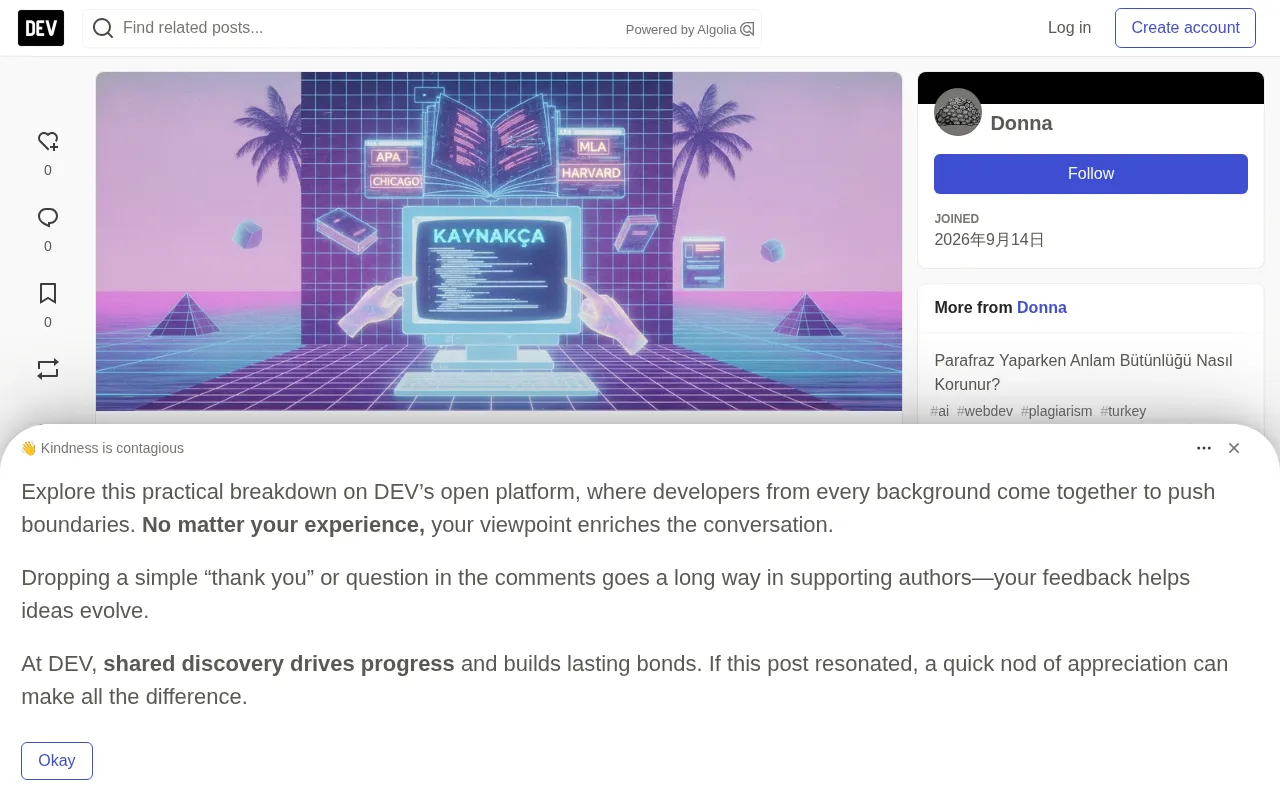
A step-by-step guide to preparing a thesis bibliography, citation styles, and reducing plagiarism risk.
This guide emphasizes the importance of preparing a bibliography in thesis writing for academic credibility and that the process should be carried out from the start of research. It explains step by step recording source information immediately, reviewing the institutional guide, identifying source types correctly, and comparing in-text citations with the bibliography. It notes which disciplines use APA, MLA, and Chicago styles and that they should not be mixed; APA 7 arrangement is shown with examples of books, articles, and internet sources. Common mistakes such as missing imprint information, citation-bibliography mismatches, and style confusion are addressed, with a reminder that reference management tools must also be checked. The final sections explain that a similarity report alone is not proof of plagiarism and that plagiarism risk can be reduced by following direct quotation and paraphrase rules.
What Is a Thesis Bibliography and Why Does It Matter?
Preparing a bibliography in thesis writing is of great importance for enhancing the credibility of academic work and showing which sources the information used is based on. Books, scholarly articles, and internet sources must be organized according to specific citation rules; however, creating the bibliography correctly alone is not enough. In-text citations and source references must also be carefully checked. This guide addresses every stage of bibliography preparation step by step and offers practical solutions to common mistakes.
What Is a Thesis Bibliography and Why Is It Important?
A thesis bibliography contains the sources consulted during research and listed according to the rules of the chosen citation system. This section enables readers to access the books, articles, and other publications used in the research and makes the scientific foundations of the thesis visible.
A properly prepared bibliography also contributes to maintaining academic integrity. Citing sources when using other researchers' ideas, findings, or expressions is necessary to acknowledge these contributions. Ideas conveyed without attribution can lead to academic ethics problems. The bibliography also shows how the researcher conducted the literature review; drawing on reliable and relevant publications supports the scientific quality of the research. Therefore, the bibliography preparation process should be regarded not as a simple formatting task done after the thesis is completed, but as work carried out from the very beginning of the research.
How to Prepare a Thesis Bibliography: Step by Step
1. Record Source Information Immediately
Recording the bibliographic information of all sources used in the research is the first step. Information such as author name, publication year, work title, publisher or journal name, and DOI or URL where available must be stored completely. Trying to find this information later can lead to wasted time and incorrect source records.
2. Review Your Institution's Thesis Writing Guide
Review your university's or institute's thesis writing guide. While some institutions require the use of a specific citation style, others may allow different systems. Once the style to be used is determined, all sources must be organized according to the same rules.
3. Identify Source Types Correctly
The bibliography entry for a book, a scholarly article, a web page, or an unpublished thesis is not prepared in the same way. The information required by the relevant citation style must be used for each source.
4. Compare the Bibliography with In-Text Citations
Check that the sources cited in the thesis appear in the bibliography and that author names and publication dates are written correctly. This process makes it easier to notice missing or incorrect entries at the final stage.
APA, MLA, and Chicago Bibliography Formats
The bibliography format used in thesis writing may vary depending on your academic field and your institution's rules. APA, MLA, and Chicago are three citation systems commonly used in academic work.
The APA style is particularly preferred in psychology, education, and the social sciences. In-text citations generally use the author's surname and publication year. The MLA style is used mostly in literature, language, and the humanities; in-text citations generally specify the author's surname and page number, and the source list is usually prepared under the heading "Works Cited." The Chicago style, on the other hand, offers two basic systems: notes-bibliography and author-date; the notes-bibliography method is especially useful for providing detailed explanations about sources in history and the humanities.
Since these systems have rules that differ from one another, the in-text citation format of one style should not be combined arbitrarily with the bibliography arrangement of another. To maintain consistency throughout the thesis, base your work on the current citation guide.
DOI (Digital Object Identifier) is a persistent and unique identifier assigned to academic publications in digital form. Unlike URLs, a DOI number remains fixed even if the publication's address changes and is generally used by being converted into a link in the form https://doi.org/10.xxxx/xxxxx. In current styles such as APA 7, the DOI is expected to be added to the bibliography for an article that has one; this enables the reader to access the source with a single click. You can verify DOI information from the article's publisher page or from indexes such as Crossref. Omitting the DOI is counted among bibliography errors because it makes the source harder to find.
How to Write Books, Articles, and Internet Sources
When creating a bibliography, the necessary information for each publication type must be recorded correctly. The following examples are representative samples prepared to explain the bibliography arrangement in APA 7 style.
Book bibliography example
Yılmaz, A. (2024). Akademik yazım teknikleri. Örnek Yayınları.
This example includes the author's surname and initial, the publication year, the book title, and the publisher information. When preparing a real thesis, the bibliographic information of the relevant book must be verified exactly.
Academic article bibliography example
Demir, B., & Kaya, C. (2023). Üniversite öğrencilerinde akademik yazım becerileri. Örnek Eğitim Araştırmaları Dergisi, 12(2), 45–60. https://doi.org/10.xxxx/xxxxx
This example shows how information such as authors, publication year, article title, journal name, volume, issue, page range, and DOI where available can be arranged in an article bibliography. The DOI address here is a representative expression used only to show the format.
Internet source bibliography example
Author or Institution Name. (2024). Title of the web page. https://www.ornek.com
For internet sources, information such as the author or institution name, publication date, page title, and URL can be used. The required fields may vary depending on the characteristics of the source and the rules of the chosen citation style.
The names, titles, and addresses in these examples do not have to belong to real publications. In your thesis, you should use only the sources you actually used and whose information you have verified.
Common Mistakes Made When Preparing a Thesis Bibliography
Incomplete bibliographic information is among the leading problems encountered when preparing a bibliography. Misspelling the author's name, having an incorrect publication date, or omitting the article's DOI information can make it difficult for readers to access the relevant source.
Another common mistake is the mismatch between in-text citations and bibliography entries. A source used in the thesis not appearing in the bibliography, or a publication listed in the bibliography never being cited in the text, may be a situation that needs correction according to the rules of the chosen style. Mixing different citation styles in the same work also leads to formatting inconsistencies; for example, adding entries organized according to another style's rules among bibliography entries prepared in APA format disrupts integrity.
To reduce these problems, check bibliography information directly from the publications wherever possible. You can make use of reference management tools such as Zotero, Mendeley, or EndNote. However, the entries these programs generate automatically must also be reviewed; not every entry produced by the software may be error-free.
Zotero, Mendeley, and EndNote are reference management tools used to collect and organize bibliographic information and to format it automatically according to the chosen citation style. These programs generally save an article's or book's imprint information with a single click through browser extensions and automatically generate in-text citations and the bibliography with a word processor plugin. However, automatically transferred data may not always be complete; problems such as capitalization of author names, abbreviation of the journal name, or an empty DOI field are common. Therefore, the entries produced by the tool must be checked against the publication's original imprint.
How to Check the Bibliography and In-Text Citations
In the final check of the thesis, the bibliography and the citations in the text should be evaluated together. First, make sure that each citation points to the correct source. Check whether direct quotations contain the necessary marks and page information. Do not forget appropriate source references for ideas conveyed through paraphrase as well.
After the bibliography arrangement is complete, examining passages that overlap with sources in the text can also be useful. A similarity check tool can help you see matches in the text and identify which sections need more detailed evaluation.
Keep in mind that a similarity rate alone is not proof of plagiarism. Properly cited quotations, common expressions, and bibliographic entries can also affect similarity results. Therefore, it is important to evaluate the report in context and to take your academic institution's guidelines into account.
Similarity check (plagiarism screening) is a software-assisted review used to determine the extent to which a text overlaps with previously published sources. Tools such as Turnitin and iThenticate compare the text against a large database and report matching sections and their sources. Since direct quotations, bibliography entries, and common expressions can also appear as matches in these reports, a percentage rate alone is not sufficient to reach a judgment. What matters is evaluating whether the matches are cited and their context. The threshold values accepted by institutions and their evaluation criteria may differ from one another.
What to Pay Attention to in Order to Reduce the Risk of Plagiarism in a Thesis
One of the most effective ways to reduce the risk of plagiarism is to keep regular source records from the beginning of the research process. Noting the source of information taken from another work immediately helps prevent citations from being forgotten during the writing stage.
Clearly marking direct quotations, preserving the original meaning when paraphrasing, and properly citing others' ideas are also important. Changing only some words is not enough to transform another text into an original expression. Review the sources and citations again before submitting your thesis; evaluate matches by performing similarity checks in sections you deem necessary. This approach can help you notice mistakes in the academic writing process and make your work more reliable.
Conclusion
Preparing a bibliography in thesis writing is one of the fundamental steps that supports the transparency and reliability of academic research. Recording source information accurately, choosing the appropriate citation style, and organizing all entries consistently contribute to your thesis meeting academic standards. Checking the bibliography and in-text citations together, correcting missing information, and carefully examining sections that overlap with sources are also important. Thanks to regular source management and conscious similarity checking, you can evaluate your research's use of sources more effectively and make the necessary corrections before submitting your thesis.
Related articles

The Touchscreen MacBook and Apple's Delightful Mess: A Deliberate Gamble
The Vergecast unpacks the touchscreen MacBook Pro's launch logic, the ProLed naming controversy, the iPad squeezed between iPhone and Mac, and how Apple stays competitive with premium hardware in the AI era.

Fifty Years Studying Power: Robert Caro's Writing and Insights on Power
Robert Caro reflects on 50 years studying power: Lyndon Johnson's persuasion and leverage, Robert Moses's transformation from idealist to ruthless builder, the dilemmas of large-scale construction, and his methods of compressing themes and solitary focus in biography writing.

Can a $20,000 Robot Do Your Chores? The Test Results Are Surprising
A YouTube test video shows how a $20,000 robot responds to commands like washing dishes, turning off lights, taking out trash, and feeding the dog. This article analyzes its real capability boundaries, the state of voice interaction technology, and how far household robots are from mainstream adoption.