How to Write Effective Software Design Documents: Core Principles and Practices
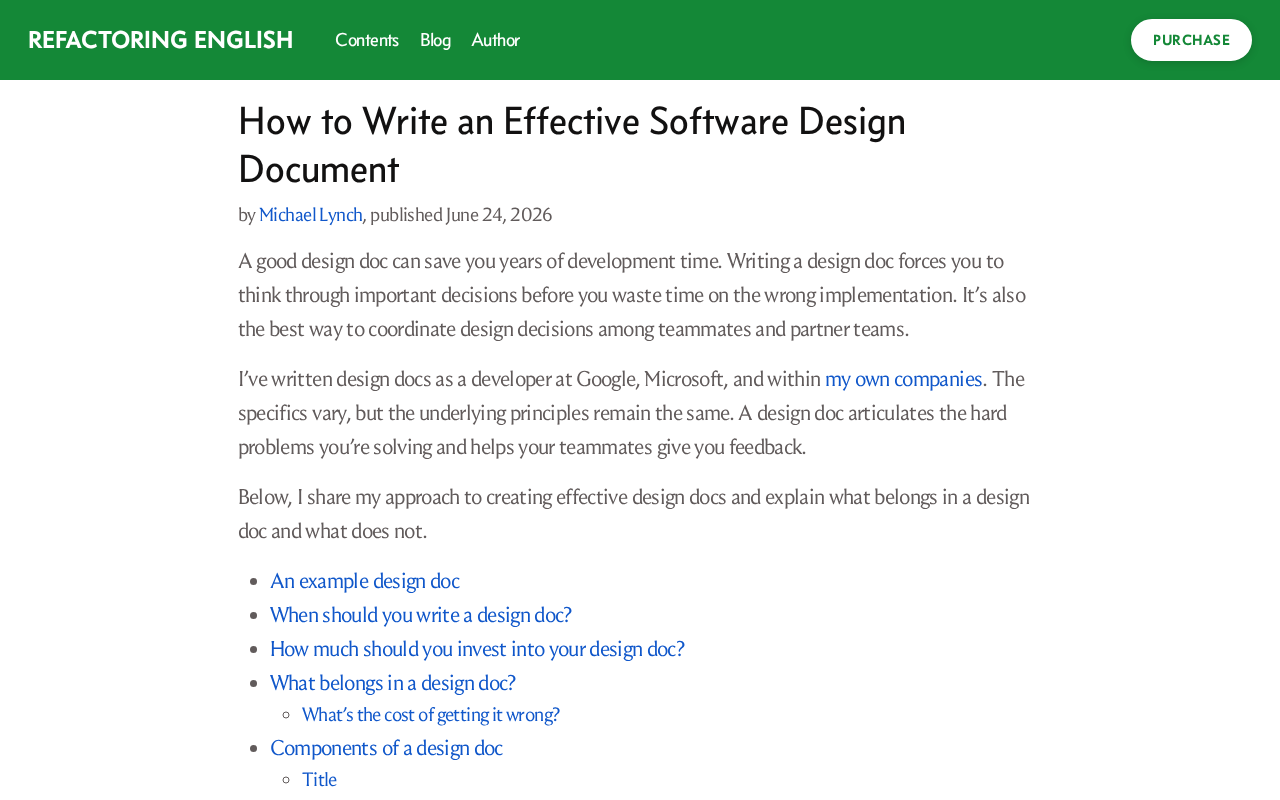
The real value of a design document lies in the writing process itself — it surfaces flaws before a single line of code is written.
This article explores the true purpose and best practices of software design documents. The author argues that the greatest benefit of a design doc often comes before review — the act of writing forces vague assumptions and team misalignments into the open. An effective document should include a clear problem statement, a comparison of alternatives, and honest trade-offs. It should be organized around the reader's needs and kept concise enough to actually be read. Documents must also stay current as implementation evolves, since outdated docs can mislead more than no docs at all. The article also acknowledges that document format should fit team size and project risk — lightweight RFCs may suit fast-moving small teams better.
Software design documents are the primary vehicle for engineering teams to communicate technical proposals — yet many engineers either treat them as a formality or bury them in bureaucratic boilerplate. A recent article from Refactoring English, How to write an effective software design document, sparked lively discussion on Hacker News, earning 227 upvotes and nearly a hundred comments. It explores the true value of design documents and how to avoid common writing pitfalls.
What Problem Does a Design Document Actually Solve?
The essence of a design document isn't record-keeping — it's thinking through a solution before writing any code. When you're forced to describe a proposal in plain language, vague assumptions, overlooked edge cases, and misaligned team understanding all surface during the writing process.
In other words, the greatest benefit of a design document often arrives before anyone reviews it — the act of writing is itself a stress test for your thinking. Many senior engineers share this view: if you can't articulate a solution clearly in writing, it probably won't hold up under the scrutiny of implementation either.
What Should a Good Design Document Contain?
The original article emphasizes that a design document doesn't need to cover everything, but several core sections are non-negotiable.
Clearly Define the Problem
The opening must explain why this work needs to be done. Many documents dive straight into technical solutions without providing any context or motivation, leaving readers unable to judge whether the proposal actually addresses the right problem. A solid problem statement should cover the current pain point, its scope, and the consequences of leaving it unresolved.
Present the Proposal and Alternatives
Proposing only one solution often appears hasty. Listing the alternatives you considered — and explaining why you ultimately chose one over the others — gives reviewers confidence that you've done the necessary trade-off analysis. This is what distinguishes a design document from a plain technical spec: it surfaces the decision-making process, not just the conclusion.
RFC (Request for Comments) is a lightweight alternative closely related to design documents, widely used in open-source communities and some tech companies (such as the Rust language community and the Ember.js team). RFCs require authors to explicitly list "unresolved questions" and "rejected alternatives" — a philosophy closely aligned with the alternatives-first approach advocated here. For small teams or fast-iteration scenarios, an RFC template is often more pragmatic than a full design document: it prescribes the minimum necessary structure without demanding lengthy prose, capturing the decision-making trail without becoming so costly to maintain that teams abandon it.
Acknowledge Trade-offs Honestly
No technical solution is perfect — every choice comes with costs. Honestly documenting your solution's trade-offs in terms of performance, complexity, maintainability, and rollout risk actually strengthens the document's persuasive power. Hiding weaknesses only invites harder questions during review.
Write for Your Readers, Not for Yourself
One of the most common failure modes for design documents is authors organizing content according to their own mental model while ignoring the reader's path to understanding. The more effective approach is to think from the reviewer's perspective: What background context do they need? Which terms require explanation? Where can a diagram replace several paragraphs of text?
Brevity matters too. A 30-page design document likely won't be read carefully by anyone. The original article recommends keeping the document concise and focused, moving details into appendices or linked references, and keeping the main body quickly scannable. Many engineers in the Hacker News discussion echoed this: the longer the document, the lower the probability it actually gets reviewed.
A Document Is a Living Artifact, Not a One-Time Deliverable
One key point worth emphasizing: a design document shouldn't be shelved the moment it passes review. As implementation progresses, plans inevitably shift. Keeping the document updated to reflect the system's actual state is what allows it to remain valuable over time. An outdated document is more dangerous than no document at all — it actively misleads those who come after.
That said, dissenting voices emerged in the comments: some engineers on small, fast-moving teams argued that the cost of maintaining documentation can outweigh the benefit, preferring to rely on code, comments, and lightweight RFCs instead of heavyweight design docs. This is a useful reminder that the format and depth of documentation should match team size and project risk — there's no one-size-fits-all answer.
The judgment that "an outdated document is more dangerous than no document" has broad consensus in software engineering, rooted in a problem of cognitive trust: readers who don't know whether a document is current tend to assume it's authoritative, and then make decisions based on incorrect information. Google internally refers to such documents as "zombie docs." One mitigation strategy is to add a "last verified date" and "owner" field to the document header, and to incorporate document review into project milestone checklists rather than relying on individual initiative. Another approach is Docs as Code: storing design documents in the code repository, tying them to code-change reviews, and using Git history to naturally track document evolution — reducing the friction of ongoing maintenance.
Practical Advice for Engineers
Drawing on the original article and community discussion, here are a few actionable takeaways:
- Write the problem before the solution: Make sure the motivation is clear before expanding into technical details.
- Surface the weaknesses proactively: Articulating trade-offs builds more trust than polishing over flaws.
- Control the length: Keep the main body lean; move details into appendices.
- Write for your audience: Anticipate the reviewer's questions and answer them in advance.
- Keep the document updated: Treat it as a living team resource, not an archived artifact.
The value of a design document ultimately comes down to whether it reduces the team's communication overhead, cuts down on rework, and helps you catch problems before you start building. The ability to write a good design document is, in many ways, one of the defining differences between a senior engineer and a junior developer.
Related articles
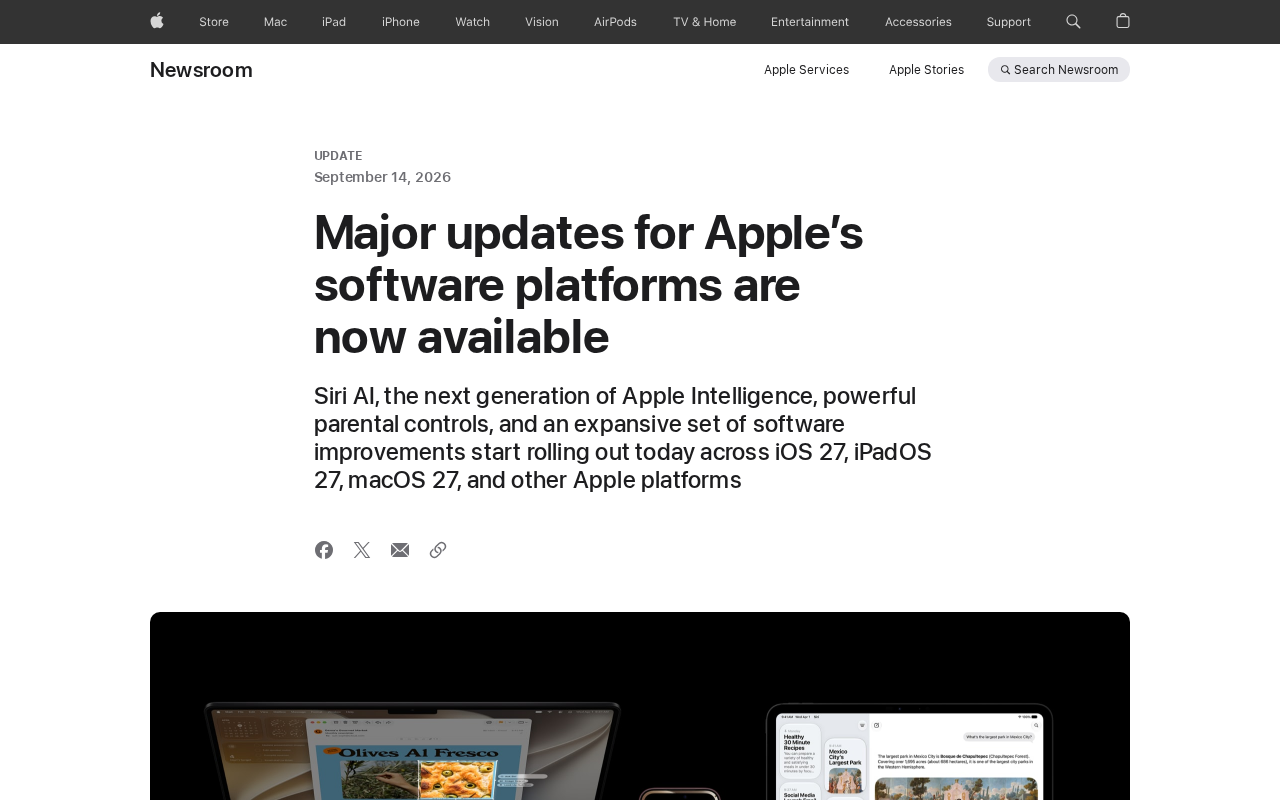
iOS 27, iPadOS 27, and macOS 27: The Information Gap Behind a Discussion
A Hacker News post about iOS 27, iPadOS 27, and macOS 27 sparked speculation about Apple unifying its version numbering. Here's how to read it with limited info.
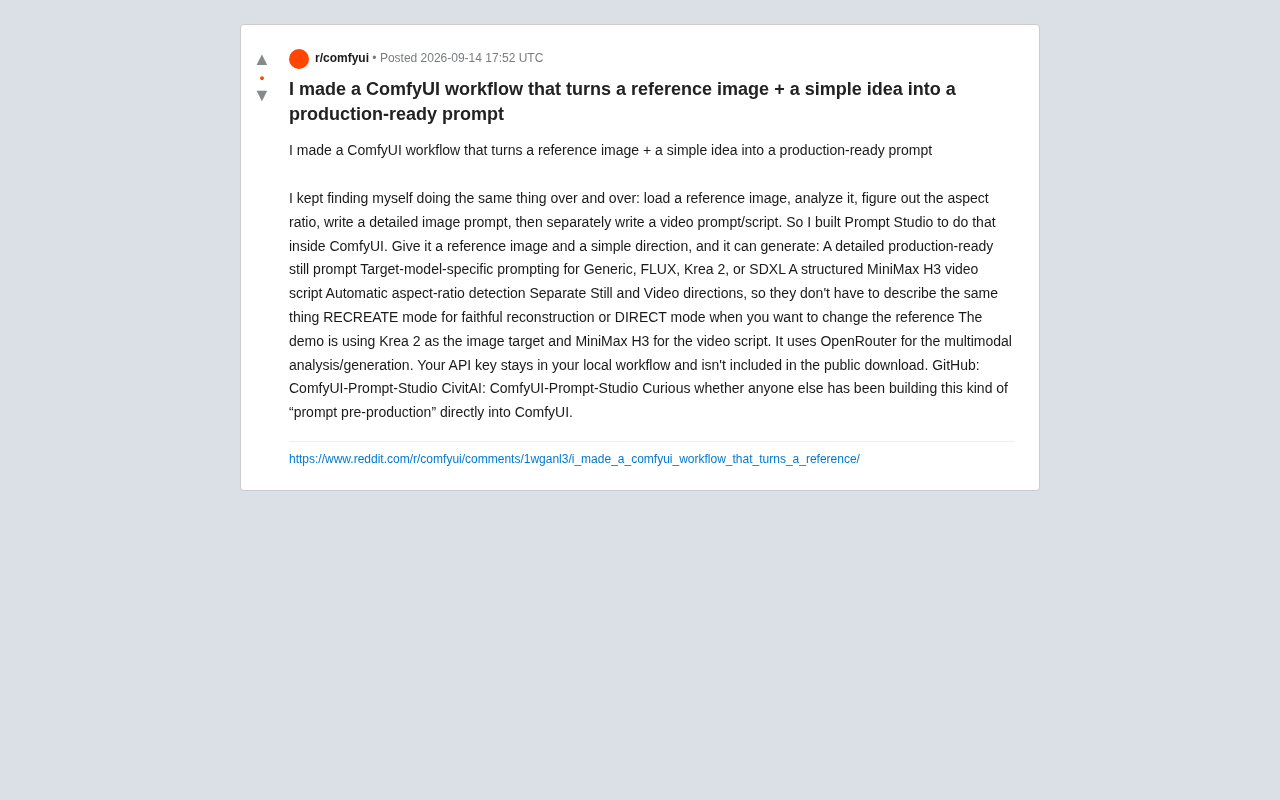
ComfyUI Prompt Studio: A Workflow for Turning Reference Images into Production-Ready Prompts
ComfyUI Prompt Studio is an open-source workflow that auto-generates production-ready image prompts, multi-model custom prompts, and MiniMax video scripts from reference images.
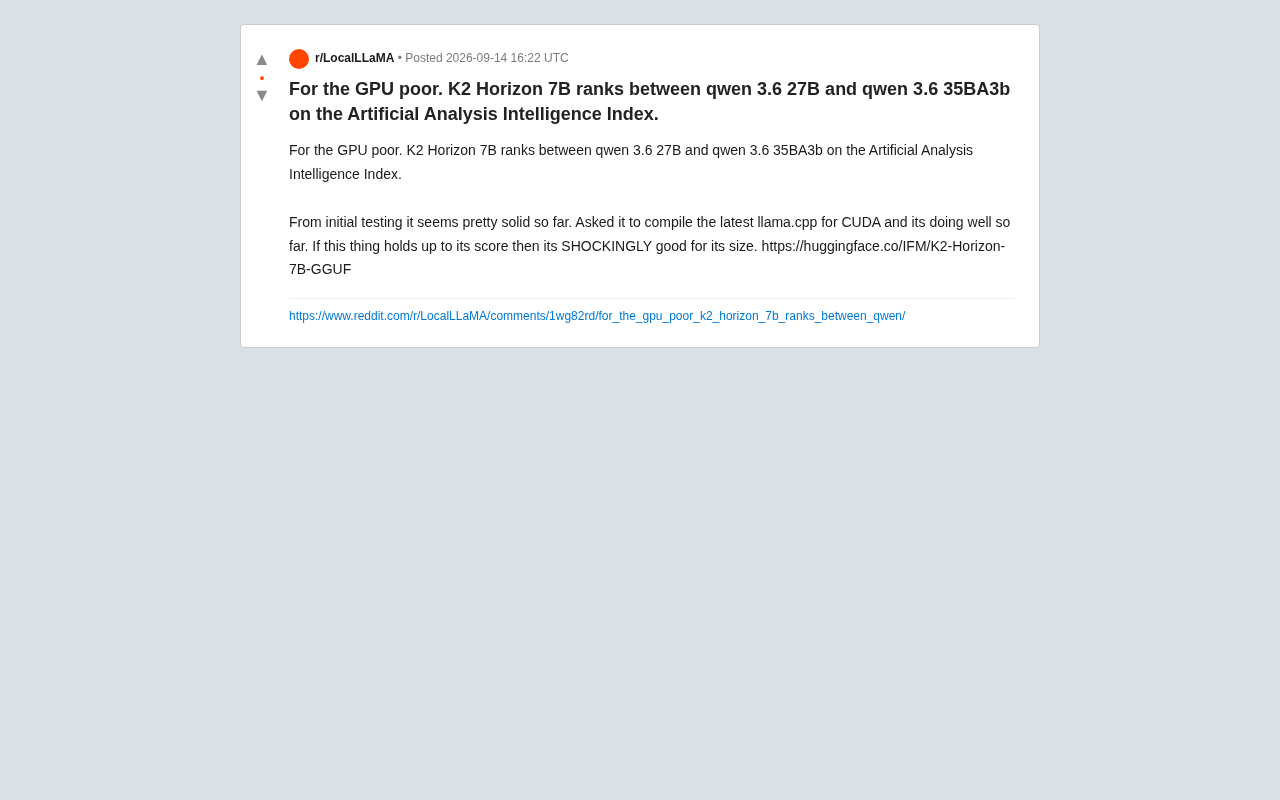
K2 Horizon 7B: A Small Model Punching Above Its Weight
K2 Horizon 7B ranks between Qwen 3.6 27B and 35BA3b on the Artificial Analysis Intelligence Index, delivering near-mid-tier intelligence at 7B parameters — a strong local deployment option.