I Play Rocky Behind-the-Scenes Featurette: A Film About Dreams and Perseverance

I Play Rocky featurette reveals Stallone's rise from living in a van to writing and starring in Rocky.
The first-look featurette for I Play Rocky focuses on the true story behind 1976's Rocky: Sylvester Stallone was homeless, living in a van with his pregnant girlfriend, and repeatedly rejected for not fitting the traditional star mold. He wrote his own script and insisted on starring despite studio resistance. The featurette also highlights producers Irwin Winkler and Robert Chartoff, fast-shooting director John G. Avildsen, and the early use of Steadicam. Philadelphia acts as a character, and recreating iconic scenes feels like time travel. Lead actor Anthony's resemblance to Stallone is praised as "the best performance."
When a Movie Tells the Story Behind a Movie
Welcome to the behind-the-scenes of a behind-the-scenes movie story. This is the opening line of the first-look featurette for I Play Rocky. The film focuses on the true story behind the birth of the cinematic classic Rocky—how a young man named Mike Stallone went from being homeless to ultimately becoming Rocky on screen, armed with a script he wrote himself and an uncompromising determination.
The featurette admits: "I knew there was a great story behind Rocky, but I didn't know the details." That's exactly the gap this film tries to fill. It's not just a biopic; it's a classic narrative about "comeback"—a story of one man fighting for his dream.
Stallone's Starting Point: A Van and a Script
In 1976, Sylvester Stallone, as the featurette puts it, "was basically homeless, living in a van with his pregnant girlfriend." He longed to be an actor, but his looks didn't fit the traditional movie-star mold, so he kept hitting walls.
Faced with the dilemma of "not getting roles," he chose another path: write his own script and fight for the lead role himself. The powerful line from the featurette—"This is my story, I'm playing Rocky"—is the core of this experience. The film doesn't shy away from the fact that the studio did everything in its power to make the movie fail; instead, it uses that as a source of dramatic tension.
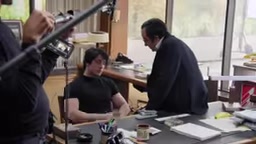
In the production background of Rocky, Irwin Winkler and Robert Chartoff were a well-known independent producer duo in Hollywood at the time, known for low budgets, high efficiency, and an eye for new talent. They had produced films like Mean Streets and supported directors such as Martin Scorsese. On the Rocky project, they completed production with an extremely low budget (about $1 million) and a tight shooting schedule (about 28 days), which stands in stark contrast to the studio's initial lack of trust. Director John G. Avildsen was likewise known for fast shooting and on-set adaptability, and he later won the Academy Award for Best Director for Rocky. Together, these factors ensured the film could maintain its artistic integrity despite limited resources, and they also confirm the dramatic narrative in the featurette that "the studio tried to make the movie fail."
The Behind-the-Scenes Heroes: Veterans, New Technology, and the Soul of a City
Stallone didn't fight alone. The featurette mentions two veteran filmmakers, Irwin Winkler and Robert Chartoff, who excelled at completing productions on limited budgets; director John G. Avildsen was known for his ability to shoot quickly. Together, these factors formed the realistic foundation that made Rocky possible.
Another innovation highlighted is the use of the Steadicam. Its inventor, Garrett Brown, appears in the featurette, recalling events "50 years ago." This technology later profoundly changed the way films were shot, and at the time, it gave Rocky a unique visual language.
Philadelphia is almost a character in this film. The featurette emphasizes that "Philadelphia brought something to the story." When the crew stood at the same filming locations as back then, the sense of crossing through time was stunning.
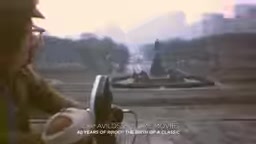
The Steadicam is a stabilizer system worn by the camera operator; through a mechanical arm and counterweights, it isolates the camera from the operator's body movement, thereby eliminating shake during moving shots and achieving smooth, stable images. It was developed by inventor Garrett Brown in the mid-1970s and first appeared on a large scale in Rocky (1976) in the boxing training and running scenes, especially the classic shot of Stallone running up the steps of the Philadelphia Museum of Art. Before that, moving shots mainly relied on cumbersome track dollies or cranes, but the Steadicam allowed camera operators to walk, run, and even go up and down stairs freely, greatly expanding the expressive mobility of cinematography. The technology was subsequently widely used in films such as The Shining and Goodfellas, becoming one of the standard tools of modern filmmaking.
Recreating a Classic: A Shoot That Crosses Time and Space
For the actors and crew involved in I Play Rocky, the shoot was full of "pinch me" moments. Someone in the featurette says: "You really feel like you are in a time machine." They were recreating iconic moments that audiences have lived with for years, and the experience gave people goosebumps.
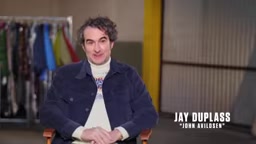
In terms of casting, the featurette gives extremely high praise to lead actor Anthony's resemblance to Stallone—"they look like they were cut from the same mold," and even his mannerisms and expressions are remarkably similar. Someone commented that this was "the best performance I've ever been involved with."
A Film About Perseverance, and Also a Tribute
The featurette for I Play Rocky doesn't stop at curiosity-seeking; it tries to convey a more plain-spoken power: when all external conditions are against you, can you still fight for yourself one more time? The reason Stallone's story is told again and again is precisely that it touches the most essential part of creation and dreams—never giving up.
This film is both a tribute to Rocky and a tribute to everyone who is "overlooked but still persevering."
One-line Summary
I Play Rocky featurette reveals the comeback story behind Stallone going from living in a van to writing his own script and starring in Rocky.
Paragraph Summary
I Play Rocky's first-look featurette focuses on the true story behind the birth of Rocky in 1976: Sylvester Stallone was homeless at the time, living in a van with his pregnant girlfriend, and repeatedly hit walls because his looks didn't fit the traditional star mold. He chose to write his own script and insist on starring, facing resistance from a studio that tried to make the film fail. The featurette also reveals the behind-the-scenes heroes—veteran producers Irwin Winkler and Robert Chartoff, director John G. Avildsen known for fast shooting, and how the early use of Steadicam changed the film's visual language. Philadelphia participates in the narrative as a "character," and recreating classic scenes gives the crew a sense of traveling through time. Lead actor Anthony's extremely high resemblance to Stallone is praised as "the best performance." The film is both a tribute to Rocky and a tribute to those who persevere.
Related articles
 Tech Frontiers
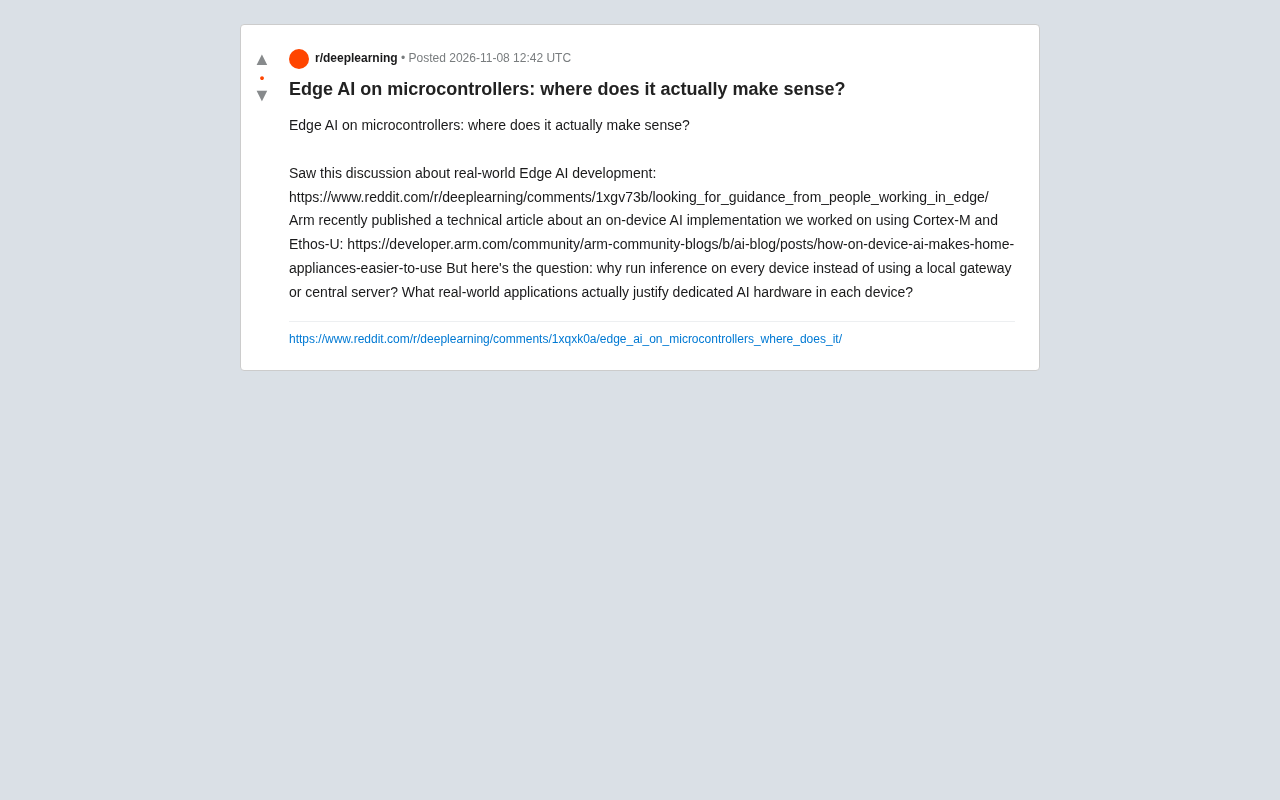
Edge AI on Microcontrollers: When Is It Actually Worth Deploying?
Drawing on Reddit discussions and Arm case studies, this article analyzes the real-world use cases for edge AI on microcontrollers: when each device needs independent inference, when a gateway or cloud is more reasonable, and the costs and boundaries of specialized hardware.
 Tech Frontiers
Pushing the Limits of Extreme Sudoku on a 16GB GPU: Insights from Depth and Flow Matching
A researcher trained a 16.54M-parameter model on a 16GB GPU to solve extreme Sudoku, finding effective depth breaks the 60% plateau and flow matching with improved sampling pushes accuracy past 99% with ~50× lower layer-evaluation budget.
 Tech Frontiers
AI Agent Approval Workflows: Why Human Confirmations Always Get Mindlessly Clicked
Why do AI agent approval workflows always get mindlessly clicked? A Reddit discussion shows that separating rules from keys, low-frequency high-risk approvals, and GitHub Environments-style gates are the keys to effective approvals.