In-Depth Claude Code Review: Why It Outperforms Cursor, Trae, and Other Mainstream AI Coding Tools

An in-depth look at why Claude Code beats Cursor, Trae, and other AI coding tools.
Claude Code is Anthropic's command-line AI coding assistant that reads a project's full context, auto-corrects errors, and delivers runnable code. This review compares it with Cursor, Trae, and Copilot, explaining why its accuracy and automation make it the top AI coding tool.
What Exactly Is Claude Code
In an era where AI coding assistants emerge one after another, Claude Code is becoming one of the hottest topics in the programmer community. Contrary to many people's first impressions, this tool isn't mysterious at all—in fact, it's one of the most practical AI tools within reach of everyday developers.
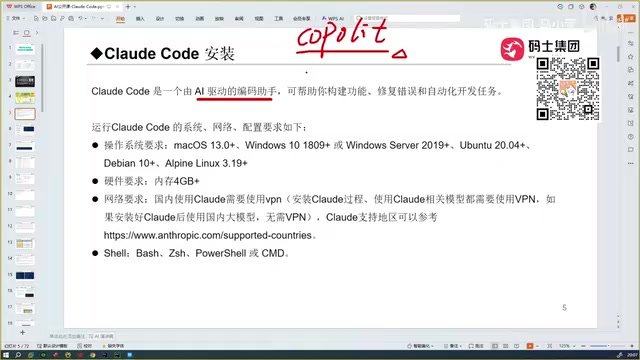
At its core, Claude Code is a command-line AI coding assistant released by Anthropic. Its biggest feature is that it requires no web login—you simply install it locally and can then call it directly within your development environment to work on real projects. This "install and go" lightweight deployment approach greatly lowers the barrier to entry.
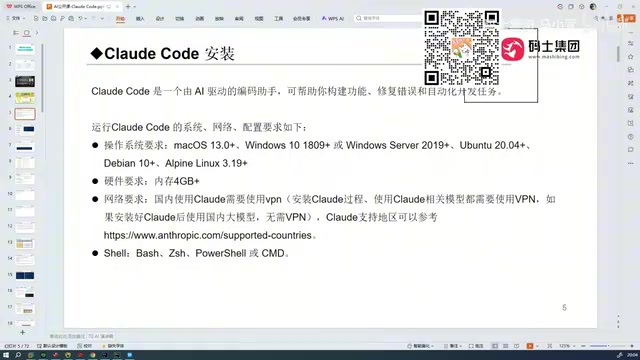
It has certain operating system requirements, but all mainstream systems are supported. Once installed, developers can immediately experience its full capabilities within their projects.
The Fundamental Difference Between Conversational AI and Claude Code
Many people ask: since we already have conversational AIs like DeepSeek and ChatGPT, why do we still need Claude Code? The difference between the two is actually more fundamental than you might imagine.
The Limitations of Conversational Coding
When you have a programming conversation in DeepSeek or ChatGPT, the AI can only provide an isolated code snippet. You then have to copy the code back into your project and test it manually. As soon as an error occurs, you're stuck going back and forth debugging repeatedly.
The more critical problem is that conversational AI cannot read your project's full context. Suppose your project has 100 code files—the AI simply can't see any of them, and you'd have to manually input the relevant information piece by piece. The process is both inefficient and tedious.
Claude Code's Core Breakthrough
Claude Code works in a completely different way. It can:
- Read through all the files in your project, providing the complete context to the large model to generate code that truly fits your business logic;
- Automatically detect and fix errors, proactively debugging after generating code to ultimately produce a version that runs directly;
- Achieve a fully automated programming loop from requirement description to runnable code.
These two capabilities—"understanding the whole picture and automatically correcting errors"—are exactly what fundamentally sets it apart from conversational AI.
The Evolution of AI Coding Tools
To understand Claude Code's competitive advantages, it's worth first tracing the development history of AI coding assistants.
From GitHub Copilot to Cursor
The earliest landmark product was GitHub Copilot—a code auto-completion plugin that delivered a disruptive experience to developers when it launched. Being able to "automatically continue writing code" was already rare at the time.
Cursor then burst onto the scene, with intelligence noticeably surpassing Copilot. It already possessed automatic coding capabilities and is somewhat comparable to today's Claude Code.
Rising Newcomers Like Trae and OpenCode
Afterward, Trae (which has both international and domestic versions) entered the market. Based on hands-on experience, Trae was specifically optimized for domestic developers, with quite excellent Chinese comprehension, and was once regarded as the most convenient coding tool. The domestic version is free—users who need it are advised to go straight for the domestic version, as the international version is a paid product.
Another tool, OpenCode, is also positioned as an AI coding tool, but actual user feedback has generally been mixed, so it's not recommended as a top priority for ordinary users.
Why Claude Code Stands Out

After systematically experiencing mainstream tools such as Copilot, Cursor, and Trae, the conclusion points in the same direction: Claude Code is a notch above Trae and is currently the strongest AI coding tool in overall performance.
The Underlying Large Model Determines the Ceiling
The capability ceiling of any AI coding assistant ultimately depends on the level of the large model behind it. Claude Code's power stems from the outstanding performance of Anthropic's Sonnet model, along with optional support for higher-tier models.
Comparing them side by side:
- Trae's biggest advantage is that it's free, but when facing technical challenges, code quality drops noticeably and accuracy becomes unstable;
- Codex (paired with OpenAI's GPT-5) is equally powerful and is considered one of the few products that can compete head-on with Claude Code;
- Mainstream domestic models such as Tongyi Qianwen and GLM still show a clear gap compared to Claude Code in comprehensive evaluations.
Core Advantage: Code Accuracy
Compared with Cursor, Claude Code's most critical point of difference lies in accuracy. Although both Cursor and Trae can achieve automatic programming, Claude Code demonstrates higher code accuracy and stronger error-correction capabilities in real-world projects, with the reliability of its output on a whole different level.
It's precisely for this reason that many professional programmers experience a genuine "sense of crisis" after trying it out—the tool's degree of automation and output quality are already enough to make seasoned developers seriously reconsider their own irreplaceability.
Final Thoughts
Claude Code represents a qualitative leap in AI coding tools—from "assisted completion" to "automated development." Its core value doesn't lie in showing off flashy tricks, but in its complete ability to truly understand the entire project, autonomously correct errors, and deliver production-ready code.
For beginners, such a tool means a gentler learning curve; for experienced developers, it's both a productivity multiplier and a "capability benchmark" worth taking seriously. No matter what stage you're at, understanding and mastering the new generation of AI coding tools represented by Claude Code has become an unavoidable required course for every developer today.
Related articles

The Truth Behind Codex 'Build a Website in 5 Minutes': AI Isn't Creating Sites—It's Helping You Copy Them
Exposing the truth behind viral Codex 5-minute website videos: creators aren't building original sites with AI—they're copying shared prompts or scraping others' work. Learn AI coding tools' real limits.

Getting Started with AI Agent Development: A Complete Guide from Concept to Practice
A comprehensive guide to AI Agent architecture and development, covering automated marketing, intelligent customer service, and investment analysis scenarios with single and multi-agent collaboration.

The Truth Behind Codex 'Build a Website in 5 Minutes': AI Isn't Creating Sites — It's Helping You Copy Them
Exposing the truth behind viral Codex 5-minute website videos: creators aren't building original sites with AI — they're copying shared prompts or scraping others' work.