Inside Anthropic Labs: How a Small Agile Team Behind Claude Code Is Transforming AI Product Development
How Anthropic's small Labs team turned Claude into developer-loved products through rapid experimentation
Anthropic Labs, a lean internal team at Anthropic, has incubated Claude Code and other rapidly iterating AI products. This analysis explores how their "small team, rapid betting" approach—focused on speed, tight collaboration, and quick market validation—represents a strategic response to AI commoditization. As model capabilities converge, organizational agility and developer ecosystem capture are becoming the new competitive battlegrounds.
Anthropic Labs: A Product Experimentation Playground Built for Rapid Iteration
As competition in the AI foundation model space intensifies, raw model capabilities matter—but the real differentiator is increasingly about turning powerful base models into genuinely useful products.
About Anthropic: Founded in 2021 by former OpenAI Vice President Dario Amodei, Daniela Amodei, and other alumni, Anthropic's core mission is developing interpretable, safe, and steerable AI systems. Unlike competitors such as OpenAI, Anthropic has prioritized AI safety and interpretability from day one, pioneering unique training methodologies like "Constitutional AI." As of 2024, Anthropic has raised multiple funding rounds from investors including Google and Salesforce, reaching a valuation in the tens of billions and establishing itself as one of the most closely watched unicorns in generative AI.
Anthropic, the company behind the Claude model family, recently revealed details about an internal unit called "Anthropic Labs"—a small team responsible for incubating rapidly iterating product experiments like Claude Code, which has earned strong praise from the developer community.
The Evolution of Claude Models: Claude is Anthropic's large language model series, now in its third generation. Compared to the GPT series, Claude models excel in long-context understanding (supporting up to 200K token context windows), code generation, and safety. The Claude 3 family includes three variants—Haiku (lightweight and fast), Sonnet (balanced), and Opus (flagship)—each optimized for different use cases. Claude models perform competitively with GPT-4, Gemini, and other rivals across benchmarks, particularly excelling in tests like MMLU (Massive Multitask Language Understanding) and HumanEval (code capability evaluation).
This team reflects Anthropic's distinctive approach to product development: use a lean, agile squad to make rapid product bets around core model capabilities, quickly validate market demand, and ship to users.
Small Team, Big Impact
Anthropic Labs is defined by being "small and fast." Unlike traditional tech companies with product teams numbering in the hundreds, this lab operates with a streamlined structure where engineers, researchers, and product people collaborate tightly.
Historical Context of Product Lab Models: Silicon Valley's "small team, fast iteration" product lab model isn't new. Google's Area 120 and Facebook's NPE team are similar experiments. This approach stems from Lean Startup principles: reduce innovation risk by rapidly building minimum viable products (MVPs), gathering user feedback, and iterating. In the AI era, this model has found renewed relevance—as underlying model capabilities evolve rapidly, the technical feasibility window for products compresses dramatically. Whoever can package model capabilities into usable products fastest wins mindshare. Anthropic Labs applies this classic methodology to AI product development.
This structure offers several advantages:
- Short decision chains: Fewer approval layers mean ideas reach production much faster
- Rapid iteration: Ability to ship tools that address developer pain points during windows of fast-evolving model capabilities
- High collaboration density: Low communication overhead and seamless cross-functional coordination
Claude Code exemplifies this model. As an AI coding assistant for developers, Claude Code leverages Claude's strengths in code comprehension and generation to quickly build a reputation in the developer community. Its success proves that a focused, nimble team can capture and respond to user needs faster than large organizations.
Why the "Rapid Betting" Product Model Deserves Attention
The Core Challenge of AI Product Development
Today, nearly all leading AI labs face the same question: how to translate leading model capabilities into differentiated product experiences. Models themselves are rapidly commoditizing—flagship models from different companies show narrowing gaps on benchmarks. What truly separates winners from losers is often product design, developer experience, and depth in vertical scenarios.
Anthropic Labs represents Anthropic's strategic response to this trend. By establishing a dedicated "rapid betting" team, the company can explore multiple product directions in parallel without disrupting core model R&D:
- Directions that gain market validation receive increased investment
- Directions with lukewarm reception are quickly cut
This portfolio approach to product strategy proves especially pragmatic in the highly uncertain AI market.
The Significance of Claude Code
The State of AI Coding Assistants: AI coding assistants represent one of the most commercially successful vertical applications of foundation models. Since launching in 2021, GitHub Copilot has accumulated millions of paying users and generates hundreds of millions in annual revenue. Cursor, Tabnine, Amazon CodeWhisperer, and others have joined the fray, creating intense competition. The core value proposition: developers have high willingness to pay, use tools frequently, and see clear productivity gains (research shows 30-50% coding efficiency improvements). Claude Code entered an already mature competitive landscape, but leverages Claude's advantages in code understanding, multi-turn dialogue, and context handling to carve out differentiation.
Claude Code's popularity is no accident. AI-assisted programming is currently the most mature and commercially clear landing scenario for large models. From GitHub Copilot to Cursor and various AI coding tools, competition in this space is fierce. Anthropic's ability to claim a position with Claude Code shows it has found the balance between model capability and product polish.
More importantly, Claude Code provides a successful template for how Anthropic Labs operates—proving the viability of the small team, rapid betting strategy. This suggests we'll likely see more product experiments emerge from this lab in the future.
Implications for the AI Industry
Organizational Structure Determines Innovation Speed
The Anthropic Labs case reminds us that in the AI era, organizational structure itself is a competitive advantage. When technological change outpaces traditional product development cycles, agile small teams that can fail fast and iterate quickly often outperform departments with complex hierarchies.
This "labs + core R&D" dual-track model may become standard configuration for more AI companies:
- Core team: Focused on pushing the boundaries of base model capabilities
- Labs team: Responsible for product exploration and market validation
The two complement each other, ensuring both technical depth and timely product launches.
The Battle for Developer Ecosystems
Notably, products like Claude Code are highly focused on the developer community. Behind this lies fierce competition among AI companies for developer ecosystems—whoever wins developer favor gains the upper hand in API calls, tool integrations, and word-of-mouth.
Strategic Value of Developer Ecosystems: In the cloud computing and open source eras, developer ecosystems have proven to be tech companies' most important moats. The rise of AWS, GitHub, Stripe, and others was built on strong developer communities. For AI companies, winning developers means: (1) securing stable API call revenue; (2) expanding model use cases through developer application innovation; (3) amplifying technical reputation through viral effects. OpenAI through ChatGPT Plugins and GPT Store, Google through Vertex AI, Microsoft through Azure AI—all are systematically building developer ecosystems. Anthropic's choice to enter through practical tools (like Claude Code) rather than platform strategy reflects a pragmatic "depth first, breadth later" approach.
By continuously shipping developer-focused products through its Labs team, Anthropic is systematically building its own developer moat. The long-term value of this strategy should not be underestimated.
Conclusion
While public information about Anthropic Labs remains limited, the product development philosophy it represents deserves deep industry reflection. As model capabilities converge, real competition is shifting from "whose model is stronger" to "who can turn model capabilities into products users can't live without, faster."
Anthropic Labs has used a small team and a hit like Claude Code to prove that in AI product development, speed, focus, and agility may matter more than scale. For anyone tracking AI product trends, this low-profile lab is worth continued attention.
Related articles
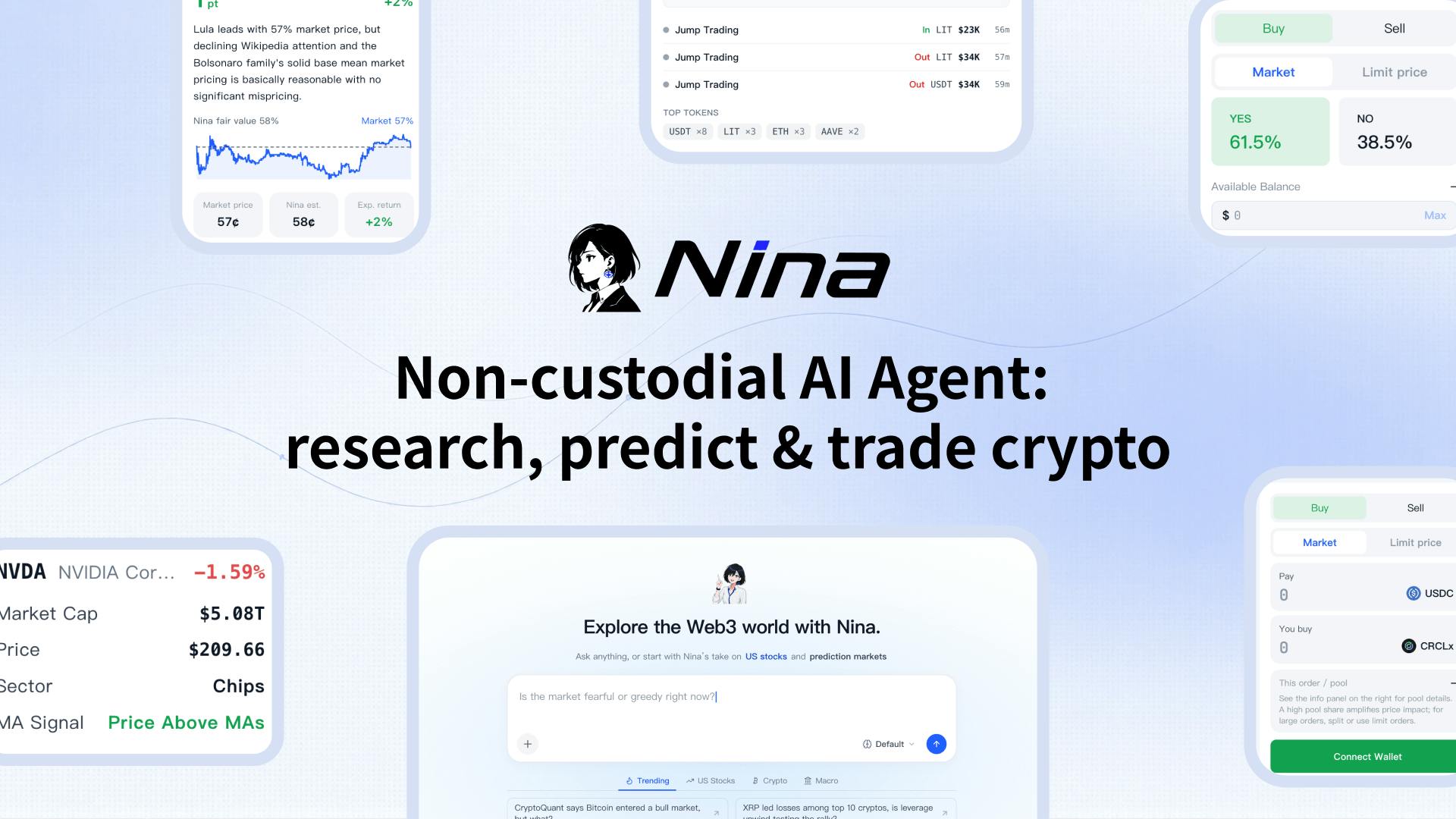
Nina: A Non-Custodial AI Trading Assistant with Institutional-Grade Data for Crypto and U.S. Stock Investing
Antalpha launches Nina, a non-custodial AI trading assistant with institutional-grade real-time data for crypto and U.S. stock analysis, Smart Money tracking, and secure trade execution.

Parkicious: Get Your Car Serviced While It's Parked — What Makes This Smart Parking App Different
Parkicious is a smart parking app for discovering and reserving spots, with optional car care services. Learn about its features, differentiators, and two-sided market challenges.
LongGuard: A Circuit Breaker for LangGraph to End Agent Runaway Loops
LongGuard is an open-source circuit breaker middleware designed for LangGraph, detecting four runaway patterns in real-time with reflect-pivot recovery and hard cost budgets to stop AI Agents from infinite loops and billing disasters.