Inside the PyTorch Ambassador Program: How to Join and Drive Ecosystem Growth

PyTorch Ambassador Sadev Zala previews his PyTorch Conference 2026 talk on the ambassador program and how to get involved.
This article covers the PyTorch Ambassador Program and IBM open source developer Sadev Zala's preview ahead of PyTorch Conference 2026. The program's core premise is channeling active community participation — through knowledge sharing, event organizing, and ecosystem promotion — into a sustainable growth force. Zala will give a dedicated talk on how the program works and how aspiring ambassadors can position themselves, with consistent community contributions, knowledge-sharing ability, and deep PyTorch ecosystem involvement being key factors. The article also notes that in-person events and booth conversations are among the best ways to build open source community connections. As competition among AI frameworks grows, structured community programs have become a critical component of open source project competitiveness.
The PyTorch Ambassador Program: A Bridge for the Open Source Community
In the open source deep learning ecosystem, PyTorch has won over a vast developer community through its flexible programming model and vibrant community. Sustaining and growing that community depends on a special group of contributors — PyTorch Ambassadors. IBM open source developer and PyTorch Ambassador Sadev Zala recently shared a preview ahead of PyTorch Conference 2026, explaining how the ambassador program works and how developers can position themselves to become one.
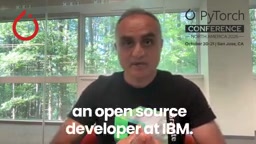
At its core, the ambassador program drives PyTorch adoption and outreach through active participation from community members. Ambassadors aren't just users of the technology — they serve as connectors, knowledge sharers, and community organizers. Zala himself will attend PyTorch Conference 2026 in San Jose, where he'll deliver a dedicated talk on how the ambassador program operates.
PyTorch was released in 2016 by Facebook AI Research (now Meta AI), evolving from the Lua-based Torch framework. Its defining feature is the Dynamic Computation Graph, which lets developers modify network architectures at runtime — a stark contrast to the static graph model used by early TensorFlow — and helped it spread rapidly through the research community. In 2022, the PyTorch Foundation began operating independently under the Linux Foundation, marking a shift from single-company stewardship to a neutral, open governance model. Today, PyTorch is one of the most widely used deep learning frameworks in both academic research and industrial deployment, with an ecosystem spanning computer vision (torchvision), natural language processing (torchtext), graph neural networks (PyG), and many other libraries. The sheer scale of that ecosystem is precisely what makes community governance mechanisms like the ambassador program so important — the core team alone can't reach the needs of millions of developers worldwide, and a distributed ambassador network fills that gap.
How Ambassadors Drive PyTorch Adoption
Based on Zala's overview, the value of the ambassador role shows up in several ways: sharing knowledge with the community, organizing and participating in in-person events, and representing and promoting the PyTorch ecosystem across technical venues. This human network is a critical growth engine for open source projects — one that goes well beyond documentation and code.

Zala specifically highlighted "learning, meeting fellow ambassadors, catching up with old friends in the community, and making new ones" as things he's most excited about. What might seem like purely social activities are actually the underlying mechanisms that allow open source communities to keep growing — technology spreads largely through interpersonal trust and conversation, not just tool promotion.

Ambassador and developer advocacy programs are common across major open source and commercial tech ecosystems. Google has the GDE (Google Developer Expert) program, Microsoft has the MVP (Most Valuable Professional) award, AWS has its Community Heroes, and the Kubernetes community has its own recognition mechanisms. The shared logic behind all of these is to identify and incentivize high-impact community members who organically spread the technology outside of official channels — offering them early access to resources, conference opportunities, and official recognition as non-monetary incentives, converting scattered individual enthusiasm into organized community growth. Unlike pure corporate marketing, voices from the community tend to carry more credibility, because audiences understand that ambassadors aren't on the vendor's payroll. For PyTorch specifically, building an independent ambassador program outside of Meta also helps reinforce its brand image as a neutral, open project.
How to Position Yourself for the Ambassador Role
For developers who want to get involved, Zala's talk will focus on "how to position yourself for the ambassador role." While this preview doesn't spell out specific application criteria, the responsibilities of ambassadors make it easy to infer what matters: consistent community contributions, the ability to share knowledge effectively, and deep engagement with the PyTorch ecosystem are all strong indicators.

Beyond his main talk, Zala will also have a poster presentation and will be available to chat at the IBM booth or the PyTorch Foundation booth. For developers looking to understand pathways into open source contribution, these in-person events are often the best way to get firsthand information and build connections within the community.
Key Takeaways for Open Source Contributors
This brief preview is light on detail, but it sends a clear signal: as competition among AI frameworks intensifies, community operations and developer relations have become a core competitive advantage for open source projects. Through a structured ambassador program, PyTorch channels scattered community enthusiasm into a sustainable and organized force for growth.
For individual developers, participating in an ambassador program isn't just about giving back to the community — it's also a way to build personal influence and expand your professional network. If you have the opportunity to attend PyTorch Conference 2026, these kinds of sessions are worth your time, offering a clear picture of how to grow from an everyday user into an active contributor driving the community forward.
Related articles

Why Does the Tesla Roadster Need to Fly? A Deep Dive into Musk's Wild Demo
Tesla's Roadster launch showed wall-climbing, upside-down driving, and flying stunts—but The Vergecast notes the demo car may lack a battery, the Rocket version is invite-only and not street-legal, and the website terms don't guarantee delivery. After nine years of delays, why does this car still need to exist?

AI Is Not a Replacement: Human-AI Collaboration Through the Lens of Factory Root Cause Analysis
Starting from factory root cause analysis, this article explains how AI accelerates evidence chain construction rather than replacing human experts, exploring the pragmatic implementation logic and business value of 'AI supporting people rather than replacing them.'

AI Agent Decision Auditing: Building an Evidence Chain in Regulated Workflows
Starting from a Reddit discussion, this article analyzes three core issues in AI agent decision auditing within regulated workflows: what fields audit records should contain, how to handle feedback latency for erroneous decisions, and how to continuously calibrate LLM judge consistency with human judgment.