Insta360 Luna Ultra In-Depth Review: Can the Detachable Screen + Dual Camera Challenge the DJI Pocket?

Insta360 Luna Ultra challenges DJI Pocket with a detachable screen, dual Leica cameras, and 8K recording.
The Insta360 Luna Ultra is Insta360's ambitious first entry into the handheld gimbal camera market, featuring a horizontal dual-camera design co-developed with Leica, an innovative detachable screen that doubles as a remote monitor, industry-first multi-person tracking, 8K 30fps recording, and a usable 10-bit iLog curve. While it impresses with sharp optics and a creative accessory ecosystem, DJI Pocket still leads in noise reduction and slow-motion specs.
Overview: Insta360's First Major Entry into the Handheld Gimbal Camera Space
In the handheld gimbal camera market, DJI's Pocket series has long held a dominant position. Now, Insta360 has finally delivered its heavyweight response — the Luna Ultra, a gimbal camera featuring a horizontal dual-camera design and an innovative detachable screen. As Insta360's first-generation product in this category, the Luna Ultra's level of polish far exceeds expectations — but can it truly shake DJI's dominance? This article provides an in-depth hands-on look at the device across multiple dimensions, including design, image quality, tracking, and accessories.
Design: Horizontal Dual Cameras and a Thoughtful Button Layout
The Luna Ultra comes in three colorways: black, white, and a Leica Collector's Edition. Unlike the DJI Pocket's vertical lens configuration, Insta360 opted for a horizontal dual-camera design that somewhat resembles a robot's two eyes — instantly recognizable and conveniently oriented to showcase the Leica co-branding logo.
In terms of button layout, the Luna Ultra has a smarter design choice than DJI: two customizable buttons are placed above the screen rather than on the side of the body. This means that when shooting in portrait mode, these buttons won't be blocked by the screen and remain fully accessible. The overall body maintains a one-hand grip form factor, weighing approximately 233 grams.
Additionally, the Luna Ultra introduces a push-pull zoom lever that supports both quick-tap zoom and press-and-hold smooth zoom. However, it currently only supports smooth zoom — it can't achieve the rapid push-pull zoom effect seen on traditional camcorders. Hopefully, a future firmware update will address this.
Core Innovation: Detachable Screen Design
This is the Luna Ultra's most differentiating feature — the screen can be physically detached from the body, transforming into an independent remote monitoring module.
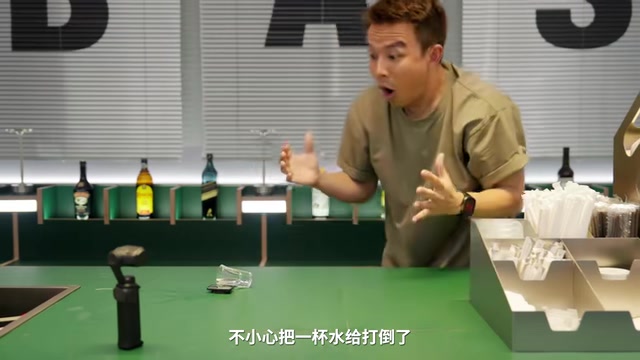
The detachable screen has its own built-in battery, providing approximately one hour of independent power. It's essentially a video transmission module that integrates all body functions, including monitoring, tracking, and even audio control. This is incredibly practical for users who need to step away from the camera while vlogging.
What's even more interesting is that Insta360 uses a WiFi + Bluetooth connection scheme, which means you can remotely power on the Luna Ultra via the detachable screen even after it's been turned off. Imagine this: the camera is set up outside your tent, and you can freely control the power on/off while lying inside. It's a genuinely thoughtful use case.
Limitations of the Detachable Screen
That said, there are some caveats to be aware of:
- Due to the exposed electronic contact points, it's theoretically not waterproof
- Video transmission starts to stutter beyond approximately 10 meters
- The UI frame rate also drops when the screen is detached
So it's better suited for close-range control rather than long-distance video transmission.
Tracking: Industry-First Multi-Person Tracking
Thanks to Insta360's technical expertise accumulated from conference gimbal cameras, the Luna Ultra's tracking capability is a major highlight. A long press on the joystick initiates subject recognition, and it supports an industry-first multi-person tracking feature.
In a two-person conversation scenario, traditional gimbal cameras would lock onto only one person, resulting in unbalanced framing. The Luna Ultra can find an appropriate midpoint between two people, making it ideal for walk-and-talk interview scenarios.
However, when following subjects at telephoto focal lengths, there's still a chance of losing the subject if they move too quickly; framing can also drift when tracking smaller subjects. Additionally, the gimbal still has axis-hitting issues — the range of motion is inconsistent between left and right sides, which can be triggered during rapid panning.
Image Quality: A Serious Contender with Leica Backing
Photo Quality: Compact Camera Level
Both lenses on the Luna Ultra are co-designed with Leica. When the 4:3 Ultra-Clear mode is enabled, resolution reaches 37 megapixels. In testing, the optical quality is genuinely impressive — high resolution paired with excellent optical design produces sharp, crisp images that are noticeably superior to smartphones.
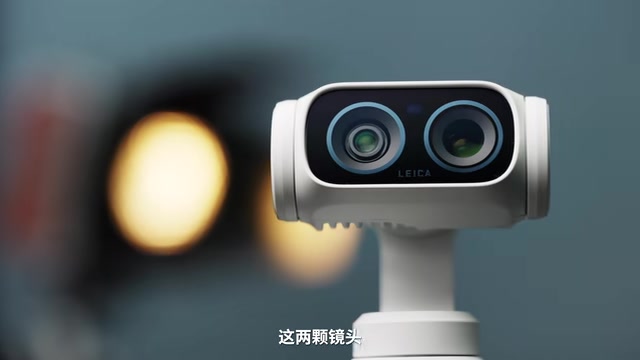
The 60mm telephoto lens has a minimum focusing distance of only about 15 centimeters, easily producing shallow depth-of-field macro shots — perfect for unboxing videos, food photography, and product detail shots. The color tuning is pleasing, and combined with various Leica color filters, the overall look is quite appealing.
However, note that Ultra-Clear photos require 3–6 seconds of processing time, during which no operations can be performed — not ideal for capturing fleeting moments. There's also a color discrepancy between the preview and the actual photo (Insta360 says this will be fixed by launch). Overall, photo quality reaches compact camera level and can even surpass some compact cameras, though there's still a noticeable gap compared to mirrorless cameras.
Video Quality: 8K Recording and the iLog Curve Breakthrough
The Luna Ultra supports 8K 30fps recording — a unique capability in this category. It also supports 4K 120fps slow motion, though it lacks DJI's 4K 240fps spec.

On the professional side, the biggest breakthrough is that the iLog curve is finally usable — at 4K 30fps and ISO 400, it achieves approximately 14 stops of dynamic range, supports 10-bit 4:2:0 color depth, and has received ASUS certification. This should be Insta360's first camera capable of shooting 10-bit 4:2:0 Log — previous models were limited to 8-bit 4:2:0 due to processing power constraints, making this a significant milestone.
However, Log mode requires careful exposure control. Noise is noticeable in low light, especially at 4K 60fps and 8K 30fps. There's currently no noise reduction adjustment toggle either — an area where DJI performs better.
The rolling shutter (jello effect) in 8K mode is more pronounced than in 4K, but in everyday use, as long as you avoid overly fast movements, the impact is minimal. For night shooting, the Luna Ultra supports a 4K 60fps night mode, which is better than DJI's 4K 30fps.
Accessory Ecosystem: Rich and Creative
Audio System: Mic Pro Wireless Microphone
The body features a cleverly designed microphone windscreen mount that can directly connect to the Mic Air or the newly released Mic Pro without a receiver.
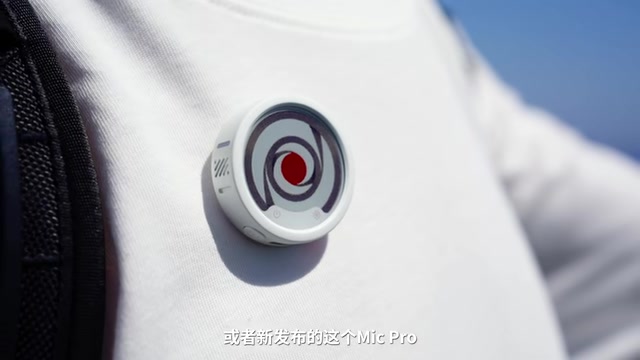
The Mic Pro has some clever design touches: the oversized brand logo has been replaced with an e-ink display that can show custom images; it features a matrix audio capture system with three built-in microphone units; and it supports 32-bit float audio, ensuring sound never clips.
Other Useful Accessories
- First-Person Head Mount Module: Worn like headphones — the direction your head turns is the direction the gimbal follows, perfect for immersive first-person perspectives
- Battery Grip: 1.5 Wh capacity, adding 55% more battery life; compact design, though the built-in tripod at the bottom is a bit too small
- Fill Light: Charges independently and doesn't draw power from the camera body
- Protective Cases: Available in a magazine-clip quick-release style and a compact long-term mount style
Heat Dissipation and Battery Life Testing
Under conditions of 24°C room temperature, continuous 4K 60fps recording with WiFi enabled:
- The bare unit lasted about 1 hour before showing an overheating warning
- With the battery grip attached, it ran for about 2 hours until the battery was depleted, with no overheating
Daytime heat dissipation performance meets expectations, but in low-light scenarios where the chipset works harder, heat buildup is more noticeable and overheating occurs sooner.
Conclusion: Luna Ultra vs. DJI Pocket — Which Should You Choose?
As Insta360's debut product in the handheld gimbal camera space, the Luna Ultra's level of completeness is impressive. The detachable screen design, multi-person tracking, Leica optics, 10-bit Log curve, and 8K recording — these differentiating features form the core of its competitive edge against the DJI Pocket.
Reasons to choose the Luna Ultra:
- Superior Leica optics and sharper image quality
- Innovative detachable screen with video transmission
- A unique and rich accessory ecosystem
- Multi-person tracking capability
Reasons to choose the DJI Pocket:
- More mature noise reduction algorithms
- 4K 240fps slow motion
- A more refined Log shooting experience
Competition drives progress. Insta360 didn't simply copy existing solutions — instead, it brought its own differentiated thinking to the table, and that's always a win for consumers.
Related articles

Disaster and Glory of the Apollo Program: The History We Must Revisit Before Returning to the Moon
From the fatal Apollo 1 fire to Apollo 8's daring lunar orbit to Apollo 11's successful landing—revisiting the disasters, fears, and compromises of the Apollo program and their lessons for today's return to the Moon.

Netflix Trust Exercise Turns Into Firing Trap: Where Are the Boundaries of Corporate Trust?
A Netflix employee was fired after sharing private info in a trust exercise. We analyze the risks of corporate trust exercises and how employees can protect themselves.

AMD CDNA5 Architecture Deep Dive: Technical Evolution and the AI Computing Competition Landscape
Deep analysis of AMD's CDNA5 architecture covering Chiplet packaging upgrades, HBM memory evolution, and low-precision compute optimization, examining how AMD challenges NVIDIA's AI chip dominance.