interviewing.io Alternatives: Choosing AI Mock Interviews by Budget

interviewing.io is too expensive—pick a mix of AI and human mocks by budget tier.
This article addresses interviewing.io's high price of $179+ per session by sorting alternatives by budget tier. The free tier includes interviewing.io's official AI Interviewer and Aced peer practice (5 per month), though depth is limited. The $20 tier features AI voice mocks like DevInterview.AI (the author's own product), offering unlimited coding, system design, and behavioral rounds—great value but no substitute for human judgment. Human mocks start around $159 (DesignGurus), with IGotAnOffer at roughly $100–250. The conclusion: a phased combination—build volume with low-cost methods first, then invest in one human calibration before onsite, and verify the latest prices before buying.
The mock interview platform interviewing.io has long been the gold standard for "real engineer interviews," but its pricing—starting at $179 per session—is hard for job seekers who need extensive practice to afford. This article sorts out alternatives by budget tier, based on prices verified on each platform's official website in October 2026. Full disclosure: the author developed DevInterview.AI, which will be clearly labeled below.
Free Tier: Start with the Official AI and Peer Practice
If your budget is zero, you can start with interviewing.io's own AI Interviewer. According to its website, it offers free, FAANG-style coding and system design mock interviews with feedback afterward. The site doesn't explicitly state whether it supports voice conversation or code execution, so it's worth trying once to see how well it fits.
Another free option is peer mock interviews on Aced (formerly Exponent)—Pramp's sessions have been migrated there. The system matches you with another candidate, and you interview each other and exchange notes. Free accounts get 5 sessions per month.
The trade-off is straightforward: the interviewer is another job seeker, and each session requires scheduling coordination. Based on feedback from multiple job-seeking bloggers on Bilibili and YouTube, peer practice helps with process familiarity but rarely delivers the depth of follow-up questions a senior interviewer would.
FAANG-style refers to mock interviews whose difficulty, scope, and scoring criteria mirror the real interview processes at leading tech companies like Facebook (Meta), Amazon, Apple, Netflix, and Google. This type of practice typically covers algorithms and data structures, system design, and behavioral rounds (such as Amazon's Leadership Principles), emphasizing writing code while explaining your thinking on a whiteboard or shared editor, and handling interviewer follow-ups and edge-case tests.
The $20/Month Tier: The Sweet Spot for AI Voice Mock Interviews
Around $20/month is currently the most competitive price band for AI mock interviews, and DevInterview.AI is designed for exactly this (again: this is the author's own product). It offers unlimited real-time voice interviews: a 30-minute coding round (with a runnable code editor), a 45-minute system design round (canvas-based), and a 30-minute behavioral round. Coding and system design are customized to your target company and level, the behavioral round is customized to your level, and each round ends with a scored report including a hire recommendation. The interviewer talks, asks follow-ups, and challenges your choices—but won't give you the answers directly.
The first interview is free with no card required; afterward it's $19.99/month, or $99.99 annually—cheaper than a single interviewing.io session. Its official reviews page publicly discloses all historical ratings.
The shortcomings are equally clear: it's an AI, not a senior engineer who has sat on a hiring committee. This is the shared boundary of all AI mock interview tools—you can practice process and communication, but a human interviewer's in-the-moment judgment is hard to fully replicate.
The system design round is an interview stage for mid-to-senior engineers, requiring an architecture proposal for an open-ended problem (such as designing a URL shortener or chat system) in about 45 minutes. Canvas-based answering means candidates use block diagrams, sequence diagrams, and text annotations instead of code to demonstrate trade-offs around scalability, consistency, caching, database selection, and failure recovery. Scoring typically focuses on requirement clarification, capacity estimation, component decomposition, and rationale for trade-offs rather than a single correct answer.
Want a Human but Budget Under $179
DesignGurus offers fixed-price 60-minute system design mocks with interviewers from FAANG+: $159 (originally $199), or $215 (originally $269) if you specify an interviewer from your target company. If system design is your biggest worry, $159 buys you a human expert—less than a single interviewing.io session.
IGotAnOffer lets you pick a calibrated interviewer for your target company and role. One credit is $50, and a coach charges 2 to 5 credits per hour (a 45-minute mock plus 15 minutes of feedback), roughly $100 to $250. The low end is below interviewing.io, the high end above it. Prices for both platforms were verified on their respective official websites.
A calibrated interviewer refers to a real interviewer whose company, level, and interviewing role closely match the candidate's target, and who can score according to the target company's actual rubric. Compared with generic mocks, a calibrated interviewer knows the company's preferred question types and focus areas better, and their feedback is closer to real hiring decisions. This is also why their per-session price is usually higher than that of ordinary mock interviews.
When interviewing.io Is Still Worth Paying For
One to two weeks before a real onsite, doing a mock with an experienced interviewer (ideally from your target company) is worth $179 or even more—if you can afford it. What's not worth it is using $179 sessions to build a skill that requires dozens of repetitions. Build volume with low-cost methods first, then do one calibrated session.
This approach fits into a more complete plan: learn patterns on NeetCode, learn system design on Hello Interview, practice speaking on DevInterview.AI, and finally (entirely optional) do one real human session on interviewing.io. The full 8-week version is available on its comparison page.
Cross-Verification and Buying Advice
Combining the platforms' official websites and public reviews, a few points of consensus emerge: the free tier is mainly interviewing.io's AI Interviewer and Aced peer practice; the $20 tier of AI voice mocks is currently the most cost-effective way to build volume; and the lowest price for human mocks is around $159 (DesignGurus). The main disagreement is whether AI mocks can replace human calibration—supporters argue that voice follow-ups are close enough to real pressure, while opponents (including some job-seeking community discussions) argue that AI cannot simulate a hiring committee's holistic judgment. My advice is a phased combination: first use AI and peer practice to get in enough "speaking reps," then invest in one human session at key milestones. All prices are as of each platform's official website on October 19, 2026; verify again before purchasing.
The hiring committee is the collective review step in hiring decisions at large tech companies, typically composed of senior engineers and managers from across teams, who make the final call by weighing written interviewer feedback, candidate background, and role requirements. Therefore, a high score in a single mock interview doesn't equal an offer—candidates also need to perform consistently across multiple interviews and get aligned positive evaluations from different interviewers.
Related articles
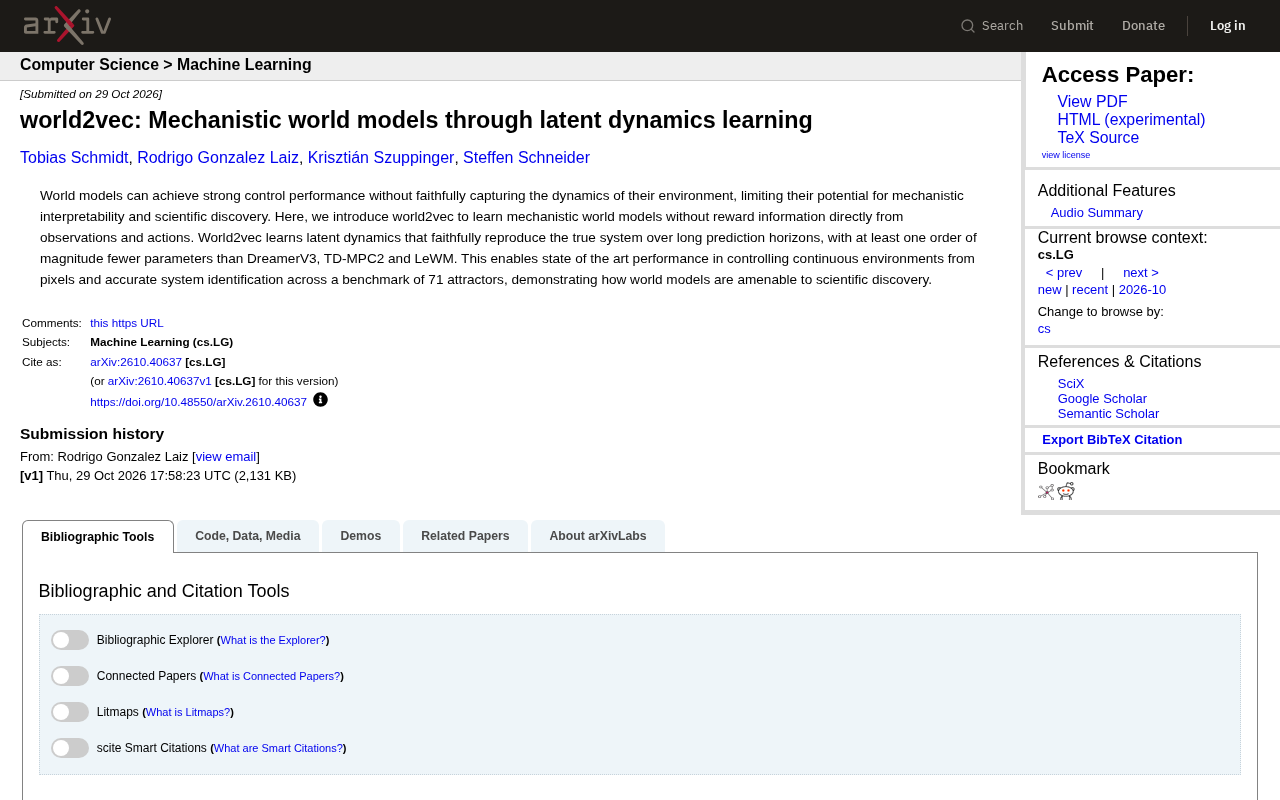
world2vec: Building Mechanistic World Models with Latent Dynamics Learning
world2vec proposes a reward-free method for learning mechanistic world models via latent dynamics, faithfully reproducing systems over long horizons with at least an order of magnitude fewer parameters than DreamerV3, TD-MPC2, and LeWM, and achieving accurate system identification on 71 attractor benchmarks.

A New KL-DRO Paradigm: Adaptive Scenario Generation Around a Learned Density Model
KL-DRO research proposes centering the KL ball on a learned density model instead of the empirical distribution, with adaptive scenario generation guiding sampling toward the worst case. Experiments show lower cost under distribution shift when records are scarce and the model can extrapolate, with comparable in-distribution cost.

ODE Samplers for Discrete Diffusion Models: Exponential Residual Flows Accelerate Generation
Discrete diffusion models lack deterministic ODE sampling? This article introduces Exponential Residual Flows (ERFs), which introduce continuous residual variables per token to construct piecewise ODEs for deterministic sampling and support consistency distillation acceleration. Superior to prior methods on code and text generation tasks.