iPhone Air Deep Dive: The Trade-offs and Thinking Behind Extreme Thinness

A deep dive into iPhone Air's design trade-offs between extreme thinness, battery life, and camera performance.
This article provides an in-depth analysis of iPhone Air from three dimensions: design philosophy, technical trade-offs, and market positioning. It explores how Apple balances extreme thinness against battery capacity, camera capabilities, and thermal management, while examining how this product fills a gap in Apple's lineup using the proven "Air" brand strategy.
Introduction: When Apple Redefines "Thin and Light"
From MacBook Air to iPad Air, the "Air" suffix has become virtually synonymous with Apple's thin-and-light philosophy. Apple's "Air" brand originated with the first-generation MacBook Air in 2008, when Steve Jobs pulled the laptop from a manila envelope in what became an iconic moment in tech history. Later, the iPad Air (2013) extended this concept to tablets. "Air" in Apple's product philosophy represents pushing portability to the extreme while maintaining core functionality. Now this philosophy has reached the iPhone lineup — and the arrival of iPhone Air has sparked widespread discussion across the industry and among users. This isn't just a new model; it represents Apple's fundamental re-examination of the smartphone form factor.
The central question around iPhone Air has always been: what does extreme thinness bring to users, and what price must be paid? This article provides an in-depth analysis from three dimensions: product design logic, technical trade-offs, and market positioning.
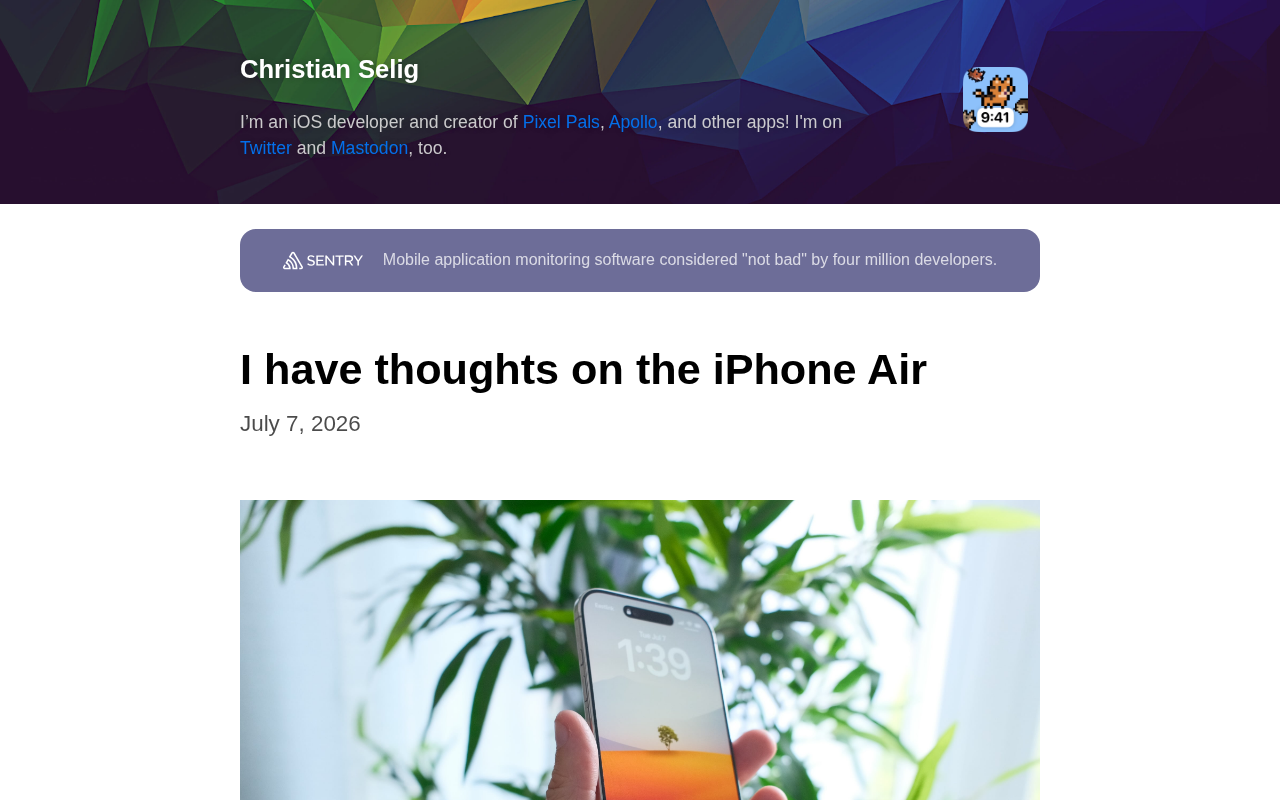
iPhone Air's Design Philosophy: A Thin-First Product Logic
Built for an Extreme Form Factor
iPhone Air's biggest selling point is undoubtedly its ultra-thin body design. Apple has always believed that outstanding industrial design can transcend numbers on a spec sheet, translating directly into an intuitive feeling when users hold the device. A thinner, lighter body not only improves portability but also establishes a premium product identity through visual and tactile impressions.
However, thinness is never free. Within the limited internal space of the body, engineers must strike a precise balance between battery capacity, thermal management, camera modules, and various sensors. Modern smartphones have reached an extremely sophisticated level of internal space utilization, primarily employing technologies such as SiP (System in Package) to integrate multiple chips in a single package, flexible printed circuits (FPC) replacing traditional rigid PCBs to accommodate curved spaces, and stepped battery designs to fill irregular spaces. Every millimeter reduced in thickness means a complete redesign and compromise of internal stacking solutions — engineers may need to redesign antenna clearance zones, re-plan thermal pathways, or even change connector types. Apple experienced the "Bendgate" incident during the iPhone 6 era due to the pursuit of thinness, demonstrating that structural rigidity is also a critical factor in thin design.
Who Is iPhone Air For?
iPhone Air is clearly not designed for power users who demand peak performance. It targets consumers who value aesthetics, portability, and everyday user experience over hardcore specifications. These users are willing to pay a design premium and can accept compromises in certain features.
iPhone Air's Technical Trade-offs: What's the Cost of Thinness?
Can Battery Life Be Satisfactory?
The most closely watched point of debate centers on battery life. A thinner body typically means a smaller battery capacity, which is an unavoidable pain point in an era where smartphones have become the hub of daily life. Apple needs to rely on improved chip efficiency and system-level optimization to compensate for the physical space constraints.
Specifically, Apple's custom A-series chips are based on ARM architecture and have consistently led the industry in power efficiency in recent years. Taking the latest process node as an example, power consumption can be reduced by approximately 30-35% compared to the previous generation at equivalent performance levels. Furthermore, Apple's battery optimization relies on fine-grained power management at the iOS system level, including background app freezing mechanisms, adaptive refresh rate (ProMotion technology dynamically adjusting between 10Hz-120Hz), and coprocessors offloading the main processor. These hardware-software synergies enable Apple to achieve acceptable battery life with relatively small battery capacities.
But this raises a deeper question: in an era of pervasive battery anxiety, are users truly willing to sacrifice battery life for a few millimeters of thickness? This is perhaps the point iPhone Air most needs to prove to the market.
Camera and Thermal Compromises
Beyond the battery, camera modules and thermal management are equally challenging for thin designs.
On the imaging front, one of the core metrics of smartphone camera systems is sensor size — larger sensors mean larger individual pixel areas, capturing more light and performing better in low-light conditions. Current flagship phones typically use 1/1.3-inch or larger main camera sensors, combined with OIS (Optical Image Stabilization) modules and multi-element lens groups, resulting in total camera module thicknesses typically between 7-9mm. This is why modern phone cameras universally protrude — the body thickness can no longer fully accommodate these components. For iPhone Air's pursuit of extreme thinness, this likely means adopting smaller sensors or more compact lens designs, making certain concessions in imaging capability.
On the thermal front, smartphone cooling solutions have evolved from graphite sheets to vapor chambers to multi-layer three-dimensional thermal architectures. Vapor chambers use internal liquid evaporation-condensation cycles to rapidly conduct heat, far more efficiently than traditional copper pipes or graphite sheets. However, vapor chambers themselves require a certain thickness (typically 0.3-0.6mm) and need sufficient spreading area to work effectively. A thinner body not only limits vapor chamber dimensions but also shortens the heat conduction distance from the SoC to the body surface, potentially causing users to feel more noticeable localized heat concentration. Under sustained high-load scenarios like gaming or video recording, thermal bottlenecks may trigger processor throttling, affecting performance.
Apple's trade-offs in these areas reflect a clear understanding of product positioning — iPhone Air pursues a balanced and elegant everyday experience, rather than pushing every single metric to the extreme.
iPhone Air's Market Positioning: Filling a Product Line Gap
A Differentiated Product Strategy
From a product matrix perspective, iPhone Air fills the gap between the standard and Pro series, offering users a new choice with "design" as its core selling point. Apple's multi-tier product strategy has already been validated in the Mac lineup: MacBook Air serves lightweight use and portability needs, MacBook Pro targets professional creators, and the two coexist without cannibalizing each other. The same is true in the iPad lineup — iPad Air is positioned between the base iPad and iPad Pro, offering near-Pro experience at a moderate price. This "Good-Better-Best" pricing and positioning strategy has been proven in consumer electronics to effectively raise average selling price (ASP) and expand total addressable market (TAM). The introduction of iPhone Air means Apple is fully transplanting this mature strategy to its most important revenue source — the iPhone product line.
Using the established "Air" brand suffix to communicate product philosophy also reduces the cost of market education. When consumers see "Air," they immediately associate it with thin and elegant. This differentiation strategy helps Apple cover a broader range of user needs while avoiding homogeneous competition within its product line.
Challenges Facing iPhone Air
Of course, this strategy also faces challenges. How to help users understand and accept performance compromises made for design is a problem Apple must solve. History has no shortage of products that sacrificed practicality in pursuit of thinness, with varying market responses. For example, the 2016 MacBook (12-inch) pushed thinness to the extreme but was eventually discontinued due to insufficient performance and too few ports. Meanwhile, MacBook Air, after years of stagnation, was revitalized with the M1 chip, proving that thinness and performance aren't always at odds.
Whether iPhone Air can succeed hinges on whether Apple can precisely grasp target users' real needs and find the sweet spot between thinness and practicality.
Conclusion: The Form Factor Innovation Direction iPhone Air Represents
iPhone Air's value may not lie in whether it's a "perfect" phone, but in the fact that it represents Apple's determination to continuously explore smartphone form factors. In an increasingly homogenized market, having the courage to make trade-offs with design at the core is itself a form of boldness.
For consumers, iPhone Air offers a clear choice: if you value portability and design, and are willing to accept the corresponding compromises, it may have been made just for you. For the industry as a whole, this device reminds us that smartphone evolution has never been just about stacking specs — it's about creating delightful product experiences within countless constraints.
Related articles

Poison-Resistant Concept Anchoring: A New Approach to Defending Against AI Data Poisoning
Deep dive into Poison-Resistant Concept Anchoring, defending against data poisoning via signed anchors and bounded updates. Experiments show 62% poison isolation with 0% false rejection rate.

Hungarian Algorithm Explained: Principles, Complexity, and Engineering Implementation Guide
In-depth explanation of the Hungarian Algorithm: core principles, O(N³) time complexity advantages, and engineering implementation. Covers assignment problem definition, step-by-step algorithm walkthrough, Python/C++ libraries, and applications in multi-object tracking and resource scheduling.
OpenAI's First Enterprise AI Report: H…
OpenAI's First Enterprise AI Report: How ChatGPT Is Changing the Way Organizations Work
OpenAI's first enterprise AI report reveals three key traits of ChatGPT Enterprise adoption: the shift from novelty to necessity, writing and coding as top use cases, and data governance as a core prerequisite.