iPhone Duo Screen Cracking: Hinge Design Defect Becomes the Focus
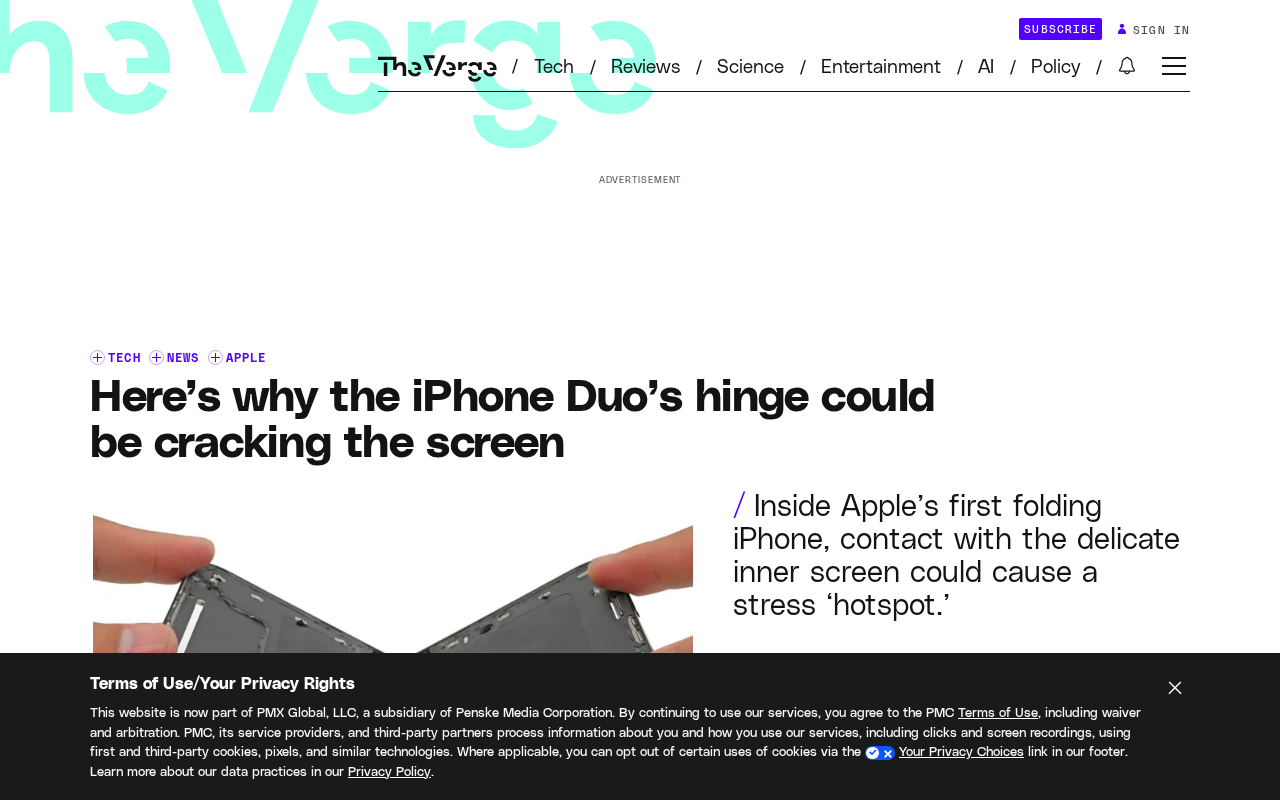
Multiple iPhone Duo inner screens cracked above the hinge within hours of launch, raising reliability concerns.
Within hours of the iPhone Duo foldable phone going on sale, social media saw multiple reports of inner screen cracking, with cracks highly concentrated in the crease area above the hinge, triggering widespread questions about the hinge design. Starting from the stress mechanism of repeated bending of foldable inner screens, the article analyzes that the failures may stem from systemic issues such as hinge support structure deviation, tolerance control, material toughness, and assembly quality control. Since some failures occurred during light use or even out of the box, the incident is unlikely to be an isolated case. Apple has not yet responded publicly, and how it handles the matter will directly affect the product's reputation and consumer confidence in foldable screens. The article suggests potential buyers wait and see.
Incident Recap: Screen Failures Surface Right After Launch
According to RSS sources, the iPhone Duo officially went on sale last Friday, but within just a few hours, social media was flooded with user reports claiming that the inner screen of this brand-new foldable phone had already been damaged. Judging from the circulating photos, the failure pattern is highly consistent: cracks or abnormal lines appear in the middle of the screen, just above the hinge, with multiple lines spreading outward. This concentrated outbreak of quality issues has quickly thrust the iPhone Duo's hinge design into the spotlight.
Why Is the Hinge Becoming a Screen Killer?
The inner screen of a foldable phone must bend repeatedly, and its reliability depends heavily on the precision design of the hinge. Judging from the images shared by users, the cracks are concentrated in the crease area directly above the hinge, suggesting that the problem may stem from uneven stress applied to the screen by the hinge during opening and closing. When the hinge's support structure or buffering mechanism deviates, microcracks are likely to form near the bending point and then expand into visible lines or fractures.
The Triple Challenge of Design, Materials, and Quality Control
Although there is no official technical analysis yet, based on historical experience in the foldable screen industry, such problems usually point to three areas: tolerance control of the hinge's mechanical structure, material toughness of the screen protective layer, and quality control consistency during assembly. As Apple's first foldable product, the iPhone Duo's hinge solution has attracted much attention, and any design or manufacturing oversight may be amplified in mass-production units.
Reliability validation metrics commonly used in the foldable screen industry include bend life testing (such as 200,000 open-close cycles) and drop testing, but laboratory conditions can hardly fully reproduce the complex stress states of real-world use. In terms of tolerance control, a hinge consists of dozens or even hundreds of precision parts, and any dimensional deviation in a single part will accumulate after assembly, causing uneven stress on the screen. In terms of material toughness, although ultra-thin flexible glass (UTG) improves hardness, there is still a trade-off between its impact resistance and polymer protective films. Quality control consistency involves processes such as adhesive bonding and foreign matter control; tiny particles may become stress concentration points during bending and induce screen failure.
Real User Experience: Broken Right Out of the Box
Photos on social media show that some failures occurred before users had subjected the device to intensive use, which means the problem may not be an isolated case or human damage but may be directly related to the product's factory condition. For a high-end foldable device, screen cracks appearing right out of the box will undoubtedly severely undermine consumer confidence.
The reason the inner screen of a foldable phone is so sensitive to the hinge lies in its structure, which is completely different from that of a traditional bar phone screen. Foldable screens typically use flexible OLED panels composed of multiple organic light-emitting layers, thin-film encapsulation layers, and polymer protective layers, with an overall thickness of only about tens of micrometers. During bending, the outer side of the screen is stretched and the inner side is compressed, with stress being lowest near the neutral layer. If the hinge's bending radius is too small or the support surface is uneven, local stress will far exceed the material's tolerance limit, and microcracks will initiate from the crease and propagate along the stress direction. Therefore, the hinge's core function is not only to enable opening and closing but also to provide the screen with a bending track of uniform curvature and controllable stress.
Industry Perspective: Foldable Screen Reliability Still Needs Verification
Since the development of foldable screen technology, screen creases and hinge durability have always been the pain points users care about most. The iPhone Duo incident once again reminds the industry that the hinge is not only a mechanical component but also a key link in screen reliability. If the hinge design cannot evenly distribute bending stress, the risk of screen cracking will be difficult to eliminate.
Apple's Silence and Subsequent Actions
As of the original article's publication, Apple had not made a public statement on the matter. For Apple, how it handles the first batch of users' screen failures will directly affect the iPhone Duo's market reputation. If the problem is indeed a design defect, a large-scale recall or repair program may be unavoidable; if it is an isolated quality control issue, the scope of the failure must be clarified as soon as possible and a solution provided.
In the consumer electronics industry, manufacturers' typical path for handling batch quality issues includes: first collecting failure samples through after-sales channels for failure analysis (FA) to distinguish design defects, manufacturing deviations, and human damage; if a systemic defect is confirmed, they may initiate extended warranty, free repair, or recall programs. Apple has historically adopted extended warranty or discounted repair programs for incidents such as the butterfly keyboard and iPhone battery throttling. For new form-factor products like foldable screens, first-batch user feedback data is particularly critical; whether the failure rate exceeds expectations and whether cracks are concentrated in the same location are both important bases for judging the nature of the problem.
Implications for Consumers
For users considering a foldable phone, the iPhone Duo incident provides a realistic reference: the reliability of foldable screens still needs time to be verified, especially in the collaborative design of the hinge and screen. Before an official conclusion is reached, potential buyers may want to wait and see, paying attention to subsequent user feedback and Apple's official response.
Form-factor innovation in foldable screens is exciting, but reliability is the prerequisite for it to go mainstream. The iPhone Duo's hinge controversy may become Apple's first mandatory lesson on the foldable screen track.
Related articles

Google's Satellite AI Server Reaches Orbit: Gemma Model Generates First Reply in Space
Google's TPU-equipped satellite powers up in orbit, with the onboard Gemma 4 model generating the first reply from space. This article analyzes the technical path, real-world constraints, and implications for edge computing and satellite remote sensing.
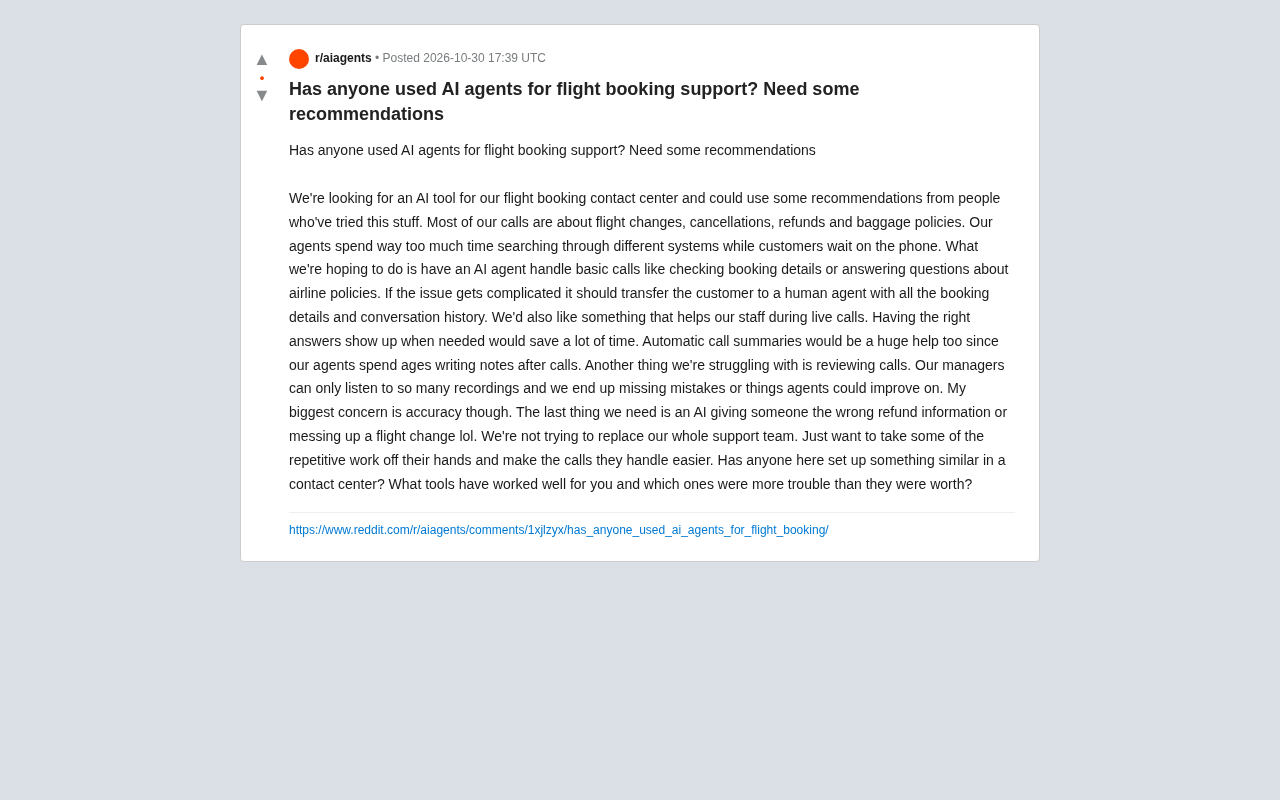
AI Agents for Flight Booking Customer Support: Real Needs and Implementation Challenges
Starting from a real Reddit question, this article breaks down four needs for introducing AI Agents into flight booking call centers: basic Q&A, agent assist, call summarization, and quality inspection, and analyzes accuracy concerns and handoff boundary design.

Vercel Unifies Runtime Cache: Data Cache Merges into Runtime Cache
Vercel merges Data Cache into Runtime Cache, unifying storage quotas and billing for Next.js fetch cache, unstable_cache, getCache, and use cache: remote. Pro and Enterprise projects get more storage, and cache reads/writes are now billed at Runtime Cache pricing.