Is Claude Fable 5 Real? Exposing the AI Reseller Service Scam

Claude Fable 5 doesn't exist — it's a fabricated model used to promote unauthorized AI wrapper services.
A viral video falsely claims Anthropic released "Claude Fable 5," but this model doesn't exist. The promotion is designed to funnel users to unauthorized third-party API relay services that pose data security, compliance, and financial risks. This article explains how to verify AI model claims through official sources and outlines legitimate ways to access Claude.
Background
Recently, a video appeared on Bilibili (China's major video platform) claiming that "Anthropic has released its latest Claude Fable 5 model" while promoting a third-party platform offering "direct domestic access with unlimited usage," along with a so-called "3-day trial redemption code." The video claimed that Fable 5 "comprehensively surpasses Opus 4.8 and GPT 5.5" and supports a 1-million-token context window.
Tokens are the basic units that large language models use to process text, roughly corresponding to 0.5–1 Chinese characters or 0.75 English words. Behind this lies "tokenization" — a core preprocessing step. Mainstream models generally use Byte Pair Encoding (BPE) or SentencePiece algorithms to segment raw text into token sequences. The core idea behind BPE is to start from a single-character vocabulary and repeatedly merge the most frequently occurring adjacent character pairs in the corpus, ultimately producing a balanced scheme that optimizes both vocabulary coverage and vocabulary size. SentencePiece builds on this by supporting unsupervised training without requiring pre-segmentation by spaces, making it more friendly to languages like Chinese and Japanese that don't use spaces. Different tokenization schemes directly affect how many tokens a given piece of text is encoded into, which in turn affects API call costs and the actual usable capacity of the context window. It's worth noting that the choice of tokenization scheme also affects "fairness" across languages: if the same semantic content consumes more tokens in a particular language, then less information can fit within the same context window — an important cost consideration for Chinese users working with models primarily trained on English corpora.
The context window determines the maximum amount of text a model can "remember" and process in a single conversation. Its physical limitation stems from the computational complexity of the self-attention mechanism in the Transformer architecture: computation scales quadratically with sequence length, meaning that expanding the context from 200,000 to 1 million tokens would theoretically increase computation by approximately 25x, requiring specialized engineering optimizations like sparse attention and sliding window attention to complete inference within acceptable latency. Sparse attention reduces computation by having each token attend to only a subset of the sequence rather than all tokens; sliding window attention restricts the attention range to a local window while using a small number of global attention tokens to maintain long-range dependencies. Beyond these, the industry is also exploring alternative architectures like Linear Attention and state-space models (such as Mamba) that fundamentally change the complexity curve, attempting to reduce computational complexity to linear without sacrificing long-range modeling capability. The "1 million token context" claimed in the video isn't entirely far-fetched — Google's Gemini 1.5 series has achieved 1 million or even 2 million token ultra-long contexts, while Anthropic's official Claude 3 series supports up to 200,000 tokens. But this actually proves that using "1 million tokens" as a selling point isn't unique at all, and certainly doesn't require a fabricated "Fable 5" model to achieve it. Exaggerating or fabricating context window parameters is a common number-dressing tactic in AI marketing.

However, upon verification, Anthropic has never released a model called "Fable 5." This is a textbook case of false advertising in the AI space, and all AI users should stay vigilant.
Why Claude Fable 5 Is Misinformation
The Model Name Completely Violates Official Naming Conventions
Anthropic is an AI safety company co-founded in 2021 by siblings Dario Amodei (former VP of Research at OpenAI) and Daniela Amodei (former VP of Policy at OpenAI), with a core team largely drawn from OpenAI. The company's central mission is AI safety research, and it has introduced important research directions such as "Interpretability" and "Constitutional AI."
Anthropic's founding background and its safety research philosophy are closely intertwined — this background directly determines the rigor of its model release process and serves as an important basis for identifying false release claims. When Dario Amodei and others left OpenAI in 2021, one of the core disagreements was about the prioritization of AI safety — they believed that on the path to more powerful AI systems, safety research should proceed in parallel with capability research rather than being an afterthought. Anthropic subsequently introduced the Responsible Scaling Policy (RSP), which sets corresponding safety evaluation thresholds for models at different capability levels; only models that pass evaluation can proceed to training at larger scales. The RSP categorizes model capabilities into AI Safety Levels (ASL): ASL-1 corresponds to basic models with no significant harm risk, ASL-2 corresponds to current mainstream commercial models, and ASL-3 corresponds to high-capability models that may have potential for large-scale harm — for example, models that could provide substantive assistance in developing weapons of mass destruction — with each level requiring different intensities of safety testing and deployment restrictions.
This policy framework means that every model release must undergo a rigorous internal review process — including Red Teaming, third-party safety audits, and multiple layers of oversight from internal ethics committees. Red teaming is an adversarial evaluation method where a dedicated team plays the role of malicious users, systematically attempting to elicit harmful outputs from the model to discover security vulnerabilities; third-party audits bring in external organizations to independently assess model capability boundaries and potential risks, ensuring that internal evaluations don't have blind spots. This multi-layered review mechanism fundamentally dictates that Anthropic cannot quietly release an entirely new model series through unofficial channels — any claim that "Anthropic just released a new model" that has zero traces on official channels can be ruled out as false based on this policy framework alone.
Interpretability research attempts to understand the feature representations inside neural networks — Anthropic's "Dictionary Learning" research published in 2024 identified millions of interpretable features in large language models for the first time, and is considered a major milestone in the field of mechanistic interpretability. "Mechanistic Interpretability" refers to understanding a model's specific computational processes at the level of neural network weights and activations through reverse engineering — not just "what the model can do" but "why it does it that way." The dictionary learning method uses Sparse Autoencoders to decompose the model's high-dimensional internal activation vectors into a set of interpretable basis vectors (i.e., "features"), each corresponding to an identifiable semantic concept, such as specific person names, sentiment tendencies, or programming syntax structures. This research direction has profound implications for AI safety: only by understanding the model's internal reasoning mechanisms can we effectively detect and correct potentially harmful behavior patterns. Constitutional AI, on the other hand, uses a preset set of behavioral principles as a "constitution" for the model to self-critique during the reinforcement learning phase, thereby reducing dependence on human feedback annotation. This method has directly influenced the safety alignment training paradigm of the Claude model series. It is precisely this high regard for safety that makes Anthropic extremely cautious when naming and releasing models — every release is accompanied by detailed technical reports and safety evaluation documents, and they would never quietly launch an entirely new series through unofficial channels.
Their model naming system is highly consistent, which is itself a component of brand credibility. Major AI companies typically follow internally consistent naming logic: OpenAI uses the dual-track naming of GPT-N plus the o-series; Google DeepMind unifies under the Gemini brand with Ultra/Pro/Flash/Nano capability tiers; Meta's open-source series uses Llama plus numerical version numbers as its main line. Anthropic's Claude series has consistently maintained a "Claude + major version number + sub-model" structure — Haiku, Sonnet, and Opus correspond to poetry forms that are respectively concise and sharp, balanced and elegant, and grand and substantial, carrying clear cultural metaphors. This naming strategy is not arbitrary: the three tiers form a gradient in parameter scale, inference speed, and API pricing, allowing users to flexibly choose based on task complexity and cost budget, while the unified poetry metaphor reinforces the brand's coherence and recognizability. The Claude series has evolved from generation 1 to the present, with the Claude 3.5 series released in 2024 further refining this system. Any claim that suddenly introduces a completely new English word (like "Fable") as a series name seriously deviates from this industry convention and serves as the first filter for identifying misinformation.
The "Opus 4.8" and "GPT 5.5" mentioned in the video are likewise nonexistent model version numbers — entirely fabricated comparison targets.
Compliance Issues Behind "Direct Domestic Access"
Anthropic's official services are currently not formally operating in mainland China. Any Claude service claiming to offer "no VPN needed, direct domestic login" is essentially a third-party wrapper (API relay) service.
The technical architecture of these "direct domestic access" Claude services typically consists of three layers: a front-end UI layer (website or app), a relay proxy layer, and an upstream API layer (Anthropic's official interface). Operators purchase Anthropic API quota on overseas servers, then forward domestic user requests to Anthropic servers through their own relay servers, ultimately returning responses to users. These services are not technically complex — operators only need to register a developer account, purchase API quota, and use open-source reverse proxy frameworks (such as one-api, new-api, etc.) to build the relay layer, enabling them to launch an "AI assistant" product within hours. These frameworks even come with built-in multi-model load balancing, billing systems, and user management features, significantly lowering the operational barrier. Notably, Anthropic's API Terms of Service explicitly prohibit commercial resale in unauthorized regions, meaning such relay services not only face domestic compliance risks but also violate the upstream service provider's usage agreements. Once abnormal traffic patterns are detected, accounts may be banned, causing service interruptions.
This chain means that all user input — including business plans, code, personal information, and other sensitive data — passes through third-party servers in plaintext. The relay architecture of wrapper services has a critical security blind spot: TLS encryption (the transport layer security protocol used by HTTPS) only protects transmission between the user and the relay server. On the relay server itself, request content is decrypted in plaintext, processed, and then re-encrypted for forwarding. This is fundamentally different from End-to-End Encryption (E2EE) — E2EE ensures that only the communicating parties can read the content, with intermediate nodes unable to decrypt it. In a relay architecture, the server operator is technically fully capable of logging, analyzing, and even selling all user conversation content. Additionally, some relay services cache conversation history on the server side to reduce latency, further increasing the risk of persistent data exposure. From a regulatory perspective, China's Data Security Law and Personal Information Protection Law have explicit provisions regarding cross-border data transfers — unauthorized cross-border transfers carry legal compliance risks, and users of such services are inadvertently participating in potentially illegal activities.
A more insidious risk is that some wrapper services employ a "model substitution" strategy: when users select a high-priced model, requests are actually routed to lower-cost open-source models (such as Qwen, DeepSeek, etc.). Users cannot tell the difference through conversation quality alone, as modern open-source models have capabilities quite close to commercial closed-source models — creating severe information asymmetry between the fees paid and the service received. From a compliance perspective, such services involve unauthorized cross-border data transfers within China, occupying a significant legal gray area. If the operator absconds or is shut down, users face not only data breach risks but also virtually no chance of recovering prepaid funds.
These services carry the following risks:
- Data security risks: All user input passes through third-party servers with no end-to-end encryption protection
- No service stability guarantee: Operations could cease at any time
- Payment traps: "Free trials" are often followed by exorbitant charges
- Questionable model authenticity: The model actually being called may not be the one advertised
Demo Content Doesn't Hold Up to Scrutiny
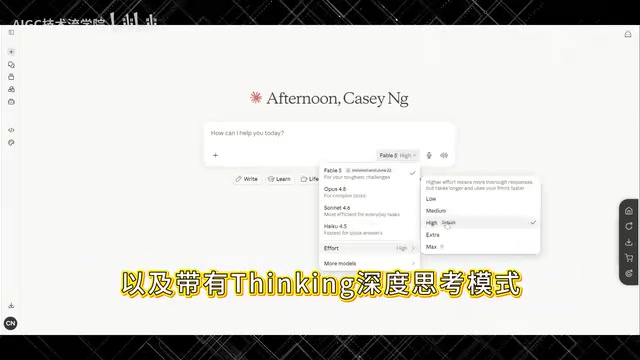
In the video, the model was asked to "introduce itself" and responded that it is "Claude Fable 5." But anyone familiar with large language models knows that the System Prompt is a core component of the LLM conversation architecture — it's injected by the developer or platform before the user conversation begins, used to set the model's role, behavioral guidelines, and response style.
In the standard Chat Completions API format, messages are divided into three roles: system, user, and assistant, with system messages occupying the highest priority position — models are trained to prioritize following instructions within them. The original intent of this design is to help developers build AI assistants with specific personalities and capability boundaries. However, precisely because commercial models are highly compliant with system messages, a wrapper platform only needs to include "You are Claude Fable 5" in the system prompt, and the model will faithfully present this identity when asked to introduce itself. This mechanism is technically known as "Persona Injection" and is a standard practice for building AI products — there's nothing inherently right or wrong about it. Many legitimate AI assistant products (such as enterprise internal knowledge base bots and customer service systems) rely on this mechanism to customize model personalities. The problem arises when operators use this mechanism to fabricate nonexistent model identities, turning it into a tool for deceiving users.
It's worth noting that System Prompt injection and "Prompt Injection Attacks" are two sides of the same technical mechanism: the former is proactively set by the platform, while the latter involves malicious users attempting to override or bypass safety restrictions in the system prompt through carefully crafted inputs. This security vulnerability currently has no perfect technical solution and remains an important research topic in LLM application security. The dangers of prompt injection attacks are particularly pronounced in multi-agent scenarios: when AI models are given the ability to call external tools, execute code, or access databases, attackers can embed malicious instructions in web content, documents, or emails to induce the model to perform unauthorized operations — such as stealing user data, sending phishing emails, or modifying system configurations. Some models (like Claude) will declare their inability to verify their own identity when pressed, but this protective mechanism can also be overridden by additional instructions in the system prompt. Therefore, having a model "introduce itself" to verify its true identity is technically meaningless. The truly reliable verification method is to call the official API directly and check the model identifier field in the response headers (e.g., model: claude-3-5-sonnet-20241022), or use the official model version query endpoint to programmatically confirm the actual model version being called.
Common Operating Tactics of AI Wrapper Services
Traffic Generation and Monetization Paths
These promotional videos typically follow a fixed playbook:
- Create urgency: "Just released," "First to integrate"
- Lower the barrier to entry: "No VPN needed," "Direct domestic login," "Free trial"
- Exaggerate actual capabilities: Showcase carefully curated demo cases
- Drive traffic to private channels: "Check the comments section," "Contact us immediately"

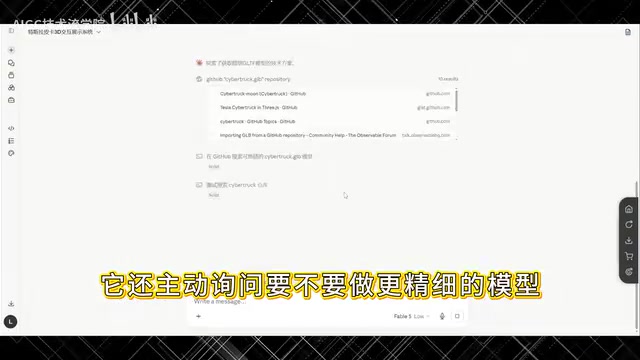
The Photoshop learning roadmap planning and 3D model generation features shown in the video can actually be achieved with similar results using existing Claude Sonnet or other mainstream models — none of it constitutes a "revolutionary breakthrough."
Technical Packaging to Enhance Credibility
The video mentioned a "deep effort" setting (from low to high, including a Thinking mode), which is actually imitating Claude's official Extended Thinking feature and effort parameter.
Extended Thinking represents the "Test-Time Compute Scaling" approach to improving LLM reasoning capabilities — investing more computational resources during inference to achieve higher-quality outputs, rather than relying solely on parameter scale during training.
To understand the significance of this approach, it needs to be placed in the historical context of LLM capability improvement. Traditional Scaling Laws, proposed by OpenAI researchers in 2020, revealed the power-law relationship between model performance and parameter count, training data volume, and compute — guiding the rapid expansion of large models over the past several years. However, as training costs approach their ceiling, test-time scaling has become a new frontier: improving output quality by having the model perform more "thinking steps" before answering. DeepMind's AlphaGo had already validated this approach's effectiveness in board games — Monte Carlo Tree Search is essentially a form of test-time compute scaling. Transferring this idea to language models gave rise to product forms like OpenAI's o-series and Anthropic's Extended Thinking, marking a paradigm shift in LLM capability improvement from "bigger models" to "smarter reasoning."
The core idea behind test-time compute scaling originates from the Chain-of-Thought (CoT) prompting technique: having the model explicitly reason step-by-step before giving a final answer can significantly improve solution quality for complex problems. The theoretical basis for this technical approach comes from an analogy to human cognition — the "System 1/System 2" framework in psychology posits that humans have both fast intuitive responses (System 1) and slow, deliberate reasoning processes (System 2); test-time compute scaling attempts to have models simulate the latter, engaging in deeper reasoning when time and compute allow. Anthropic has internalized this capability as a native model feature, providing a thinking parameter toggle at the API level, along with a budget_tokens parameter to set the maximum tokens the thinking process can consume. This parallels OpenAI's o1/o3 series "Reasoning Model" approach — the latter trains models through reinforcement learning to perform internal reasoning, achieving significant breakthroughs in mathematics, programming, and scientific reasoning tasks. Both approaches manifest as longer response latency and higher token consumption, but show significant advantages in mathematical proofs, multi-step code debugging, complex logical reasoning, and similar tasks.
Wrapper platforms packaging professional API parameters like budget_tokens into an "effort slider" UI design exploits users' cognitive ambiguity about official features, using visual similarity to establish false authority and leading users unfamiliar with technical details to believe they are using the official service or a more advanced version.
How to Identify False Claims in the AI Space
Step 1: Verify Official Information Sources
- Major model releases always come with official blog posts and technical reports
- Directly check Anthropic's official website (anthropic.com) announcement page
- Follow reliable AI industry media for cross-verification
Step 2: Recognize Common Scam Characteristics
- Using nonexistent model version numbers for performance comparisons
- Repeatedly emphasizing enticing words like "free" and "unlimited"
- Requiring private messages or comment sections to access usage instructions
- Video publication timing suspiciously close to the claimed "model release date"
Legitimate Ways to Use Claude
Currently, compliant ways to use Claude include:
- Official website: claude.ai (requires overseas network access)
- Official API access: Through Anthropic's official API
- Authorized partner platforms: Cloud service providers such as Amazon Bedrock and Google Cloud Vertex AI
For users in China, it is recommended to use Claude through legitimate cloud service providers' API interfaces. Amazon Bedrock and Google Cloud Vertex AI, as Anthropic's official cloud partners, offer Claude models on their platforms through formal authorization. Data processing follows each cloud provider's privacy agreements and compliance frameworks, offering higher credibility and stability compared to third-party wrapper services.
Both cloud providers operate Asia-Pacific data centers outside mainland China (such as Singapore and Tokyo), which can reduce access latency to some extent. Their enterprise-grade SLA (Service Level Agreement) terms explicitly specify service availability guarantees and incident response times, providing stronger legal protections for business users. In terms of features, Amazon Bedrock offers a "model invocation logging" function that allows enterprise users to audit the complete record of every API call — particularly important for users in heavily regulated industries like finance and healthcare. Google Cloud Vertex AI offers "Data Residency" options that allow users to specify the geographic region for data processing, further meeting regulatory requirements around data sovereignty. Additionally, both platforms support Private Endpoint deployment, allowing enterprises to access the API through dedicated private network connections, completely bypassing the public internet and eliminating data leakage risks at the network level.
It's worth adding that choosing officially authorized platforms is not only a safeguard for data security but also the only reliable way to ensure model version authenticity. Official platform API responses include explicit model identifier fields (e.g., model: claude-3-5-sonnet-20241022), and developers can programmatically verify the actual model version being called, fundamentally eliminating the risk of "model substitution" fraud. While this requires a certain level of technical expertise, both data security and service quality are guaranteed.
Conclusion
In an era of rapid AI iteration, the ability to discern information has become especially important. Claude Fable 5 is a completely nonexistent model, and the real purpose of related promotional videos is to funnel traffic and generate profit for third-party wrapper services. The key to identifying such scams lies in mastering basic technical knowledge: understanding mainstream model naming conventions, recognizing that System Prompts can fake model identities, and understanding the data risks of API relay services. Users are advised to maintain rational judgment, obtain AI product information through official channels, and not risk data breaches and financial losses for the sake of convenience.
Related articles

DIY Air Purifier: Building a Silent CR Box with PC Fans and an Aluminum Frame
Learn how to build a quiet Corsi-Rosenthal air purifier using PC case fans and an aluminum frame, covering fan selection, PWM speed control, and cost analysis.

Universality of Gradient Descent Training: Does Neural Network Architecture Choice Really Matter?
Exploring the universal approximation capability of gradient descent training, analyzing the relationship between neural network architecture choice and learnability, from UAT to NTK theory.

From AI to Large Models: Understanding the Conceptual Landscape and Technological Evolution of Artificial Intelligence
Understand how AI, machine learning, deep learning, large models, and generative AI relate to each other. From Deep Blue to ChatGPT, learn how Transformer architecture gave rise to LLMs.