Is Interstellar Travel Possible? A Scientific Roadmap from Light Sails to the 100 Year Starship

Human interstellar travel faces fundamental challenges of vast distance and propulsion technology.
This article explores the scientific challenges of achieving human interstellar travel. Proxima Centauri, the nearest star at 4.24 light-years away, would take 50,000–60,000 years to reach with our fastest current spacecraft. Chemical rockets are a dead end due to the Tsiolkovsky equation's exponential fuel requirements — reaching one-tenth light speed would require more fuel than the observable universe's total mass. Alternative approaches including nuclear fission, fusion, and antimatter each face significant bottlenecks, meaning humanity must find entirely new propulsion methods.
From Low Earth Orbit to Interstellar Space: Are We Ready?
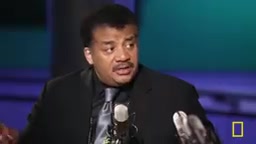
Since 1972, when humans last left low Earth orbit, we haven't set foot anywhere beyond the Moon. Yet former NASA astronaut Mae Jemison is pushing a seemingly audacious plan — achieving the capability for human interstellar travel within 100 years. On StarTalk, astrophysicist Neil deGrasse Tyson and theoretical physicist Lawrence Krauss explored the scientific challenges and possibilities behind this grand vision in depth.
This isn't merely a discussion about space exploration technology — it's a profound conversation about the future trajectory of human civilization.
How Far Is Interstellar Distance, Really: A Mind-Blowing Analogy
To understand the challenge of interstellar travel, you first need to grasp the scale of the distances involved. Neil offered an elegant analogy: if Earth were a basketball, the Moon would be a tennis ball about 10 yards (roughly 9 meters) away — far more distant than most people imagine from textbook illustrations. At this scale, Mars would be a mile away, while the nearest star, Proxima Centauri, would be equivalent to twice the actual Earth-Moon distance.
What does this mean? At the speed of the fastest spacecraft humanity has ever launched, reaching Proxima Centauri would take 50,000 to 60,000 years — longer than the history of humans painting on cave walls. This number alone demonstrates that interstellar travel is on an entirely different order of magnitude from the space exploration we're familiar with.
It's worth noting that Proxima Centauri is the closest star to our solar system, approximately 4.24 light-years (about 40 trillion kilometers) away. It's a red dwarf with roughly 12% of the Sun's mass, invisible to the naked eye. In 2016, astronomers discovered a planet approximately 1.3 times Earth's mass — Proxima Centauri b — within its habitable zone, making it the top target for interstellar probes, not only because of its proximity but also because of the scientific value of potentially finding an Earth-like world there. Proxima Centauri is actually part of the Alpha Centauri triple star system, gravitationally bound to Alpha Centauri A and B, the latter two forming the third-brightest point of light in the night sky.
Why Chemical Rockets Can't Reach the Stars
Mae Jemison stated bluntly in the interview: chemical propulsion is out of the running. All those spectacular flames we see during Space Shuttle launches are utterly inadequate for interstellar travel.
Lawrence Krauss further explained the severity of this conclusion: to reach one-tenth the speed of light using chemical rockets — the minimum velocity needed to reach the nearest star within a human lifetime — the required fuel mass would exceed the total mass of the entire observable universe. This isn't an engineering problem; it's a fundamental limitation of physics.
The core issue lies in the Tsiolkovsky Rocket Equation — derived by Russian scientist Konstantin Tsiolkovsky in 1903, this formula is the cornerstone of modern aerospace engineering: Δv = ve × ln(m0/mf). Here, Δv is the achievable velocity change of the spacecraft, ve is the exhaust velocity, m0 is the initial mass (including fuel), and mf is the dry mass after fuel is expended. This logarithmic relationship means that for every doubling of desired velocity increment, the required fuel mass grows exponentially. Chemical rockets have an exhaust velocity of approximately 4–4.5 km/s, while the speed of light is about 300,000 km/s — a difference of roughly 70,000 times. To reach one-tenth the speed of light, working backward through the equation, the fuel-to-spacecraft mass ratio becomes an astronomical number.
What makes it even worse is that you need to accelerate the fuel itself, meaning you need more fuel to accelerate the fuel, creating an exponentially growing vicious cycle. Simply put, chemical propulsion is a dead end. To achieve interstellar travel, humanity must find entirely new methods of propulsion.
Interstellar Propulsion Options: From Nuclear Fission to Antimatter
Mae Jemison listed the possible energy options: nuclear fission, nuclear fusion, and antimatter. Each offers orders of magnitude more energy density than the previous one, but each faces distinct technical bottlenecks.
Nuclear Fission Propulsion
Nuclear fission technology is already used on deep-space probes (such as radioisotope thermoelectric generators), but its energy conversion efficiency falls far short of what's needed to accelerate a spacecraft to interstellar travel velocities.
Nuclear Fusion Propulsion
The theoretical basis for nuclear fusion propulsion involves deuterium-helium-3 or deuterium-tritium reactions, which release approximately 10 million times more energy per unit mass than chemical combustion. The exhaust velocity is about 1% the speed of light — orders of magnitude higher than chemical rockets. Yet even so, reaching one-tenth the speed of light would still require carrying enormous quantities of fuel. More critically, humanity has not yet achieved engineering-scale controlled nuclear fusion — the International Thermonuclear Experimental Reactor (ITER) project isn't expected to complete construction and begin experiments until around 2025, with commercialized power generation still decades away. Miniaturizing a fusion reactor and integrating it into a spacecraft propulsion system — maintaining plasma stability under extreme temperature gradients, intense radiation, and microgravity — is orders of magnitude beyond current technological capabilities.
Antimatter Propulsion
Antimatter is theoretically the ultimate propulsion solution, because matter-antimatter
Related articles
Deep Dive into AI Agent Skill Design: …
Deep Dive into AI Agent Skill Design: Engineering Practices from Anthropic and Perplexity
A deep dive into Skill design philosophy from Anthropic's Claude Code team and Perplexity's Agent team, covering the Tax Test, Gotchas Flywheel, progressive disclosure, and Eval-First practices for building high-quality AI Agent skill systems.
Deep Dive into OpenAI's Official GPT-5…
Deep Dive into OpenAI's Official GPT-5.6 Prompting Guide: The Shift from Manual to Automatic
A deep dive into OpenAI's official GPT-5.6 Sol prompting guide: conciseness-first, outcome-oriented design, autonomy boundaries, tool routing, and reasoning intensity tuning.
 Deep Dives
Deep Dive into How OpenClaw (Open-Source Crayfish) AI Agent Works
Deep analysis of OpenClaw AI Agent internals: System Prompt, tool calling, SubAgents, Skill system, memory, and Context Engineering explained.