Is the Newsletter Business Slowing Down? Substack and Beehiiv Face Three Challenges

The newsletter sector has shifted from explosive growth to stock competition, with inbox saturation, business crunching, and AI impact forming a structural watershed.
The newsletter sector is undergoing structural adjustment. The article points out that platforms like Substack and Beehiiv face three pressures simultaneously: inbox saturation pushing the attention battle into a stock phase, with open rates and conversion rates under pressure; business maturation forcing platforms and creators into a crunch phase, with top-heavy concentration and harder monetization for long-tail creators; and AI lowering content production barriers while eroding open rates, making trust and content governance key platform capabilities. The conclusion is that the newsletter business hasn't simply slowed—it has moved from extensive growth to a professional phase requiring refined operations. Differentiated topic selection, reader relationship maintenance, and multi-channel distribution are essential for creators, and platform competition will focus on recommendation quality, monetization tools, and content governance.
The newsletter business was once seen as the golden gateway to the creator economy, but its growth narrative is now being tested by reality. According to an industry observation from an RSS source, platforms like Substack and Beehiiv are simultaneously facing three pressures: inbox saturation, business model maturation, and the impact of AI-generated content.
Inbox Saturation: The Attention Battle Enters a Stock Phase
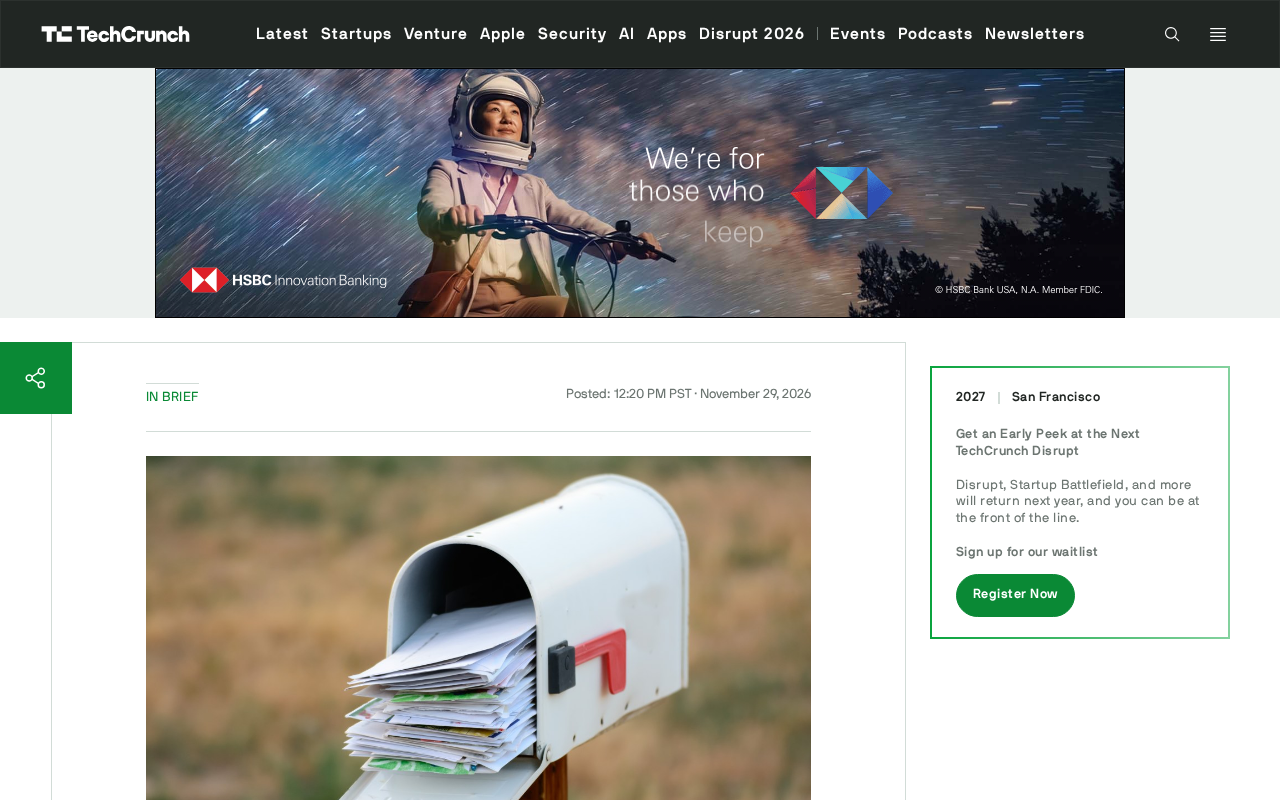
The core promise of newsletters is to "bypass the algorithm and reach readers' inboxes directly." But as more and more creators flood the same channel, the marginal value of this promise is diminishing. Readers have limited inbox capacity, and open rates and subscription conversion rates come under pressure as content density on platforms rises. For platforms, customer acquisition costs are no longer cheap, and the growth logic has shifted from "land grabbing" to "retention."
This change doesn't mean the newsletter format is failing—it means the era of extensive growth is over. Platforms need to answer a more practical question: when subscribers receive multiple newsletters every day, why should they open yours?
The relationship between inbox capacity and open rates: An email inbox is essentially a zero-sum attention container. Research shows that there is a psychological upper limit to the number of emails an average user can effectively process each day. Beyond that threshold, "email fatigue" sets in, manifesting as mass ignoring, unsubscribing, or archiving. Newsletter open rates are typically measured as "opens/delivered," and industry benchmarks have fallen from above 40% in the early days to the 20%-30% range, with some niche segments even lower. This means that even if subscription lists continue to grow, the actual reachable audience size may stagnate or even shrink. Platforms and creators must shift from pursuing subscriber counts to pursuing "effective reach rate" and "per-email value."
Business Maturation: From Hype to Crunching Numbers
Substack and Beehiiv's paid subscription and advertising revenue-sharing models have been running for some time, and the industry has entered a "crunching numbers" phase. Creators are starting to scrutinize platform commissions, paid conversion rates, and content ROI; platforms are exploring diversified revenue streams such as recommendation networks and ad alliances.
Another signal of maturation is the固化 of the competitive landscape. Top newsletters occupy most of the subscription share, and monetization becomes harder for long-tail creators. According to the source's analysis, the newsletter business hasn't "slowed down" to the point of losing value—rather, it has transitioned from an explosive phase to one requiring refined operations. This places higher demands on both platform product capabilities and creators' distribution strategies.
Unit Economics: In the newsletter context, unit economics refers to the revenue-versus-cost comparison for a single subscriber or a single newsletter. On the revenue side: paid subscription fees, ad revenue sharing, and sponsorship slots. On the cost side: customer acquisition cost (CAC), platform commissions (Substack typically 10%, Beehiiv charges by tier), content production time, and tool expenses. When acquisition costs rise and paid conversion rates fall, only top creators can spread costs through scale. Platforms promoting recommendation networks and ad alliances is essentially about helping long-tail creators reduce acquisition costs and increase per-subscriber revenue to maintain ecosystem health. The core metric of the crunch phase is whether subscriber lifetime value (LTV) exceeds acquisition cost.
AI's Double-Edged Sword: Efficiency Gains and Content Dilution
AI's impact on the newsletter ecosystem manifests at both ends. On the production side, AI-assisted writing, summarization, and formatting have significantly lowered the barrier to content creation, allowing creators to produce newsletters faster. On the consumption side, AI summarization tools let readers get key points without opening emails, directly eroding open rates and ad impressions.
More subtly, there's the trust issue. As AI-generated content proliferates, readers' expectations for the "human curation and opinion value" of newsletters actually increase. If platforms can't distinguish high-quality newsletters from mass-generated content in their recommendation and moderation mechanisms, the inbox crowding problem will worsen further.
How AI summaries erode open rates: Email clients and third-party tools (such as Gmail's Gemini summaries, Apple Mail's priority inbox, and various AI reading assistants) can generate newsletter key points without opening the email. For readers this is an efficiency gain, but for the newsletter business model that relies on the "open—read—click" funnel, it's a structural shock: declining open rates directly affect ad impression billing (CPM), declining click rates affect sponsor ROI evaluations, which in turn压低 sponsorship slot pricing. The deeper issue is that when AI summaries become the default consumption method, the newsletter's "brand memory" and "author voice" are compressed into a few bullet points, and the direct relationship between readers and creators is weakened—which is precisely the core value that distinguishes newsletters from social media.
Conclusion: Not a Decline, but a Watershed
Based on the source's assessment, the newsletter business hasn't simply "slowed down"—it has entered a period of structural adjustment. Inbox saturation is forcing platforms to shift from a traffic mindset to a retention mindset; business maturation demands healthier unit economics; and AI simultaneously amplifies both efficiency and noise.
For creators, this means the window where "start a newsletter and you'll grow" is closing. Differentiated topic selection, reader relationship maintenance, and multi-channel distribution are becoming essential capabilities. For platforms like Substack and Beehiiv, the next stage of competition will focus on recommendation quality, monetization tools, and content governance—not merely subscriber growth.
Newsletters remain an indispensable channel in the creator economy, but they are no longer a low-barrier incremental market. They are a professional business that requires long-term management.
Related articles

The Real Danger of AI Is Power Imbalance, Not Value Differences
AI safety debates often focus on value differences, but the real risk is power imbalance. Drawing on Cortés and the Virginia Company, this article argues that checks on power matter more than value alignment.

My Frame TV Died on Black Friday, So I Bought a Hisense Instead
When my Samsung Frame TV suddenly died on Black Friday, I skipped the repair and bought a Hisense. Reflections on art TV premiums, reliability trade-offs, and the return to pragmatism in consumer decisions.

War Forges a Military-Industrial Power: How Ukraine Became a Leading Global Weapons Producer
How Russia's war forced Ukraine's defense industry transformation: from aid recipient to arms producer, drone-driven asymmetric breakthroughs, combat validation spillovers, and funding and supply chain constraints.