Jared Diamond: Charisma Is Not a Leadership Necessity — Great Leaders Have 37 Different Paths

Diamond uses natural experiments to study leadership, showing charisma isn't necessary and followers and context matter equally.
Pulitzer Prize winner Jared Diamond introduces his new book *Prophets, Coaches, and Kings* on Huberman Lab, using "natural experiments" to analyze leadership across politics, business, sports, and religion. He refutes the popular misconception that leaders must be charismatic, noting that Stalin and Pinochet were effective without charisma — charisma is just one of about 37 paths. Analysis of 22 post-WWII political leaders shows only Mandela and Lee Kuan Yew stepped down voluntarily; the rest were assassinated, overthrown, or voted out. He stresses that studying leadership requires studying followers, using Jim Jones as an example. In sports and business, he admires John Wooden and Yvon Chouinard, attributing their success to life philosophy rather than mere technique. Using ANOVA and a dice analogy, he notes coaches and CEOs contribute about 15%-30% of variance, with frequent leadership changes often reflecting mean reversion. At 89, Diamond continues language learning, music listening, and New Guinea bird research, advising young people to do what they're good at, love, and that benefits the world.
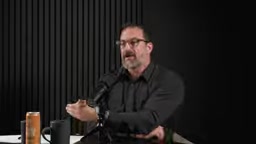
In an interview on the Huberman Lab podcast, Pulitzer Prize winner and author of Guns, Germs, and Steel Professor Jared Diamond shared his research for his new book Prophets, Coaches, and Kings. The 89-year-old UCLA professor emeritus used a "natural experiment" approach to conduct a cross-disciplinary analysis of leaders in four domains — politics, business, sports, and religion — arriving at a counterintuitive core conclusion: the most common misconception about leadership is the belief that leaders must be charismatic.

Charisma Is Not a Prerequisite for Leadership
Diamond stated bluntly: "The most common generalization about leaders is that they have to be charismatic. That's nonsense." He cited examples: Stalin and Chilean dictator Pinochet had no charisma whatsoever. "There are about 37 ways to be an effective leader, and charisma is just one of them."
This judgment rests on Diamond's systematic analysis of 22 major post-WWII political leaders. In the book, he compiled a table including Stalin, Hitler, Mussolini, Anwar Sadat, and others, attempting to find common traits. The result was unexpected: of the 22, only two — Nelson Mandela and Lee Kuan Yew — voluntarily stepped down. The remaining 20 were either assassinated (Sadat), committed suicide (Hitler), voted out of office (Churchill), or overthrown by coup. "Once you become a powerful leader and believe you're effective, you're extremely unlikely to step down voluntarily."
The Natural Experiment Method: Beyond the Limits of Traditional Biography
Diamond's research on leadership employs a methodology consistent with Guns, Germs, and Steel — the natural experiment. He explained that traditional historians write biographies, but the same historical facts can lead to diametrically opposed conclusions. British historian A.J.P. Taylor used the same facts as mainstream biographers yet concluded that Hitler was simply a "normal politician" pursuing the goals of other German politicians.
"That's the weakness of the traditional biographical method. You're constrained by the facts, but different people draw different conclusions from the same facts." Diamond's method compares parallel scenarios "with this leader" and "without this leader."
He used Hitler as an example to illustrate the power of this approach. In 1930, Hitler's car collided with a truck at an intersection; the truck nearly crushed the car, but Hitler was only slightly injured. In 1944, Count Stauffenberg placed a briefcase containing a bomb at Hitler's feet, but Hitler happened to lean forward; the bomb killed four people and Hitler only suffered ear drum damage. Diamond asked: "If Hitler hadn't leaned forward, WWII in Europe would have ended in 1944 — would the surviving members of my wife's family in Poland have lived?"
His conclusion: Hitler was unique. He was the most incendiary orator of the 20th century; anti-Semites were everywhere in Europe, but only Hitler conceived of implementing slaughter on an industrial scale. "Without Hitler, there might not have been a Holocaust."
Natural experiment is a design in observational research where the researcher cannot actively manipulate the independent variable as in a randomized controlled trial, but instead uses external events (such as policy changes, accidents, geographic differences) to create "quasi-random" groupings and compare outcomes between treatment and control groups. In Guns, Germs, and Steel, Diamond used geographic differences such as continental axis orientation and the distribution of domesticable plants and animals as "natural experiments" to explain the divergence of civilizational development. In leadership research, he treats parallel scenarios "with a certain leader" and "without that leader" as natural controls — for example, Hitler's 1930 car accident and the 1944 assassination attempt are both "quasi-random" nodes that nearly changed the course of history. This method can partially avoid the "post-hoc attribution" bias of traditional biography, but it relies on counterfactual reasoning and cannot strictly control confounding variables as randomized trials do, so conclusions are better suited as causal hypotheses rather than definitive proof.
The Symbiotic Relationship Between Followers and Leaders
Diamond emphasized that studying leadership cannot focus only on leaders — followers must also be studied. Take Jim Jones: the founder of the Peoples Temple orchestrated the largest mass suicide in American history in Guyana, with 931 people dying from cyanide poisoning. But Diamond reminds us that Jones was not initially "crazy" — he led the desegregation movement in Indianapolis and attracted many idealists.
"The people who followed Jones were not a random group. They were mainly poor, elderly, many African American, and not highly educated." This contrasts sharply with the followers of Roosevelt or Churchill — the latter were not "pathological" crowds but normal voters.
Analysis of variance (ANOVA) is a statistical method used to test whether differences in means between different groups (such as different coaches or teams) are significant, decomposing total variation into between-group and within-group variation. In leadership research, researchers use ANOVA to estimate the percentage of total variance in performance explained by the "coach" factor, with the remainder attributed to player talent, team resources, luck, and so on. The 15%-30% Diamond cites is not the proportion of results "directly determined" by the coach, but rather the coach factor's explanatory power in a statistical model — similar to R² in regression analysis. This figure is comparable in sports and business (about 30% for CEOs), indicating that leaders have influence but are far from omnipotent; it also reminds us that mean reversion after a coaching change is often misread as a "new coach effect" when it may simply be random fluctuation.
The Philosophy of Entrepreneurs: John Wooden and Yvon Chouinard
In sports and business, Diamond particularly admires two leaders: UCLA basketball coach John Wooden and Patagonia founder Yvon Chouinard.
Wooden led UCLA to 9 NCAA national championships, including 7 consecutive titles. Diamond believes the key to Wooden's success was not only attention to detail — he even cared about what socks his players wore — but also that "for him, basketball was not a sport but a philosophy of life." Wooden's disciples Bill Walton and Kareem Abdul-Jabbar both said they learned more about life than about basketball from their coach.
"You can learn to train players to jump higher, but you cannot fake a philosophy of life."
Diamond equally admires Chouinard: "For him, Patagonia is a model of a way of living." Chouinard emphasizes employee leave and sustainability, refuses to over-purchase cotton to expand production, and is also the first ascensionist of Yosemite's hardest climbing walls. "He is a complete person, not just a business leader."
The Sports Shortcut in Business Leadership Research
An interesting insight: business school professors study sports data extensively because business outcomes are hard to measure, whereas sports competitions occur weekly with public results and coaches right on the sidelines. Using analysis of variance (ANOVA), researchers found that about 15%-30% of the variance in sports performance is attributable to the coach, with similar proportions attributable to players and institutions. In the business world, CEOs likewise contribute about 30% of the variance.
Diamond used a dice-rolling analogy to explain the "coaching change effect": if you roll a 1 and fire the roller, the probability that the next roller gets a better result is five-sixths. "The UCLA athletics department is now $150 million in debt precisely because we've fired every basketball coach since John Wooden, each time having to buy out contracts — $5 million, $10 million, $15 million."

The "coaching change effect" and mean reversion: Diamond's dice analogy illustrates that if you fire the executor because of poor results, the probability that the next result will be better is naturally higher — not because the new leader is stronger, but because extreme results regress toward the mean, a statistical phenomenon. The management concept of "mean reversion" reminds boards: improved performance after a CEO change may simply be a luck cycle rather than enhanced leadership. True causal identification requires comparing subsequent performance of "changed" and "unchanged" groups under identical conditions, or using quasi-experimental methods such as regression discontinuity or difference-in-differences. Diamond's dice model is a minimalist version of counterfactual reasoning: it compresses the leadership contribution into a small amount of variance beyond random fluctuation, thereby explaining why frequent coaching changes often come with rising buyout costs yet do not necessarily bring systematic performance improvement.
Time Management of an 89-Year-Old Scholar
Diamond was born in 1937, now 89, and still reads Italian daily (he has studied 13 languages), conversing with an Italian professor at USC for two hours each week. He is listening to all 210 of Bach's church cantatas at a rate of about one per week, expecting to finish in three to four years.
He admits that only in recent years has he truly realized the finiteness of time. "New Guinea has 10 isolated mountain ranges, several of which I made the first ornithological explorations of. If I don't write this up, this knowledge will die with me." He plans to spend the rest of his life completing a comprehensive study of bird distribution in New Guinea, answering a core question: what makes certain bird species good colonizers, able to appear on all 10 mountain ranges, while others appear on only one.
Advice for Young People: Do What You're Good At and Love
When asked for life advice, Diamond cited three principles from the late biologist Tom Lovejoy's father: do what you're good at, do what you enjoy, and do something that has an impact on the world.
His core advice is especially direct: "Make sure you do what you enjoy. If someone tells you 'you must do this, you must do that,' tell them to go to hell." He recalled not ironing his shirts in graduate school; although he irons them now, if someone told him he should spend time ironing shirts, "I'd tell them to go to hell. There are other things in life I'd rather do."
On how to achieve in multiple fields, Diamond's experience provides a model: from postdoctoral work in gallbladder physiology to research on New Guinea birds to history and geography, he went through three career transitions. The key was that his postdoctoral experience in Harvard's Society of Fellows gave him freedom — "I could tell the boss of the biophysics lab that this summer I'm going to New Guinea for three months to study birds. I didn't ask his permission; I just informed him." Later at UCLA, medical school dean Sherman Mellinkoff even gave him $5,000 a year specifically for New Guinea bird research.
"I've done what I enjoy, I've done what I'm good at, I've done something beneficial to the world." This may be Diamond's definition of an "extraordinary life."

Related articles

A Single Prompt Triggers a Global PHP Security Storm: Is AI a Savior or a Hidden Risk?
A single AI prompt triggered a global PHP security crisis affecting Wikipedia and the Internet Archive. This article reviews the incident, analyzes the OpenAI-Amazon controversy, and explores the security paradox of lowered vulnerability discovery barriers in the AI era and developer response strategies.

When AI Is Taken Away: How Reliance on Shortcuts Undermines Your Problem-Solving Resilience
A study of 1,222 people found that after using AI to answer questions, once AI was removed, people gave up on more problems than a control group that never used AI. The article analyzes the impact of AI reliance on learning resilience and metacognition, and explores design implications for AI learning tools.

Carta and NewView Partner to Let Startup Employees Cash Out Equity Early
Carta and NewView Capital partner to simplify startup tender offers, helping employees sell equity early. Analysis of the mechanism, liquidity pain points, and impact.