Java Developers: The Complete Guide to Moving from Small Companies to Big Tech — Tech Stack Planning & Interview Preparation

A complete guide for Java developers to break through career bottlenecks and land big tech jobs.
This article systematically outlines the complete strategy for Java developers at small companies to land jobs at big tech: the ideal path involves systematic learning during college, joining a mid-sized company after graduation, and staying put for three years to build a stable track record. For those who've already gone off track, stabilize for two years starting now and never fabricate credentials. On the tech stack side, 2025's focus should be on three core directions — high concurrency, AI/LLM, and algorithms — to stand out in big tech interviews.
The Struggles and Way Out for Developers at Small Companies
In the IT industry of 2025, a large number of Java developers share the same anxiety: their educational background isn't impressive enough, their work experience isn't compelling enough, and their tech stack isn't comprehensive enough. Especially for programmers who've worked at small to mid-sized companies for two or three years, breaking through their current bottleneck and successfully landing a job at a major tech company has become a career-defining challenge.
This article is based on practical insights from a senior tech professional, systematically outlining the complete path from small companies to big tech. It covers ideal career planning, remediation strategies, Java tech stack building, and other core topics. Whether you're a college student or someone three years into your career, you'll find actionable plans you can implement immediately.
The Ideal Path: A Golden Plan from Campus to Big Tech
During College: Systematic Learning Is the Right Approach
The ideal career path should begin during your university years. From freshman to junior year, the most important thing is systematic technical training, not fragmented, haphazard learning.
Here's a common pitfall many people fall into: substituting systematic learning with short videos and scattered blog posts. Fragmented learning might seem like you're learning anytime and anywhere, but in reality it takes more time and produces worse results. Systematic learning requires concentrated time investment, but its efficiency and effectiveness far exceed the former. By systematic, I mean following a logically progressive path like "Data Structures & Algorithms → Computer Networks → Operating Systems → Database Principles → Java Core → Mainstream Frameworks." Each module has knowledge dependencies on the previous ones, and skipping around leads to only surface-level understanding.
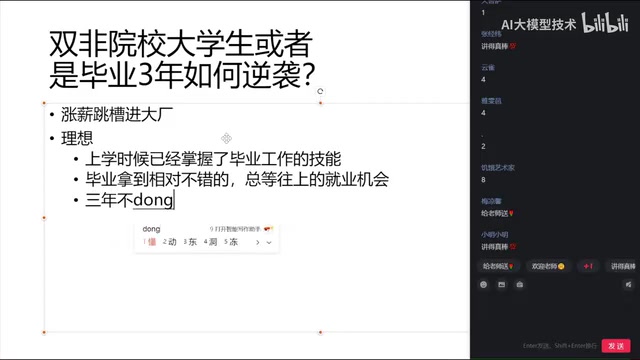
The goal is clear — by graduation, you should have mastered the basic skills needed for work, capable of landing an offer with decent starting pay at a company with 400-500+ employees. This starting point directly determines your growth potential over the next three years.
First Three Years After Graduation: Stability Is Your Greatest Competitive Advantage
After landing your first solid job, the most important principle is: don't job-hop for three years.
Why is staying put for three years so crucial? Because big tech companies and quality employers pay close attention to a candidate's job stability. To use a simple analogy, it's like checking someone's relationship history when dating — three years without frequent changes signals that this person is focused and reliable, making companies naturally more willing to grant interview opportunities. From an HR perspective, the total cost of hiring an engineer (recruiter fees, training period, onboarding period) typically equals 3-6 months of that position's salary. Candidates who frequently job-hop represent a higher risk of talent loss, so they get filtered out at the resume screening stage.

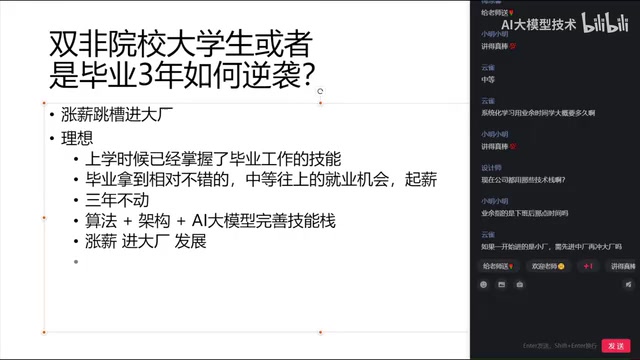
During these three years, you shouldn't just coast — you should use your off-work hours to systematically build out your skill set:
- Algorithm skills: A mandatory part of big tech interviews, non-negotiable
- Architecture thinking: Build basic system design capabilities — you don't need to go too deep, but you need a big-picture perspective
- AI/LLM: The hottest tech direction in 2025 — Java developers must have exposure to this area
After three years, your options expand dramatically: targeting big tech, negotiating significant salary increases, or pursuing more growth-oriented positions — you'll have the leverage to negotiate.
Remediation Strategy: What to Do If You've Already Gone Off Track
Repairing Your Resume After Frequent Job-Hopping
In reality, many Java developers haven't followed the ideal path. Some have hopped five times in three years, making their resume look extremely "messy." What do you do in this situation?
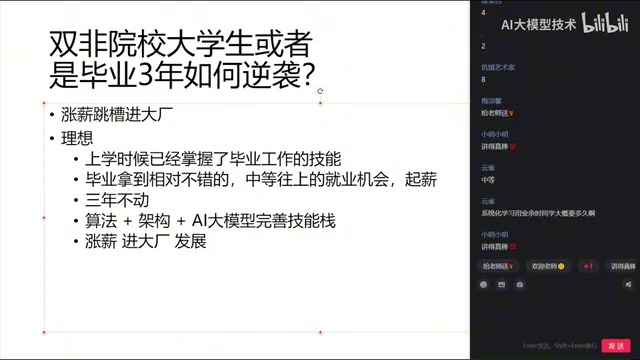
The answer is: starting now, aim to stay put for two years.
In today's job market, some companies no longer strictly require three years of stability — around two years of tenure is also acceptable. So if you just made a job change, start counting from now, and use these two years to do two things:
- Stabilize your current job — diligently accumulate project experience and industry knowledge
- Systematically build out your tech stack — prepare thoroughly for your next move
After two years, your resume will have at least one "clean" stretch. When you then apply to big tech or quality mid-sized companies, your chances of passing resume screening will increase significantly.
The Risk of Fabricating Credentials: 99.9% Chance of Getting Caught
Some people ask: can someone with an associate degree fabricate their educational credentials to target big tech?
The answer is straightforward: 99.9% chance you'll get caught.
Background checks are a standard procedure at major internet companies before extending an offer, typically conducted by specialized third-party agencies (such as Qianxun, Beijingbao, etc.). The investigation covers degree verification, work history confirmation, reasons for leaving previous positions, and multiple other dimensions. Degree verification directly interfaces with the Xuexinwang (China Higher Education Student Information Network) database, where enrollment dates, graduation dates, and major information for associate, bachelor's, and graduate degrees can all be queried in real-time. Any form of credential fabrication has virtually no room to hide. Once discovered, not only is the current opportunity gone, but you may also be blacklisted in the industry — the risk far outweighs the reward.
If you've already fabricated credentials, treat it as a one-off gamble, but never put all your eggs in that basket. Rather than risking credential fabrication, invest your energy in improving your actual technical abilities — people with strong technical skills never lack opportunities at companies of any size.
Building Your 2025 Java Tech Stack: Three Core Directions
For Java developers aiming for big tech, the 2025 tech stack should be built around three core directions:
High Concurrency: The Hard Threshold for Big Tech Interviews
High Concurrency refers to a system's ability to handle a large number of requests within the same time period. It's one of the core technical challenges that distinguishes big tech from small and mid-sized companies. Taking e-commerce flash sales as an example, during Double Eleven (Singles' Day), Alibaba's system peak QPS (Queries Per Second) has exceeded the million level, placing extremely high demands on the underlying technical architecture. Java's core advantage in high concurrency lies in the maturity of the JVM and its rich concurrency utility library (java.util.concurrent). However, to truly master high concurrency, you need to deeply understand the complete knowledge chain from hardware cache coherence and OS thread scheduling to the Java Memory Model (JMM).
High concurrency capability is also a high-frequency topic in big tech interviews and serves as the dividing line between junior and mid-to-senior Java engineers. You need solid mastery of the following technologies:
- Multithreading and thread pools: Thread lifecycle, thread pool parameter tuning, usage of concurrency utilities
- Lock mechanisms: Principles and applicable scenarios of synchronized, ReentrantLock, read-write locks, and distributed locks
- Distributed caching: Redis data structures, solutions for cache penetration/breakdown/avalanche
- Message queues: Core principles of Kafka and RocketMQ, and their practical applications in peak shaving, valley filling, and async decoupling
Merely memorizing interview Q&A is far from enough — the key is understanding how these technologies are used in real business scenarios and why they're used that way.
Large Language Models (AI): A New Growth Area for Java Developers
AI large language models are currently the hottest technical direction and an excellent opportunity for Java developers to differentiate themselves. Understanding LLMs requires first grasping their underlying architecture: Transformer is the deep learning architecture proposed by Google in their 2017 paper "Attention Is All You Need." Its core mechanism is "Self-Attention," which allows the model to dynamically focus on information at different positions when processing sequential data. GPT, BERT, LLaMA, and other current mainstream large language models are all evolved from the Transformer architecture. Java developers don't need to implement Transformer from scratch, but understanding its input/output mechanisms, tokenization process, and context window limitations forms the foundation for properly calling LLM APIs and designing prompt engineering.
You don't need to transition into an algorithm engineer, but you do need to master the following capabilities:
- Understanding the basic principles of LLMs (Transformer architecture, prompt engineering, etc.)
- Integrating AI capabilities into Java applications, such as calling LLM APIs
- Building RAG (Retrieval-Augmented Generation) applications to implement intelligent business features. The core idea behind RAG is: when querying a large language model, first retrieve relevant content snippets from an external knowledge base (such as company documents or databases), then input these snippets as context alongside the question to the model, thereby generating more accurate, business-relevant answers. RAG effectively addresses the "hallucination" problem of LLMs.
Related articles
 Tutorials
ChatGPT Plus Subscription Guide: Are GPT-5.5, image-2, and Codex Worth the Upgrade?
A detailed look at ChatGPT Plus features — GPT-5.5, image-2, and Codex — with a Plus vs Pro comparison and a complete step-by-step subscription guide for users outside the US.
 Tutorials
Harness AI Engineering in Practice: Using Claude Code to Master Enterprise-Level E-Commerce Development
Deep dive into Harness AI Engineering: master enterprise e-commerce development with Claude Code using the Rules, Skills, Wiki, and Changes framework.
 Tutorials
Cursor + Codex Dual-IDE Collaboration: A Practical Methodology for Open-Source Project Customization
A complete methodology for open-source project customization based on real-world experience, detailing the Cursor+Codex dual-IDE workflow, seven-stage process, MVP validation, and AI source code reading techniques.