jcode: The Self-Proclaimed Most Powerful Free Open-Source Coding Agent Ever

Free open-source coding agent jcode claims a Rust-rewritten harness layer outperforming commercial products, but the data awaits verification.
The article introduces jcode, a free open-source coding agent said to outperform commercial products like Cursor, Codex, and Claude, claiming 20x more memory efficiency than Claude Code and 6.3x faster than Codex. It explains that all coding agents have a harness middle layer handling prompts, tool calls, memory, and sessions, and that jcode's core difference is rewriting this layer from scratch in Rust. jcode also emphasizes automatic memory, multi-session parallelism, and multi-agent collaboration. The article cautions that all performance data comes from a single video source lacking public testing methodology, recommends developers verify it themselves, and advises caution about open-source maintenance and enterprise support.
The Ambition of a Free Open-Source Agent
A developer claims to have built a coding agent that can beat mainstream products like Cursor, Codex, and Claude—and it's completely free and open source. The tool is called jcode. According to the original YouTube video, jcode matches or even surpasses the most expensive commercial solutions on the market today: it's 20x more memory-efficient than Claude Code and 6.3x faster than Codex. Whether these numbers hold up under scrutiny is another matter, but it raises an interesting question: what exactly are we paying for when we pay for a coding agent?

Every Coding Agent Hides a Middle Layer
The video introduces a key concept—the harness. It's the middle layer between you and the AI, responsible for processing your prompts, invoking tools, managing memory, and maintaining sessions. Every coding agent you pay for is, at its core, charging you for this layer.
The video's argument is blunt: existing commercial tools have made this layer slow and bloated. jcode's choice is to rewrite this underlying architecture from scratch in Rust. Rust's memory safety and zero-cost abstractions are indeed common choices for rewriting performance-sensitive infrastructure, which explains why jcode dares to make claims like "20x memory efficiency" and "6.3x speed."
That said, a caveat is in order: the video doesn't specify what benchmarks or workloads these comparisons were measured under. As a single-source claim, these multipliers are better treated as directional references rather than rigorous benchmark conclusions.
Zero-cost abstraction is one of the core concepts in Rust's language design, referring to the fact that the high-level abstractions the language provides (iterators, generics, closures, etc.) incur no additional runtime overhead after compilation—abstractions improve readability and safety at the source level, but the compiled output performs on par with hand-written low-level code. This characteristic makes Rust particularly well-suited for rewriting performance- and memory-sensitive infrastructure. Note, however, that zero-cost abstraction doesn't mean code automatically becomes faster; it only guarantees that the abstraction itself introduces no extra cost. Actual performance still depends on algorithm choices, memory layout, and concurrency design.
Memory safety is another signature feature of Rust. Through compile-time mechanisms like ownership, the borrow checker, and lifetimes, it prevents common memory errors such as dangling pointers, data races, and buffer overflows without relying on garbage collection. For systems like coding agents that need to run persistently and frequently manage sessions and context, memory safety can significantly reduce the risk of crashes and hard-to-diagnose defects—this is the technical rationale behind jcode's choice to rewrite its harness layer in Rust.
Automatic Memory: Learning Without Configuration
Another selling point jcode emphasizes is automatic memory. According to the video, it requires no initial configuration—it learns automatically during use and retrieves relevant information when you need it.

This hits a pain point for many developers. Most coding assistants require you to manually maintain context files, rule documents, or memory banks, and once a project grows complex, maintenance costs add up. If jcode can truly deliver "works out of the box, learns as you go," it reduces not just configuration time but also the cognitive burden of long-term use. Of course, the accuracy of automatic memory, its forgetting strategy, and privacy boundaries are questions that must be answered for such a feature to truly land—questions the video doesn't address.
Context engineering is the key background for understanding the memory problem in coding agents. Large language models are inherently stateless—each call can only see what's within the current input window. So an agent needs a mechanism to decide what information enters the context: project structure, conversation history, code snippets, rule constraints, and so on. Most commercial tools take an explicit approach, having users maintain context files (such as rule documents or memory files) that the agent reads according to convention. This is controllable but costly to maintain. Automatic memory attempts to hand these decisions to the system itself, dynamically managing context through strategies like retrieval, summarization, and compression. The difficulty lies in judging what's worth remembering, when to forget, how to trade off within a limited window, and how to avoid bringing erroneous or outdated information into subsequent reasoning.
Multi-Session Parallelism and Multi-Agent Collaboration
jcode also highlights two engineering-oriented capabilities. First, multi-session parallelism: you can run multiple Codex and jcode sessions simultaneously without noticeable slowdown. This is practical for developers juggling multiple task lines at once.

Second, multi-agent collaboration: one agent coordinates while others execute, with all agents working on the same codebase without interfering with each other.
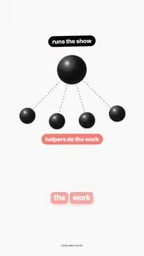
Multi-agent architecture is a hot direction in the coding agent space right now, but "without interfering" is easier said than done—file locks, conflict merging, and task boundary division are all hard problems. The video gives conclusions without implementation details, so this part's actual performance needs hands-on verification.
What Free and Open Source Means
"The most powerful free coding agent on the market" is the video's core claim. Free and open source is indeed jcode's sharpest differentiator: commercial agents charge per seat or per usage, while an open-source solution pushes costs close to zero while allowing community auditing and secondary development.
But free comes at a price. Open-source projects' maintenance continuity, documentation completeness, and enterprise-grade support typically can't match commercial products. For individual developers and small teams, jcode is worth a try; for enterprise scenarios with compliance and stability requirements, the evaluation period will likely need to be longer.
Approach with Caution, Verify by Doing
Overall, jcode proposes a valuable technical thesis: rewriting an agent's harness layer in Rust in exchange for higher resource efficiency and a more natural user experience. The idea itself holds up—Rust has plenty of successful precedents in the infrastructure space.
But be clear-headed: all performance claims in this article come from a single video source, and comparisons like 20x and 6.3x lack publicly disclosed testing methodology and environment details. If you're interested, the most reliable approach is to clone it and run it on your own projects—after all, whether a coding agent is any good is ultimately decided by your codebase.
Background Note
Benchmarking is the fundamental method for evaluating performance claims like these. A credible benchmark needs a clearly defined task set, input scale, hardware environment, software versions, and metrics (such as latency, throughput, and peak memory)—and ideally should be reproducible. Relative multipliers like "6.3x faster" without disclosing test conditions and baseline configurations make it impossible to determine whether the difference comes from architectural advantages, task selection bias, or environmental differences. In the coding agent space, workloads vary enormously—completing a single line of code, refactoring an entire module, and cross-file searching have completely different resource and speed characteristics. So when you see multiplier-style claims, prioritize asking about testing methodology and reproducibility before deciding whether to believe them.
One-line Summary
Free open-source coding agent jcode claims to have rewritten its harness layer in Rust with performance surpassing commercial products, but the data awaits verification.
Paragraph Summary
The article introduces a free open-source coding agent called jcode, which is said to outperform commercial products like Cursor, Codex, and Claude, claiming 20x more memory efficiency than Claude Code and 6.3x faster than Codex. The article proposes that all coding agents have a harness middle layer responsible for processing prompts, tool calls, memory, and sessions, and that jcode's core difference is rewriting this layer from scratch in Rust for greater efficiency. jcode also emphasizes automatic memory, multi-session parallelism, and multi-agent collaboration. The article cautions that all performance data comes from a single video source lacking public testing methodology and environment details, recommends developers clone and verify it themselves, and advises caution regarding open-source projects' maintenance continuity and support capabilities in enterprise scenarios.
Related articles

Salesforce Acquires Rune for $375M: AI Logistics Tech Bolsters Defense Business
Salesforce reportedly acquires defense tech startup Rune for $375M. Rune's AI logistics tech will strengthen Salesforce's Missionforce defense platform, continuing its M&A spree.

Why Fair Use Benefits Everyone in the AI Era
Starting from a Hacker News discussion, this article analyzes the legal logic and controversies of the fair use principle in AI training and content creation, and its dual impact on creators and the tech ecosystem.

Mistral Large 4 Open-Sources a Trillion Parameters, Microsoft Offers Voluntary Severance to 60,000 Employees
Mistral Large 4 open-sources a trillion-parameter multimodal model with a coding agent score of 48; SanDisk earnings show AI inference reshaping NAND demand; Google Gemini adds in-app file editing, OpenAI raises Codex quotas, and Microsoft offers voluntary severance to 60,000 employees.