Jensen Huang Declares AGI Has Arrived and Congratulates OpenAI, Sparking Industry Debate
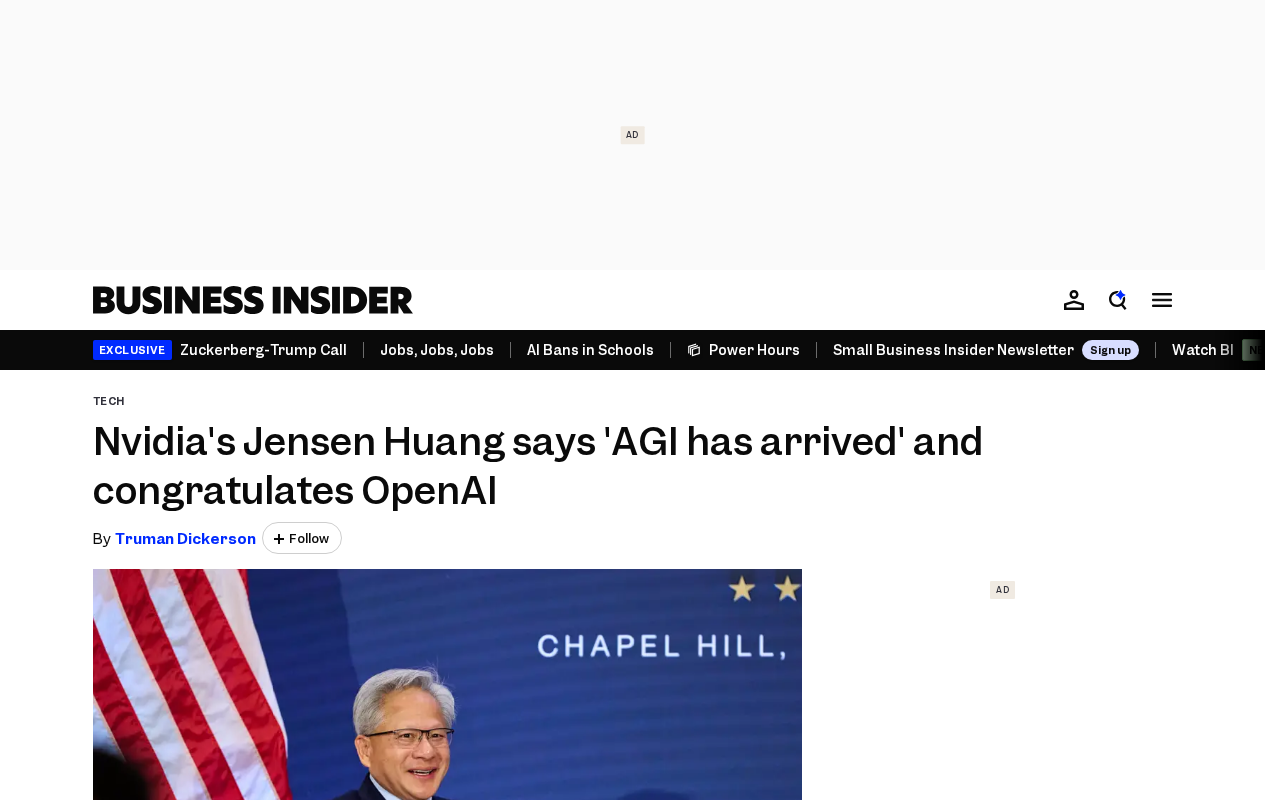
Jensen Huang declares AGI has arrived, congratulates OpenAI, sparking fierce industry debate.
Nvidia CEO Jensen Huang publicly declared that AGI has arrived and congratulated OpenAI for its contributions. While pointing to rapid advances in LLM reasoning and multimodal capabilities, the claim has drawn significant pushback from the tech community, with critics arguing current AI lacks true understanding, long-term planning, and autonomy. The debate highlights fundamental disagreements over how AGI should be defined.
Jensen Huang Declares AGI Has Arrived and Congratulates OpenAI, Sparking Industry Debate
Nvidia CEO Jensen Huang recently made a public declaration: AGI (Artificial General Intelligence) has arrived, with special congratulations extended to OpenAI. This statement quickly ignited heated debate across the tech community and thrust the long-contested topic of AGI back into the industry spotlight.
The concept of AGI (Artificial General Intelligence) can be traced back to the founding era of AI research. At the 1956 Dartmouth Conference, AI pioneers originally envisioned creating machines with general intelligence. However, as research progressed, the academic community gradually recognized the enormity of this goal and shifted focus to Narrow AI — systems that excel at specific tasks. The core distinction between AGI and Narrow AI lies in "transfer capability": AGI should be able to flexibly apply knowledge learned in one domain to entirely new, previously untrained scenarios, just as humans do. Currently, there is no unified consensus on the definition of AGI. From DeepMind's six-level AGI classification framework to OpenAI's internal charter defining it as "outperforming humans at most economically valuable work," different organizations hold significantly varying interpretations.
Why Jensen Huang Believes AGI Has Been Achieved
Huang's judgment comes from a unique vantage point. As the core provider of global AI computing infrastructure, Nvidia sits at the frontier of observing AI capability evolution. This unique perspective stems from Nvidia's two decades of deep investment in GPU computing. GPUs (Graphics Processing Units) were originally designed for graphics rendering, but their massively parallel computing architecture happens to align perfectly with the matrix operation demands of deep learning. In 2006, Nvidia launched the CUDA programming platform, ushering in the era of general-purpose GPU computing. Since then, virtually every AI breakthrough from AlexNet to the Transformer architecture has had Nvidia GPUs behind it. Today, Nvidia's data center business has become the company's largest revenue source, and its market capitalization has soared to the global top ranks on the AI wave, at one point surpassing both Apple and Microsoft. This market position means that every public statement from Huang carries significant weight for capital markets and industry expectations.
From GPT-4 to the latest generation of large language models, AI systems are rapidly approaching human-level performance in reasoning, planning, and multimodal understanding. The capability leap of large language models is the central context for the AGI discussion. Traditional LLMs are based on the Transformer architecture, generating text token by token through autoregression — essentially "next-word prediction." But starting with GPT-4, models began exhibiting Emergent Abilities — when model scale crosses a certain threshold, capabilities that previously didn't exist suddenly appear, such as multi-step reasoning, code debugging, and abstract analogy. OpenAI's o1 model introduced a Chain-of-Thought reasoning mechanism, where the system performs internal reasoning before delivering a final answer, significantly improving performance on complex tasks like math competitions and programming challenges. This shift from "pattern matching" to "quasi-reasoning" forms a critical technical foundation supporting the claim that "AGI has arrived."
The concept of "general" has always been subject to different interpretations within the industry. If AGI is defined as "a system that can match or exceed average human performance across the vast majority of cognitive tasks," then current large models have indeed demonstrated remarkable general capabilities across many domains — from programming and writing to mathematical reasoning and creative design, with ever-expanding coverage. Huang's statement is very likely based on this more pragmatic definition of AGI.
OpenAI's Critical Role in the Path to AGI
Huang's special congratulations to OpenAI highlight the company's irreplaceable role in advancing AGI. From the GPT series to reasoning models like o1, OpenAI has continuously pushed the upper limits of AI capability. Innovations in core technologies such as reinforcement learning and chain-of-thought reasoning have given AI systems problem-solving abilities that more closely resemble human cognition.
On the technical front, Reinforcement Learning (RL) plays a pivotal role in large model training. OpenAI's RLHF (Reinforcement Learning from Human Feedback) approach works by having human evaluators rank and score model outputs, training a reward model, and then using that reward model to guide policy optimization of the large language model. This technique makes model outputs better aligned with human expectations and is one of the core reasons ChatGPT's user experience far surpassed its predecessors. Chain-of-Thought Reasoning is another key innovation, enabling models to show intermediate reasoning steps when answering complex questions rather than jumping straight to conclusions. Combined with Test-time Compute strategies — investing more computational resources during inference to achieve higher-quality outputs — AI systems' problem-solving capabilities are improving at a pace that exceeds expectations.
The deep collaboration between OpenAI and Nvidia is equally noteworthy. Large-scale AI model training cannot happen without top-tier GPU computing power, and Nvidia's H100 along with its next-generation chips form the hardware foundation enabling these technological breakthroughs. Specifically, the H100 is a data center GPU based on the Hopper architecture, manufactured using TSMC's 4nm process with 80 billion transistors, equipped with 80GB of HBM3 high-bandwidth memory, and capable of 3,958 TFLOPS at FP8 precision. Its Transformer Engine can intelligently switch between FP8 and FP16 precision, dramatically accelerating Transformer model training efficiency. Through NVLink and NVSwitch technologies, multiple H100s can form supercomputing clusters with high-speed GPU interconnects. Subsequent releases — the H200 and Blackwell architecture (B100/B200/GB200) — have further improved memory bandwidth and compute density. Currently, training a GPT-4-class model is estimated to require tens of thousands of H100s running for months, with a single training run costing tens of millions to over a hundred million dollars, which explains why AI compute has become a strategic resource.
The two companies have formed a symbiotic relationship: OpenAI continuously pushes the boundaries of AI capabilities, while Nvidia provides the underlying compute power and reaps ongoing benefits from the AI wave.
The AGI Controversy: Skepticism and Reflection from the Tech Community
Despite Huang's influential statement, the claim that "AGI has arrived" has drawn considerable skepticism from the tech community. Discussions on platforms like Hacker News reveal that many frontline practitioners believe current AI systems remain a significant distance from true general intelligence.
The main points of contention center on several areas:
- Lack of genuine understanding: Current AI primarily relies on statistical correlations rather than causal reasoning. Turing Award laureate Judea Pearl categorized cognitive abilities into three levels: association (seeing what correlates with what), intervention (what happens if I do something), and counterfactuals (what would have happened if a different choice had been made). Current large language models mainly operate at the first level — learning statistical associations between words and concepts from massive datasets, excelling at pattern recognition and generating plausible-sounding text. But they have fundamental limitations in causal reasoning: they cannot truly understand "why," only identify "what is." This limitation is particularly evident in scenarios requiring common-sense reasoning, physical intuition, and counterfactual thinking, and it forms the core argument for many researchers who believe current AI has not yet reached AGI.
- Limited long-term planning capabilities: Poor performance on tasks requiring continuous learning and long-horizon planning
- Insufficient real-world interaction: Weak perception and manipulation capabilities in the physical world
- Lack of autonomy: No genuine goal-setting or autonomous decision-making ability
At its core, this debate is really about disagreements over the definition of AGI. In late 2023, Google DeepMind published a widely influential paper proposing a six-level classification framework for AGI, attempting to provide a more structured reference for this definitional dispute. The six levels are: Level 0 (No AI), Level 1 (Emerging, equal to or slightly better than a non-technical human), Level 2 (Competent, at the 50th percentile of skilled adults), Level 3 (Expert, at the 90th percentile), Level 4 (Virtuoso, at the 99th percentile), and Level 5 (Superhuman, exceeding all humans). Each level is further divided into "narrow" and "general" dimensions. Under this framework, today's most advanced large models roughly fall within the Level 1 to Level 2 "general" range — competent across a broad set of tasks, but not yet at expert level in many specialized domains. This tiered approach helps transform the vague "has AGI arrived?" debate into more concrete technical assessments.
If stricter criteria are applied — requiring systems to simultaneously possess human-level common-sense reasoning, emotional understanding, creativity, and other comprehensive capabilities — then AGI clearly has not been achieved. But if more pragmatic standards are used, focusing on AI systems' utility and coverage in real-world applications, "approaching AGI" may be a reasonable description.
Far-Reaching Implications for the AI Industry Landscape
Regardless of whether AGI has truly arrived, Huang's public statement sends an important signal: the top players in the AI industry believe that technological development has entered a new phase. This assessment could directly influence investment directions, R&D priorities, and regulatory policy trajectories across nations.
The heating up of the AGI topic is directly influencing the evolution of global AI regulatory policies. The European Union officially passed the AI Act in 2024, becoming the world's first comprehensive AI regulatory law, classifying AI systems by risk level with specific transparency and safety assessment requirements for general-purpose AI models (GPAI). The United States has taken a hybrid approach of executive orders plus industry self-regulation, with the Biden administration's 2023 AI Executive Order requiring large model developers to report safety testing results to the government. China has also progressively released a series of regulations including administrative measures for generative AI. Notably, if AGI is deemed to have been achieved or to be imminent, countries may accelerate more stringent regulatory measures, including mandatory safety audits for AI systems, capability caps, and even the establishment of international coordination mechanisms. In this context, Huang's statement carries policy signaling significance that cannot be ignored.
For developers and enterprises, what matters more than debating the definition of AGI is thinking about how to leverage current AI capabilities to create real-world value. Today's large models can already deliver near-expert-level performance in numerous scenarios including coding assistance, content generation, and data analysis — and this alone represents enormous commercial opportunity.
Final Thoughts
How exactly the arrival of AGI should be defined may never have a universally agreed-upon answer. But one thing is certain: we are at a critical inflection point of rapidly accelerating AI capabilities. Huang's statement, rather than being a definitive verdict on the current state of technology, is better understood as a high-profile affirmation of AI's powerful momentum.
Technological progress has never happened overnight, and AGI won't suddenly "descend" upon us one day. It is more likely to be a gradual evolutionary process, and our understanding of intelligence itself will continue to deepen along the way. The debate surrounding AGI may itself be one of the hallmarks of artificial intelligence reaching maturity.
Related articles

Vercel Agent Integrates with Slack: Conversational AI for Managing Production Environments
Vercel AI Agent now supports Slack integration, enabling teams to manage deployments, rollbacks, PRs, and configs via natural language. A deep dive into features, technical implications, and best practices.
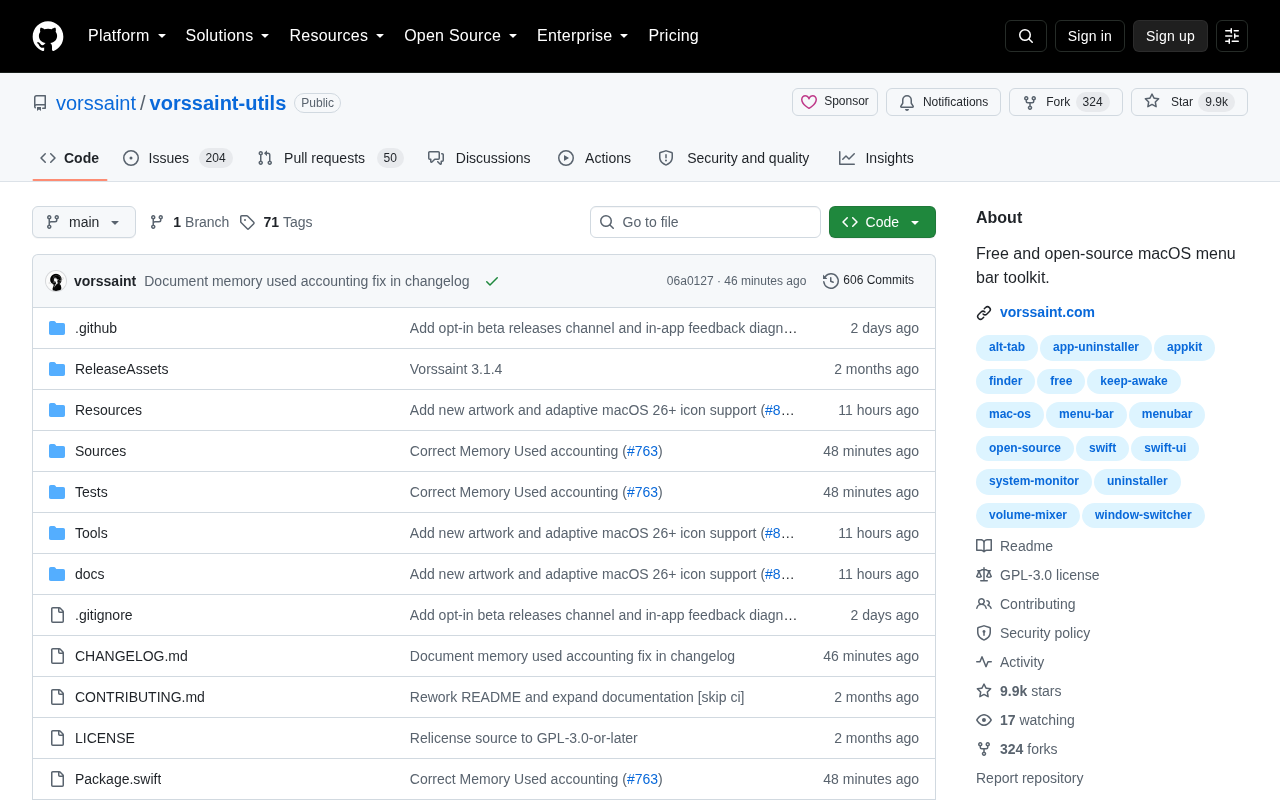
vorssaint-utils: A Free and Open-Source macOS Menu Bar Toolkit
vorssaint-utils is a free and open-source macOS Menu Bar toolkit built with native Swift, offering excellent performance and low resource usage. With nearly 10K GitHub stars, it's an ideal alternative to paid Menu Bar tools.
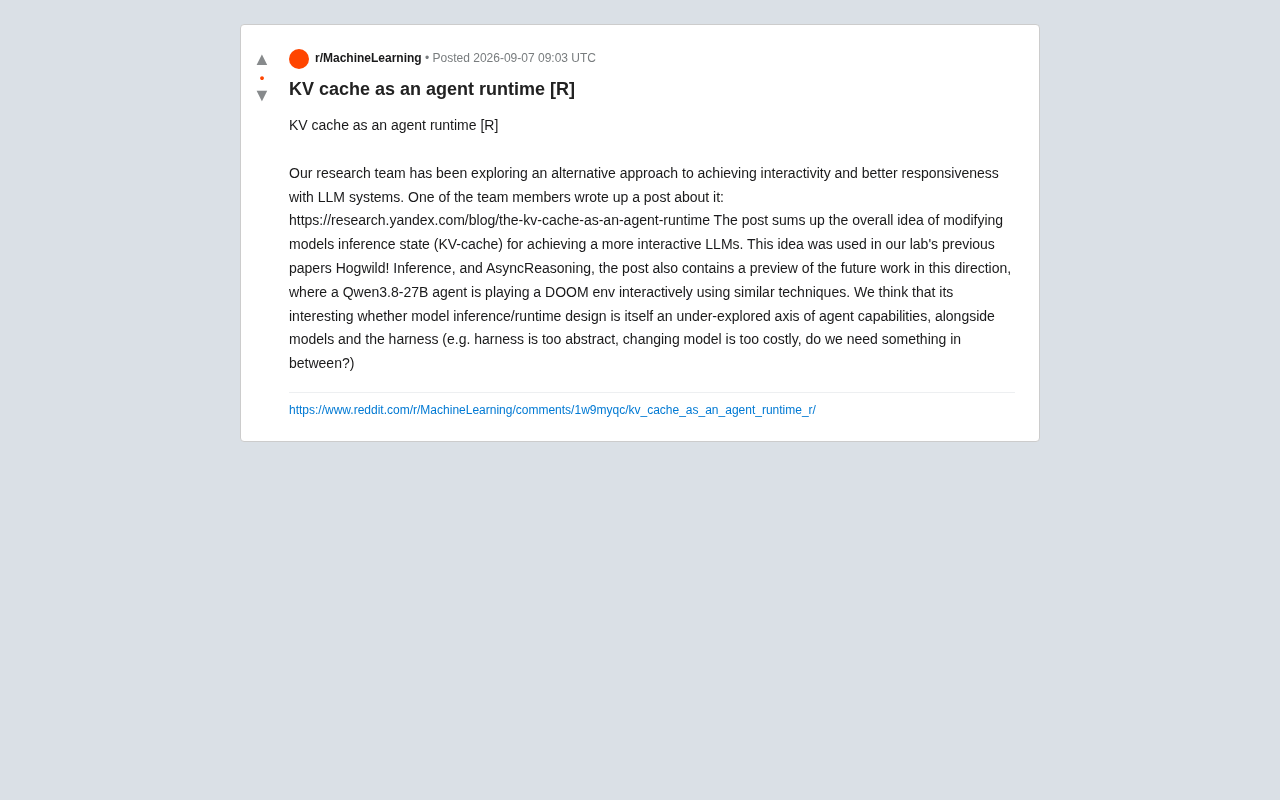
KV Cache as Runtime: The Third Path for AI Agent Interaction
Deep dive into Yandex's KV cache runtime approach: manipulating inference state for low-cost, real-time AI agent interaction beyond training and prompting.