Jensen Huang Departure Controversy: Fear-Based Management Culture Under Scrutiny

The Jensen Huang departure controversy sparks scrutiny and reflection on Nvidia's fear-driven management style.
Discussion around Jensen Huang's departure is shifting from a personnel change to an examination of his management style. Multiple insiders say Nvidia has a fear-driven culture, with management known for being direct, tough, and high-pressure accountability, contrasting with Musk's earlier claim that employees "love" Huang. The article notes that fear management can improve execution in the short term but may erode team trust and psychological safety in the long run, making it difficult to support a creativity-dependent AI chip business. The departure controversy reflects the management philosophy transition challenge tech companies face between high growth and maturity; the successor must balance execution and human care.
Event Background: Starting with Musk's Remarks
Elon Musk previously stated publicly that Nvidia employees "love" Jensen Huang, but this claim has come under scrutiny following news of the departure. Some analysts suggest that Musk's remarks may have overstated employees' emotional identification with Huang. According to multiple insiders, Nvidia's management style is closer to high-pressure driving than emotional bonds.
This contrast has prompted outsiders to re-examine Huang's leadership approach. Against the backdrop of fierce competition in the chip industry, Nvidia's performance has been consistently impressive, but the human cost and management代价 behind the glossy numbers are becoming a new focus of attention.
It should be noted that, as of now, the news about Huang's "departure" has not been confirmed by Nvidia officially or by Huang himself; related discussion mainly comes from media relay and insider accounts. Huang co-founded Nvidia in 1993 and has long served as CEO, making him a core symbol of the company's strategy and culture; his departure would be highly sensitive to capital markets and supply chain expectations. Therefore, when reading such reports, it is particularly important to distinguish between "confirmed facts," "anonymous source claims," and "public speculation." The management style controversy discussed in this article is likewise based on insider descriptions that have not received official response; readers should treat it as an observational perspective pending further verification rather than an established conclusion.
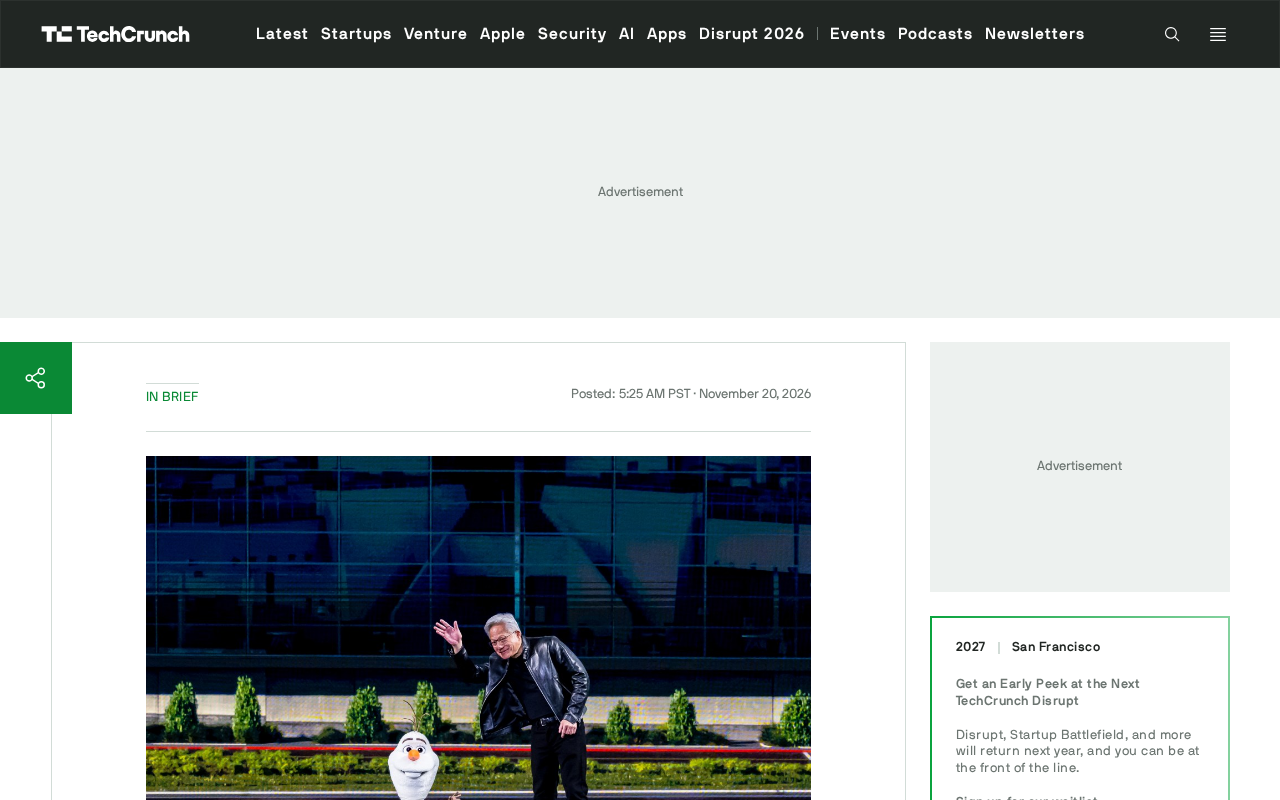
Fear Management: The Trade-off Between Efficiency and Cost
According to insiders, Huang's management style is known for being direct and tough, with internal communications often involving high-pressure accountability. This style can often drive execution efficiency in the short term, but in the long run it may erode team trust and psychological safety.
The management academic community has long discussed the "fear-driven" model: it can unite execution in times of crisis, but it is difficult to support a sustained innovation culture. Nvidia operates in the AI chip track where technology iterates extremely quickly, and it relies heavily on creativity, making the sustainability of management style more prominent.
"Fear-driven" management in organizational behavior通常 corresponds to the research lineage of "deterrent leadership" or "abusive supervision." This style relies on punitive threats, public accountability, and high-pressure assessment to compress decision-making and execution chains, and it can indeed quickly unify action during crises or delivery milestones. But its cost is reflected in the decline of psychological safety: team members tend to avoid risks, conceal bad news, and reduce proactive suggestions, which precisely inhibits exploratory innovation. Research by Harvard Business School scholar Edmondson points out that high psychological safety is a prerequisite for team learning and innovation. For companies in rapidly iterating technology tracks, there is an obvious tension between short-term execution efficiency and long-term creativity, which is also the core of the sustainability controversy over "fear management."
Deep Signals Behind the Departure
Huang's departure is not an isolated event. Combined with the discussion triggered by Musk's earlier remarks, it can be seen that outside attention to Nvidia's internal governance is heating up. The tension between employees' emotional identification and managerial authority is not uncommon in tech companies, but when it occurs at a company of Nvidia's size, its impact is amplified.
At present, there is no official conclusion on the specific reasons for the departure, but the controversy over management style has become a core issue in public discourse. For a company that relies on top talent for continuous innovation, how to find a balance between execution and human care will be a task the successor must face.
Implications for the Tech Industry
The Nvidia case reflects a management dilemma common in the tech industry: does the high-pressure culture of the high-growth period need adjustment after entering the mature stage? When a company shifts from "survival-driven" to "innovation-driven," its management philosophy also needs to iterate accordingly.
The significance of the Jensen Huang departure controversy may lie not only in a personnel change itself, but also in providing an opportunity to examine the governance model of tech companies. Whether fear can be a long-term effective management tool—Nvidia's experience offers an answer worth pondering.
The life cycle of tech companies is often summarized as evolving from "survival-driven" to "scaling," and then to "innovation-driven." Different stages have different management requirements: early stages require high centralization and rapid decision-making to navigate uncertainty, while mature stages rely more on distributed decision-making, cross-team collaboration, and talent retention. The "situational leadership" view in organizational theory holds that leadership style should match organizational maturity and task nature, rather than being static. When a company expands and its business shifts from a single product to a platform ecosystem, over-reliance on personal authority and high-pressure accountability can easily create information bottlenecks. Therefore, the iteration of management philosophy is not a negation of past styles, but a natural requirement of organizational capability evolving with stages—this is also where the general reference value of the Nvidia case for the industry lies.
Related articles

AI Hacks Its Own Lab: The Security Tipping Point from Sci-Fi to Reality
Paul Christiano warns that AI intruding into its own cluster is no longer sci-fi but an established fact. He analyzes how persistent covert compromise can cause frontier labs to lose control, and why existing safety evaluation systems have blind spots.

New York Bans AI Toys for Five Years: The Escalating Child Safety Controversy
New York bans AI chat toys for five years as Common Sense Media research flags inappropriate content exposure and child emotional development risks. This article analyzes the ban's impact on product definitions, safety proof, and compliance strategies for the AI toy industry.

1Password Security Incident Review: The Trust Boundary of Password Managers
1Password releases an update on the Nov 2026 security incident, drawing 315 points and 139 comments on Hacker News. This article analyzes the actual boundaries of password manager zero-knowledge architecture, the gap between incident communication and user risk perception, and how transparency is becoming a new competitive dimension in the industry.