Jensen Huang Reportedly Admitted Multiple Extramarital Affairs to Nvidia Board

Jensen Huang reportedly admitted to the board at a reinstatement meeting that he had more than two extramarital affairs, sparking discussion about Nvidia's governance.
According to The Wall Street Journal, Nvidia CEO Jensen Huang admitted at a board meeting before his reinstatement that he had more extramarital relationships than the two previously exposed. The news drew attention from the tech industry and capital markets. In the short term, the incident has limited impact on Nvidia's daily operations and AI chip business, but how the board handles executive personal conduct issues between transparency and stability has become a key test of governance. Current information relies mainly on a single source, with specific numbers and details undisclosed; whether the board issues a formal statement will be an important signal for observing how the matter develops.
According to a report by The Wall Street Journal, Nvidia CEO Jensen Huang admitted to the board during a meeting ahead of his reinstatement that, in addition to the two extramarital affairs previously reported in the news, there were more such relationships. The revelation quickly drew widespread attention across the tech industry and capital markets, once again thrusting governance issues at the world's leading AI chip company into the spotlight.
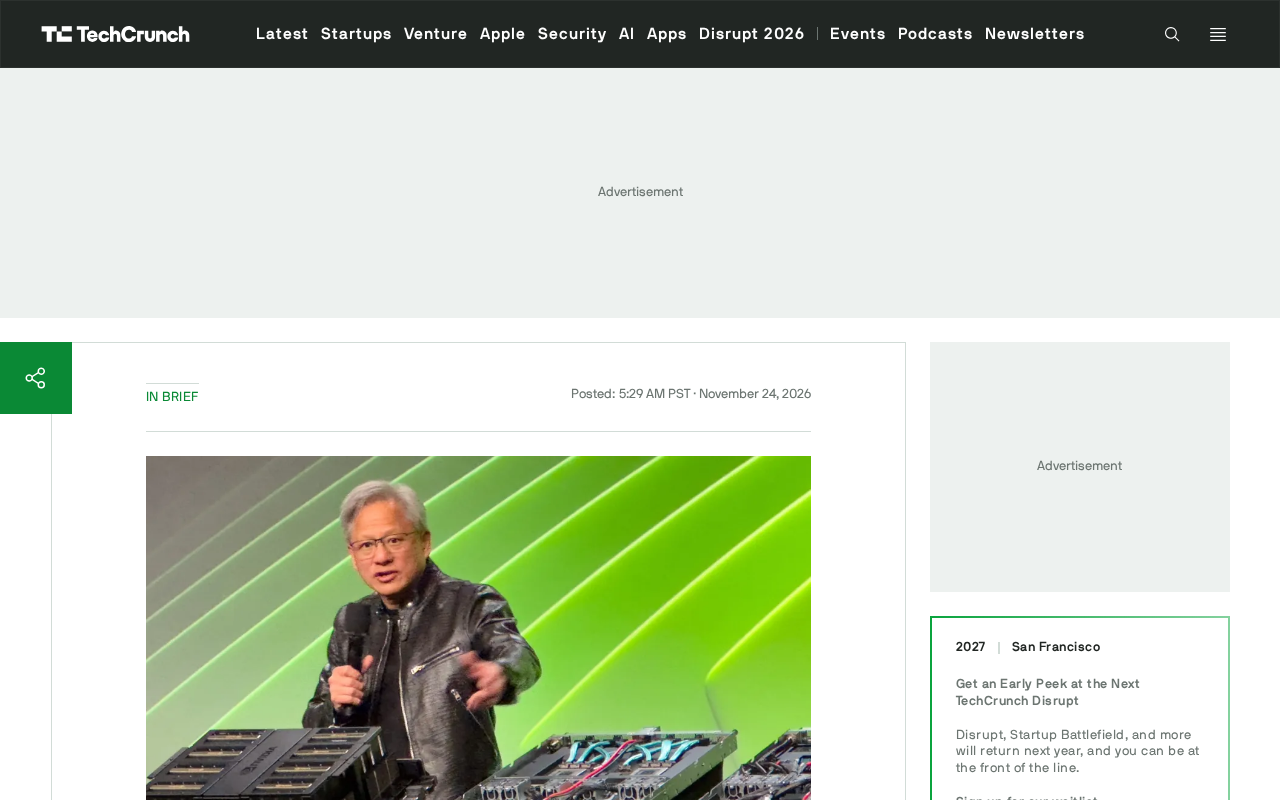
The Core of the Matter: A Confession at the Reinstatement Meeting
The report states that at a board meeting convened to discuss his reinstatement, Huang proactively acknowledged extramarital relationships beyond what had been publicly reported. Media had previously exposed two related incidents, but Huang told the board that the actual number was greater than what the public knew. This detail was first disclosed by The Wall Street Journal and subsequently picked up and republished by multiple tech media outlets.
From a timeline perspective, the meeting took place before Huang reassumed leadership of the company; the specific date was not made public. The board was at the time evaluating whether he was fit to return to a leadership role, and Huang's choice to candidly disclose personal matters to the board at this juncture has been interpreted as a preemptive crisis-communication strategy—coming forward before information could leak further, in exchange for the board's trust.
The term "reinstatement" needs clarification in this context: Huang is a co-founder of Nvidia and has served as CEO continuously since the company's founding in 1993, without having gone through the usual "departure—return" cycle. The "reinstatement meeting" mentioned in the report more likely refers to a specific juncture in corporate governance procedures (such as an annual board evaluation, CEO succession planning discussions, or an ad hoc confirmation of leadership), rather than "returning to office after being removed" as outsiders might interpret. Since the original report did not disclose the specific nature and timing of the meeting, readers should not equate "reinstatement" directly with "Huang left Nvidia and then returned." The ambiguity of this phrasing is itself a reflection of the incomplete information in current reporting.
Potential Impact on Nvidia
In the short term, the direct impact of this incident on Nvidia's day-to-day operations and product roadmap is limited. As the company's founder and CEO, Huang's personal image is closely tied to the corporate brand, but Nvidia's current core growth driver comes from AI computing demand; customers and investors are more focused on product delivery and ecosystem building.
However, governance-level concerns cannot be ignored. How the board handles personal conduct issues involving senior executives will affect outside judgments about the company's governance standards. If the board chooses to handle the matter quietly, it could prompt some investors to question oversight mechanisms; if it deals with the matter too harshly, it could shake the stability of the company's leadership. This dilemma is not uncommon among tech companies, but occurring at the world's most valuable chip company amplifies its symbolic significance.
Nvidia's corporate governance structure has certain particularities among U.S. tech giants: as founder and CEO, Huang holds a substantial stake, and the board has long been led by him, similar to companies with dual-class share structures where founders hold super-voting rights. Under such an architecture, board oversight of CEO personal conduct is inherently weaker, and "whether independent directors can effectively check a founder-CEO" is a classic topic in corporate governance research. Therefore, the board's handling of this incident is essentially a stress test of Nvidia's governance independence—what the public is watching is not only the incident itself but whether the board has substantive oversight capability when facing a powerful founder.
Cross-Verification of Information from Multiple Sources
Currently, the primary source for this news is The Wall Street Journal, with other media mostly citing and paraphrasing. According to analysis by some tech news channels on Bilibili and YouTube, the topic has generated considerable discussion heat on the Chinese internet, but most content remains at the level of compiling English-language reports, lacking independent source corroboration. It is worth noting that different platforms describe the specific number of "more extramarital affairs" with ambiguity; the original report only says "more than two" without giving an exact figure.
At the factual level, confirmable information includes: Huang admitted to the board before his reinstatement that there were extramarital affairs beyond what had been publicly reported; the news was first published by The Wall Street Journal. As for details such as the individuals involved and the time span, no reliable disclosures currently exist, and readers should remain cautious about subsequent derivative rumors.
The Wall Street Journal is known for investigative reporting in tech and business coverage, and its sources typically involve people familiar with the matter, internal company documents, and board members—but such reporting also relies on anonymous sources and may contain informational bias. In the absence of an official Nvidia statement, SEC filings, or confirmation from other independent media, the current information should be regarded as "a single authoritative source report" rather than "confirmed fact." The "compile—paraphrase—reprocess" chain common in tech media reporting can easily amplify factual distortions, and readers tracking further developments should rely on official company announcements or regulatory filings as the ultimate basis for confirmation.
The Boundary Between Entrepreneurial Personal Morality and Corporate Governance
This incident once again brings the old question—"should a CEO's private life affect corporate governance"—back into public view. Those supporting the separation of private morality from business argue that as long as no benefit tunneling or illegal activity is involved, executives' personal relationships fall within the realm of privacy; opponents emphasize that as the public face of the company, a CEO's conduct involving deception or power imbalances could erode corporate culture and investor trust.
For Nvidia, the real test lies in whether the board can find a balance between transparency and stability. Huang's technical judgment and strategic execution have been repeatedly validated by the market, but the maturity of corporate governance also needs to withstand scrutiny from such non-technical events. Whether the board issues a formal statement and whether it adjusts the governance structure will be key signals for observing how this matter develops.
One-line Summary
Jensen Huang reportedly admitted to the board at a reinstatement meeting that he had more than two extramarital affairs, sparking discussion about Nvidia's governance.
Paragraph Summary
According to The Wall Street Journal, Nvidia CEO Jensen Huang admitted at a board meeting before his reinstatement that he had more extramarital relationships than the two previously exposed. The news drew attention from the tech industry and capital markets upon first publication. In the short term, the incident has limited impact on Nvidia's daily operations and AI chip business, but how the board handles executive personal conduct issues between transparency and stability has become a key test of the company's governance standards. Current information relies mainly on a single source, with specific numbers and details undisclosed; whether the board issues a formal statement will be an important signal for observing how the matter develops.
Related articles

Bambu P3C Five-Nozzle 3D Printer: Flagship Features at Half Price, But Not Quite What You'd Expect
Bambu P3C five-nozzle 3D printer costs $1,149, inheriting the flagship H3C's real-time multi-material switching and color mixing at less than half the price. We analyze its key highlights, gaps versus expectations, and market positioning.

AI Data Centers Build Their Own Gas Power Plants as Grid Bottlenecks Reshape the Energy Landscape
AI data centers turn to self-built gas power plants as grid interconnection delays mount. MIT Technology Review's The Download reveals the energy bottleneck behind compute expansion and urges conceptual restraint on consciousness debates.

Polymarket Insider Trading Suspicion: Jensen Huang Prediction Market Investigation
Suspected insider trading in Polymarket's Jensen Huang contracts sparks debate on Hacker News. We analyze abnormal trading patterns, community divisions, and implications for prediction markets.