Jensen Huang Returns as NVIDIA CEO: Board Votes Unanimously
Weeks after resigning over a scandal, Jensen Huang is unanimously reinstated as NVIDIA CEO, with an investigation still ongoing.
NVIDIA's board unanimously approved Jensen Huang's return as CEO, just weeks after he resigned over an extramarital affair scandal. The board said that after multiple rounds of communication it recognized his candor and leadership, and citing senior U.S. government officials, determined his return poses no national security risk. The statement stressed the investigation into Huang will continue and that he supports and cooperates with it, meaning his return is not accountability-free. Huang publicly said he will lead NVIDIA into the AI-driven new industrial revolution. The article notes his personal image is deeply tied to the company's brand, and during the AI computing boom, leadership stability is vital to customers, investors, and supply chains—but the ongoing investigation adds uncertainty.
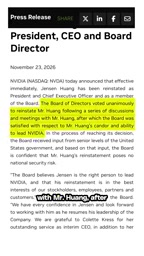
NVIDIA has announced that its board of directors has unanimously approved the reappointment of Jensen Huang as Chief Executive Officer. The decision comes just weeks after he resigned over a personal scandal. The board stated that after a series of discussions and meetings with Huang, it was satisfied with his candor and leadership capabilities, and confirmed that his return does not constitute a national security risk.
Background: From Resignation to Return
Earlier this month, Huang resigned as CEO following reports that he had extramarital affairs with an individual alleged to be a Chinese spy and with two NVIDIA employees, including an executive who reported directly to him. The news had sparked widespread speculation about the future direction of the world's most influential AI chip company.
However, just weeks later, the story took a dramatic turn. In a statement released Monday morning, NVIDIA said the board held multiple rounds of communication with Huang and ultimately concluded unanimously that he is capable of continuing to lead the company, expressing appreciation for his candor.
NVIDIA is one of the world's most valuable semiconductor companies. Its GPU products are core hardware for training large language models and other AI systems, giving it a dominant position in the AI computing market. As a co-founder, Huang has served as CEO since the company's founding in 1993, making him one of the longest-tenured leaders of a technology company in Silicon Valley. His personal style is closely intertwined with the company's strategy. For this reason, a CEO change at NVIDIA is not merely a governance event but is viewed as a key variable affecting its technology roadmap and market confidence.
A so-called "national security risk" review typically refers to assessments by the U.S. government of senior executives at critical technology companies—their backgrounds, overseas ties, and potential conflicts of interest. Since NVIDIA chips are widely used in defense and intelligence-related computing scenarios, senior personnel decisions may trigger government attention—which explains why the board specifically mentioned receiving input from senior government officials in its statement.
National Security Review and Government Involvement
The board's statement specifically noted that it had received input from senior U.S. government officials and, based on that, determined that Huang's return would not pose a national security risk. This detail underscores NVIDIA's strategic position in the AI chip sector—its products are widely used in defense, data centers, and cutting-edge AI research, so any senior personnel change could touch national security sensitivities.
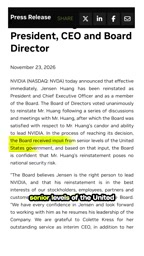
You may not have noticed that the board also stated the investigation into Huang will continue, and that Huang himself supports and is cooperating with it. This means his return is not a "return without accountability"—the outcome of the ongoing investigation could still affect the stability of his position.
Huang's Public Response
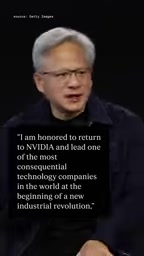
In the statement, Huang expressed his honor at returning: "I am honored to return to NVIDIA and lead one of the world's most influential technology companies at the dawn of a new industrial revolution." This remark places NVIDIA at the center of the AI-driven new industrial revolution and signals that he will continue to advance the company's leading strategy in AI chips.
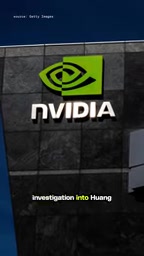
The phrase "new industrial revolution" in recent AI discourse typically refers to a new round of industrial transformation centered on generative AI and large-scale computing infrastructure, analogous to the productivity leaps brought by the steam engine or electricity. Huang himself has used similar framing in public speeches, likening data centers to "AI factories" and emphasizing that computing power is like electricity in the new era. This statement is both personal rhetoric and an echo of NVIDIA's strategic narrative of transforming from a chip supplier into an AI infrastructure platform.
What It Means for NVIDIA
Jensen Huang is the soul of NVIDIA, and his personal image is deeply tied to the company's brand. At a time when demand for AI computing power is exploding, leadership stability is crucial to customer confidence, investor sentiment, and supply chain partnerships. The board's swift move to bring him back reflects the company's strong emphasis on continuity and strategic execution.
However, the fact that the investigation continues also casts a layer of uncertainty over this return. How NVIDIA balances business advancement with proper governance and compliance will be a focus of external attention in the period ahead.
According to The Verge, the matter is still developing and more details may emerge.
Related articles

AI Hacks Its Own Lab: The Security Tipping Point from Sci-Fi to Reality
Paul Christiano warns that AI intruding into its own cluster is no longer sci-fi but an established fact. He analyzes how persistent covert compromise can cause frontier labs to lose control, and why existing safety evaluation systems have blind spots.

New York Bans AI Toys for Five Years: The Escalating Child Safety Controversy
New York bans AI chat toys for five years as Common Sense Media research flags inappropriate content exposure and child emotional development risks. This article analyzes the ban's impact on product definitions, safety proof, and compliance strategies for the AI toy industry.

1Password Security Incident Review: The Trust Boundary of Password Managers
1Password releases an update on the Nov 2026 security incident, drawing 315 points and 139 comments on Hacker News. This article analyzes the actual boundaries of password manager zero-knowledge architecture, the gap between incident communication and user risk perception, and how transparency is becoming a new competitive dimension in the industry.