Jensen Huang Reveals the 30-Year Nvidia-TSMC Origin Story: One Phone Call Changed Everything

Jensen Huang recalls writing to Morris Chang 30 years ago, starting Nvidia's trust-based, win-win long-term partnership with TSMC.
During Lex Fridman's Taiwan trip, Jensen Huang described the origin of Nvidia's 30-year partnership with TSMC: in 1996, seeking a foundry for his startup, he reached only voicemail via the Yellow Pages and wrote to founder Morris Chang, who eventually called back personally. Huang chose TSMC not for price or capacity but for Morris Chang's business philosophy and values. He practices "rough fairness," avoids rigid contracts, and wishes partners long-term success—an advantage in today's AI compute race.
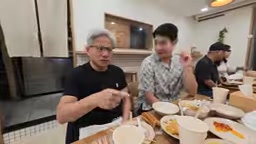
During Lex Fridman's trip to Taiwan, Nvidia founder Jensen Huang rarely shared the origin of Nvidia's 30-year partnership with TSMC. A bowl of cold soy milk and a table of Taiwanese breakfast—behind it all is a phone call from 30 years ago that changed the semiconductor landscape.
From Voicemail to a Call Back from the Founder
In 1996, the PC revolution was just getting started, and the release of Windows 95 had the entire industry buzzing. Jensen Huang was looking for a chip foundry for his startup, Nvidia, but the foundry industry rules were harsh at the time: to get capacity, you often had to license your technology.
"The first company we approached was SGS Thompson," Huang recalled. "Back then, if you wanted to use someone else's foundry, you had to license your technology. It was a bit like some deals in the early AI field—if you want compute, you have to license something first."
Later he heard about Taiwan's TSMC and UMC, which had "no strings attached." He looked up the phone number for TSMC's U.S. office in the Yellow Pages and called, but got a voicemail.
"What kind of company only has a recording when you call?" Huang laughed. "I left a message saying Nvidia was a startup making graphics chips. That voicemail might be worth a lot now."
He called several times, but no one replied. Finally, he wrote a long letter to TSMC founder Morris Chang.

The foundry model is the key background for understanding this story. Before Morris Chang founded TSMC in 1987, most semiconductor companies were IDMs (integrated device manufacturers), meaning they designed and manufactured their own chips. TSMC pioneered the pure-play foundry model: manufacturing chips only for others, not designing and not competing with customers. This model allowed fabless design companies like Nvidia to focus on R&D while outsourcing capital-intensive manufacturing. The 1990s coincided with the PC revolution, and chip demand exploded, but foundry capacity was scarce, and foundries often required customers to exchange technology licenses. TSMC and UMC were the first to offer "no strings attached" foundry services, which became an important reason Huang proactively reached out.
"This Is Morris Chang from TSMC"
After the letter was sent, there was no reply for a long time. Then one day around 6 p.m., the phone rang.
"The person said, 'This is Morris Chang from TSMC.' At that time, everyone outside my office was playing games—I remember it was the first-generation PlayStation—laughing and shouting. I yelled to them: Hey guys, quiet down, Morris Chang is calling!"
Huang said he was delighted that a founder would personally call back, "maybe we won't die." Morris Chang invited him to Taiwan. That was Huang's first trip back to Taiwan in 30 years, and it was the beginning of everything.
He first visited UMC, then TSMC. Both companies were friendly. When asked why he ultimately chose TSMC, Huang's answer was not price or capacity.
"I like TSMC because Morris Chang said many times, 'We can't do that.' He has his own business philosophy and core values, and he spent a lot of time talking about corporate governance, integrity, partnership, and continuous thinking."
Morris Chang said one thing to him: "Jensen, if we work together, I promise you we will go through fire and water for you."
"For 30 years, they have been going through fire and water for me. He kept his word."
The Wisdom of Not Signing Rigid Contracts: Choosing Who to Work With
Huang emphasized that choosing a foundry is not "buying something," but "choosing who to work with."
"Because you are building a chip together, not taking something off the shelf. Building chips is too hard; it's impossible to know all the details in advance, impossible to make all decisions ahead of time."
He compared the relationship to a marriage, but opposed an "ironclad prenuptial agreement": "The more you try to write it specifically, the more fragile the relationship becomes. So I keep it loose and pursue 'rough fairness.' Sometimes I win, sometimes they win, and over time, everything balances out."
According to Huang, he takes the same approach with employees—no ironclad contracts, but choosing to cooperate with each other.
"They need to know I want them to win. My employees know I want them to win. TSMC knows every day that I want them to win. That attitude shows up in partnerships and business dealings."
What does deep supply chain integration mean in the semiconductor industry? From design to mass production of an advanced-process chip, design companies and foundries need to collaborate for years on process parameters, yield optimization, packaging and testing, and other steps. Nvidia's GPU architecture is highly coupled with TSMC's process technology; for example, every iteration from 28nm to 5nm requires close coordination between engineering teams on both sides. This relationship is far from standard product procurement; it is joint development. Huang's emphasis on "not signing rigid contracts" is actually a trust mechanism based on long-term repeated interactions: in a fast-iterating industry, overly rigid contracts can hinder adaptability, while the tacit understanding of "rough fairness" allows both sides to make quick decisions and share risks at every technology turning point.
"Let Others' Success Become Your Success"
Huang also shared a detail: last year, the stock prices of his entire supply chain rose 300%, while Nvidia's stock price stayed flat.
"I'm not happy about that, but it's because our platform is solid enough that everyone can rise and match it. That's a good thing."
He concluded: "Hoping for the long-term success of partners and friends ultimately leads to your own success. This principle applies to family, employees, partners, and customers."
Implications for the Tech Industry
This story is not mere nostalgia. At a time when the AI compute arms race is white-hot, the deep bond between Nvidia and TSMC precisely explains why Nvidia can maintain leadership in chip supply. Huang's idea of "choosing who to work with" rather than "what to buy" seems especially critical in supply chain competition in the AI era.
"When every AI company is fighting for TSMC's capacity, what Nvidia has is 30 years of trust," one observer commented.
Taiwan Trip and Food Guide
The interview took place over a relaxed Taiwanese breakfast, and Lex Fridman called Huang "the world's best food guide." Huang introduced cold soy milk (because most Asians are lactose intolerant), savory soy milk, fried dough sticks, pork floss, soup dumplings, and joked that "eating and hunger are completely unrelated."
But the most important thing at this breakfast was still that story: a founder personally called back, starting a 30-year partnership and shaping the underlying landscape of today's AI chips.
"This journey is not just a partnership, but the beginning of an entire industry," Lex Fridman concluded.
As Huang said, in the tech industry, what is rare is not just choosing who to work with, but choosing to work together for decades.
Background
Capacity competition in the AI compute arms race: Global demand for AI chips is surging, and TSMC's advanced process capacity (such as 3nm and 5nm) has become a scarce resource. Nvidia's ability to secure priority capacity is due not only to its order scale but also to the trust and coordination capabilities accumulated over 30 years of cooperation. When allocating capacity, TSMC prioritizes long-term partners' technology roadmap alignment and delivery reliability. The deep bond between Nvidia and TSMC makes it difficult for competitors to replicate the same supply assurance in the short term. Huang's statement that "when every AI company is fighting for TSMC's capacity, what Nvidia has is 30 years of trust" refers precisely to this hidden barrier based on historical relationships.
One-line Summary
Jensen Huang recalls writing to Morris Chang 30 years ago, starting Nvidia's long-term partnership with TSMC based on trust and mutual success.
Paragraph Summary
During Lex Fridman's trip to Taiwan, Jensen Huang recounted the origin of Nvidia's 30-year partnership with TSMC: in 1996, while looking for a foundry for his startup, he found TSMC in the Yellow Pages but only reached voicemail, so he wrote to founder Morris Chang and eventually received a personal call back. Huang chose TSMC not because of price or capacity, but because he agreed with Morris Chang's business philosophy and core values. He follows a "rough fairness" approach to cooperation, avoids rigid contracts, and hopes for partners' long-term success. At a time when the AI compute race is white-hot, this relationship has become a key advantage for Nvidia in maintaining leadership in chip supply.
Related articles

Reinforcement Learning Takes On Getting Over It: Distributed Training Strategies Behind 63% Progress
A developer uses deep reinforcement learning to tackle Getting Over It. The agent climbs from the bottom to 63% progress but gets stuck at the anvil. The project is open-sourced, using divide-and-conquer training and CPU-only training, seeking community collaboration to break the bottleneck.

Sigma FP2 Released: The World's Smallest Full-Frame Camera Gets Sensor and Screen Upgrades
Sigma launches the FP2 full-frame camera, retaining its smallest-and-lightest design with three key upgrades: improved sensor, articulating LCD screen, and longer battery life—built for portable video creators.

AAAI 2027 Phase 2 Decisions Imminent: Community Debates Review Fairness and Submission Ecosystem
AAAI 2027 phase 2 review results are imminent, with the Reddit community debating reviewer consistency and process transparency. This article examines pre-decision sentiment, structural tensions in top conference review, and practical strategies for authors.