Jony Ive and Sam Altman Found IO: A Complete Breakdown of Their AI Hardware Design Philosophy
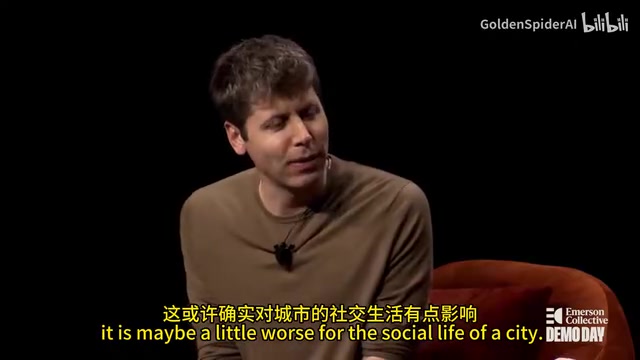
Jony Ive and Sam Altman co-found IO to build AI hardware that subverts the attention economy.
Former Apple Chief Design Officer Jony Ive and OpenAI CEO Sam Altman have co-founded IO, a company dedicated to developing a new kind of AI hardware product. Their design philosophy starts from human nature rather than technical capabilities, employing a counterintuitive exploratory methodology that first deeply investigates fundamental questions about humanity, nature, and the essence of intelligence. The core product vision is to replace the attention-grabbing "Times Square" experience with the calm of a "lakeside cabin," with launch expected in less than two years.
A Meeting of Two Generational Thinkers
When former Apple Chief Design Officer Jony Ive met OpenAI CEO Sam Altman two years ago, they discovered they had been thinking about the same questions — about design, intelligence, and the role technology should play in human life. This conversation took place at the end of a Demo Day, marking the first time the two publicly discussed in depth the design philosophy and product vision behind their jointly founded company, IO (pronounced I.O.).
IO is the product of a deep collaboration between Jony Ive's design firm LoveFrom and OpenAI. LoveFrom was founded by Ive in 2019 after leaving Apple and brings together several former core Apple designers. In late 2023, OpenAI and LoveFrom announced a strategic partnership, which later evolved into the co-founding of IO as an independent entity. The name IO itself alludes to the fundamental computer science concept of Input/Output, while also echoing the core proposition of human-computer interaction — when machines understand humans well enough, the boundary between "input" and "output" becomes blurred or even disappears entirely.
This was not an ordinary product launch conversation. It revealed an entirely new methodology for product creation — in the age of AI, the best products may not start from technology, but from a profound understanding of human nature.
San Francisco: A Cultural Hotbed of Creativity
Jony Ive recalled his first visit to San Francisco in 1989 when he was just 21 years old — it was his first time on an airplane. The city's improbable terrain, density, and diversity left a deep impression on him. He believes that the geographic constraints of the San Francisco peninsula actually created a density of "impossible encounters and collaborations."
Sam Altman offered an interesting perspective: San Francisco's weather is crucial for creativity. "Cold, crisp weather helps my creative process," he said. "Every time I come back from somewhere hot and humid, the moment I land in San Francisco, my thinking feels clearer and more expansive." He also connected Burning Man and the birth of AI — arguing that the same cultural force drove the emergence of both.
The deeper implication of this discussion is that true innovation requires a specific cultural soil — freedom, tolerance for weirdness, and dense collisions of talent. As Sam put it: "Freedom is freedom — you either accept all of it with all its weirdness, or you don't."
A Counterintuitive Creative Methodology: Don't Start with the Product
The most striking part of this conversation was Jony Ive's revelation of IO's product development methodology. They didn't start from the question "what product suits AI?" Instead, they first explored a series of topics seemingly unrelated to product development:
- The relationship between humans and nature
- The relationship between humans and animals
- The relationship between humans and other humans
- The nature of intelligence
- The history of tools
- Values and human rights
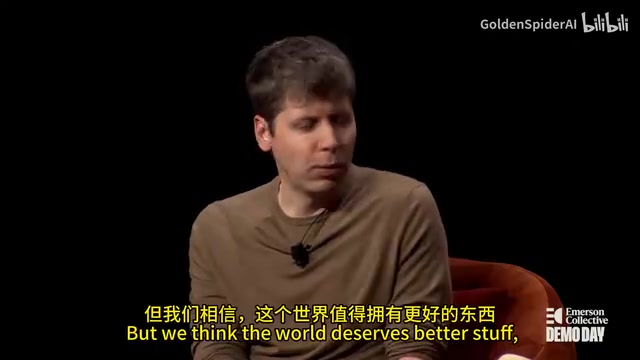
Jony explained: "If you have a predetermined goal, it just makes me feel profoundly disappointed and lifeless, because you have no idea what you're missing." His relationship with Sam is built on a shared trait: "a desire to learn and explore, rather than to prove yourself right."
Sam described what this process looks like in practice: Jony's team creates volumes of beautifully crafted research books — on the history of shapes, camera design, how relationships evolve over time — each as thick as a brick, stacked several feet high. "Each book is so beautifully made and thoughtful that you think 'this can't possibly have anything to do with the product,'" Sam said. "But eventually all the threads converge, and one day Jony calls and says 'we have something to show you.'"
This methodology has deep roots in design tradition. Jony Ive's design philosophy at Apple was profoundly influenced by German industrial designer Dieter Rams. Among Rams' "Ten Principles of Good Design," "Good design is as little design as possible" was treated by Ive as gospel, finding its ultimate expression in products like the iMac G3, iPod, and iPhone — creating value through subtraction rather than addition. This philosophy requires designers to develop an almost anthropological understanding of human behavior and needs before ever putting pen to paper, so they know "what to subtract." Transplanting this methodology to AI hardware means completely hiding the cognitive complexity of models behind minimalist physical forms — and that requires starting from human nature, not from technical capabilities.
Times Square vs. Lakeside Cabin: The Core Philosophy of AI Products
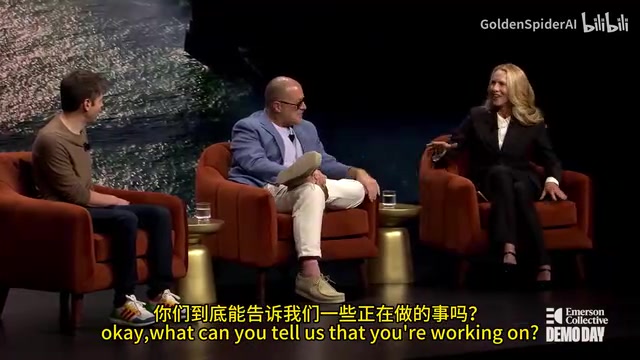
When asked what IO is specifically building, Jony characteristically gave a "non-answer." But Sam revealed the product's core design philosophy using a remarkably vivid metaphor:
The experience of modern tech products is like walking through New York's Times Square — flashing lights, notifications competing for your attention, dopamine chasing, brief attention spans, the small indignities of constant interruption.
What IO wants to create is the experience of sitting in the most beautiful cabin by a mountain lake — calm, peaceful, letting you focus on what truly matters.
This metaphor precisely targets the dominant paradigm of tech product design over the past decade-plus — the Attention Economy. This concept was introduced by economist Herbert Simon in the 1970s, with its core logic being: in an age of information overload, human attention becomes a scarce resource, and platforms use variable reward mechanisms to trigger dopamine release, creating addictive usage loops. Former Google design ethicist Tristan Harris called this "hijacking the brain" and founded the Center for Humane Technology to drive industry reflection. IO's "lakeside cabin" philosophy is essentially a systematic subversion of this design paradigm — and Sam believes that only the maturation of AI technology makes such subversion possible.
Sam argues this transformation was impossible in the pre-AI era. Only when you have a sufficiently intelligent AI that can:
- Handle matters on your behalf over extended periods
- Proactively filter irrelevant information
- Possess deep contextual awareness
- Judge when to interrupt you and when not to
- Understand the context of your entire life
— can you truly escape the "Times Square" interaction model. This isn't a simple "Do Not Disturb" mode; it's a fundamental paradigm shift in human-computer interaction.
Radical Simplicity in Design and Product Timeline
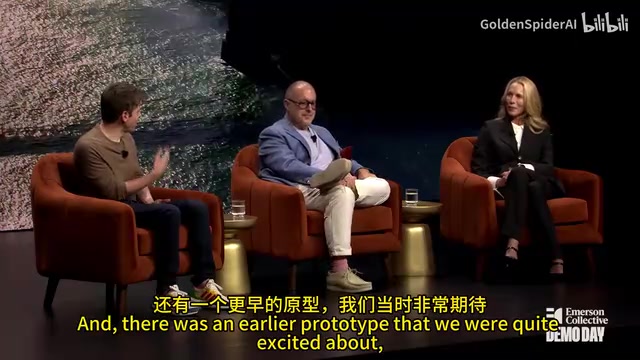
Jony described his aspirations for IO's product: "I love solutions that appear almost naively simple. I love extremely intelligent, sophisticated products that make you want to touch them, that feel unthreatening, that you use almost without thinking — they're just tools. We are what matters."
Sam added a fascinating detail: Jony once said good design should make you "want to lick it or take a bite." There was an early prototype they were both excited about, but Sam admitted "I had absolutely no urge to pick it up and bite it." It wasn't until a later version that the feeling finally appeared. This pursuit of sensory impulse isn't mysticism — it's the result of internalizing functional complexity within materials and form, so that all the user perceives is purity and delight, while all the intelligent computation happens silently "beneath the skin."
Regarding the product launch timeline, Sam stated clearly that IO's AI hardware product will arrive in less than two years. Jony emphasized the emotion the product should evoke: "Before we even knew what product we were making, I said 'we're going to make people smile, we're going to make people feel happy.'"
Related articles
 Tech Frontiers
A Rare Quiet Day in AI: Recursive Self-Improvement Stirs Beneath the Surface
A rare quiet day in AI sees multiple sources go silent simultaneously. Behind the calm, Recursive Self-Improvement (RSI) research continues. What this means for the industry.
 Tech Frontiers
Reve 2 vs. Ideogram 4: A Deep Dive into Layout Control in AI Image Generation
A deep comparison of Reve 2 and Ideogram 4's layout control capabilities, covering technical approaches, real-world use cases, and industry trends for designers and creators.
 Tech Frontiers
In the Weights: Check Your Influence Score in the AI World
In the Weights is an AI influence search engine that quantifies your presence in the AI world with a score. Explore how it evaluates practitioners and what it means for digital identity.