Kid Rock Helicopter Flyover Incident: Hegseth's Intervention Sparks Military Discipline Controversy

Hegseth's termination of helicopter violation investigation sparks civilian control controversy
US Defense Secretary Hegseth intervened in an Army helicopter's unauthorized flyover of Kid Rock's residence, terminating the investigation and exempting the pilots, then publicly announced it on social media. The move sparked debate over the boundary between civilian control and military discipline. A retired Air Force brigadier general criticized him for undermining flight discipline and warned it sends the wrong signal. The incident reflects how politicians navigate military interactions and the risk that "my buddy is the Commander-in-Chief"-style exemptions pose to military discipline culture.
Title
Kid Rock Helicopter Flyover Incident: Hegseth's Intervention Sparks Military Discipline Controversy
Meta Description
US Defense Secretary Hegseth terminated the investigation into an Army helicopter's unauthorized flyover of Kid Rock's residence and exempted the pilots from punishment, prompting criticism from a retired general about civilian interference in military discipline. The incident reflects the deeper tension between civilian control of the military and military discipline.
Article Content
US Defense Secretary Pete Hegseth has recently found himself embroiled in controversy after intervening in an incident involving Army helicopters flying unauthorized over musician Kid Rock's residence. What began as an "unauthorized" flight ended with Hegseth personally terminating the investigation and exempting the pilots from punishment—yet it has ignited widespread discussion both inside and outside the US military about civilian control of the military and military discipline.
Incident Recap: From "Saturday Morning Beer" to Military Investigation
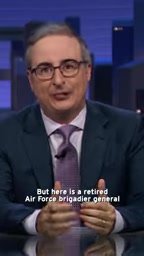
According to a breakdown by Last Week Tonight, in March of this year, two Army helicopters deviated from their training route and flew over Kid Rock's residence in Nashville. Kid Rock subsequently posted a video on social media showing the helicopters circling at low altitude while he waved in acknowledgment. The video quickly went viral and caught the military's attention—then-Army Chief of Staff Randy George supported launching a follow-up investigation to determine whether safety regulations had been violated.

Kid Rock appeared rather confident when recounting the matter to local reporters. He said he was sitting outdoors "drinking a Saturday morning beer" when he saw the helicopters approaching and "saluted them in appreciation." When a reporter asked about the military investigation, he replied: "I think they'll be fine. My buddy is the Commander-in-Chief."
Army helicopter training flights are typically subject to strict route and altitude regulations; deviations from established routes require air traffic control coordination and must be documented. Low-altitude flyovers of residential areas are especially sensitive, potentially violating Federal Aviation Administration (FAA) minimum safe altitude regulations and raising noise disturbance and privacy concerns. The military's investigation into such "unauthorized" deviations aims to determine whether they resulted from navigation errors, communication failures, or deliberate violations, in order to decide whether administrative or disciplinary action is warranted. The investigation itself does not presume the pilots guilty but is a standard safety and accountability procedure, the results of which typically affect pilots' flight qualifications and promotion records.
Hegseth's Intervention: Investigation Terminated and Public Statement
Kid Rock's "confidence" was not unfounded. The investigation was indeed suppressed—largely thanks to Hegseth. He personally terminated the investigation, exempted the involved crew from responsibility, and proudly announced on social media: "Thanks Kid Rock. US Army pilots' suspension lifted. No punishment. No investigation. Move on, patriots."

This statement quickly sparked controversy. In the view of Last Week Tonight, Hegseth's approach placed personal relationships above military discipline, while the incident itself involved flight safety—one of the helicopters flew "quite low," raising suspicions of violations.
As a civilian official, the US Defense Secretary holds ultimate administrative authority over military disciplinary matters and can exert influence within the framework of the Uniform Code of Military Justice (UCMJ), including dismissing charges or intervening in disciplinary decisions. However, defense secretaries have traditionally respected the professional judgment of service secretaries and avoided direct involvement in individual cases to preserve the independence of military justice and the integrity of the chain of command. Directly terminating an already-initiated investigation and publicly declaring "no punishment"—while procedurally within his authority—breaks the long-established tacit understanding between civilian leadership and the military system, easily inviting accusations of "political interference in discipline."
Retired General's Criticism: Flight Discipline Is Non-Negotiable
Amid the controversy, a retired Air Force brigadier general offered a rare voice of reason on Newsmax. He stated plainly: "Flight discipline is flight discipline, and any violation of flight discipline is unacceptable."
The general further noted that Hegseth's statement sent the wrong signal: "You're basically telling the pilot corps that if you want to fly over your mom's house, we think that's fine. I've personally seen people destroy entire careers over this kind of crap." He emphasized that the military needs "professional and disciplined forces," and that Hegseth "understands that spirit, but he doesn't know what you know and what I know—these things are serious, complex, and dangerous."
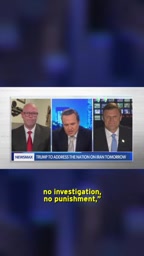
He concluded with advice: "Don't micromanage. That's not your job. You have lieutenant colonels below you who can handle this perfectly."
Flight discipline is the core of military aviation safety culture, encompassing standard operating procedures, crew resource management, and immediate correction and reporting of violations. Every flight accident or serious violation is incorporated into safety investigations to update training and regulations. Cases of pilots losing their careers over minor violations are not uncommon, because the military believes that lax discipline accumulates into systemic risk. The retired general's criticism is grounded in this professional consensus: enforcement of discipline must be consistent and predictable, and any exception may be interpreted as tacit approval, thereby weakening the force's respect for safety rules.
The Tension Between Civilian Control and Military Discipline
The core contradiction in this incident lies in the boundary between civilian leadership and military professional judgment. As Defense Secretary, Hegseth has the authority to influence disciplinary matters, but directly terminating an investigation and publicly endorsing violations breaks the discipline culture the military has long maintained.
Host Seth Meyers couldn't resist a jab: this reasoned analysis came from Newsmax—"the network that thinks Fox News is a bunch of communists." He described the contrast as "like watching a donkey correctly put on a condom"—while glad it was being responsible, he hadn't expected it to have that capability.
From a broader perspective, this is not just a farce about Kid Rock but also a reflection of how politicians navigate the fine line in their interactions with the military. When "my buddy is the Commander-in-Chief" becomes a justification for exemption, the professionalism and discipline of the armed forces face the risk of erosion. The retired general's warning is worth pondering: flight discipline is not a doctrine that can be bent at will but experience earned through countless careers and even lives.
Hegseth may believe he is "supporting patriots," but true support may lie in allowing the military to return to professional judgment rather than substituting political enthusiasm for flight safety.
Civilian control of the military is a fundamental principle of the US constitutional system, designed to ensure that the armed forces are subordinate to elected leadership and to prevent military dictatorship. However, this principle applies primarily to policy-making and strategic direction, not to micro-level disciplinary enforcement. Military professional judgment enjoys a degree of autonomy in operations, training, and discipline; civilian leadership typically exerts influence by appointing service chiefs and setting overall policy rather than directly intervening in individual cases. When civilian leaders substitute personal relationships or political considerations for the military's disciplinary procedures, they enter the gray zone between civilian control and military professionalism, potentially damaging the military's accountability culture and internal trust.
One-line Summary
Hegseth's termination of the helicopter violation investigation sparks civilian control controversy
Paragraph Summary
US Defense Secretary Hegseth intervened in an incident involving Army helicopters flying unauthorized over musician Kid Rock's residence, personally terminating the investigation, exempting the pilots from punishment, and making public statements on social media. The move has triggered discussion inside and outside the military about the boundary between civilian control and military discipline. A retired Air Force brigadier general criticized him for undermining flight discipline and warned it sends the wrong signal, damaging military professionalism. The incident reflects how politicians navigate the fine line in their interactions with the military and the risk that "my buddy is the Commander-in-Chief"-style justifications for exemption pose to military discipline culture.
Related articles

Gemini 4 Neon Leak: A Potential Strong Contender Against Opus 5.5
A Hacker News thread suggests Gemini 4 Neon looks like an Opus 5.5 competitor. This article unpacks the product positioning behind this community signal, shifts in the top-model competitive landscape, and what it means for developers' model selection strategy.

Claude Fable 5.2's Self-Authored Short Film 'Fable' Sparks Discussion
A short film 'Fable,' credited to Claude Fable 5.2 for script, visuals, and directing, appears on Hacker News. This article analyzes the significance of full-pipeline AI creation, community reactions, and what it means for content creators.

Anthropic IPO Pricing: A Signal of AI Giants Going Public
Anthropic's IPO pricing draws attention. This article analyzes its potential impact on AI industry valuation, commercialization paths, and the competitive landscape, and highlights public-market expectations and challenges for AI companies.