Kimi 2.6 Code: A Terminal-Native Coding Agent Built on the Moonshot Model
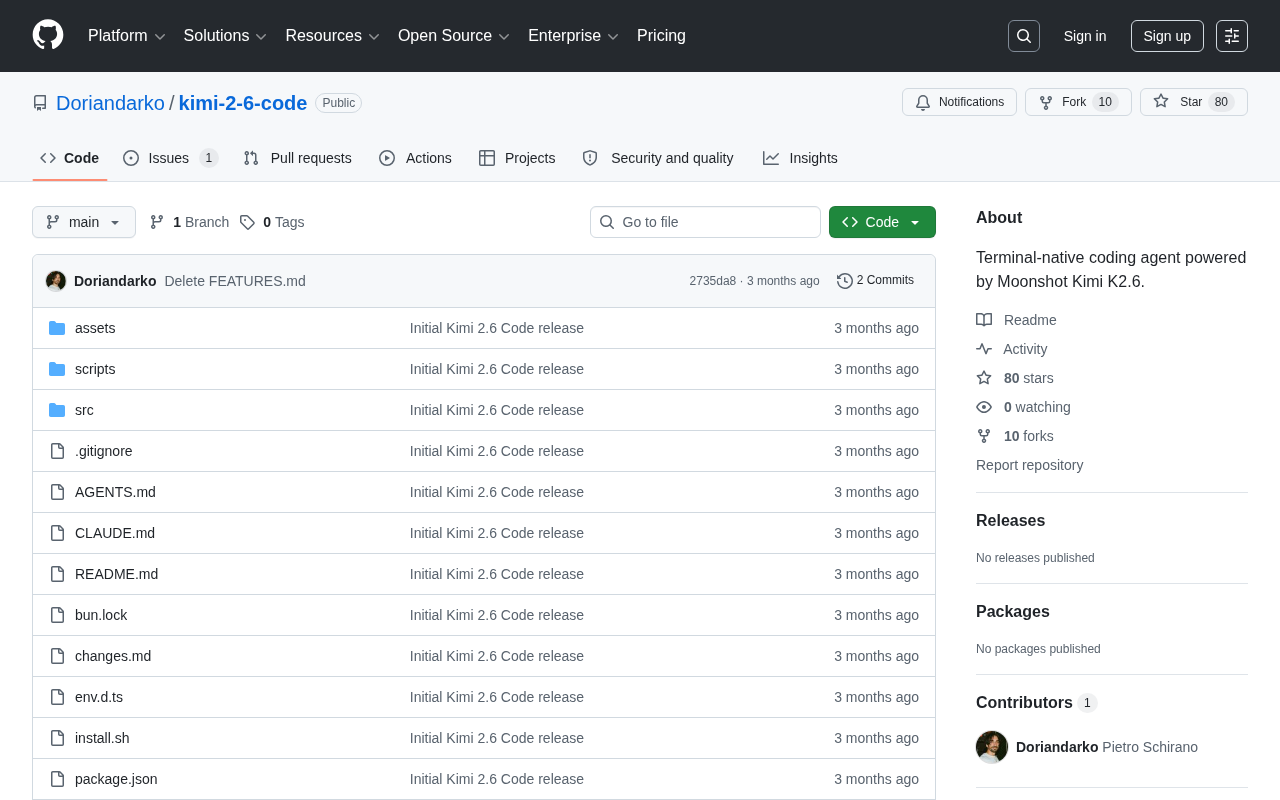
An open-source terminal coding agent that binds Moonshot's Kimi K2.6 model to a CLI-native developer workflow.
kimi-2-6-code is an open-source project by developer Doriandarko that wraps Moonshot's Kimi K2.6 model into a terminal-native coding agent built in TypeScript. It follows the design philosophy of tools like Claude Code and Aider, letting developers read/write files and generate code without leaving the command line. Kimi K2.6 was chosen for its strong long-context capabilities and practical accessibility for developers in China. With roughly 75 Stars, the project is an early-stage personal effort — best treated as a learning resource or lightweight experiment rather than a production solution.
A Terminal-Based AI Coding Assistant
The open-source project kimi-2-6-code, released by developer Doriandarko, is positioned as a terminal-native coding agent powered by Moonshot's Kimi K2.6 model. Written in TypeScript, the project has earned around 75 Stars and 7 Forks on GitHub — modest numbers, but it represents a clear trend: embedding large model capabilities directly into command-line workflows, rather than asking developers to switch to a browser or a standalone IDE plugin.
"Terminal-native" means this agent doesn't rely on a GUI — it runs directly in a shell environment. Developers can issue coding requests, let the model read and modify files, and execute tasks all within their familiar command line. The interaction loop never leaves the terminal. This approach aligns with tools like Claude Code and Aider, and fundamentally works by leveraging developers' existing habits.
Claude Code is Anthropic's official terminal coding assistant, letting developers invoke Claude directly from the command line to read/write files, run commands, and complete programming tasks. Aider is a popular open-source alternative that supports multiple mainstream models. The core design philosophy of these tools is "meet developers where they are" — rather than forcing developers to leave the terminal and switch context, AI capabilities become a natural extension of the command line. They typically use function calling mechanisms to let the model operate directly on the file system and shell, forming a closed loop of "state a requirement → model generates a plan → auto-execute → return feedback."
Why Kimi K2.6 Was Chosen as the Foundation
The project's central selling point is its model choice — Moonshot's Kimi K2.6. Binding a specific model to a terminal agent is a common pattern in this category of open-source tools: by tailoring prompt engineering, tool-calling protocols, and context management to a particular model, you often get more consistent results than a generic wrapper would deliver.
For developers in China, accessing Kimi models is typically more practical than accessing overseas models in terms of network accessibility and cost. This explains why a coding agent specifically built around Kimi exists — it fills a gap in the "domestic model + local terminal workflow" niche.
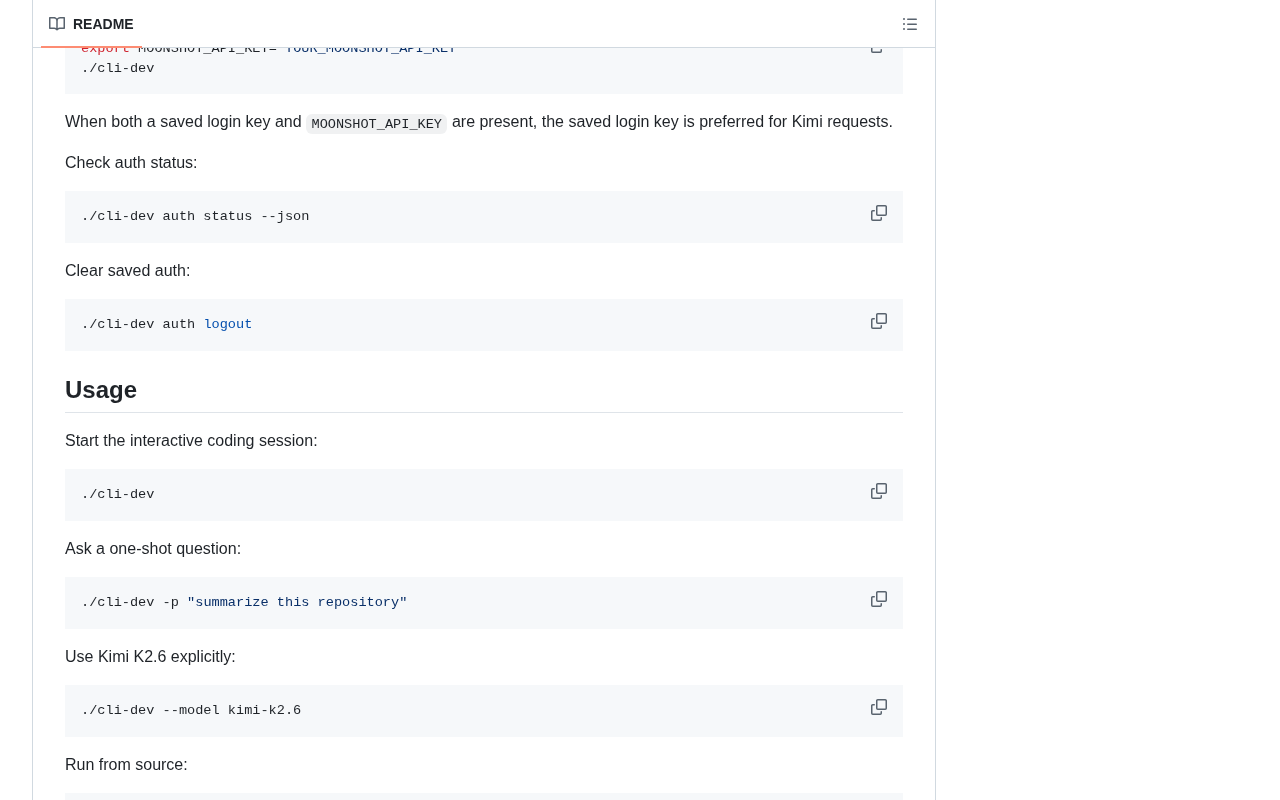
Kimi K2.6 is a code and reasoning-enhanced model released by Moonshot AI, representing an iteration of the K2 series. The K2 series is known for strong long-context understanding (supporting up to 128K token context windows) and targeted optimizations for tasks like code generation and function calling. Long-context capability is especially critical for terminal coding agents — the agent needs to continuously read multiple files, maintain operation history, and track task state within a single session. A shorter context window leads to "forgetting" earlier information, which in turn causes operational errors. Moonshot also provides an OpenAI-compatible API, which keeps integration costs relatively low for existing toolchains.
What the TypeScript Implementation Means
The project is built with TypeScript, and this technical choice has a direct impact on the user experience. The TypeScript ecosystem runs on Node.js, making installation and distribution relatively lightweight, with dependencies managed via npm. For developers familiar with frontend and full-stack toolchains, the barrier to reading source code, extending functionality, or contributing is fairly low.
From an engineering perspective, the core challenge of a terminal agent isn't calling a model API — it's how to organize tool calls, manage file read/write permissions, maintain multi-turn conversation context, and establish a safe, controllable intermediary layer between model output and actual file operations. Whether these capabilities are mature is the real measure of a coding agent's quality, and the project's current public information isn't sufficient to fully evaluate these details.
Tool Calling (also known as Function Calling) is the core mechanism that gives modern coding agents file operation capabilities: developers pre-define a set of "tool functions" the model can invoke (such as reading files, writing files, or executing shell commands). When generating a response, the model can output structured tool-call instructions, which the host program executes locally and passes results back to the model. This design decouples the model's "intent" from actual system operations, allowing developers to insert permission checks, sandbox isolation, or manual confirmation steps in the middle layer — preventing the security risks of letting a model operate directly on the file system. Context management determines an agent's coherence over long-running tasks and is another major engineering challenge for terminal coding agents.
A Realistic Assessment of the Project's Maturity
It's worth being clear-eyed: with 75 Stars and 7 Forks, this is still an early-stage personal project. It reads more like a proof-of-concept or a personal tool shared openly, rather than a battle-tested production-ready solution. Users should expect limited feature coverage, potentially incomplete documentation, and possible stability issues.
For developers who want to give it a try, a reasonable framing is: treat it as a learning example for understanding how to build a model-specific terminal agent, or as an entry point for experimenting with domestic model coding capabilities in personal projects. For critical business use cases, thorough testing and code review are essential before relying on it.
A Microcosm of the Terminal Agent Space
This project may be small, but it reflects a rapidly expanding field. From Claude Code to various open-source alternatives, command-line coding agents are becoming an important way for large models to integrate into development workflows. The value of kimi-2-6-code lies in its explicit binding to the domestic model Kimi K2.6, adding a localized piece to this ecosystem.
As Moonshot and other vendors continue to iterate on model capabilities, the tooling layer built around them will very likely grow richer. For developers, the significance of open-source projects like this isn't just in using them directly — it's in having a starting point that can be dissected, studied, and adapted.
Related articles
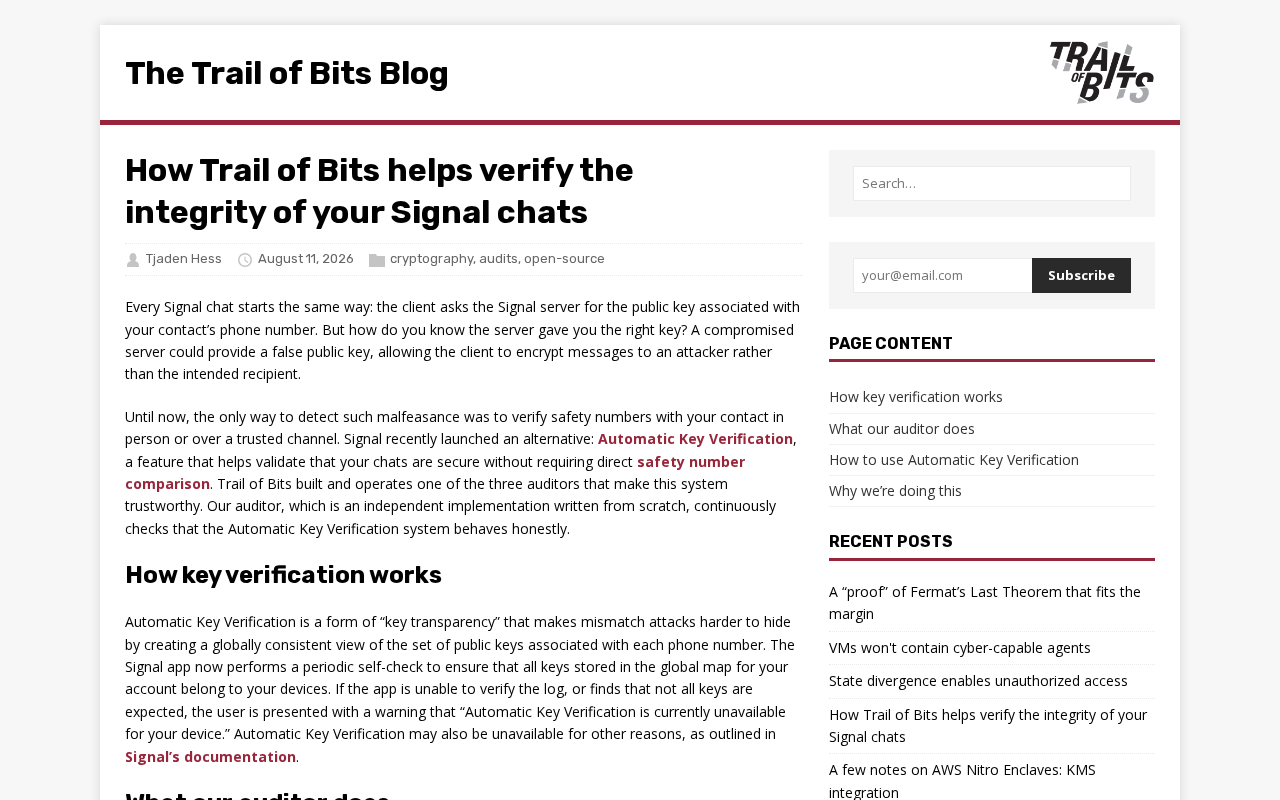
How Trail of Bits Verifies the Integrity of Signal Chat Logs
How does Trail of Bits, as an independent security auditor, help verify the integrity of Signal's end-to-end encrypted chat logs? A technical overview of chat integrity verification and the value of third-party audits.
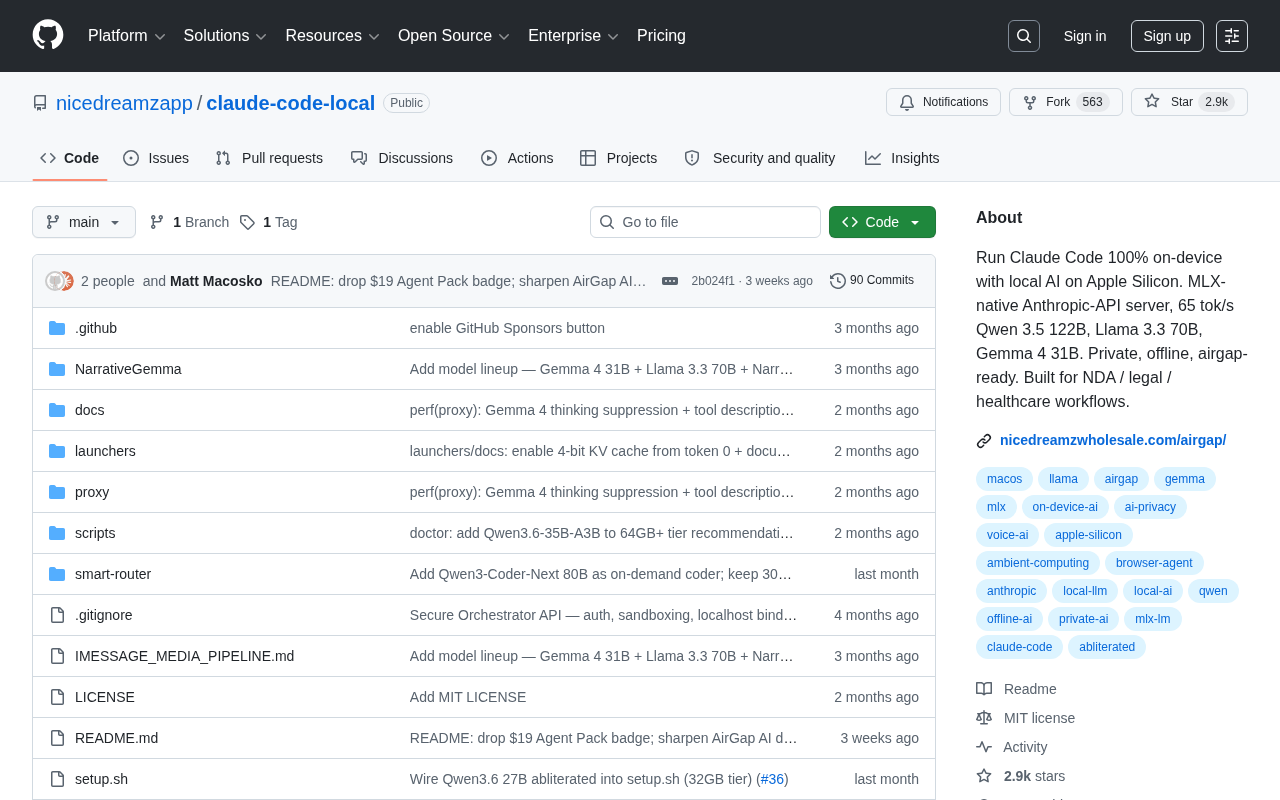
Running Claude Code Locally: A Fully Offline AI Coding Solution for Apple Silicon
claude-code-local runs Claude Code 100% offline on Apple Silicon via MLX, supporting Qwen 3.5 122B at 65 tok/s — built for NDA, legal, and medical privacy workflows.
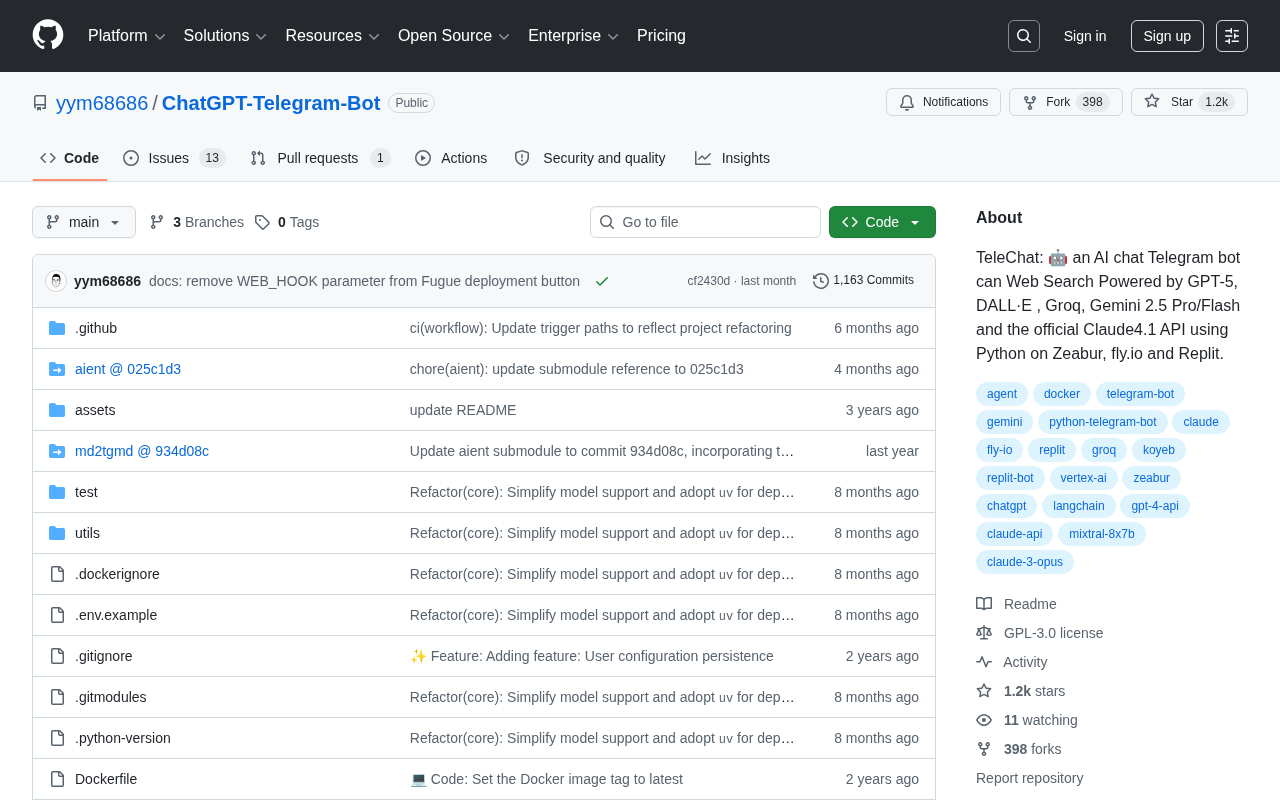
TeleChat: An Open-Source Telegram AI Bot Integrating GPT-5, Gemini, and Claude
TeleChat is an open-source Telegram AI bot integrating GPT-5, DALL·E, Groq, Gemini 2.5, and Claude 4.1. Supports web search and deploys on Zeabur, fly.io, and Replit. 1,242 Stars on GitHub.