Kimi CLI Open-Sourced: Moonshot AI's Command-Line AI Coding Agent
Kimi CLI Open-Sourced: Moonshot AI's C…
Moonshot AI open-sources Kimi CLI, a terminal-based AI coding agent rivaling Claude Code and Gemini CLI.
Moonshot AI has open-sourced Kimi CLI, a Python-based command-line AI coding agent that quickly surpassed 9,000 GitHub Stars. Leveraging the company's ultra-long context models (up to 2M tokens), Kimi CLI targets code generation, debugging, and refactoring workflows. It enters a competitive space alongside Claude Code and Gemini CLI, using an open-source tool plus paid API business model.
Kimi CLI: A Homegrown Contender in the Terminal AI Agent Space
As competition in AI coding assistants reaches a fever pitch, the command-line interface (CLI) is emerging as a critical battleground for AI Agent deployment. Chinese AI company Moonshot AI recently open-sourced its CLI agent project, Kimi CLI, with a confident official tagline: "Kimi Code CLI is your next CLI agent."
The project is hosted on GitHub and developed in Python. It quickly caught developers' attention after launch, accumulating 9,256 Stars and 1,151 Forks, with a daily growth rate of 48 stars. These numbers make one thing clear: beyond Claude Code, Gemini CLI, and other international products, homegrown AI coding tools are rapidly earning developer trust.
Why CLI Agents Are the New Trend
Over the past year, AI coding tools have evolved from IDE plugins to standalone CLI tools. Spearheaded by products like Anthropic's Claude Code, more and more vendors have come to realize that the command-line environment is a natural fit for developer workflows — it can directly handle file reads/writes, code edits, and command execution, making it the ideal substrate for building autonomous agents.
At their core, CLI Agents are LLM-powered autonomous execution systems. They leverage Tool Use / Function Calling mechanisms to give models the ability to manipulate the computing environment. Their technical architecture typically consists of three layers: a perception layer (reading file systems and codebase structures), a reasoning layer (where the LLM analyzes tasks and formulates action plans), and an execution layer (invoking Shell commands, editor APIs, etc. to carry out actual operations). This paradigm closely mirrors the academic ReAct (Reasoning + Acting) framework — the model performs chain-of-thought reasoning at each step while simultaneously taking concrete actions, creating a closed feedback loop that makes it far more capable than a simple question-and-answer AI.
Three Core Advantages of CLI Agents
Compared to traditional conversational AI or IDE-embedded assistants, CLI Agents offer several standout benefits:
- Deep workflow integration: Runs directly in the terminal environment, eliminating constant context-switching between browsers and editors;
- Powerful operational capabilities: Can read project structures, execute Shell commands, and batch-modify files — truly "getting things done" rather than just "offering suggestions";
- Scriptable and automatable: Easily integrates into CI/CD pipelines and automation scripts for greater extensibility.
It's worth noting that CI/CD (Continuous Integration/Continuous Deployment) pipelines — represented by tools like GitHub Actions, Jenkins, and GitLab CI — are the backbone of modern software engineering. Integrating a CLI Agent into a CI/CD pipeline means AI capabilities can automatically kick in when events like code commits, Pull Request creation, or test failures occur. For example: automatically reviewing code quality, generating change summaries, fixing lint errors, or even attempting to auto-fix failing tests and re-submit. This elevates AI from a "passive responder" to an "active participant" in the engineering process — and it's the core reason CLI Agents deliver more productivity value than purely conversational AI.
Kimi CLI's choice of Python as its development language aligns with the mainstream direction of the current AI tooling ecosystem. Python's rich AI SDKs and library ecosystem make it well-suited for rapid iteration and community contributions.
Kimi CLI's Positioning and Background
Kimi CLI is powered by Moonshot AI's in-house Kimi series of large language models. As one of China's leading LLM companies, Moonshot AI previously built its consumer reputation on ultra-long context capabilities and the Kimi intelligent assistant. The launch of a developer-focused CLI tool marks a strategic expansion of its product lineup — from consumer applications into the developer ecosystem.
The "Kimi Code CLI" naming signals a clear focus on code-related tasks, likely covering core scenarios such as code generation, debugging, refactoring, and project comprehension. Notably, Moonshot AI was among the first in the industry to make "ultra-long context" a core differentiator, with its models supporting context windows of up to 2 million tokens. This capability is critical for code understanding: a mid-sized engineering project can easily span hundreds of thousands of lines of code, and traditional models — constrained by context length — can only process it in fragments, making it hard to grasp global dependencies. Ultra-long context allows Kimi CLI to ingest an entire codebase in one pass, enabling cross-file symbol reference tracking, architecture-level refactoring suggestions, and global bug tracing. This gives Kimi CLI a genuine competitive edge in understanding large codebases and performing cross-file reasoning.
The Deeper Significance of Going Open Source
Open-sourcing the CLI tool is a strategic move worth watching closely. Rather than open-sourcing the model itself, Moonshot AI has chosen the classic "open tools, paid services" business model — the same path taken by Stripe with its open-source SDKs and HashiCorp with Terraform. Developers using Kimi CLI call the Kimi model API, and each inference request consumes tokens, generating a continuous revenue stream. Open-sourcing not only lets the community help rapidly improve features and fix issues, but also funnels more developers into the Kimi model API ecosystem, creating a virtuous "tool → model" flywheel.
GitHub Stars and Forks aren't just signals of community approval — they represent the top of the Developer Funnel. Active contributors often convert into paying API users, completing the "open-source acquisition → commercial conversion" cycle. Surpassing 9,000 Stars in a short period also validates the developer community's strong appetite for homegrown AI coding tools.
Competitive Landscape and Market Outlook
The CLI Agent space is already crowded: Anthropic's Claude Code, Google's Gemini CLI, and open-source projects like Aider and OpenHands are all competing for developer mindshare. For Kimi CLI to stand out, beyond raw model capability, it will need to continuously refine usability, execution reliability, and cost efficiency.
For developers in China, Kimi CLI offers a locally-built option backed by a domestic LLM — one that comes with stronger data compliance assurances. Its future performance will depend on Moonshot AI's combined investment in model iteration, tooling experience, and community engagement.
It's worth noting that as the project is still in its early stages, details around features, supported model versions, and pricing strategy are yet to be fully disclosed by the team. Developers who are interested are encouraged to watch the GitHub repository and evaluate its real-world value through hands-on use.
Conclusion
The release of Kimi CLI represents a meaningful step by a domestic LLM company into the developer tooling space. It rides the CLI Agent industry trend, leverages Moonshot AI's technical strengths in ultra-long context processing, and embraces the developer community through the classic "open-source tool + commercial API" model. While it still has a way to go before reaching full maturity, its rapid growth in community attention shows that homegrown AI coding tools are gaining increasing recognition. For developers who value efficient terminal-based workflows and want to seamlessly integrate AI capabilities into their CI/CD pipelines, Kimi CLI is a new option well worth adding to your watchlist.
Related articles

Alibaba Launches Happy Shrimp: AI-Powered One-Click Complete Song Generation
Alibaba launches Happy Shrimp, an AI music generation tool that creates complete songs with lyrics, melody, arrangement, and vocals from natural language descriptions. In-depth analysis of its core features, differentiation from competitors like Suno, and industry impact.
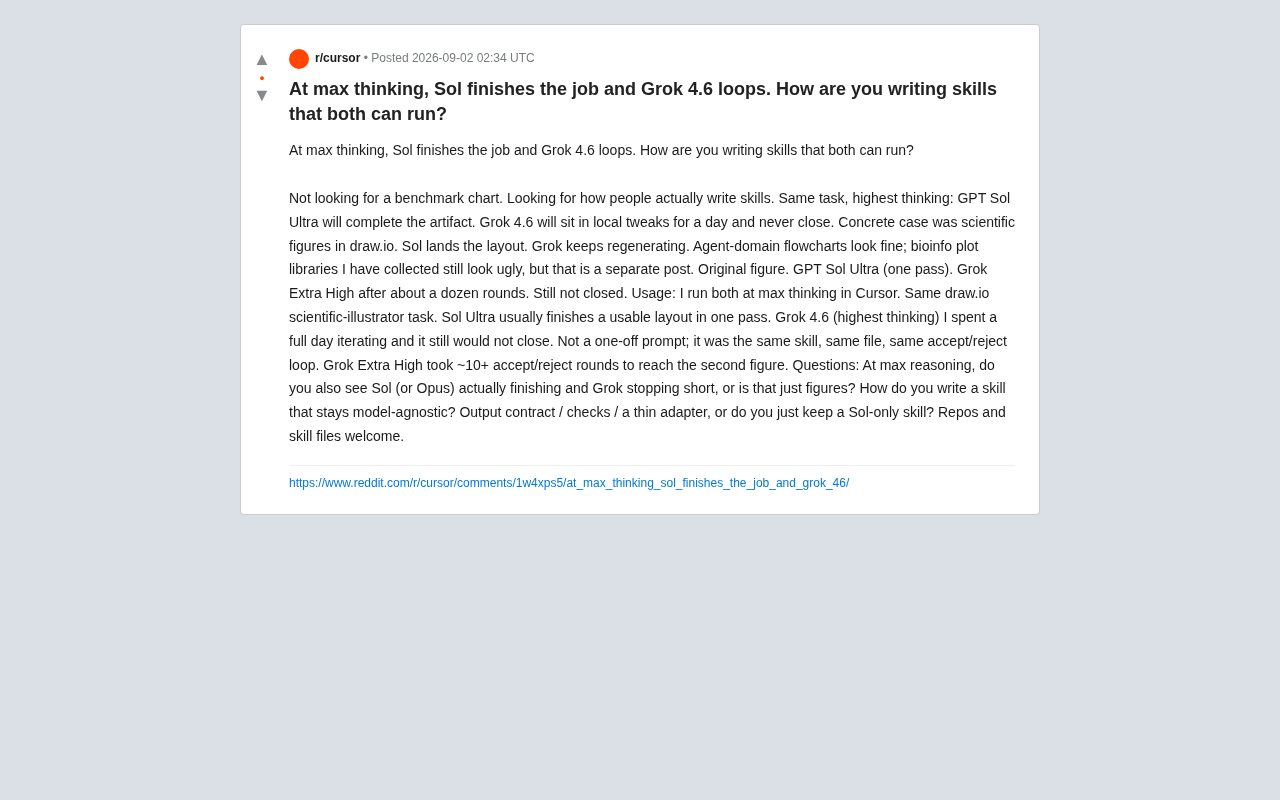
GPT Sol Ultra vs Grok 4.6: Real-World Task Completion Benchmark in Reasoning Mode
Developer benchmark reveals GPT Sol Ultra completes draw.io scientific diagrams in one iteration while Grok 4.6 fails to converge despite maximum reasoning mode, exposing that reasoning depth ≠ task delivery capability.
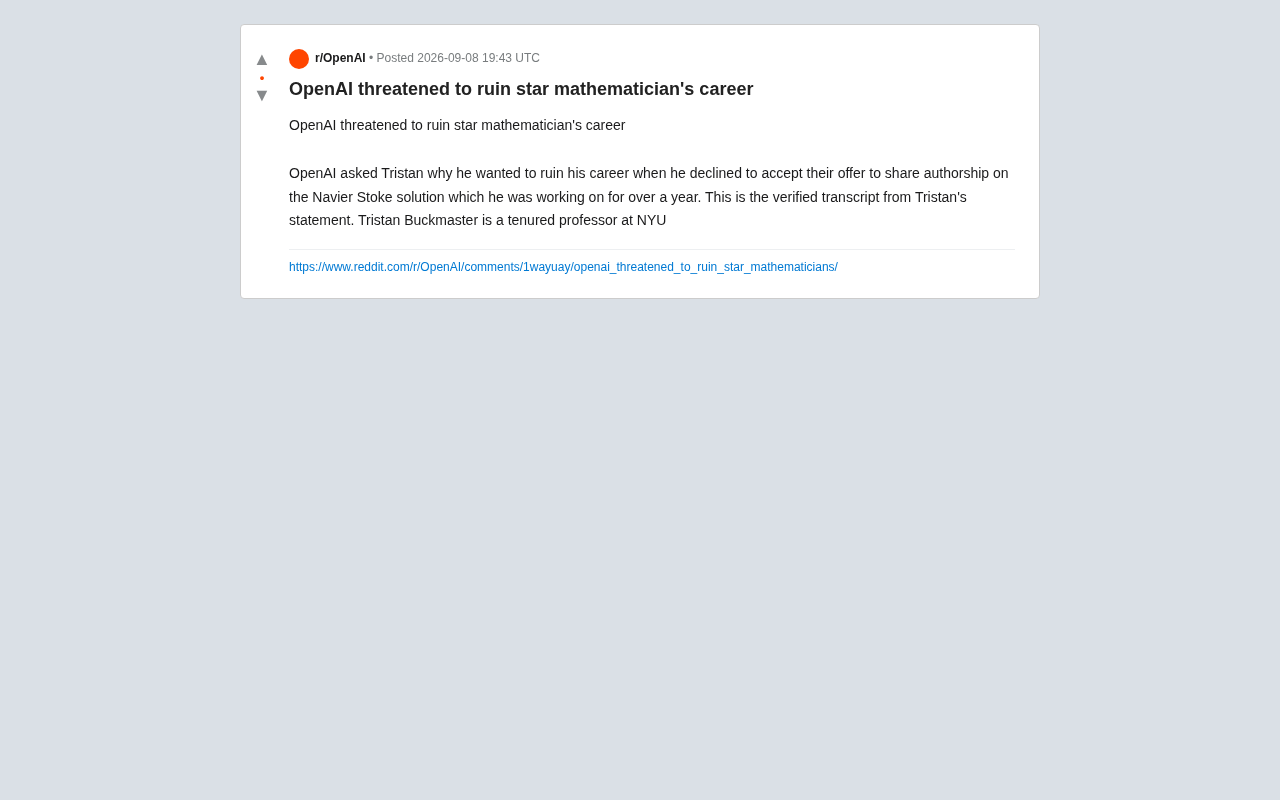
OpenAI Authorship Dispute: The Battle Over Academic Boundaries in the AI Era
OpenAI disputes authorship with mathematician Tristan Buckmaster over Navier-Stokes research, raising ethical questions about AI involvement in science.