Ladybird: A Brand-New Browser Engine Enters Alpha Testing

Ladybird, a browser with a from-scratch engine, releases an Alpha version for macOS and Linux, bringing an independent implementation to the browser market.
The independent browser project Ladybird, led by Andreas Kling, has released an Alpha test version for macOS and Linux after over four years of development, becoming the first browser in recent years to use a new self-developed engine. The current engine market is dominated by Blink, WebKit, and Gecko, and Ladybird implements everything itself, from rendering to JavaScript execution—a rare full-stack approach. The Alpha aims to collect early feedback from developers and enthusiasts. The new engine helps test web standards interoperability and reduce dependence on mainstream engines, but in the short term it cannot challenge mainstream browsers, and its long-term prospects depend on sustained community contributions and funding.
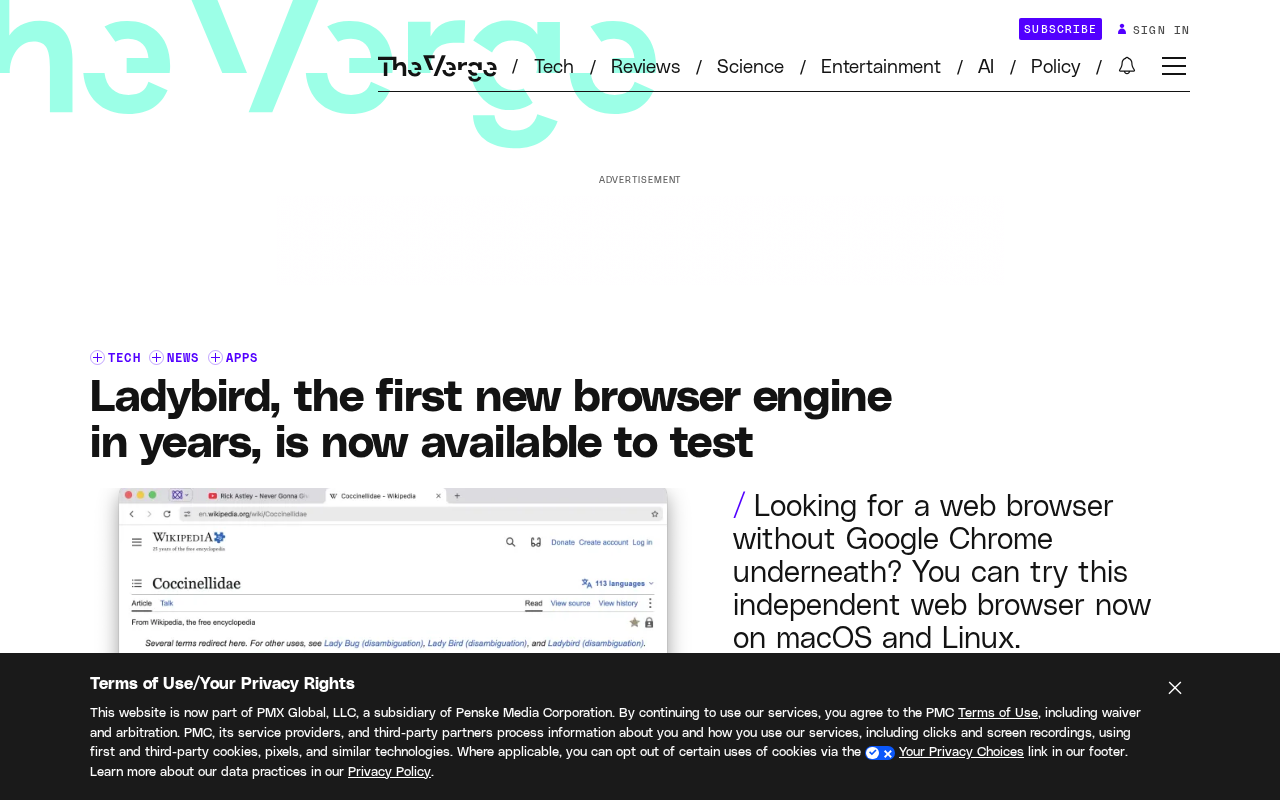
The independent browser project Ladybird has taken a key step forward: developer Andreas Kling announced that this browser, built entirely from scratch with its own engine, has officially released an Alpha test version for macOS and Linux. After more than four years of development, Ladybird has become the first browser in recent years to use a completely new engine, bringing a new variable to a browser market long dominated by a handful of giants.
What Makes a Browser Engine Built from Scratch Different
The browser engine is the core component that determines how web pages are rendered and how scripts are executed. Today the mainstream market is almost entirely monopolized by three engines: Blink (Chrome, Edge), WebKit (Safari), and Gecko (Firefox). The emergence of a new engine means the web platform gains another independent implementation. Ladybird is not a fork of or wrapper around an existing engine; it implements everything itself, from rendering and networking to JavaScript execution. This "full-stack, self-developed" path is extremely rare today.
In the announcement, Kling emphasized that the goal of the Alpha version is to collect early feedback, not to provide a browser for daily use. This means both feature completeness and stability are at an early stage, but its symbolic significance cannot be ignored: the space for innovation in browser engines has not been completely closed off.
A browser engine is typically composed of multiple subsystems working together: the layout and painting modules responsible for parsing HTML/CSS into a render tree, the script engine that executes JavaScript, the network stack that handles HTTP requests and resource loading, and the security sandbox responsible for process isolation and permission control. Mainstream engines such as Blink and WebKit share origins but have diverged for years, each accumulating a large number of compatibility patches and non-standard behaviors targeting real-world web pages. Ladybird's choice to implement these subsystems from scratch means it cannot directly reuse this historical accumulation and must align with web standards item by item. This is also the fundamental reason why independent engine development cycles are long and maintenance costs are high.
Why Independent Engines Are Worth Watching
A brand-new engine has dual value for the web ecosystem. On the one hand, it provides another rendering implementation, which helps test the interoperability of web standards—when websites are optimized only for mainstream engines, independent engines often expose compatibility issues. On the other hand, it reduces dependence on a single technology stack and injects new possibilities into the competitive landscape of the browser market.
However, building an engine is only the first step. The real challenge lies in continuously keeping up with evolving web standards and reaching a usable level in performance, security, and compatibility. There have been attempts at independent browsers before, but most failed to reach the mainstream due to resource or ecosystem limitations. Whether Ladybird can cross this gap depends on sustained investment from the community and developers.
Interoperability is a core principle of the web standards system, meaning that the same web page should behave consistently across different browser engines. In reality, website developers often perform feature detection and compatibility workarounds for mainstream engines, causing deviations between standards documents and actual implementations. The value of an independent engine is that it carries no historical baggage and can implement specifications more strictly, thereby exposing in testing where other engines deviate. Standards organizations such as the W3C and WHATWG also rely on multiple independent implementations to verify the feasibility of specifications; domination by a single engine would subject standards evolution to the commercial interests of the implementer.
Previously well-known independent engine attempts include Servo (a parallel rendering engine led by Mozilla Research, some of whose technology was later incorporated into Firefox) and Goanna (used by the Pale Moon browser). Although Servo achieved technical breakthroughs, it long faced insufficient funding and manpower and ultimately failed to stand on its own. Such cases show that competition in browser engines is not only a technical issue but also a long-term game of sustained investment and ecosystem building. Ladybird likewise needs to face the practical constraints of contributor scale, funding sources, and the pace of standards adoption.
What the Alpha Version Can Do at This Stage
At present, the Alpha version supports only macOS and Linux; a Windows version has not yet been mentioned. As an early test build, it is better suited to developers, tech enthusiasts, and users interested in browser internals who want to try it out. Kling's announcement did not provide a specific feature list or performance data, which fits the characteristics of the Alpha stage: the focus is on validating the architecture and collecting issues.
For users who want to participate in testing, it is advisable to follow official channels for installation methods and to actively report rendering anomalies or crashes. The quality of early feedback often directly influences the direction of subsequent iterations.
Will the Browser Market Change as a Result?
In the short term, Ladybird will find it difficult to shake the positions of Chrome, Safari, and Firefox. The advantages of mainstream browsers lie not only in the engines themselves but also in their vast extension ecosystems, sync services, and developer toolchains. In the long term, however, a healthy web ecosystem needs diversified engine implementations. Ladybird's Alpha release is a starting point; whether it can move from a test version to a stable version will depend on whether the project can attract enough contributors and funding support.
From a broader perspective, Ladybird's progress also reflects developers' concerns about the excessive concentration of the browser technology stack. Regardless of ultimate success or failure, this attempt provides a real test of the feasibility of independent browser engines.
One-line Summary
Ladybird, a browser with a from-scratch engine, releases an Alpha version for macOS and Linux, bringing an independent implementation to the browser market.
Paragraph Summary
The independent browser project Ladybird, led by developer Andreas Kling, has released an Alpha test version for macOS and Linux after more than four years of development, becoming the first browser in recent years to use a completely new self-developed engine. The article notes that the browser engine market is currently monopolized by Blink, WebKit, and Gecko, and that Ladybird implements everything itself, from rendering and networking to JavaScript execution—a full-stack, self-developed path that is extremely rare. The goal of the Alpha stage is to collect early feedback rather than to serve daily use, and it is aimed mainly at developers and tech enthusiasts. The new engine helps test web standards interoperability and reduce dependence on mainstream engines, but in the short term it will find it difficult to shake the position of mainstream browsers, and its long-term prospects depend on the sustainability of community contributions and funding support.
Related articles

Nothing CMF Buds 2A Drops to $17.89 on Black Friday: A New Low for ANC Earbuds
Nothing CMF Buds 2A wireless earbuds Black Friday deal: just $17.89 on Amazon, about $11 off retail and a record low. ANC earbuds at an entry-level price.

When AI Creation Gets Accused of "Spitting": Hacker News Heats Up Over the Glaude Controversy
A Hacker News post, "Spitting in the Face of Glaude," sparks debate on AI creation transparency and attribution ethics. This analysis examines the blurred creator identity behind the controversy and offers practical advice for AI content production.

Akai Embraces Custom Firmware: MPC Sample 1.4 Lets Users AI-Program Their Sampler
Akai embraces the modding community with MPC Sample 1.4 firmware, supporting vibe-coded custom firmware and effects. We analyze the impact of this open strategy on music hardware and AI-assisted programming.