Laguna S 2.1: The Open-Source Coding Model That's 14x Smaller Yet Stronger

Poolside's Laguna S 2.1: an open-source coding model 14x smaller yet 4.5x stronger than rivals.
Poolside released Laguna S 2.1, an open-source agentic coding model with 118B total params but only 8B active. It scores 40.4% on the hard DeepSWE benchmark, ~4.5x DeepSeek V4 Pro Max, supports 1M-token context via MoE + sliding window attention, runs on a single workstation, and starts at $0.10/M tokens on OpenRouter.
An Open-Source Coding Model That Defies Conventional Wisdom
Poolside has released Laguna S 2.1 (Pulse), an open-source large model for agentic coding. What makes this model most striking isn't its absolute performance ceiling, but rather how it directly matches and even surpasses much larger models like DeepSeek V4 Pro Max and Anthropic Sunlit 5 in the vertical domain of Agentic Coding — all with an extremely small parameter count.
According to official figures, Laguna S 2.1 has 118B total parameters, with only 8B active parameters. By comparison, it claims to be "14x smaller and 4.5x stronger" in coding capability — trading a model size far smaller than its competitors for significantly higher coding benchmark scores. If these numbers hold up to reproduction and verification, they will pose a powerful challenge to the industry's prevailing "parameters equal power" mindset.
Even more critical is the deployment threshold: it can run locally on a single workstation. Enterprises no longer need to rely on massive cloud clusters — they can deploy cutting-edge coding capabilities right in their own data centers.
Architecture Design: MoE + Ultra-Long Context
Sparse Expert (MoE) Structure
Laguna S 2.1 adopts a Mixture of Experts (MoE) architecture, comprising 256 routed experts + 1 shared expert, with 118B total parameters but only 8B activated per pass. This "high capacity, low activation" design is the core reason it can approach the capabilities of large models while keeping costs under control.
The Technical Principles of Mixture of Experts: Mixture of Experts (MoE) is an architectural paradigm that splits a large neural network into multiple "expert" sub-networks. It can be traced back to research by Jacobs et al. in 1991, and has re-entered the mainstream spotlight in recent years with Google's Switch Transformer (2021) and Mistral's Mixtral 8x7B (2023). Its core idea is that during each forward pass, a "router" network dynamically selects a small number of experts to participate in computation, rather than activating all parameters. This design allows the model to maintain a large parameter count (boosting knowledge capacity) while the compute cost of a single inference is comparable to that of a small model, achieving significant resource savings in both the training and inference phases. Laguna S 2.1's 256 routed experts represent an ultra-fine-grained MoE design, far exceeding Mixtral's 8-expert design, and in theory can achieve more refined knowledge partitioning and higher parameter utilization.
At the attention level, the model uses a hybrid scheme of 12 layers of global attention + 36 layers of sliding window attention. Global attention ensures the coherence of long-range information, while sliding window attention dramatically reduces the computational overhead of long sequences. Together, they support an ultra-long context window of up to 1,048,576 tokens (approximately 1 million).
The Engineering Logic of Sliding Window Attention: The self-attention mechanism of a standard Transformer has O(n²) complexity, growing quadratically with sequence length, making it extremely expensive to process million-token-scale long contexts. Sliding Window Attention (SWA) was proposed by Beltagy et al. in Longformer (2020). Its core idea is to limit each token's attention scope to a local fixed window (e.g., 4096 tokens before and after), reducing complexity to O(n×w) (where w is the window size). Laguna S 2.1's hybrid layered strategy — 12 layers of global attention ensuring macro-level semantic coherence across the entire context, and 36 layers of SWA handling local fine-grained feature extraction while controlling overall compute consumption — makes million-scale context truly feasible in engineering terms, rather than just a number on a spec sheet.
Training Efficiency
Pretraining ran on 4,096 GPUs for 60 days, and it took less than 9 weeks from the start of pretraining to public release. Such iteration speed is quite aggressive among frontier models, and indirectly confirms the training efficiency advantages of the sparse architecture.
Benchmark Performance: An Edge on the Hardest Tasks
The official team published multiple agentic coding benchmark scores:
- Terminal Bench 2.1: 70.2%
- SWE Bench Multilingual: 78.5%
- SWE Bench Pro: 59.4%
- DeepSWE: 40.4%
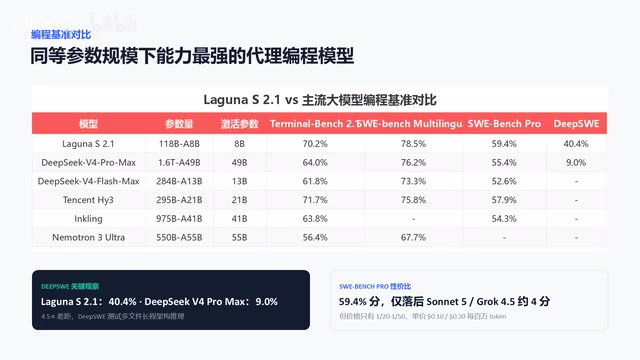
Understanding the Industry Significance of the SWE-Bench Series: SWE-Bench was introduced by Princeton University in 2023 and is currently recognized as one of the LLM evaluation benchmarks closest to real-world software engineering scenarios. Unlike traditional code completion tests, SWE-Bench requires the model to read a real GitHub Issue, understand the full code repository context, and generate a Patch that passes unit tests — simulating the entire workflow of an engineer handling a production bug. SWE-Bench Multilingual extends beyond Python to multiple languages, while SWE-Bench Pro and DeepSWE further introduce higher-difficulty scenarios such as cross-file dependencies, multi-step modifications, and error recovery. DeepSWE is considered the benchmark that "most closely approximates the complexity of real large-scale engineering projects." On this benchmark, the gap between Laguna S 2.1 and DeepSeek V4 Pro Max (40.4 vs ~9), if verified through independent reproduction, would carry strong industry reference value.
Among these, DeepSWE is considered the hardest of the six benchmarks, testing deep architectural reasoning capabilities such as spanning dozens of files, multi-step decision-making, and error recovery. Laguna S 2.1 scored 40.4 here, while DeepSeek V4 Pro Max scored only about 9 — with 14x fewer total parameters and 6x fewer active parameters, yet a score roughly 4.5x higher.
This result stems from the combination of three factors: the inference efficiency brought by low active parameters, the reasoning gains from explicit Thinking mode, and the long-range consistency provided by the ultra-long context training environment. It should be noted that all the above data comes from the official blog, and its true value can only be confirmed after independent third-party reproduction.
Long-Range Consistency: The True Core Capability
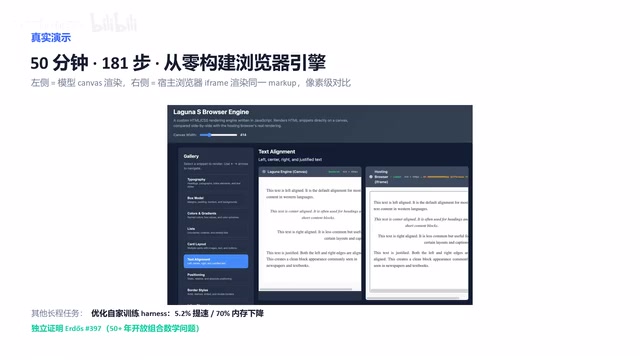
Poolside published a complete reasoning trace: Laguna S 2.1 built a browser rendering engine from scratch in 50 minutes across 181 steps, with rendering speed reportedly comparable to mainstream browsers.
The challenge of such tasks lies not in the quality of a single generation, but in coherent reasoning at the scale of hundreds of thousands of tokens — the model must remember code it wrote earlier, understand dependencies between modules, and accurately locate and roll back when errors occur. This is precisely the real foundation behind the DeepSWE score of 40.4, and a direct manifestation of long context combined with thinking mode.
Additionally, the official team mentioned that the model optimized their own training Harness, improving speed by 5.2% and reducing memory by 70%, and independently proved Erdős Problem No. 397. This is more of a research-oriented demonstration, but it also shows that its reasoning chain possesses a certain degree of rigor.
Deployment and Ecosystem: Day 1 Full-Stack Support
In terms of engineering implementation, Laguna S 2.1's ecosystem support is quite comprehensive:
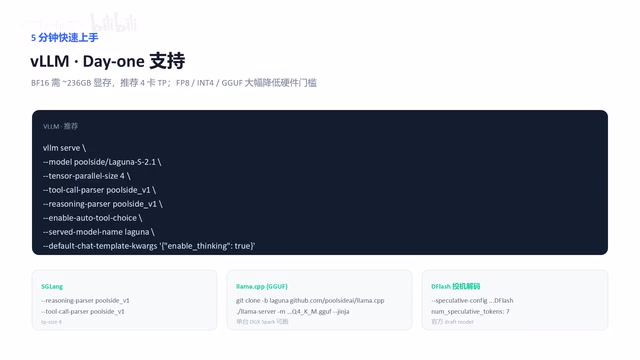
- Inference frameworks: vLLM, SGLang, TRT-LLM, and llama.cpp all supported on Day 1
- GGUF quantized versions can run locally on desktop workstations
- A companion speculative decoding Draft Model can further reduce inference latency
Technical Background on the GGUF Format and Local Deployment: GGUF (GPT-Generated Unified Format) is a model serialization format launched in 2023 by Georgi Gerganov, founder of the llama.cpp project. It supports various quantization precisions such as Q4_K_M, Q5_K_M, and Q8_0, and can compress model weights from FP16/BF16 down to 4-8 bits. Taking Laguna S 2.1 as an example, the FP16 model with 118B parameters requires about 236GB of VRAM, while the Q4 quantized version can be compressed to around 60-70GB, giving a single workstation equipped with multiple consumer-grade GPUs or a high-memory Mac Studio/M4 Ultra the practical ability to run it. GGUF has become the de facto standard for local deployment of open-source models, with tools like llama.cpp, Ollama, and LM Studio all supporting it natively.
The Principle of Speculative Decoding Acceleration: Speculative Decoding was independently proposed by researchers at DeepMind and Google around 2022-2023. Its principle is to use a lightweight "draft model" to quickly generate several candidate tokens first, then have the target main model verify them in parallel, accepting the portions matching the distribution and regenerating the rejected ones. Since verifying multiple tokens requires computation comparable to generating a single token, when the draft model has a high hit rate, overall throughput can increase by 2-3x while maintaining an output distribution completely identical to the original model, with no loss in precision. Poolside provides a dedicated Draft Model tailored to its own MoE architecture, making actual inference latency in high-throughput scenarios such as long code generation more competitive.
When using it, note: you must enable Enable Thinking and preserve the historical Reasoning Content, otherwise you will lose the core long-range reasoning capability.
Pricing: Driving Down Invocation Costs
The pricing offered through OpenRouter is extremely competitive:
| Item | Laguna S 2.1 | DeepSeek V4 Pro Max | Sunlit 5.2 |
|---|---|---|---|
| Input (/million tokens) | $0.10 | $0.40 | $2 |
| Output (/million tokens) | $0.20 | $1.60 | $10 |
| Cache read | $0.01 | — | — |
The 256K context endpoint is completely free. For teams that need to invoke coding capabilities at scale, this token economy is extremely attractive.
Use Cases and Limitations
The model uses the OpenMDW 1.1 license, which permits commercial use, modification, and self-hosting, but is subject to Poolside's usage policy.
Industry Background on AI Model Licensing: AI model open-source licensing has in recent years formed an ecosystem distinct from traditional software open source (Apache/MIT/GPL). OpenMDW 1.1 (Open Model Deployment and Weights License) is a licensing framework designed specifically for large model weights, permitting commercial use, model modification, and self-hosted deployment, but typically including restrictive clauses such as prohibiting the use of the model to train competing commercial models and requiring attribution of the source. It's worth noting that such "Open Weights" models are fundamentally different from true "open source" (releasing training code, datasets, and the complete training pipeline) — what Laguna S 2.1 makes public are the inference weights, not the complete training system. For users in regulated industries such as defense and government, the details of the license directly determine the boundaries of compliance risk, requiring dedicated legal review before procurement.
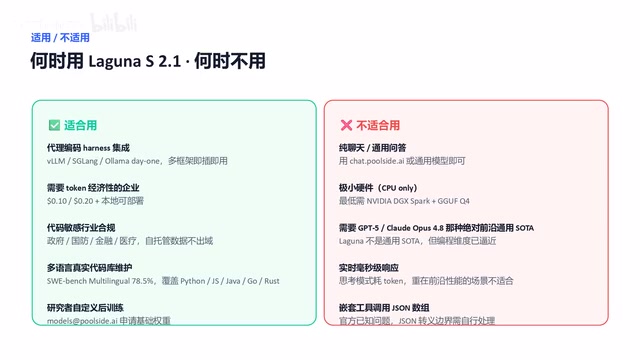
Recommended Use Cases:
- Enterprise R&D teams sensitive to token costs and needing to integrate an agentic coding Harness
- Institutions with high compliance requirements, such as government and defense
- Daily maintenance of multilingual real codebases
- Researchers needing to perform custom post-training
Not Recommended For:
- Pure chat conversation or general Q&A
- Inference in pure CPU environments
- Tasks requiring absolute cutting-edge general capabilities
- Real-time second-level responses (nested JSON and array tool calls have known issues that must be handled manually)
Conclusion
Laguna S 2.1 represents a technical path worth watching: using a sparse MoE architecture + ultra-long context to go deep and thorough in the vertical domain of coding, rather than blindly stacking parameters in pursuit of general capabilities. Its coding capability deserves a perfect score, while its general task performance is around four stars.
For enterprises and developers, three core values are crystal clear: the genuine long-range reasoning capability brought by thinking mode, the low deployment threshold that runs on a single workstation, and a friendly commercial license. Of course, the "14x smaller, 4.5x stronger" claim still needs to be verified by community testing. Users who want to try it out can head to HuggingFace to download the model weights, or directly experience it using OpenRouter's 256K free endpoint.
Key Takeaways
Related articles
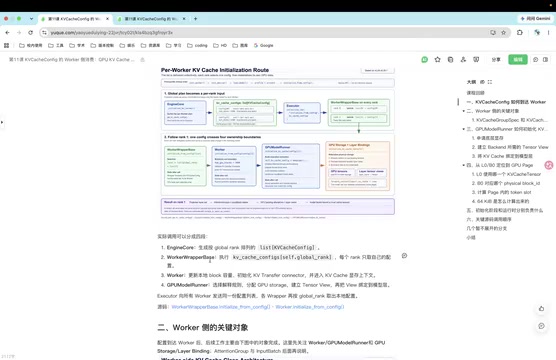
Deep Dive into vLLM Worker-Side GPU KV Cache Initialization
Deep dive into vLLM's Worker-side KV Cache GPU memory allocation, covering the full pipeline from KVCacheConfig generation to physical memory binding via ModelRunner.
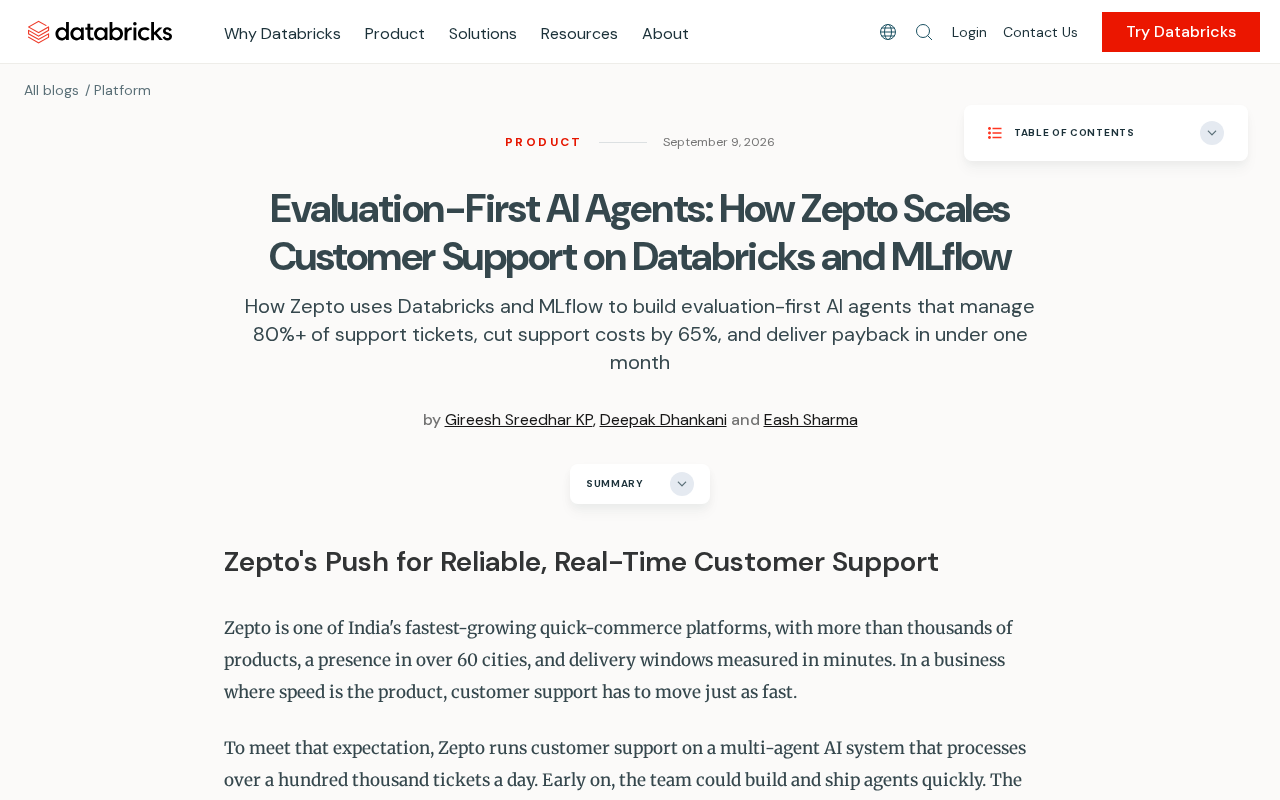
Zepto Builds AI Customer Service with MLflow: An Evaluation-Driven Practice Guide
Deep dive into how Zepto built an evaluation-driven AI customer service system using MLflow and Databricks, achieving 60% faster responses and 40% less manual handling. From technical architecture to practical insights.

Iran Captures U.S. Underwater Drone in Strait of Hormuz: A Comprehensive Analysis
Iran announces capture of U.S. Navy underwater drone in Strait of Hormuz. In-depth analysis of the incident, strategic value of UUVs, U.S.-Iran geopolitical competition, and implications for global energy security and military dynamics.