LEGO's BrickLink Marketplace Offline for a Week Due to Unusual Activity, No Recovery Timeline

LEGO's BrickLink offline over a week due to unusual activity, no recovery timeline, affecting buyers and sellers.
LEGO's secondary marketplace BrickLink has been offline for over a week after detecting "unusual activity," with no clear recovery timeline or details disclosed. As a core hub for LEGO fans trading parts and sets, BrickLink has been key for restocking scarce parts and secondhand circulation since LEGO acquired it in 2019. The outage cuts off transactions, leaving players unable to search for parts or complete orders, and small sellers facing lost orders and communication chaos. The information gap amplifies anxiety; sellers should keep records and buyers should avoid high-value third-party deals while awaiting official updates.
LEGO's BrickLink marketplace has been offline for over a week due to an "unusual activity" incident. The platform is a key gathering place for LEGO fans to buy and sell parts and sets, and this outage has left a large number of sellers and buyers waiting.
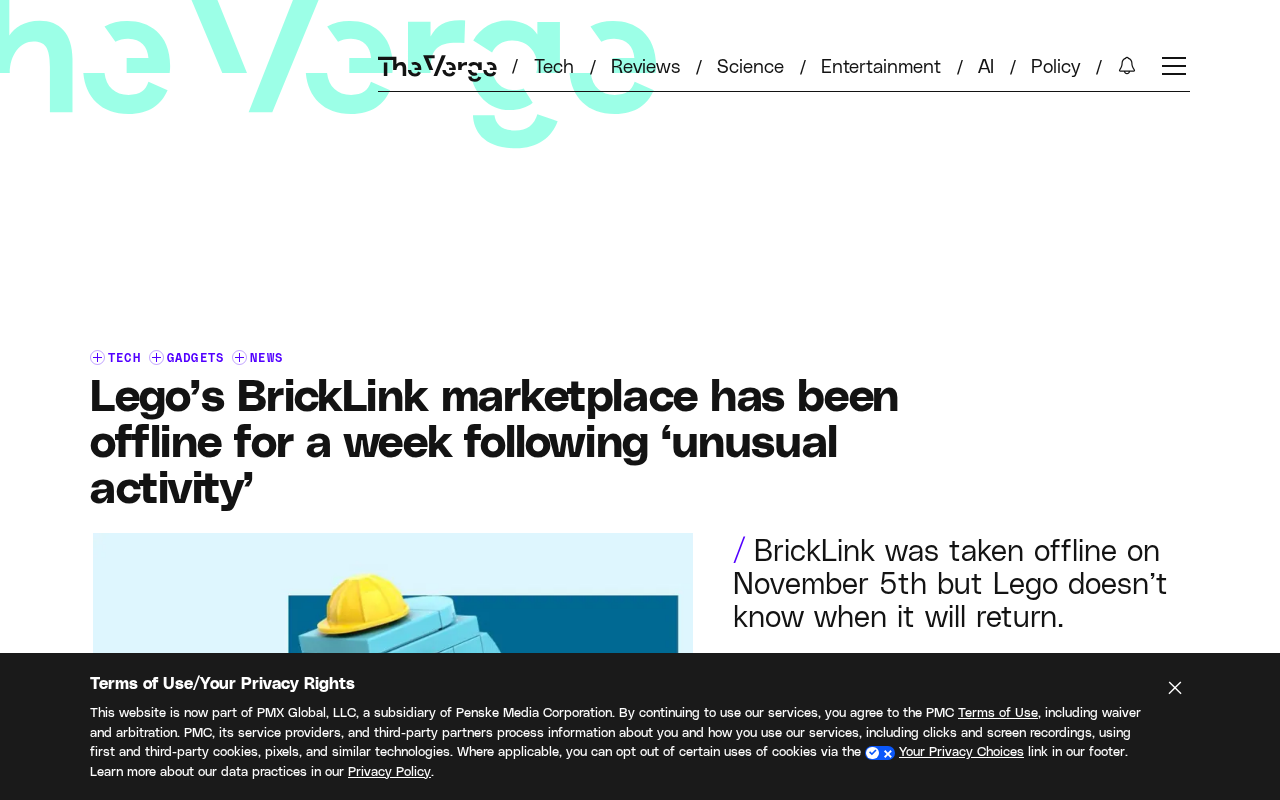
Incident Recap: Unusual Activity Triggers Shutdown
According to updates posted on-site by the BrickLink team, the platform was forced offline after detecting "unusual activity." The team has continued to brief the community on progress over the past week, including preliminary estimates for recovery, but as of publication, no clear timeline for return has been provided. This means users who rely on BrickLink for transactions may need to prepare for a longer disruption.
BrickLink was acquired by LEGO in 2019 and has since been a unique secondary market within the LEGO ecosystem—not only a channel for restocking parts but also a platform where many independent sellers run small businesses. This outage directly cuts off that transaction pipeline.
What "unusual activity" typically means
In security notices from e-commerce and online community platforms, "unusual activity" is a deliberately vague phrase that usually refers to system-detected behavior deviating from normal patterns, such as abnormal login attempts, traffic spikes, signs of unauthorized access, or data scraping. Platforms use this term rather than directly labeling it an "attack" or "breach" often because investigations are incomplete, or to avoid panic and legal liability. For users, this means the nature of the incident could range from a minor technical glitch to a serious security event, so before official details are disclosed, it's unwise to assume account or payment information is safe, nor to conclude that a breach has occurred.
Impact on Users and Sellers
For ordinary players, BrickLink being offline means they cannot search for scarce parts, complete purchases already ordered, or easily estimate progress on their current projects. For sellers—especially small shops that rely on BrickLink as their main source of income—a week of downtime brings not only lost orders but also chaos in customer communication and inventory management.
The platform team acknowledged the uncertainty in updates but did not disclose the specific nature of the unusual activity or whether data security or payment information was involved. This information gap easily amplifies community anxiety, especially against the backdrop of frequent attacks on e-commerce platforms.
BrickLink in the LEGO Ecosystem: Irreplaceability Stands Out
BrickLink matters because it fills gaps that official LEGO channels struggle to cover: discontinued sets, specific-colored parts, and secondhand circulation among players. After the acquisition, BrickLink maintained a relatively independent community atmosphere, which helped it accumulate a large number of loyal users.
This prolonged outage exposes a problem: when a niche but highly specialized marketplace becomes community infrastructure, its reliability directly affects the hobbies and small businesses of thousands of people. With no recovery timeline, the impact will continue to accumulate.
BrickLink's secondary market mechanism
BrickLink's core is a C2C (consumer-to-consumer) marketplace made up of independent sellers who manage their own inventory, pricing, and shipping, while the platform provides a catalog, search, and transaction matching. Its parts catalog system is extremely detailed, distinguishing by color, mold variant, and new/used condition, enabling it to meet long-tail needs that official channels cannot cover, such as specific parts from discontinued sets. This highly specialized structure also means alternatives are limited: ordinary e-commerce platforms lack corresponding parts categories and buyer communities, so once BrickLink goes offline, sellers and buyers find it hard to migrate to other channels in the short term.
What to Watch Next
What users care about most is the recovery timeline, whether the unusual activity involved account or payment data, and what measures the platform will take to prevent similar incidents. Currently, official communication is only in the form of "updates" with few details. It is advisable for sellers to keep records of orders and communications, and for buyers to hold off on high-value transactions through third-party channels while waiting for further official statements.
This BrickLink outage reminds us that even vertical community platforms acquired by large companies still require ongoing scrutiny of their operational resilience and transparency.
One-line Summary
LEGO's BrickLink has been offline for over a week due to unusual activity, with no recovery timeline, affecting both buyers and sellers.
Paragraph Summary
LEGO's secondary marketplace platform BrickLink has been offline for over a week after detecting "unusual activity." The official team continues to post updates but has not provided a clear recovery timeline or disclosed the specific nature of the incident. As a core gathering place for LEGO fans trading parts and sets, BrickLink has played a key role in restocking scarce parts and secondhand circulation since LEGO acquired it in 2019. This outage directly cuts off the transaction pipeline: ordinary players cannot search for parts or complete orders, and small sellers relying on the platform face lost orders and communication chaos. The information gap amplifies community anxiety. The article suggests sellers keep records and buyers hold off on high-value third-party transactions, and notes that the operational resilience and transparency of vertical community platforms deserve ongoing scrutiny.
Related articles

Nothing CMF Buds 2A Drops to $17.89 on Black Friday: A New Low for ANC Earbuds
Nothing CMF Buds 2A wireless earbuds Black Friday deal: just $17.89 on Amazon, about $11 off retail and a record low. ANC earbuds at an entry-level price.

When AI Creation Gets Accused of "Spitting": Hacker News Heats Up Over the Glaude Controversy
A Hacker News post, "Spitting in the Face of Glaude," sparks debate on AI creation transparency and attribution ethics. This analysis examines the blurred creator identity behind the controversy and offers practical advice for AI content production.

Akai Embraces Custom Firmware: MPC Sample 1.4 Lets Users AI-Program Their Sampler
Akai embraces the modding community with MPC Sample 1.4 firmware, supporting vibe-coded custom firmware and effects. We analyze the impact of this open strategy on music hardware and AI-assisted programming.