LLaDA-Image Open-Sourced: A Deep Dive into the 6B Parameter Unified Image Generation and Editing Model

inclusionAI open-sources LLaDA-Image, a 6B parameter model unifying image generation and editing.
inclusionAI has open-sourced LLaDA-Image, a 6-billion-parameter unified AI model capable of both text-to-image generation and image editing. Available in Standard and Turbo versions, the model is fully released on GitHub, Hugging Face, and arXiv. Its unified architecture simplifies deployment while balancing performance and resource efficiency, making it a practical option for local AI image deployment.
LLaDA-Image Open-Sourced: A Deep Dive into the 6B Parameter Unified Image Generation and Editing Model
A new AI image model called LLaDA-Image has been officially open-sourced. With 6 billion (6B) parameters, this unified architecture model can handle both image generation and editing tasks simultaneously. Developed by the inclusionAI team, it has been fully released on GitHub, Hugging Face, and arXiv.
The Technical Breakthrough of LLaDA-Image's Unified Architecture
The core highlight of LLaDA-Image is its unified model architecture design. Traditional AI image systems typically require separate models trained for generation and editing tasks—text-to-image models (like DALL-E, Midjourney) focus on creating entirely new images from text descriptions, while image editing models (like InstructPix2Pix, ControlNet) are optimized for local or global modifications to existing images. This separated architecture necessitates maintaining multiple sets of model weights, training pipelines, and inference pipelines.
LLaDA-Image breaks through this limitation by achieving both text-to-image generation and image editing capabilities through a single 6-billion-parameter model. The unified architecture processes all tasks through shared feature extractors and decoders, treating generation and editing as different operations within the same latent space. This design draws on Multi-Task Learning principles, enabling knowledge transfer between different tasks—for example, compositional skills learned during generation tasks can assist with content coherence judgments in editing tasks. From an engineering perspective, a single model significantly simplifies deployment workflows, reducing memory usage and model-switching overhead.
In the deep learning domain, model parameters refer to the weights and bias values in a neural network that need to be learned from training data. Six billion (6B) parameters means the model contains 6 billion adjustable numerical values, which collectively determine the complexity of patterns the model can learn and represent. Compared to GPT-3's 175 billion parameters or Stable Diffusion XL's approximately 3.5 billion parameters, the 6B scale falls in the medium-to-large range for image generation. This scale is sufficient to capture complex visual features and semantic relationships while still being runnable on a single consumer-grade GPU (such as the RTX 4090), whereas larger models typically require distributed inference techniques like model parallelism or tensor parallelism. LLaDA-Image strikes a balance between resource consumption and practicality, making it highly attractive for developers looking to deploy image AI capabilities on local or edge devices.
Standard and Turbo Versions: Two Variants for Different Scenarios
The project offers two versions of model weights: the standard LLaDA-Image and the optimized LLaDA-Image-Turbo. The Turbo version has been specifically optimized for inference speed, significantly improving generation speed while maintaining output quality.
Turbo versions typically employ multiple inference acceleration techniques. Common methods include: knowledge distillation (compressing the standard model's knowledge into a smaller or faster architecture), quantization (converting 32-bit floating-point weights to 8-bit or 4-bit integers), and inference step optimization. In the context of diffusion models, standard generation may require 50–100 denoising iterations, while Turbo versions can reduce steps to just 4–8 through techniques like Consistency Models or Progressive Distillation—achieving over 10x speedup, compressing single image generation time from tens of seconds to 2–3 seconds and making real-time interaction possible.
This dual-version strategy accommodates different application scenarios:
- Standard version: Pursues the best image generation quality, suitable for creative scenarios with high demands on visual detail
- Turbo version: Optimized for inference speed, better suited for interactive applications requiring real-time responses, at the potential cost of extremely subtle texture details or stability in complex scenes
The full model weights are available on Hugging Face, allowing developers to download and integrate them directly into their projects. The accompanying GitHub repository includes model architecture code, inference scripts, and usage examples, providing a complete toolchain for getting started quickly.
Fully Open Source: Code, Weights, and Paper Released Simultaneously
As a fully open-source project, LLaDA-Image joins the ever-growing open-source image AI ecosystem. Its arXiv paper (ID: 2609.03796) provides detailed technical specifications and training methodology, offering a reproducible research foundation for both academia and industry. The open-source strategy not only promotes the democratization of technology but also creates opportunities for continuous improvement and community contributions.
The inclusionAI team's decision to release simultaneously across multiple platforms reflects their consideration of different community needs. Modern AI open-source projects rely on three core platforms to form a complete ecosystem:
- GitHub: Hosts source code and development collaboration, provides code version control, and serves as the standard hosting platform for open-source projects
- Hugging Face: Has become the de facto sharing platform for machine learning models, offering model cards, online inference APIs, and seamless integration with the transformers library. As of 2026, it hosts over 500,000 models, enabling application developers to quickly integrate and use them
- arXiv: A preprint server operated by Cornell University that provides rapid publication and citation DOIs for papers not yet peer-reviewed. It serves as the primary channel for AI research dissemination, ensuring academic rigor and citability
This comprehensive open-source strategy ensures that different audiences' needs are met: engineers get runnable code from GitHub, application developers rapidly integrate models from Hugging Face, and researchers learn theoretical foundations and experimental details from arXiv. The multi-platform strategy also increases the project's discoverability and academic impact.
Application Prospects: From Content Creation to Design Assistance
LLaDA-Image's unified architecture opens up broad application prospects across multiple domains:
- Content creation tools: Designers can use the same model for the complete workflow from concept generation to detail refinement, without switching between different tools
- Design assistance software: Single-model integration simplifies tech stack complexity
- Multimodal application development: A unified interface lowers the development barrier
However, as a newly released model, its actual performance, comparisons with existing mainstream models (such as Stable Diffusion, DALL-E, etc.), and generalization capabilities across various real-world scenarios still await extensive community testing and validation.
Evaluating image generation models requires a multi-dimensional metrics framework. Technical metrics include: FID score (Fréchet Inception Distance, measuring the distance between generated and real image distributions—lower is better), CLIP score (evaluating semantic consistency between images and text prompts), and inference speed (typically measured in seconds per image or iterations per second). Practical dimensions focus on: prompt-following ability (whether it can accurately understand complex multi-object and spatial relationship descriptions), style consistency, generation quality of human faces and hands (a traditional challenge), and controllability and boundary smoothness of editing operations. Additional considerations include the model's resource requirements (VRAM usage), open-source license restrictions, and NSFW content safety filtering mechanisms.
Whether 6 billion parameters are sufficient to compete with the 3.5B SDXL and larger closed-source models (such as DALL-E 3) on complex tasks requires systematic benchmarking across these dimensions to establish a clear positioning—a question worth continued observation.
With the public release of model weights and code, developers and researchers are expected to conduct benchmark tests and application explorations soon, which will provide clearer reference points for LLaDA-Image's positioning in the open-source image AI landscape.
Key Takeaways
- LLaDA-Image is a 6-billion-parameter unified architecture model supporting both text-to-image generation and image editing
- Two versions are available—Standard and Turbo—optimized for quality and speed respectively
- Fully open-sourced across three major platforms: GitHub, Hugging Face, and arXiv
- The unified architecture simplifies deployment and lowers the development barrier for multimodal applications
- Real-world performance still awaits extensive community testing and benchmark comparisons
Related articles
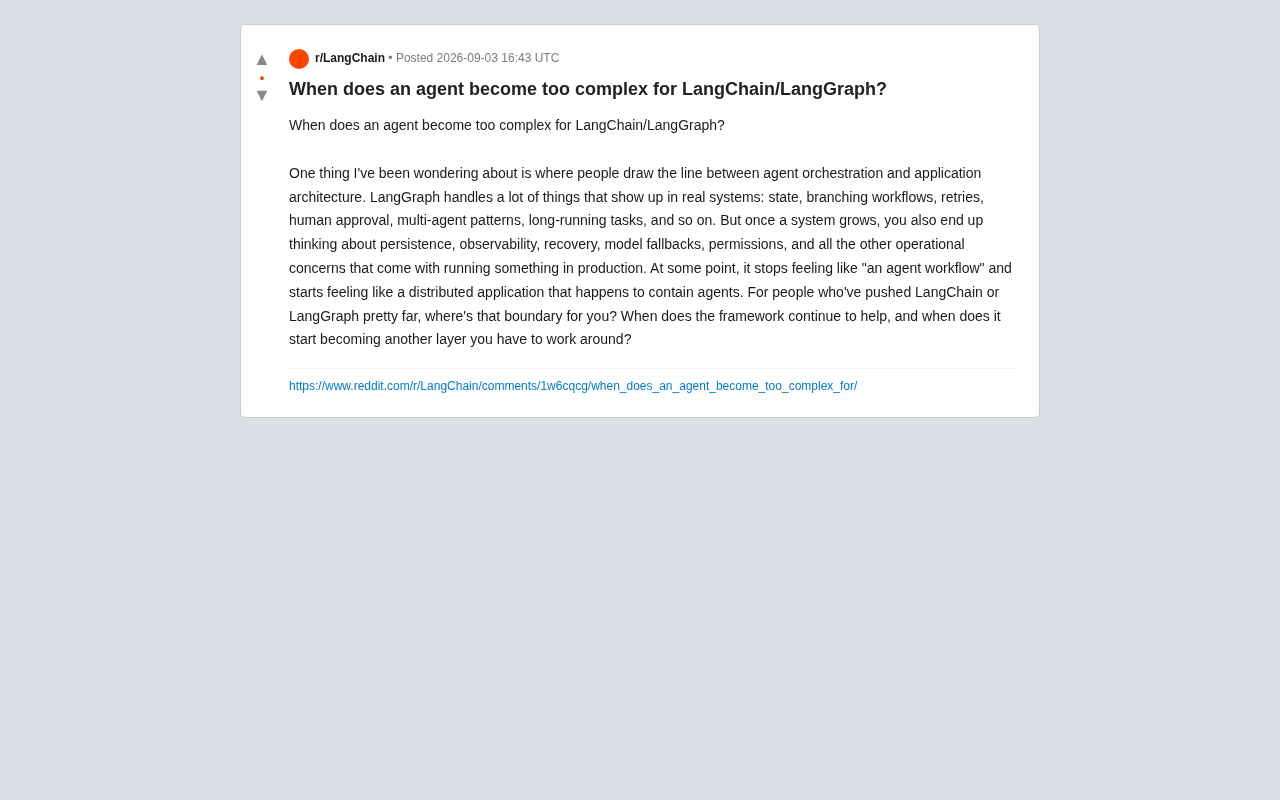
The Boundaries of LangGraph: When Does an Agent Become a Distributed Application?
Explore the capability boundaries of Agent orchestration frameworks like LangGraph, and learn when AI Agent systems cross the line from workflow orchestration into distributed application architecture.
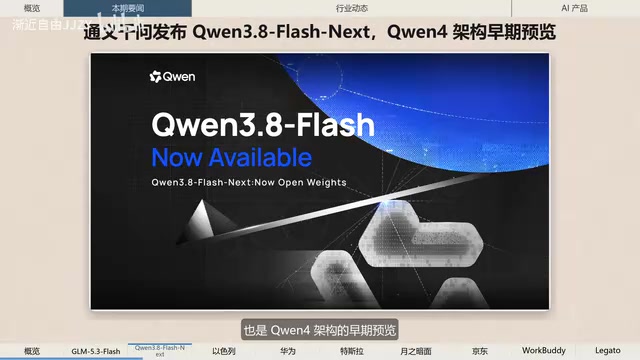
Zhipu Open-Sources GLM-5.3-Flash 320B Model as Alibaba's Qwen4 Architecture Preview Launches Same Day
Zhipu open-sources GLM-5.3-Flash native multimodal model (320B total/18B active params) while Alibaba launches Qwen3.8-Flash-Next as Qwen4 architecture preview, both redefining LLM efficiency.
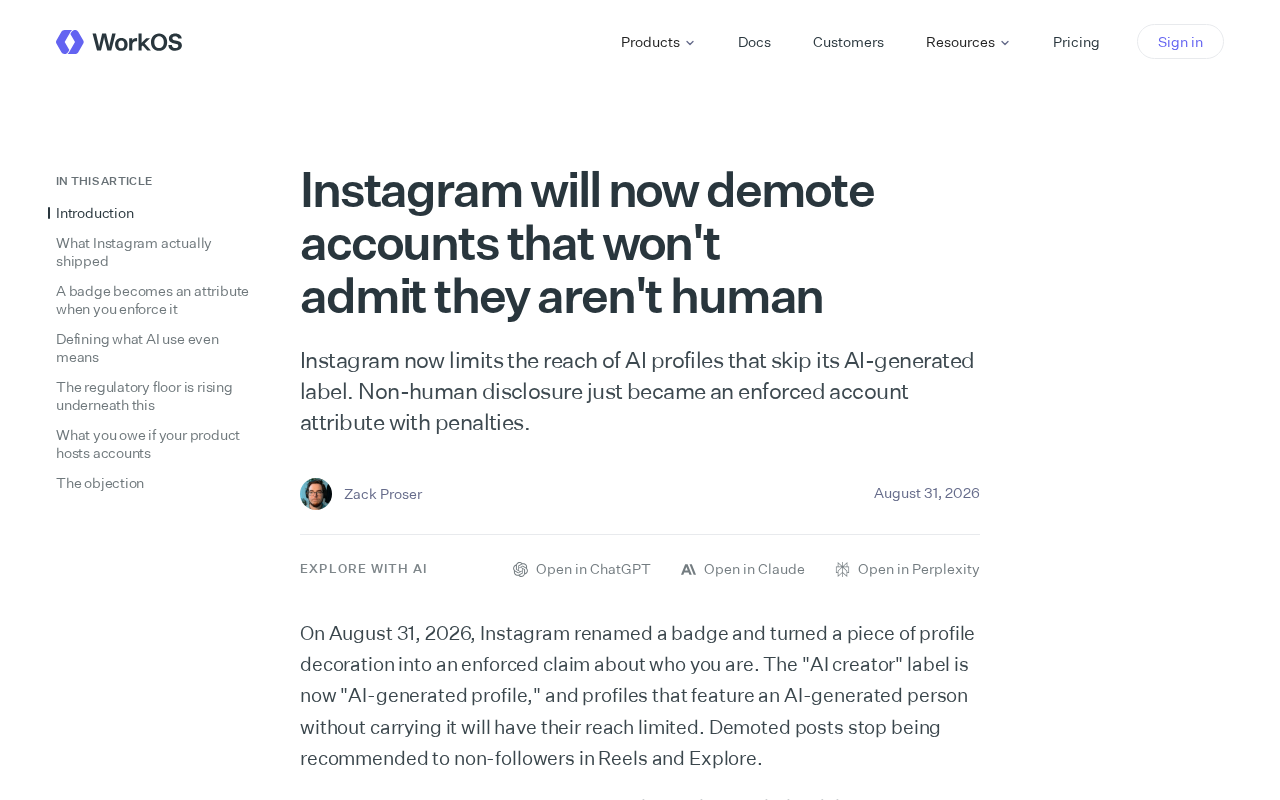
Instagram's New Rule: AI Accounts That Don't Disclose Their Identity Will Be Throttled
Instagram mandates AI identity disclosure — accounts that refuse will be throttled. Explore the enforcement challenges, detection limits, and industry impact.