LLM Juries: How Multi-Model Voting Builds Reliable Metadata
LLM Juries: How Multi-Model Voting Bui…
Multi-model LLM juries use voting and consensus aggregation to build more reliable, accurate metadata at scale.
Relying on a single LLM for metadata generation exposes systems to hallucinations, bias, and inconsistency. The LLM Jury paradigm addresses this by having multiple diverse models independently judge each data point and aggregating their outputs via voting or consensus — much like ensemble learning. This article explores the engineering principles behind building effective LLM juries, including model diversity, aggregation strategies, and tiered cost control, with food databases as the primary case study.
The Reliability Problem with Single LLMs
In real-world AI engineering, large language models (LLMs) are widely used for data annotation, content classification, and metadata generation. Yet one challenge remains unavoidable: the output of a single model is often accompanied by hallucinations, biases, and inconsistencies.
Technical Background: The Root Cause of Hallucinations Hallucinations in LLMs stem from their autoregressive generation mechanism: when generating each token, the model is essentially sampling from a conditional probability distribution rather than retrieving facts from a knowledge base. This means a model can produce factually incorrect content with high "fluency." Inconsistency, meanwhile, is closely tied to the model's temperature parameter and random sampling process — even the same question asked of the same model multiple times can yield different answers. For structured annotation tasks that demand high consistency, this inherent randomness poses a systemic risk.
When we need to automatically generate structured metadata for large-scale datasets (such as a food database), relying on a single model's judgment is like letting a judge decide a case alone — risk is concentrated, with no checks and balances.
A recent technical post titled Building Food Metadata with LLM Juries proposes an insightful solution: drawing on the judicial concept of a "jury," multiple LLMs collaboratively participate in the judgment process, improving the accuracy and robustness of metadata generation through voting or consensus. This LLM Juries paradigm is emerging as a critical engineering approach for enhancing the reliability of AI outputs.
What Is the LLM Jury Mechanism?
From Single Verdict to Collective Judgment
The core idea behind LLM Juries is to move away from letting a single model produce the final answer, and instead convene multiple different models (or multiple independent samples from the same model) as "jurors." Each model independently renders a judgment, and the final conclusion is reached through voting, weighting, or aggregation.
This approach draws directly from the classical machine learning concept of Ensemble Learning. The theoretical foundation of ensemble learning lies in the Bias-Variance Tradeoff: a single learner often has weaknesses in either bias or variance, but by combining multiple independent learners, variance can be dramatically reduced while bias is kept in check. Random forests, gradient boosting trees (XGBoost), and Bagging are all classic implementations of this idea.
Just as a random forest reduces overfitting risk by combining multiple decision trees, an LLM Jury smooths out individual bias and randomness by aggregating the judgments of multiple models. Notably, LLM Juries hold a key advantage over traditional ensemble learning: while the base learners in traditional ensemble methods often share similar inductive biases, LLMs from different vendors have vastly different pretraining corpora, RLHF alignment strategies, and architectural designs — meaning their "failure modes" are less correlated, and the theoretical benefits of ensembling are more pronounced. The difference here is that these "jurors" possess language understanding and reasoning capabilities, enabling them to handle more complex, subjective judgment tasks.
Why Food Metadata Is an Ideal Validation Scenario
Building metadata for food data is a classic "semi-structured judgment" problem — determining which category a food item belongs to, whether it contains allergens, which dietary preferences it suits (vegetarian, gluten-free, etc.), and how to classify its nutritional attributes. These tasks are neither purely objective fact extraction nor fully open-ended creative work; they require reasoning and classification within a structured rule framework.
This is precisely where single models fall short: different models may give entirely different answers for the same food classification, and edge cases with blurry boundaries are especially error-prone. Through the jury mechanism, multiple models cross-check each other in ambiguous territory, significantly reducing the probability of incorrect labels entering the database.
Key Engineering Considerations for the Jury Mechanism
Juror Selection: Diversity Is the First Principle
The key to building an effective jury lies in model diversity. If all "jurors" come from the same model family and use the same training data, they are likely to make the same mistakes — and voting loses its error-correcting value. In practice, models from different vendors and architectures are typically mixed (e.g., using GPT series, Claude series, and open-source models simultaneously) to ensure genuine independence of judgment.
This principle also echoes findings from the LLM-as-a-Judge research field. This paradigm was formally introduced to the academic community through Stanford's MT-Bench and Chatbot Arena studies (Zheng et al., 2023), which found that powerful LLMs can agree with human evaluators more than 80% of the time when assessing open-ended response quality. However, single LLM judges exhibit significant Position Bias (tending to rate answers that appear first more highly) and Self-Enhancement Bias (tending to favor outputs that resemble their own style). By selecting multiple models from different organizations to form a jury, these systematic biases can cancel each other out during aggregation.
Four Design Patterns for Aggregation Strategies
Once independent judgments from multiple models are collected, how to aggregate them into a final conclusion is the central challenge. Common strategies include:
- Majority Voting: The simplest approach; works well for tasks with clear classification boundaries.
- Weighted Voting: Different weights are assigned to models based on their historical performance on a validation set.
- Confidence Fusion: Each model outputs both an answer and a confidence score, which are combined to reach a final conclusion.
- Arbiter Pattern: When the jury is divided, a more capable model is brought in as a "chief judge" to make the final ruling.
Tiered Cost and Efficiency Control
The obvious tradeoff of the jury mechanism is a multiplicative increase in compute cost. Calling multiple models for every data point means significant API costs and latency at scale. Engineering practice therefore typically employs a tiered arbitration strategy:
This strategy relies on Uncertainty Quantification mechanisms in its implementation. Lightweight models (such as GPT-4o-mini or open-source Llama variants) first screen the entire dataset, while recording the confidence distribution of model outputs (estimable through repeated sampling or logprobs). Only when confidence falls below a preset threshold — or when the entropy of repeated samples is high — is the data point routed to the full jury process. In practice, this architecture can compress full jury invocations to just 10%–30% of total volume, dramatically reducing overall API costs with minimal quality loss. Content annotation pipelines at companies like Netflix and Airbnb have adopted similar cascaded architecture designs.
Simple, high-confidence cases are handled quickly by a single model; only when there is disagreement or low confidence is the full jury process triggered. This "arbitration on demand" design keeps quality high while effectively controlling costs.
Deeper Value and Broader Applications
Dual Gains in Reliability and Interpretability
LLM Juries don't just improve result accuracy — they also deliver additional interpretability benefits. When multiple models reach the same judgment, our confidence in the result is greater. When they disagree, the disagreement itself is a valuable signal: it precisely flags the genuinely difficult, boundary cases in the data that need human review. This provides a natural intelligent triage mechanism for human-in-the-loop annotation workflows.
From an information-theoretic perspective, the degree of disagreement among multiple independent models is essentially an estimate of annotation difficulty. High-disagreement samples tend to correspond to edge cases in the domain, ambiguously defined categories, or genuinely contested questions — precisely the areas where human annotation experts should focus their effort.
From Food Data to a General Annotation Paradigm
Although this article's case study focuses on food metadata, the methodology has broad transferability. Any scenario requiring large-scale, high-quality structured annotation — medical data classification, legal document labeling, content moderation, e-commerce product attribute extraction — can benefit from the jury approach.
In fact, LLM-as-a-Judge has become a mainstream method for evaluating model outputs in recent years, and the jury mechanism is a natural extension and engineering implementation of this idea in the direction of reliability.
Conclusion
As LLMs continue to penetrate production environments, managing their inherent uncertainty has become a core challenge engineers must face. LLM Juries offer an elegant and pragmatic answer: rather than chasing a single perfect model, build reliable systems through the collective intelligence of multiple models.
This is both a modern-day expression of classical ensemble learning principles and an important marker of AI engineering's growing maturity. For any team building data-intensive AI applications, the engineering philosophy of upgrading from "single-point judgment" to "collective verdict" is well worth serious consideration and adoption.
Key Takeaways
Related articles

PGP-Clinical-TimeKAN: A Detailed Guide to the Multivariate Physiological Indicator Joint Prediction Framework
An in-depth analysis of the PGP-Clinical-TimeKAN framework for joint probabilistic prediction of multivariate physiological indicators, covering trajectory-first paradigm, KAN message passing, MIMIC-IV validation, and ablation studies.
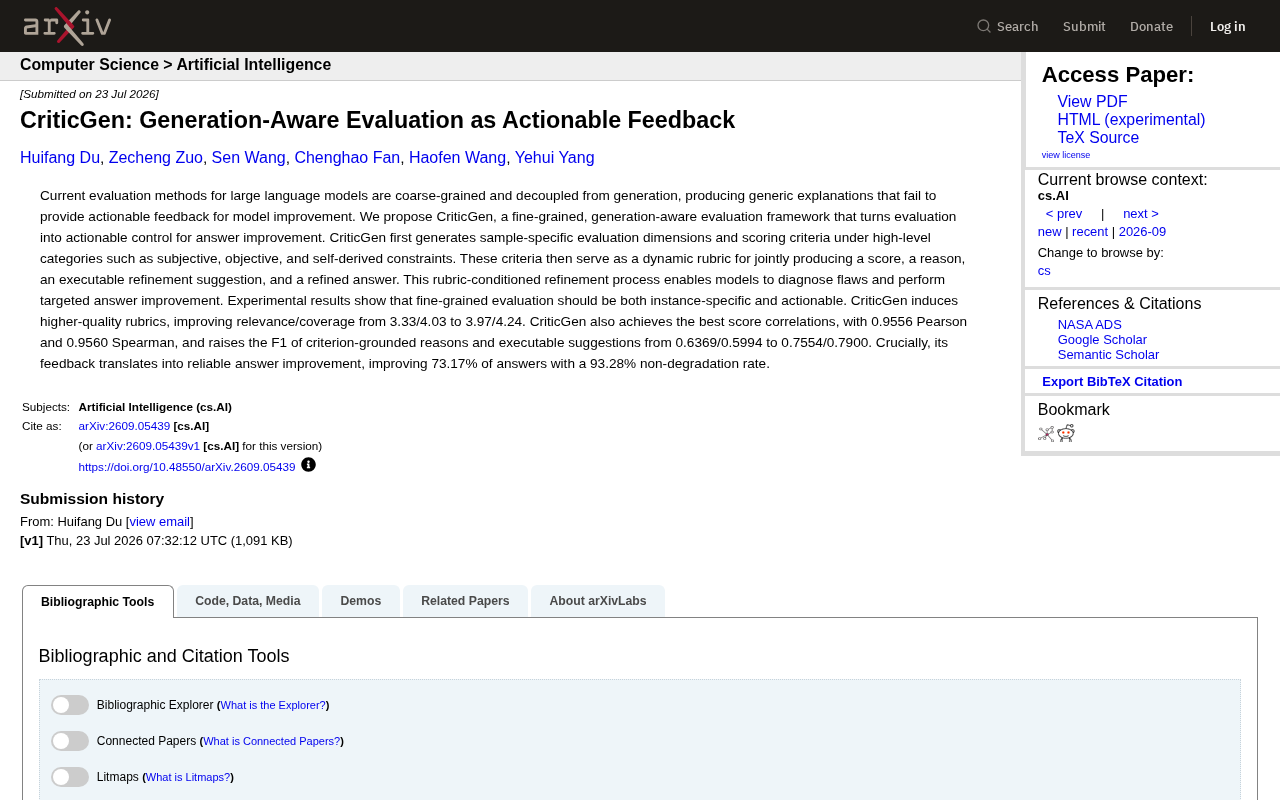
CriticGen: A New Framework That Transforms AI Evaluation into Actionable Improvement Feedback
CriticGen proposes a generation-aware evaluation framework that transforms AI assessment from passive scoring to an active optimization loop, achieving 73.17% answer improvement and 93.28% non-degradation rate.
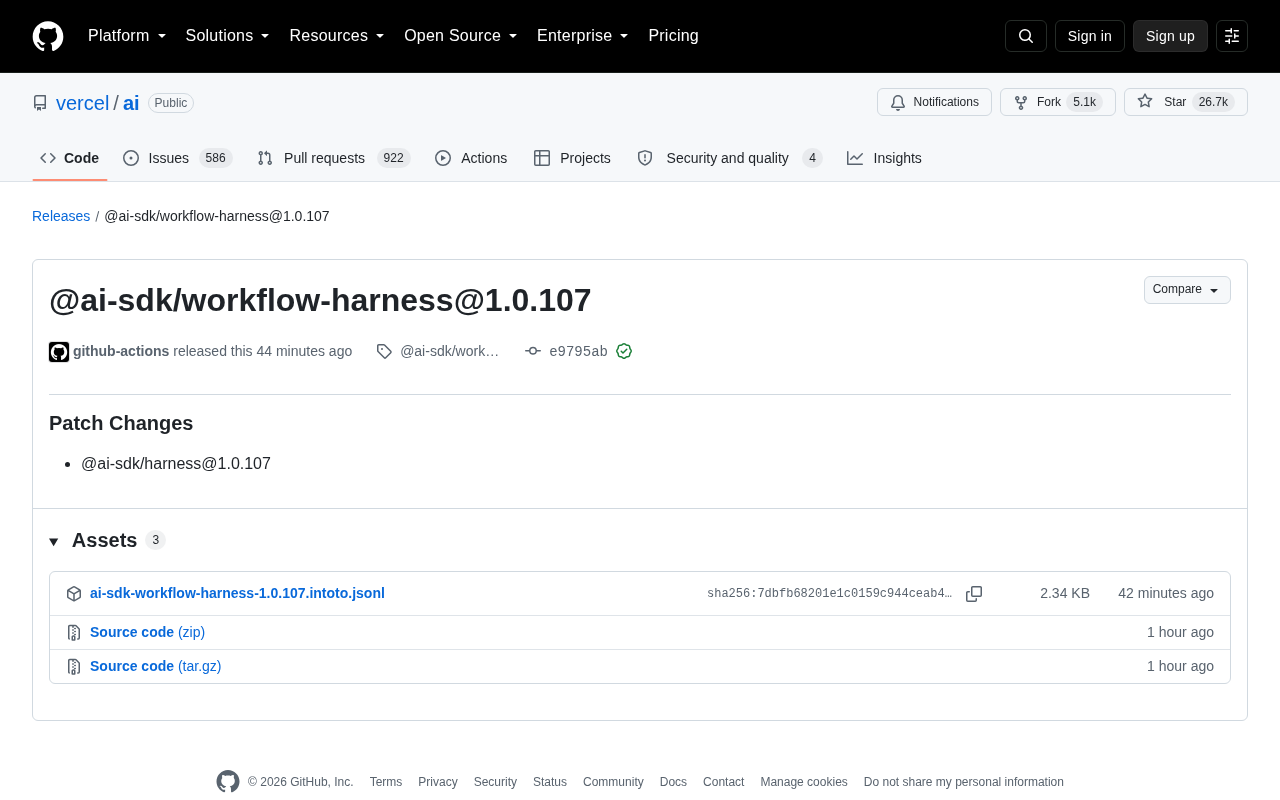
Vercel AI SDK workflow-harness Update Analysis
Deep analysis of Vercel AI SDK workflow-harness 1.0.107 update: architecture design, engineering practices, and developer value for building reliable AI apps.