Long-Running Agent Framework: Enabling AI Agents to Handle Complex, Extended Tasks
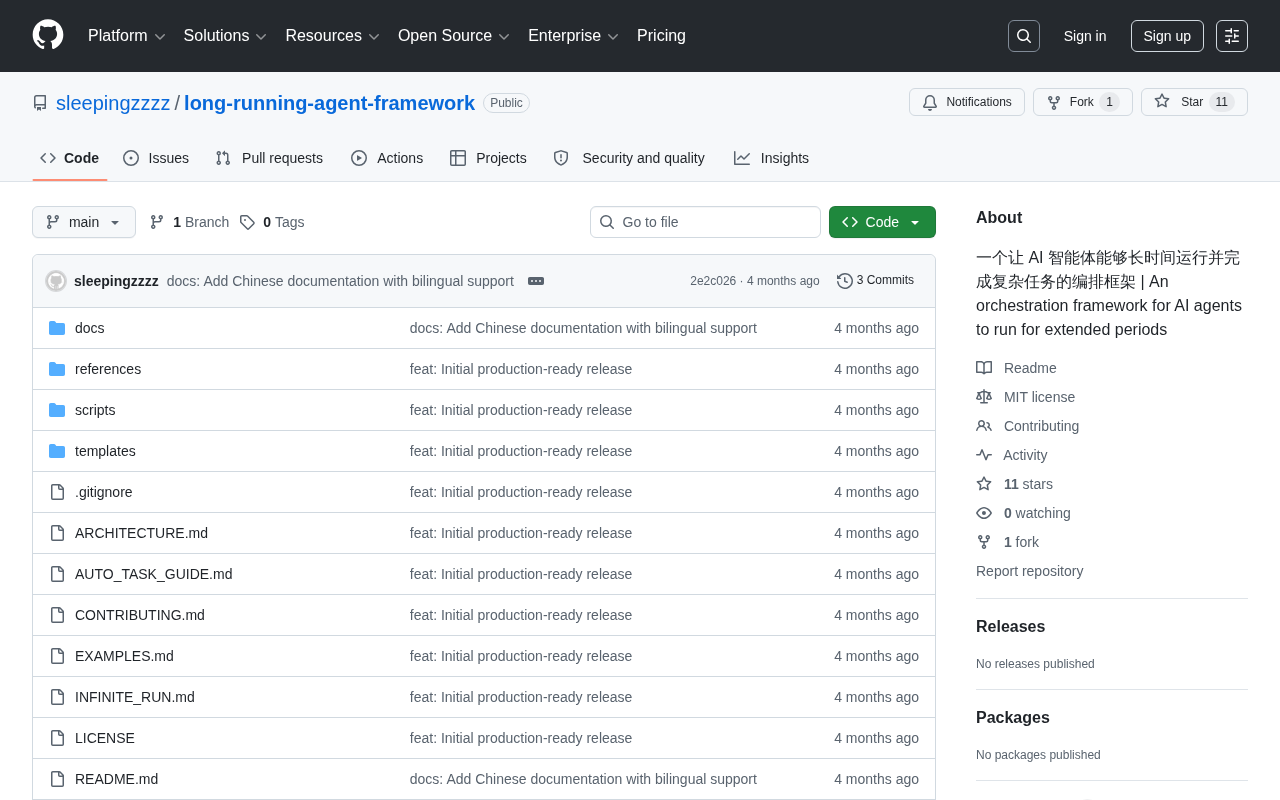
An open-source JavaScript framework for orchestrating AI agents across long-running, multi-step tasks.
long-running-agent-framework is an open-source JavaScript orchestration framework addressing the core pain points AI agents face with long-horizon, multi-step tasks: lost context, inability to resume interrupted work, and unreliable scheduling. It abstracts orchestration logic to handle task decomposition, step chaining, state persistence, and error recovery — letting agents run like stable background services. Built for the Node.js async ecosystem, it suits automated workflows, background data processing, and continuous monitoring use cases. Currently at a very early stage (10 Stars), it represents grassroots community exploration of the industry shift from one-shot Q&A agents toward continuously autonomous ones.
Why Long-Running AI Agents Are Hard to Build
Most mainstream AI agents today excel at short, focused tasks — answering a question, generating code, or summarizing a document. But once a task spans hours or longer, involves multiple steps, requires state persistence, and demands error recovery, typical Agent architectures start to fall apart. Lost context, inability to resume interrupted tasks, and unreliable scheduling mechanisms are very real obstacles developers face.
The open-source project sleepingzzzz/long-running-agent-framework on GitHub targets exactly this pain point. It positions itself as "an orchestration framework for AI agents to run for extended periods," written in JavaScript, with the goal of solving the orchestration and continuous-execution challenges that Agents face during long-horizon tasks.
The Core Problems an Orchestration Framework Solves
The project's positioning makes its two key concepts clear: "orchestration" and "extended periods." Together, they point to a common engineering need — how to keep one or more AI agents running stably as a background service, rather than losing all state the moment a conversation ends.
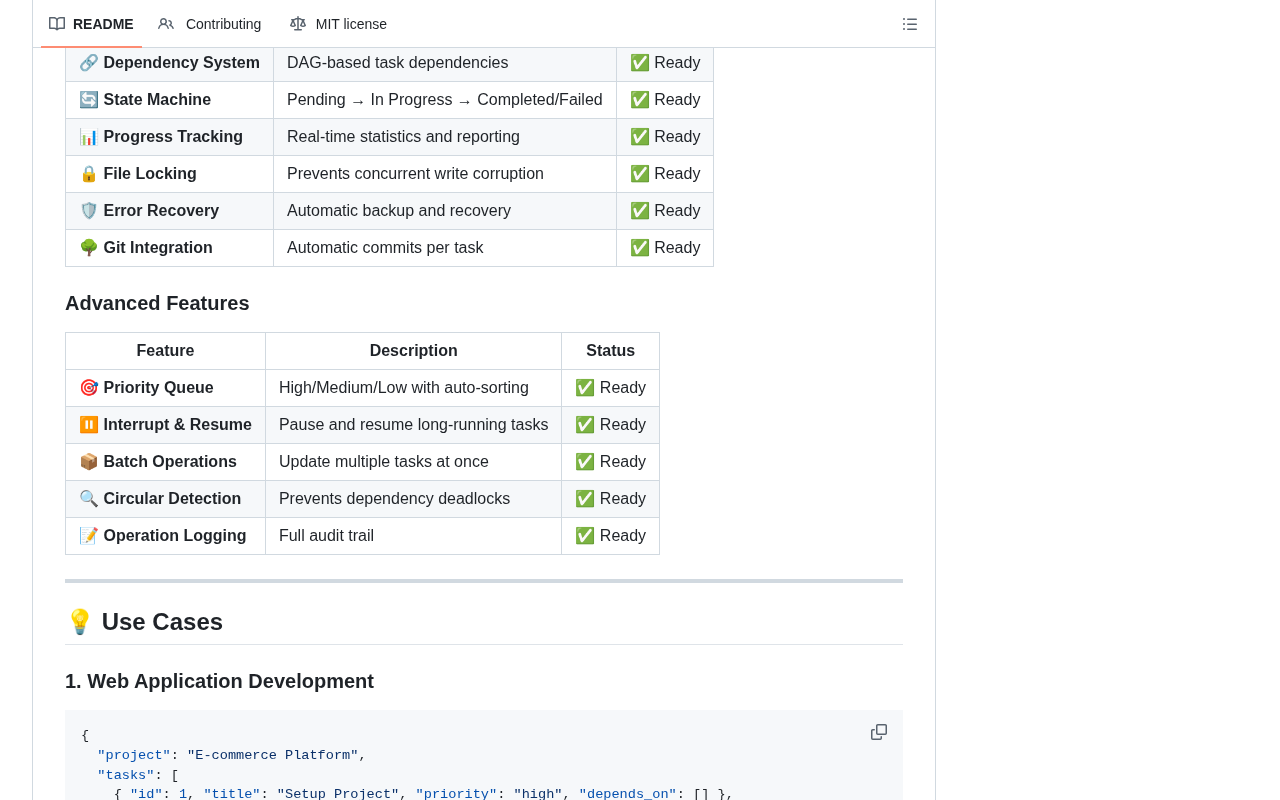
Orchestration typically means the framework is responsible for breaking tasks into subtasks, chaining steps together, managing execution order, and scheduling across multiple cooperating agents. Long-duration operation, in turn, requires deliberate design around state persistence, task resumption, and exception handling — precisely the capabilities needed to evolve a "works-once demo" into a "continuously operating system."
For developers building automated workflows, background data processing, or Agent applications that require continuous monitoring and response, the value of this kind of framework lies in abstracting away repetitive orchestration logic so developers can stay focused on business logic.
In software engineering, "Orchestration" and "Choreography" represent two distinct models for multi-service collaboration. Orchestration relies on a centralized controller (the Orchestrator) that directs the execution order and interactions of all subtasks or sub-agents — like a conductor leading an orchestra. Choreography, by contrast, has each service autonomously responding to events in a decentralized fashion. For AI Agent frameworks, the orchestration model's strengths lie in state visibility, controllable execution order, and easier error tracking and resume-from-checkpoint capabilities — all of which are essential for long-horizon tasks. When a task spans hours, network interruptions, API rate limits, and model call failures can all occur. An orchestration-capable framework needs to maintain a global state machine, recording which steps have been completed and which are pending, and resuming from the exact breakpoint rather than starting over. This is the core distinction between such frameworks and simple "chain" calling tools.
Technology Choices and Project Status
The project uses JavaScript as its primary language, which means it naturally fits the Node.js ecosystem and full-stack development environments — making it relatively easy to adopt for teams already familiar with the JS stack. JavaScript's async features (Promises, async/await, the event loop) also map well to the demands of long-running tasks and scheduling.
Looking at community metrics, the project is at a very early stage: 10 Stars and 1 Fork. This indicates it's an emerging, exploratory project that hasn't yet been broadly validated. Developers who keep an eye on cutting-edge tools can treat it as a directional experiment worth following, but before adopting it in production, you should carefully assess its maturity, documentation quality, and maintenance activity.
JavaScript's async advantages in the Agent framework space deserve a closer look. Node.js's non-blocking I/O model, based on the Event Loop, keeps resource consumption relatively low when managing multiple long-pending tasks simultaneously — such as waiting on external API responses or polling task status. The async/await syntax allows complex async task flows to be written in a near-synchronous style, reducing the code complexity of multi-step orchestration logic. Python's asyncio offers similar async capabilities, but its threading model is constrained by the GIL (Global Interpreter Lock), limiting performance in CPU-intensive scheduling scenarios. That said, the Python ecosystem has far more mature Agent frameworks like LangChain and LlamaIndex, while the JavaScript ecosystem's tooling in this space is still relatively sparse — meaning this project faces both opportunity and challenge.
Why Long-Running Agents Matter for the Industry
Zooming out, long-running agents are becoming an important evolutionary direction in the Agent space. The industry broadly recognizes that truly productive AI Agents shouldn't just "answer questions" — they should be capable of taking on complex goals that require extended time and multiple steps to complete: sustained code refactoring, long-cycle data analysis, automated operations, and more.
Achieving this requires reliable orchestration and scheduling frameworks as foundational infrastructure. Similar open-source explorations will continue to emerge, gradually transforming "letting an Agent work autonomously for a long time" from a concept into a reusable engineering pattern. long-running-agent-framework, small as it is, represents the developer community's grassroots experimentation within this trend.
Long-running Agents are technically often classified as "async Agents" or "background Agents," in contrast to "synchronous Agents" that require real-time interaction. Notable industry explorations in this direction include: OpenAI's Assistants API, which introduced persistent Thread mechanisms allowing conversation state to be saved across sessions; Anthropic gradually strengthening multi-step task support in Claude's tool-use scenarios; and open-source projects like AutoGPT and BabyAGI, which provided early validation of the "goal-driven continuous execution" concept — though these also exposed core challenges of long-horizon Agents: tasks tend to drift from their goals, errors cascade and amplify, and resource consumption is hard to predict. Reliable orchestration frameworks need to strike a balance between "giving Agents sufficient autonomy" and "maintaining human oversight and the ability to interrupt" — a design philosophy that remains an active area of research in the industry.
Recommendations for Developers
If you're exploring how to build long-horizon Agents, it's worth paying attention to the orchestration abstractions these kinds of frameworks provide — understanding how they handle state, schedule steps, and manage interruptions and recovery. Even if you don't adopt one directly, the design thinking can be valuable reference material for building your own system.
A word of caution: early-stage projects often have limited stability and documentation. It's advisable to evaluate in an experimental environment first, weighing the trade-offs against your own reliability and maintainability requirements. Tracking Star growth, Issue response times, and release cadence are practical signals for judging whether an open-source project can be depended on long-term.
Related articles
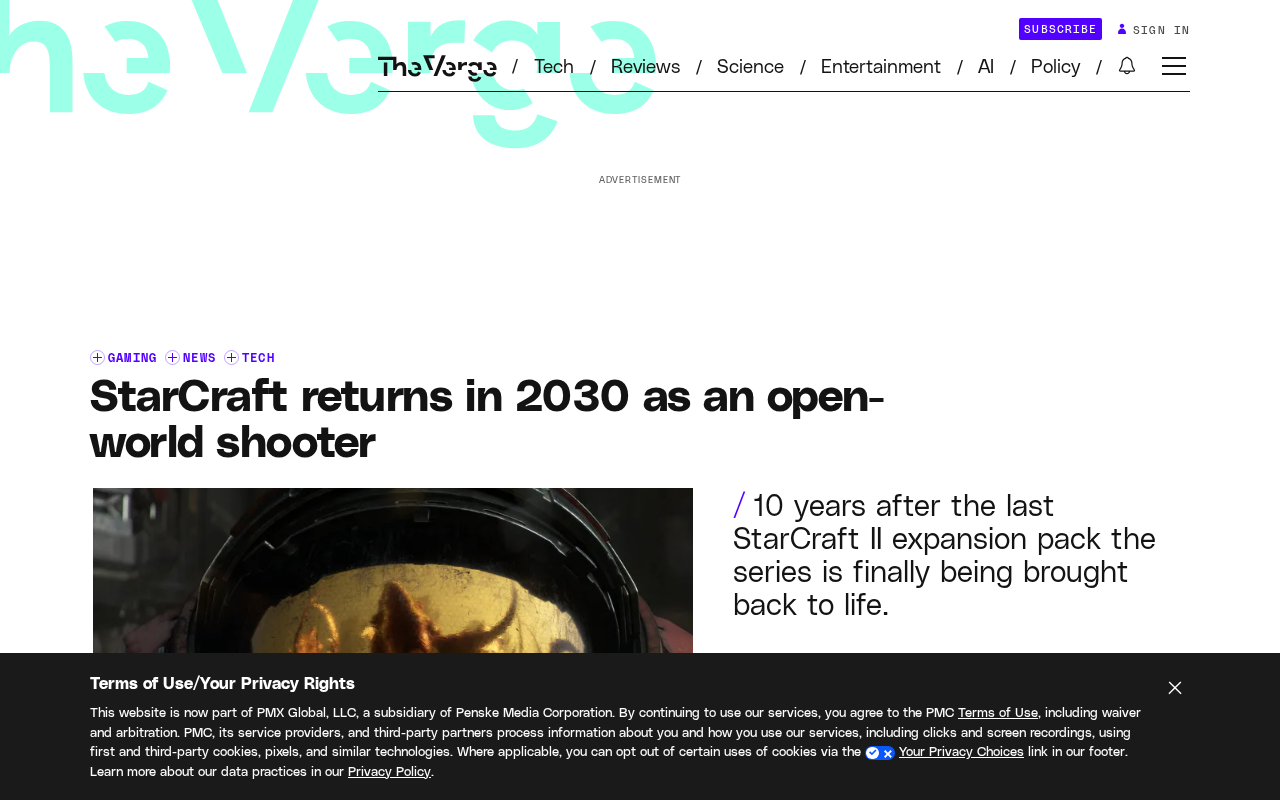
StarCraft Returns: Blizzard Reboots the Franchise as an Open-World Shooter
Blizzard is rebooting StarCraft as an open-world shooter, led by Far Cry veteran Dan Hay — revisiting the dream that StarCraft: Ghost never fulfilled.
CadQuery vs. OpenSCAD: Which Is Better for AI Agentic CAD Work?
CadQuery vs. OpenSCAD for AI agentic CAD: comparing Python ecosystem, error feedback, and geometric expressiveness to find the best tool for AI-driven 3D modeling.
Void Linux Maintainer Orphans ~100 Packages Over AI Policy Dispute
A Void Linux maintainer orphaned ~100 packages over an AI policy dispute, highlighting open source governance challenges around AI contributions, licensing, and community values.