Machine Party Hands-On: The Chaos and Laughs of a Streamer Free-for-All

Yogscast plays Machine Party: frantic factory minigames with great social chaos but no catch-up mechanic.
In a Yogscast multiplayer session, streamers tried Machine Party — a factory-themed party game compilation likened to "horrifying Mario Party." The game cycles rapidly through minigames like minesweeper runs, 3D cube carving, and recipe-based gun-building, each simple to learn but brutally fast. The real fun comes from constant player sabotage, with "gang up on Ravs" becoming the session's running theme. The key flaw: no catch-up mechanic, letting experienced players dominate unchallenged. Streamers ultimately called it "the TikTok of janky multiplayer Steam games" — always switching before you get bored.
A "Horrifying Mario Party" Brawl
This video from YouTube channel Yogscast is a multiplayer gaming session where several streamers — Lewis, Ravs, Oze, Boba, and others — tried out a party game compilation called Machine Party. The tone was set right from the opening: someone described it as "Mario Party, but terrifying" — a rapid-fire collection of minigames where players can shove and sabotage each other at any moment, filling the entire recording session with screams, profanity, and laughter.
If you're looking for a fast-paced Steam multiplayer game to play with a few friends — one that gets people laughing and cursing in equal measure — this session offers a pretty vivid picture of what to expect.

A Minigame Gauntlet: From Minesweeper to Gun-Building Madness
The core of Machine Party is a rotating series of factory-themed minigames — each with simple rules you can pick up instantly, but requiring players to understand and execute them under extreme time pressure. The session featured a substantial number of games; the streamers themselves noted, "We played about 20 games."
A Few Standout Stages
- Minefield: Players must cross a field packed with land mines. A traffic-light indicator on their belt — green, yellow, red — signals proximity to danger, with red meaning a mine is right underfoot. Hidden grinders scattered across the map add another layer of threat, wiping out anyone who lingers too long.
- Chisel Gauntlet / Cube Carving: A three-step process of memorize, carve, and submit that tests short-term memory for 3D shapes. Streamers universally found it brain-melting, with the rotating camera being a particular source of frustration — one player even tried to cheat by peeking at Ravs' screen, only to fail by forgetting to hit the submit button.
- Battle Royale (Gun-Building): A crafting mechanic reminiscent of Plate Up!, where players collect gears, pipes, springs, glue, and other components at a workbench to assemble a weapon, then use it to eliminate each other. Parts can be stolen, making "swipe someone's components, then shoot them" a go-to tactic.
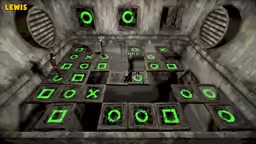
Plate Up! is a 2022 co-op management game where players collect ingredients, combine and process them according to recipes, and fulfill orders — a workflow built entirely around recipe memorization and task coordination. Machine Party's gun-building stage borrows a similar "recipe crafting" framework: players must identify and gather specific component combinations rather than freely stack parts. This gives the stage a layer of strategy beneath the chaos, and it's a relatively rare design choice in party games — one that raises the learning curve while providing structural support for the scramble to steal parts.
The Real Draw: Social Chaos
The greatest fun in this game isn't the ingenuity of any individual stage — it's the way players sabotage each other. Nearly every minigame allows for shoving, stealing, or framing others, so the recurring catchphrase of the whole session became: "Everyone push Ravs in."
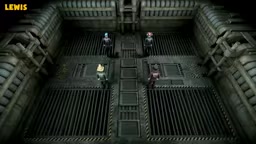
This "gang up on one person" dynamic carried across multiple stages: in the tile-walking level (think Squid Game's glass bridge), players shoved each other into the pit; in the forklift stage, everyone teamed up to steal Ravs' crate; in the garbage platform level, players hurled trash onto the leader's platform en masse. The streamers themselves identified the pattern — "It's like how we have to gang up on Harry in Minecraft minigames. You need to team up just to have a chance."
The session also had plenty of absurd highlights, including "Spine Breaker," a stage with a chasing creature that players had to fling onto each other, and a smoking stage requiring precise control over how much smoke you inhaled — too little and you're inefficient, too much and you cough — jokingly described as "a cop in an '80s office trying to squeeze in as many cigarettes as possible."

A Key Flaw: No Catch-Up Mechanic
The session also exposed a notable balance issue. Ravs had already played the game with another group of streamers (Hat Films) and knew every stage inside out, allowing him to lead from start to finish without breaking a sweat. The others only realized this toward the end, grumbling that he was "the guy who secretly went back to the Squid Game and memorized all the rules" — "a veteran player disguised as the villain."
One streamer put the design flaw plainly: "This game has no catch-up mechanic. Unlike Mario Party, where anyone can make a comeback, if you're ahead from the start you stay ahead — there's no way to close the gap." Once a more experienced player has the advantage, the competitive tension drains away fast. For a party game built around shared fun, this is a balance problem worth the developers' attention.
A "catch-up mechanic" is one of the core balancing tools in party game design — a systemic way to give losing players a chance to overtake the leader, keeping tension alive throughout. Classic examples from the Mario Party series include trailing players having better odds of randomly receiving high-value items, and hidden bonus events in the final round. Party games without such mechanics tend to settle into "performative" competition once the early standings are set: the leader coasts to victory while those behind can only hope for someone else to stumble. For compilation-style games that live and die by social chaos and the freshness of each session, the absence of a catch-up mechanic is especially damaging — it renders the instinct to "gang up on first place" largely pointless.
Why "Rough Multiplayer Games" Are Still a Good Time
Setting aside the balance debate, the streamers wrapped up with a pretty sharp takeaway. Lewis argued that Machine Party's real cleverness lies in its pacing: "Any one of these minigames on its own would probably be something we'd play for 10 minutes on the channel and get bored of — but put together, it's a completely different experience."
Another streamer offered an equally sharp analogy: "It's the TikTok of janky multiplayer Steam games." Each game lasts just long enough for you to learn the rules, then immediately cuts to the next before boredom can set in. That philosophy of fragmented, rapid rotation fits neatly with the short-attention-span habits of today's audience — and it's precisely why compilation party games like this keep drawing in streaming content creators.
The whole session had the tension and dark humor of Squid Game, and it's a solid candidate for a friend group gaming night — just make sure nobody has done their homework on the stages beforehand.
Related articles

iPhone Duo Battery Life Tested: One Charge a Day Is Unavoidable, and the Large Screen Is the Culprit
iPhone Duo battery test: heavy use needs at least one charge a day, and about 30% remains after 6.5 hours of screen-on time. How often the large screen is unfolded is key; a MagSafe battery pack helps, and long-term degradation is also worth watching.

Kimi K3.1 Pro Open-Sourced: 2.8 Trillion Parameters Close In on Opus
Moonshot releases the open-source MoE model Kimi K3.1 Pro, with 2.8T total parameters and 104B activated, trailing Opus 5.5 by under 1 point on Terminal Bench 4.0.

Costco Tech Price Guessing: Are Monitors, Keyboards, Mice, and Bose Speakers Worth It?
A YouTube blogger guesses prices of Costco tech products: 2K 180Hz monitor, Logitech keyboard and mouse, Bose speaker, and CyberPower UPS, revealing warehouse-store selection and brand premium.