macOS 27 Golden Gate: A Reimagined Siri Takes Aim at AI Productivity Tools
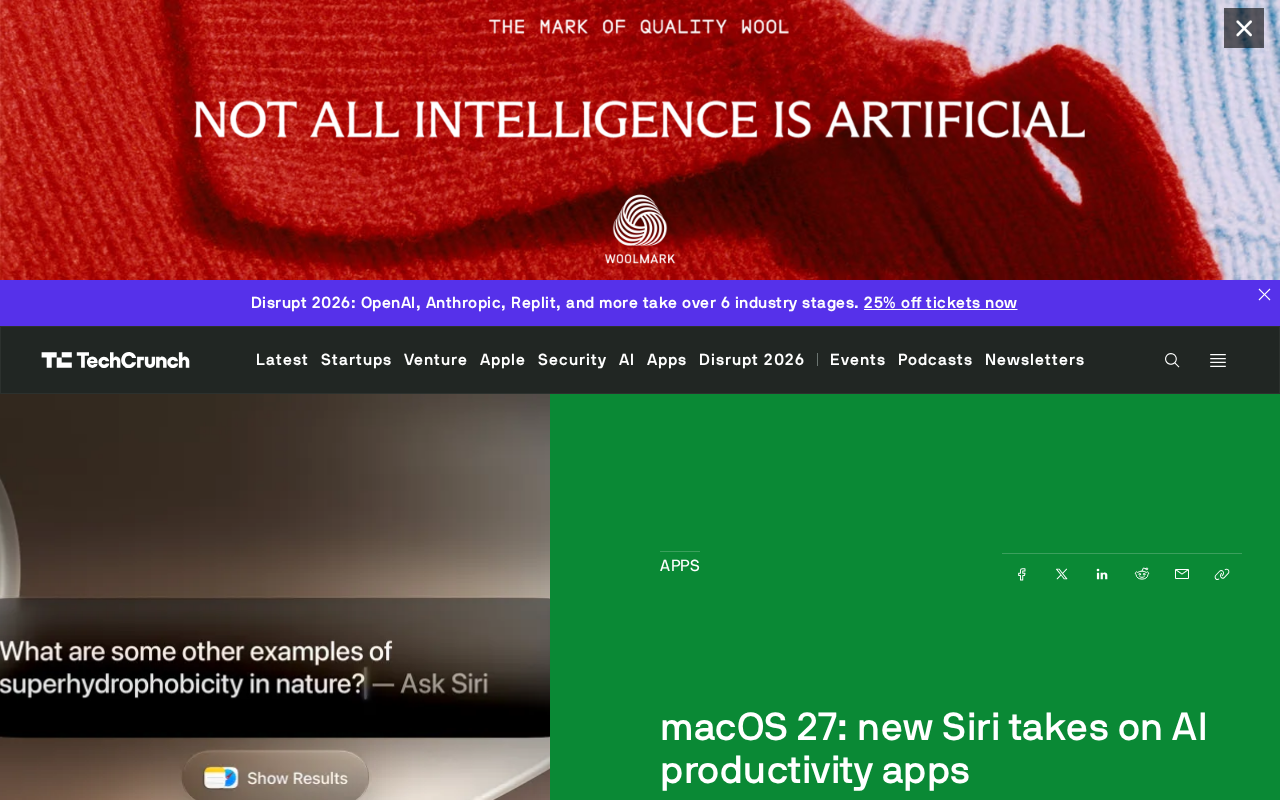
macOS 27 Golden Gate upgrades Siri into a system-level AI productivity assistant and refines visual design consistency.
macOS 27, codenamed Golden Gate, has two headline changes: a revamped Siri repositioned as a system-level AI productivity assistant to rival third-party tools, and more visually unified windows and icons. Siri's edge lies in deep system integration — cross-app data access, on-device processing, and privacy protection — advantages no third-party app can fully match. The design update continues Apple's push to align macOS, iOS, and iPadOS visuals. For users, both changes promise a smoother experience; for developers, Siri's expansion brings both competitive pressure and potential new integration opportunities if APIs are opened up.
Two Highlights of macOS 27 Golden Gate
According to RSS sources, macOS 27 — codenamed Golden Gate — features two standout changes: a comprehensively upgraded Siri AI and a more visually unified approach to windows and icons. The former signals Apple's positioning in the generative AI race, while the latter continues the company's ongoing refinement of system-wide design consistency.
Based on what's been made public so far, this generation of macOS is clearly tilting toward AI. The new Siri is no longer just a voice assistant for checking the weather or setting alarms — it's being positioned as a system-level intelligent assistant that directly competes with third-party AI productivity applications. Apple's goal seems clear: when users need to tackle everyday tasks, they should reach for the built-in Siri rather than launching a separate AI tool.
Why the New Siri Is Challenging AI Productivity Apps
Over the past few years, AI productivity tools have surged in popularity — from writing assistance and scheduling to information retrieval. Third-party apps have carved out significant mindshare on macOS, largely thanks to their strong natural language understanding and task automation capabilities. Meanwhile, the built-in Siri has long been criticized for being sluggish and limited in scope.
The Siri upgrade in macOS 27 is Apple's direct response to this competitive landscape. By evolving Siri into an intelligent assistant capable of handling productivity tasks, Apple's key advantage lies in deep system-level integration — it can tap into app data more thoroughly, coordinate across applications, and leverage on-device computing power to protect user privacy. These are moats that no third-party app can fully replicate.
For users, a smarter, deeply integrated system assistant means fewer app switches and a more seamless workflow. That said, whether Siri can truly deliver on its "productivity" promise will depend on how accurately it understands real-world tasks and how reliably it executes them — something that will need to be validated once the official release arrives.
A More Consistent Design Language
Beyond AI, Golden Gate's other major change is visual. According to sources, the new system brings greater consistency to the appearance of windows and icons. Apple has long emphasized unified, restrained design, and this type of update typically aims to reduce visual fragmentation across different apps, making the entire desktop environment feel more cohesive.
Unifying windows and icons may seem like a minor detail, but it directly affects how users perceive and interact with the system every day. More consistent visual standards reduce cognitive load and also pave the way for tighter cross-platform design alignment — particularly with iOS and iPadOS. This trend aligns with Apple's broader strategy of converging design languages across its platforms.
What This Means for Users and Developers
For everyday users, both major changes in macOS 27 point toward a more effortless experience: a more capable AI assistant and a more polished interface. If the new Siri lives up to expectations, some users may find themselves relying less on paid third-party AI tools.
For developers, the picture is more nuanced. A more capable, system-level Siri could create direct competitive pressure for similar third-party apps. But on the flip side, if Apple opens up the relevant APIs, developers could have new opportunities to build more deeply integrated experiences on top of Siri's capabilities. How the ecosystem ultimately evolves will depend on how Apple balances "building in-house" against "opening up."
Takeaway
Public information about macOS 27 Golden Gate remains limited for now, with the core highlights centered on the new Siri AI and a more unified interface design. The former reflects Apple's aggressive stance in the AI productivity space; the latter continues its longstanding design philosophy. The real-world impact of these changes will need to be assessed once fuller feature details and hands-on experience with the final release become available.
Related articles

Deep Dive into Agent Eval Harnesses: Build vs. Buy?
A deep dive into the four core components of an agent eval harness — Cases, Runner, Capture, and Graders — with practical guidance on when to build vs. adopt existing frameworks.

Getting Started with Krea 2 Image Generation: A Beginner's Guide to LoRA and Checkpoints
A beginner's guide to Krea 2 image generation: how to start with free open-source workflows, understand LoRA vs Checkpoint on Civitai, and achieve consistent realistic image generation.

Nintendo 'Customer Appreciation' Sale: Switch Games and Accessories Price Cuts Roundup
Nintendo's Customer Appreciation sale discounts Switch games and accessories at Amazon, Best Buy, Walmart, and its digital store — funded by tariff refunds. Ends Sept 26.