MCP Protocol in Russia: Which Companies Have Opened Their Data to AI Agents

MCP is emerging as the universal protocol for connecting AI agents to data systems worldwide, now governed by the Linux Foundation.
MCP (Model Context Protocol), launched by Anthropic in late 2024 and transferred to the Linux Foundation in December 2025, provides a unified standard for AI agents to connect to data services, with over 37,000 registered servers. In Russia, leading companies like ВкусВилл and Туту have been early adopters, while government agencies lag behind — though developers can build connectors for any service with a public API, as seen with the Russian Central Bank and Moscow Exchange. The article argues that AI agents represent the next operating system paradigm and that MCP is its foundational protocol, with security — covering permissions, prompt injection, and auditability — identified as the key challenge for broad adoption.
MCP: The New Standard for AI Agent Data Access
When an AI agent needs to access your email, calendar, CRM, ATS, or LMS, what protocol does it use to establish that connection? The answer is MCP — the Model Context Protocol. Introduced by Anthropic in late 2024, this standard provides a unified communication bridge between AI agents and all kinds of data services.
In December 2025, Anthropic formally transferred MCP to the Linux Foundation, marking the protocol's transition from single-vendor control to open governance. This shift is significant — it removes MCP from the hands of any one commercial company, making it a true industry-wide public standard. The official registry now lists over 37,000 MCP servers, a testament to its rapid global expansion.
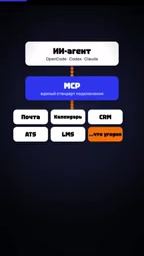
Architecturally, MCP follows a client-server model: the AI model (e.g., Claude) acts as the MCP client, while various data systems — email, databases, SaaS platforms — expose their capabilities by running MCP servers. The protocol defines three core primitives: Resources (data for the AI to read), Tools (operations the AI can invoke), and Prompts (prompt templates). This standardized design solves the classic M×N integration problem, where every AI application previously had to build a custom integration for every data source. With MCP, any compatible AI client can theoretically connect directly to any MCP server, reducing integration complexity from exponential to linear. The Linux Foundation's stewardship means the protocol will evolve through an open RFC process, preventing any single vendor's roadmap from holding the entire ecosystem hostage.
The State of MCP Adoption in Russia
How is the Russian market participating in this global wave of protocol adoption? Research from YouTube offers a measured picture: the number of Russian companies providing official MCP interfaces remains limited.
The companies leading the charge are mostly large players in retail, travel, and finance — including grocery chain ВкусВилл, travel platform Туту, financial services provider Т-Инвестиции, and Ural Airlines (Уральские авиалинии). What these organizations share is that they are data-intensive and have high-frequency user interactions, making them natural candidates for improving service efficiency through AI agents.
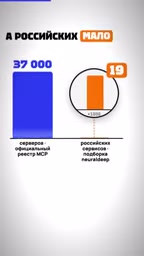
By contrast, Russian government agencies have been slower to adopt MCP — which is hardly surprising. The public sector faces higher barriers around data security, regulatory compliance, and system modernization.
No Official MCP? A Public API Is Enough
One important technical point worth highlighting: MCP is an open standard, which means that even if a service hasn't provided an official MCP server, any developer can build a connector as long as the service exposes an API.
The research specifically cites the Russian Central Bank (Центральный банк) and the Moscow Exchange (Мосбиржа) as examples. Both institutions have usable public APIs. Within the ЦУ training program, participants built their own connectors, allowing their AI agents to directly access this financial data.

This "API as entry point" flexibility dramatically lowers the barrier to adoption. It means businesses and developers don't have to wait for data owners to proactively add MCP support — they can layer agent capabilities on top of existing systems right now.
Building a custom connector essentially means writing a thin adapter layer: on one side, it complies with the MCP protocol spec (communicating with the AI client via JSON-RPC 2.0); on the other side, it calls the target service's REST or GraphQL API. Since MCP provides official SDKs in Python, TypeScript, and other languages, a basic connector can often be completed in just a few hundred lines of code. This pattern has already given rise to a large community ecosystem — GitHub hosts a wealth of open-source connectors targeting public APIs (such as central bank data interfaces and stock exchange market feeds) that developers can reuse or build upon. One caveat: custom connectors require the builder to handle authentication, rate limiting, and data format mapping themselves, which is one reason official MCP servers tend to be more stable than community-built alternatives.
Why MCP Is the Protocol for the Next-Generation Operating System
The source video puts forward a forward-looking thesis: AI agents will become the next interaction interface after smartphones — perhaps even a new kind of operating system. And MCP is the foundational protocol connecting all kinds of systems to this "new OS."

This analogy is worth sitting with. If the core relationship of the mobile era was between apps and the mobile operating system, then the core relationship of the agentic era may well be between data services and MCP. Following this logic, whoever opens up their data via MCP first will secure a prime "gateway" position in the AI agent ecosystem.
In other words, MCP delivers more than just a technical connection — it represents a new kind of customer relationship. Users' AI agents will become the "new customers" for enterprise data. Visionary companies have already recognized this and are proactively staking their claim.
The Next Frontier: Security Is the Critical Issue
As companies open their data to AI agents, security concerns naturally surface. Who is authorized to access which data? How do you prevent unauthorized calls? How do you audit agent behavior? These are unavoidable challenges for MCP to scale. The original video also previews that subsequent content will focus specifically on security.
For companies on the fence, the trend is already clear: 37,000 servers globally, the protocol under Linux Foundation governance, and leading enterprises steadily coming on board. The real question is no longer "should we do this" but "how do we do it safely."
MCP's security risks concentrate around three areas: identity and permissions (verifying that a calling party is a legitimate AI agent rather than a malicious program, and enforcing granular, tool-level access control); prompt injection attacks (malicious data sources hijacking agent behavior through returned content, causing the agent to execute unauthorized actions); and auditability and explainability (agent call chains are often multi-hop and automated, making it difficult for traditional log auditing to reconstruct decision processes). The MCP spec itself is relatively permissive on security mechanisms, largely leaving authentication details like OAuth and API keys to individual MCP server implementers. Industry efforts currently under exploration include dedicated identity proxies for MCP, dynamic permission tightening based on call intent, and sandboxed isolation of agent behavior.
Related articles

Gemini 4 Argon Hands-On: AI Builds Board Games, Constructs Temples, and Trains Robots Autonomously
Gemini 4 Argon hands-on roundup: AI autonomously builds a desk racetrack and temple in Blender, writes a ray tracing engine, trains a humanoid robot to sink 7 shots, plus API pricing and developer access.

The Magic Octagonal Coin: Why Only 9% of People Can Predict Its Flip?
Only 9% of people can correctly predict the Magic Octagon coin flip. This article explains its spatial rotation mechanism, common cognitive pitfalls, and a new hypothesis based on Relevance Theory, exploring the limits of human spatial reasoning.

Sam Altman: AI Is Entering the Era of Scientific Discovery — Math Breakthroughs Will Replicate in Biology and Energy
Sam Altman says AI is entering the era of scientific discovery — math breakthroughs will replicate in biology, materials science, and energy to help develop new drugs and energy sources.