Medicare Spends $50,000 Treating a Heart Attack but Won't Spend $100 Preventing One: The Mismatch in Healthcare

Medicare will pay $50K to treat a heart attack but balks at $100 for prevention, exposing payment system incentive misalignment.
Drawing on a MedPage Today opinion piece, the article notes that Medicare pays about $50,000 for a heart attack while preventive measures may cost only $100—a payment logic misalignment reflecting deep incentive problems in the U.S. healthcare system. It analyzes how fee-for-service favors billable treatments and how prevention is marginalized due to hard-to-quantify cross-period benefits, and presents two voices from the Hacker News discussion: one blaming system design, the other questioning that prevention's real cost far exceeds $100 and not all prevention is cost-effective. Finally, it extends the topic to health tech product design, arguing prevention value must become measurable and reimbursable to gain willingness to pay.
On Hacker News, an opinion piece from MedPage Today sparked widespread discussion, with a title that strikes at the core contradiction of the U.S. healthcare system: Medicare is willing to pay $50,000 for a heart attack but won't spend $100 to prevent one. The post garnered 271 points and 260 comments, indicating that this topic hits a nerve for many people.
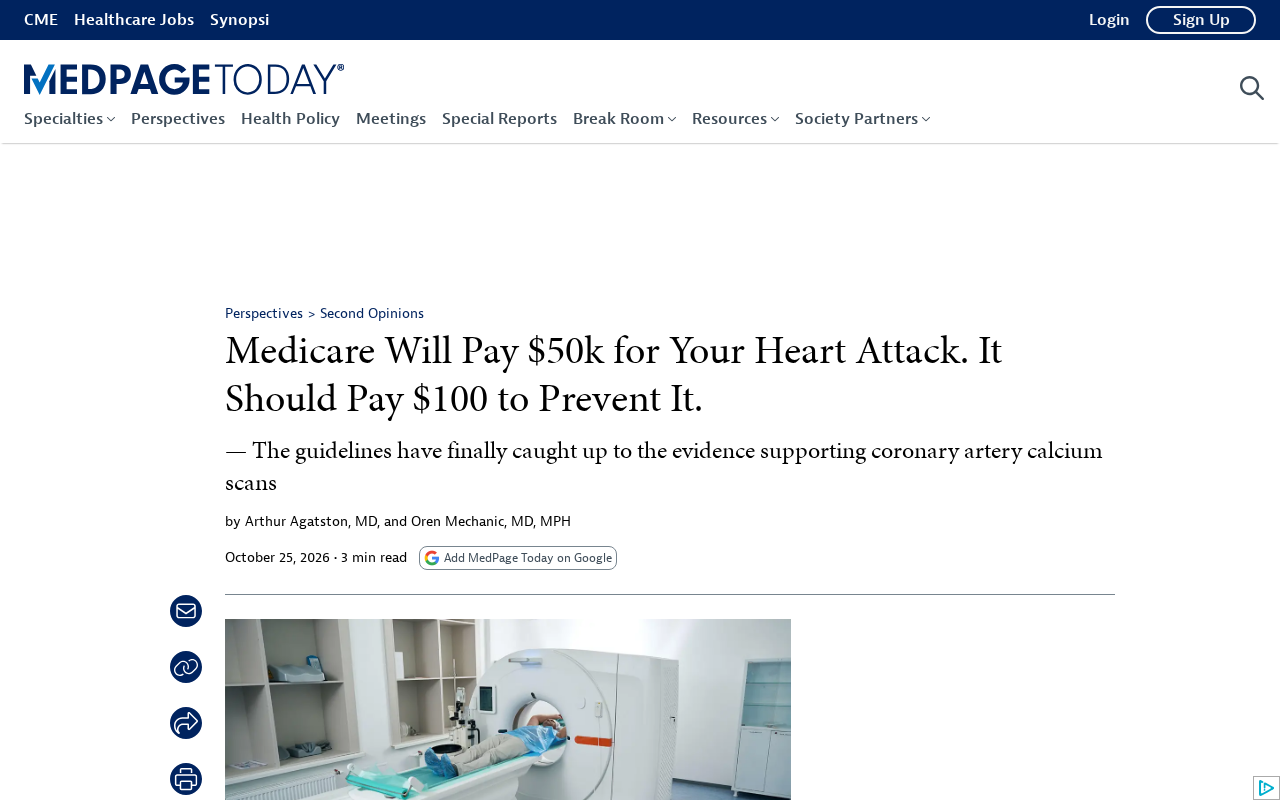
An Unsettling Comparison
The article's title itself is a punch to the gut: treating a heart attack may cost Medicare tens of thousands of dollars, while preventive measures—such as statins or lifestyle interventions—might cost only around one hundred dollars. This misalignment in payment logic is a microcosm of the entire healthcare system's incentive structure.
It's worth emphasizing that the key figures here come from the original title: $50,000 for treatment vs. $100 for prevention. The comparison is powerful because it turns the abstract notion of "prevention is better than cure" into a quantifiable economic calculation.
Why Does Prevention Always Come Last?
The Structural Bias of the Payment System
The reimbursement logic of U.S. health insurance favors "after-the-fact remediation." When an acute event occurs, hospitals have clear billing codes, items, and reimbursement pathways; preventive services, however, are often fragmented, difficult to quantify, and their benefits are long-term. For payers, today's preventive spending may yield savings ten years down the line—a cross-period benefit that is hard to account for in the current budgeting system.
Fee-for-Service is the traditional payment model for U.S. Medicare, where doctors and hospitals are reimbursed for each service they provide. This model inherently incentivizes volume of services rather than health outcomes, because low-reimbursement items like preventive counseling and patient education yield far less revenue per unit time than surgery or imaging tests. The Medicare Access and CHIP Reauthorization Act (MACRA) of 2015 attempted to link some payments to quality metrics through the Merit-based Incentive Payment System (MIPS), but the cross-period benefits of preventive services remain difficult to reflect in annual budgets, and the structural bias has not been fundamentally reversed.
Incentive Misalignment
For healthcare institutions, heart attack treatment brings clear revenue from surgery, hospitalization, and follow-up care. Prevention is different—it requires ongoing follow-up, patient adherence management, and "what didn't happen" is hard to prove valuable. This incentive misalignment causes resources to flow continuously toward the treatment side.
Mismatch between cross-period benefits and budget cycles is a key economic concept for understanding why prevention is marginalized. The costs of prevention are incurred in the current budget cycle, while the avoided acute event costs may occur five, ten, or even more years later—and the beneficiary may have changed insurers or moved into Medicare. For commercial insurers, enrollees may switch jobs at any time, so today's preventive spending may not translate into future savings; this "transferability" further weakens the willingness to pay for prevention. Academically, this is often categorized as the "prevention paradox"—the benefits of prevention are statistically "events that didn't happen," difficult to attribute to specific individuals, and therefore hard to price in contracts and reimbursement systems.
Two Voices in the HN Discussion
Among the 260 comments on Hacker News, two tendencies emerged. Some commenters argued that this is an inevitable result of insurance and payment system design—any fee-for-service system will favor billable items. Others pointed out that the "$100" for prevention isn't as simple as it sounds—it involves long-term medication, screening, and lifestyle interventions, the real costs may be higher, and not all prevention is effective.
This divergence deserves serious attention. The article's argument is impactful, but the economics of prevention isn't just "cheap means worthwhile." Which preventive measures are truly cost-effective requires specific evidence.
Cost-Effectiveness Analysis is the standard tool for assessing whether preventive measures are "worth it," typically measured by the incremental cost per quality-adjusted life year (QALY) gained. The commonly used threshold in the U.S. is roughly $50,000 to $150,000 per QALY. Statins for secondary prevention (in people with existing cardiovascular disease) are usually highly cost-effective, but for primary prevention in low-risk populations, they may exceed the threshold. Additionally, screening involves hidden costs such as false positives, overdiagnosis, and subsequent unnecessary invasive tests, all of which significantly raise the true price of "$100 prevention." Therefore, the skepticism about prevention costs in HN comments has solid grounding in health economics.
Implications for Tech and Product Design
This topic is also relevant to those building health tech products. If a system's payers only reward "handling problems after they occur," then even the best prevention tools will struggle to gain willingness to pay. Product design needs to consider: How can the value of prevention be made measurable and reimbursable? How can long-term benefits be translated into immediate incentives?
The original article comes from MedPage Today's Second Opinions column, an opinion piece with a clear stance. Its value lies not in providing a complete policy solution but in using a minimalist comparison to put the deep problems of the healthcare payment system on the table.
For those interested in healthcare, insurance tech, and public policy, both the article and the HN discussion are worth reading—especially the comments, which turn an opinion piece into a live debate about incentive mechanisms.
One-line Summary
Medicare will pay $50,000 to treat a heart attack but balks at $100 for prevention, exposing the incentive misalignment in the payment system.
Paragraph Summary
Drawing on an opinion piece from MedPage Today, the article notes that Medicare pays about $50,000 for a heart attack while preventive measures may cost only $100—a payment logic misalignment that reflects deep-seated incentive problems in the U.S. healthcare system. It analyzes how the fee-for-service system favors billable treatment items and how prevention is marginalized because cross-period benefits are hard to quantify, and presents two voices from the Hacker News discussion: one attributing it to system design, the other questioning that the real cost of prevention is far higher than $100 and that not all prevention is cost-effective. Finally, the article extends the topic to health tech product design, suggesting that prevention value must become measurable and reimbursable to gain willingness to pay.
Related articles

Tencent WorkBuddy Hands-On: How AI Agents Crush Traditional Chat Assistants
WorkBuddy vs Doubao tested: how AI Agents directly operate computers to convert PPT to PDF, archive files and more. Analysis of WorkBuddy's low barrier, domestic ecosystem, pricing and plugin marketplace, plus AI Agent selection advice.

Azure Cross-Tenant Attack Chain: Root Cause Analysis of Five Paths
Binary Security analyzes five full cross-tenant compromise paths in Azure, trending 271 points on HN. This article interprets their shared root cause perspective and offers defense recommendations for cloud tenant isolation and reflections on responsibility boundaries.

Recreating a Real Bubble Tea Station in Isaac Sim: Script-Driven Unitree G1 Brews Tea
Developers recreated a real self-service tea station in NVIDIA Isaac Sim, using scripts to drive a Unitree G1 through a five-step tea-brewing process, exploring whether physics simulation can be a source of synthetic robot demonstration data and discussing contact stability and imitation learning.