MemoKet Gem Review: The AI Note-Taking Wearable That Remembers Everything

MemoKet Gem is an ultra-light AI wearable that turns one-touch recordings into structured, context-aware notes.
MemoKet Gem is an AI note-taking wearable designed for minimal distraction and no-screen interaction. It captures audio with a single button press and automatically generates structured bullet points and graphical summaries — going beyond simple transcription. It supports three wearing styles (wristband, Apple Watch strap, and lanyard), uses haptic feedback and an LED indicator instead of a screen, and offers cross-session contextual association to link related conversations over time. Battery life reaches 20 hours, with Slack and Notion integration. Transcription accuracy, real-world AI intelligence, privacy compliance, and pricing remain to be validated.
An AI Recording Device That Doesn't Need a Screen
MemoKet Gem bills itself as the lightest AI note-taking wearable on the market, with a clear core purpose: help you remember everything being discussed and turn what you hear into actionable items. It's not just a simple voice-to-text tool — it aims to layer "contextual understanding" on top of speech transcription. The device is smart enough to determine whether a conversation you just had is related to a previous one, adding background context to new content or recognizing that a discussion is still evolving.
In terms of design, it looks more like a fitness band than a traditional recording device. There's a shortcut button on the body to trigger recording, and the entire interaction has been stripped down to its bare essentials.

Three Wearing Styles: Wristband, Watch Strap, and Lanyard
Gem offers a surprisingly flexible range of wearing options — one of the things that sets it apart from ordinary recording devices.
The first option is wearing it as a standalone wristband. The second integrates it into an existing Apple Watch band — the recording module is tucked under the strap and nearly invisible, letting you continue using your Apple Watch normally while keeping the recording button within easy reach. The third option pairs it with the Gem lanyard, worn around the neck against the chest. The name "Gem" itself comes from the device's compact, jewel-like form factor.
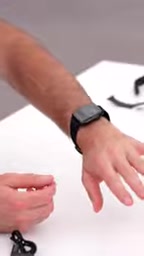
The device itself is remarkably light — you barely notice it's there. It features haptic vibration feedback and a tiny red LED indicator to signal when recording is active. No screen to check, no app to open — this is precisely the core value proposition of screenless wearables like this.
One-Touch Recording, Automatically Structured Notes
In practice, what's most impressive about Gem is how low it sets the barrier to use. The entire workflow comes down to two steps: speak, then press a button.
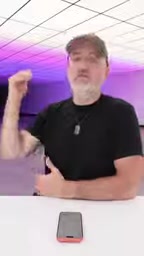
Of course, you can open the app anytime to review results. Inside, you'll find individual recordings organized and summarized — content from a product demo, for instance, gets automatically distilled into bullet points: key details like "wearable device, haptic vibration, red LED" are presented as clean list items, and the device can even generate a graphical summary of the content.
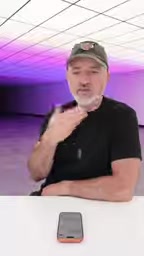
A comment from one reviewer captures it well: "If you finish a meeting and send this out — I didn't do anything, I just talked and hit one button." This zero-editing output experience is exactly the promise AI note-taking hardware is trying to deliver. In addition to bullet points, the app also retains the full verbatim transcript.
Long-Term Memory and Ecosystem Integration
Another key selling point of Gem is the long-term accessibility of the information it captures. Records don't expire over time — even a week later, when you need to recall a specific detail, you can search directly through the transcripts. This "permanent memory" capability is the central idea behind the product's tagline, "It Remembers Everything."
On the workflow integration side, Gem supports seamless connections with tools like Slack and Notion, letting your notes flow directly into your team's collaboration environment.
"Contextual association" is the core technical claim that sets Gem apart from ordinary voice transcription tools. Standard speech-to-text services (like Whisper or Otter.ai) only transcribe individual recordings verbatim, whereas Gem claims to build connections across sessions — for example, recognizing that today's product meeting is a continuation of last week's discussion and automatically incorporating relevant background when generating a summary. This fundamentally relies on a backend large language model performing vector retrieval and semantic matching against historical records — similar to a RAG (Retrieval-Augmented Generation) architecture: when each new recording is summarized, the system first searches the user's historical transcript library for semantically related segments, then feeds them as context to the model. The real-world effectiveness of this capability is highly dependent on recording quality, speaker identification accuracy, and the volume of historical data a user has accumulated — making noisy environments or multi-speaker scenarios the biggest challenge.
Hardware Specs at a Glance
Based on available information, the key specs include:
- Battery life: Up to 20 hours of continuous recording
- Colors: Midnight Gray and Moon Silver
- Interaction: Physical button trigger + haptic vibration + LED indicator, no screen required
- Features: Voice-to-text, contextual association, structured summaries, graphical output
A Few Questions Worth Considering
The AI note-taking hardware space has gotten increasingly crowded in recent years — from Humane to Rabbit to various recording pendants. Gem takes the "minimal wearable + deep software" approach. Its differentiating edge lies in making the recording hardware nearly invisible and offering three wearing modes to fit different scenarios.
That said, the available material here is primarily from a product demo. Key questions — around privacy (do you need to inform others you're recording?), transcription accuracy, the actual intelligence behind contextual association, and subscription pricing — haven't been fully addressed. For anyone considering a purchase, these remain factors that will need to be validated through extended real-world use. Overall, Gem represents a pragmatic attempt to push AI wearable recording devices toward "low-friction, high-automation" — and that's a direction worth watching.
Privacy compliance for AI wearable recording devices varies significantly across legal frameworks. In the United States, for example, some states (such as California and Illinois) require explicit consent from all parties in a conversation before recording (the "all-party consent" rule), while others only require one party to be aware for the recording to be legal. In enterprise settings, recording business meetings without disclosure may also implicate trade secret protections. Moreover, uploading audio data to the cloud for AI processing means conversation content is stored on third-party servers — regulations like GDPR (the EU's General Data Protection Regulation) impose strict requirements in this area. The fact that these devices are designed to be "nearly invisible" in appearance is actually a double-edged sword from a compliance standpoint: the less noticeable the device, the more easily it can trigger disputes over the right of recorded parties to be informed.
Related articles

Gemini 4 Argon Hands-On: AI Builds Board Games, Constructs Temples, and Trains Robots Autonomously
Gemini 4 Argon hands-on roundup: AI autonomously builds a desk racetrack and temple in Blender, writes a ray tracing engine, trains a humanoid robot to sink 7 shots, plus API pricing and developer access.

The Magic Octagonal Coin: Why Only 9% of People Can Predict Its Flip?
Only 9% of people can correctly predict the Magic Octagon coin flip. This article explains its spatial rotation mechanism, common cognitive pitfalls, and a new hypothesis based on Relevance Theory, exploring the limits of human spatial reasoning.

Sam Altman: AI Is Entering the Era of Scientific Discovery — Math Breakthroughs Will Replicate in Biology and Energy
Sam Altman says AI is entering the era of scientific discovery — math breakthroughs will replicate in biology, materials science, and energy to help develop new drugs and energy sources.