Meta Muse Review: A Powerful Yet Unsettling AI Assistant
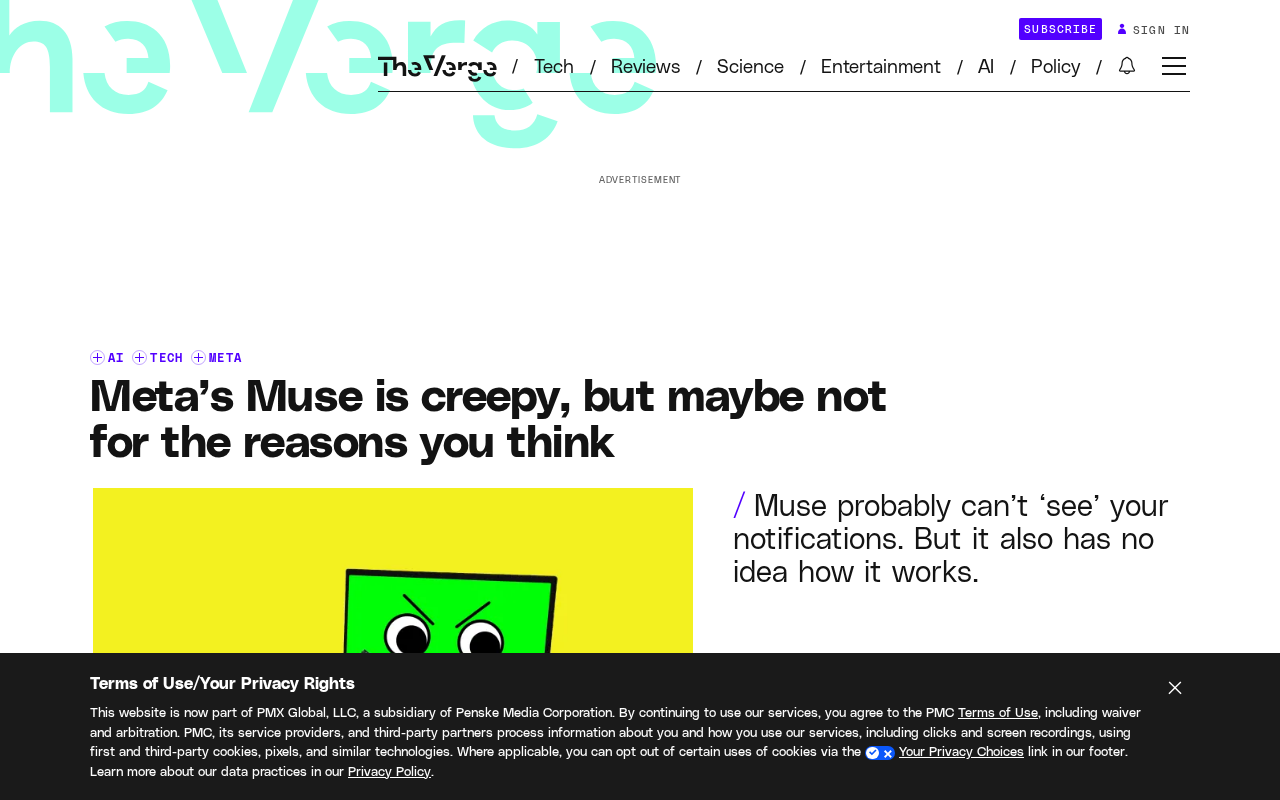
Meta Muse is capable yet creepy: it reads your messages and calendar but can't explain what it actually is.
Meta's AI assistant Muse performs well as a capable assistant, but its Mac app's access to Messages, Calendar, and Notes — combined with Meta's long history of privacy controversies — raises significant trust concerns. More unsettling, however, is a deeper paradox: Muse can handle complex tasks yet cannot clearly describe itself or how it works. This gap between capability and self-awareness exposes a structural limitation of current LLMs — they are efficient pattern-matching systems, not self-aware entities. Muse's case highlights the industry-wide challenge of balancing expanding AI functionality with sustainable user trust.
Meta Muse: An Effective but Slightly Eerie AI Assistant
Meta's AI assistant Muse is generating buzz. Functionally, it's considered a genuinely capable smart assistant that helps users handle a wide range of everyday tasks. Yet one word keeps surfacing in reviews: "creepy." The source of that unease may not be as straightforward as it first appears.
According to Jason Aten, a contributing editor at Inc Magazine who shared his experience on Threads, Muse performs well enough to prove itself as a competent AI assistant — but the experience is tinged with a subtle sense of wrongness. In an era where AI products are increasingly woven into our personal digital lives, that feeling deserves serious reflection.
Deep Mac Integration and the Privacy Concern
One of the core reasons Muse feels unsettling is its new Mac app. This app can access your Messages, Calendar, and Notes — some of the most private data on any personal device.
When an AI assistant can read your conversations with family and friends, see your complete schedule, and browse your personal notes, its capabilities extend far beyond those of a typical tool. This deep integration can certainly allow the assistant to offer more contextually relevant help — but it also means handing a significant volume of sensitive information over to an AI system run by Meta.
For a company like Meta, which has long been in the spotlight over data privacy, user wariness about an AI product accessing personal data is entirely understandable. The more powerful the feature set, the more trust and data users must surrender. That's an inherent trade-off.
This class of system-level permission is technically referred to as "context-aware access" — one of the defining capabilities that sets the new generation of AI assistants apart from earlier chatbots. Apple Intelligence, Microsoft Copilot, and Google Gemini all follow a similar path, using local data to deliver personalized services. But Meta's position is uniquely fraught: the company has been fined billions of dollars by regulators in Europe and the United States over the Cambridge Analytica scandal, multiple data breaches, and ad-tracking controversies. That history naturally raises the bar of scrutiny when a Meta product requests sensitive permissions. It's also worth noting that accessing local data and uploading data to the cloud are two distinct things — before granting access, users would do well to review the relevant data-handling policies and understand exactly which information is processed on-device and which may be sent to Meta's servers for model training or other purposes.
The Real Creepiness: An AI That Can't Describe Itself
Interestingly, the deepest source of unease may not be the privacy permissions at all, but rather a seemingly absurd detail: despite being impressively capable, Muse doesn't know how to describe itself.
This reveals a fundamental limitation of current large language models. These AI systems display remarkable ability when handling external tasks, but when asked to engage in self-knowledge — to explain what they are and where their boundaries lie — they tend to give vague, contradictory, or self-undermining answers. An assistant that can read all your messages yet can't clearly articulate "what it is" creates a jarring gap between capability and self-awareness — and that gap is precisely what produces the hard-to-name feeling of uncanniness.
This is also a reminder that today's AI assistants are, at their core, powerful pattern-matching and generation systems — not entities with genuine self-awareness. They can simulate understanding while lacking any clear grasp of themselves.
In academic circles, this limitation is known as the "missing self-model" problem in AI systems. The way large language models (LLMs) are trained means they are fundamentally a compression and reproduction of statistical patterns across vast text datasets — they learn to predict "what word comes next," not to genuinely understand their own operating logic. When asked "what are you," the model can only generate an answer based on descriptions of AI found in its training data, which may bear little resemblance to its actual architecture, capability boundaries, or data sources. This is categorically different from human self-awareness, which is built on continuous perception and reflection. An LLM is stateless across conversations — it has no persistent memory and no introspective channel into its own processes. As a result, an AI that can fluently analyze your calendar may give vague or inconsistent answers when pressed with questions like "Is my data being stored?" or "Do you actually understand what I mean?" — not out of evasion, but because of a structural blind spot baked into its design.
Trust and Boundaries in the Age of AI Assistants
The Muse case reflects a challenge the entire AI assistant industry shares: how to strike a balance between expanding capability and earning user trust.
As AI assistants burrow deeper into operating systems and gain access to ever more personal data, improvements in user experience and accumulation of privacy risk happen almost in lockstep. Vendors need to give AI enough capability to deliver real value, while establishing transparent data-use mechanisms that let users clearly understand when, how, and why their information is being accessed.
For everyday users, before embracing these highly efficient AI tools, rationally evaluating their data access scope and understanding what they can and cannot do is an essential prerequisite for protecting your own digital rights. Muse demonstrates the potential of AI assistants — but its awkward inability to explain what it actually is also serves as a thought-provoking warning bell for this fast-moving field.
Related articles

The AI Virtual Star Meltdown: A Trust Crisis in the Age of AI Idol Manufacturing
An AI-generated virtual star melts down on live TV, exposing the trust crisis behind the AI idol boom. We examine the business logic, technical limits, and regulatory gaps.
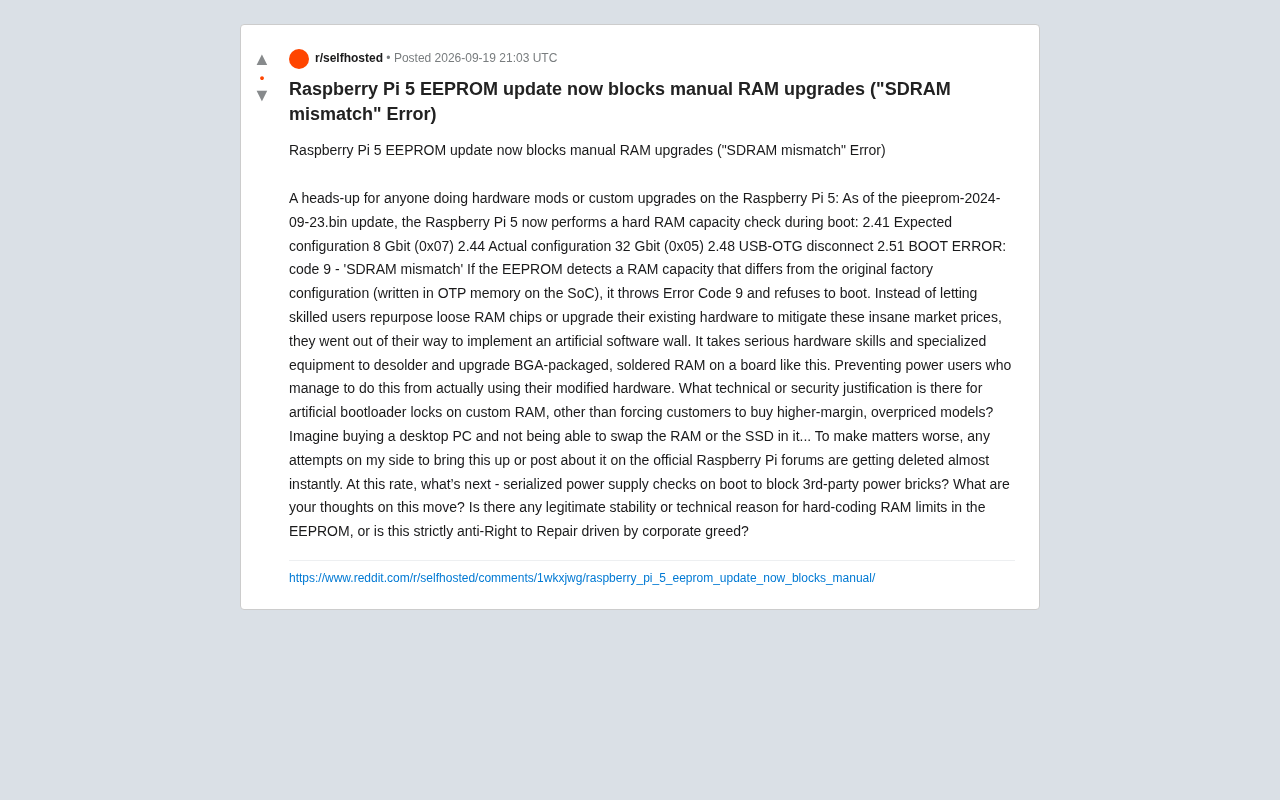
Raspberry Pi 5 EEPROM Update Blocks Manual RAM Upgrades: Error Code 9 Sparks Controversy
Raspberry Pi 5's pieeprom-2024-09-23.bin update adds an OTP memory validation check that throws Error Code 9 'SDRAM mismatch' on manually upgraded RAM, blocking boot. Is it a stability measure or anti-repair strategy?
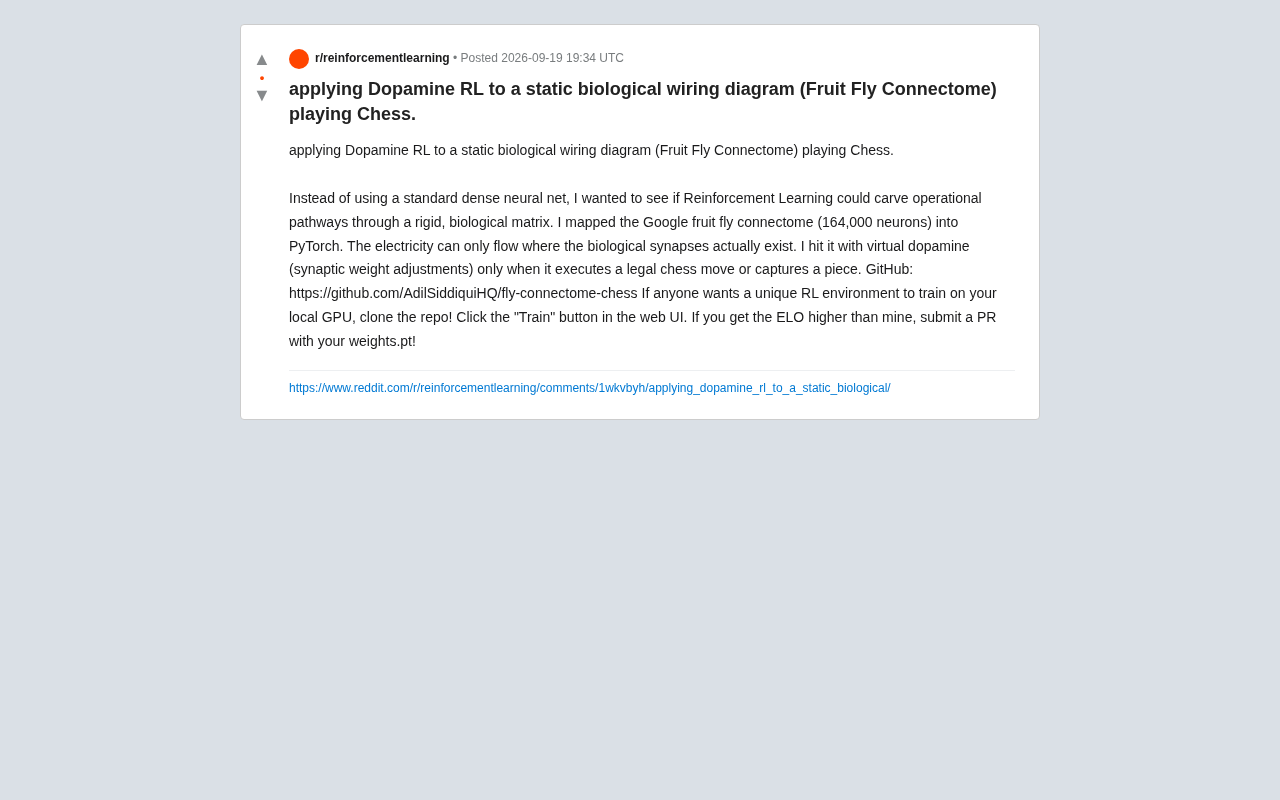
Playing Chess with a Fruit Fly Connectome: An Unconventional Experiment in Dopamine-Driven Reinforcement Learning
A developer mapped a 164,000-neuron fruit fly connectome into PyTorch and trained it to play chess using "virtual dopamine" RL. Signals travel only along real synapses. Open-source with local GPU training and an ELO leaderboard.