Meta MuseWonder Hands-On: Benchmark Scores Near Opus 5.5, But Real-World Coding Falls Short

Meta releases MuseWonder with impressive benchmark scores but a clear gap between real coding experience and benchmarks.
Meta has officially released the MuseWonder family, claiming it ranks second only to Claude Opus 5.5 on the Artificial Analysis Intelligence Index and scored 79 on DeepSway. But a long-time AI model reviewer found after thorough testing that running MuseWonder Full just three times in MuseCode exhausted a $50 plan quota, and three projects—a macOS browser clone, a Minecraft clone, and a Zombies clone—were all "decent" but far from top-tier. In a same-prompt comparison with Sway2, Sway2 finished free in 15 minutes with better quality, while MuseWonder took 24 minutes and about $18 yet performed worse. The article also credits MuseWonder's agent generalization, token efficiency, and front-end design style, and Meta's transparency in admitting shortcomings, while noting that benchmark scores increasingly fail to predict real-world performance.
Meta has officially released the MuseWonder family of models, claiming it ranks second only to Claude Opus 5.5 on the Artificial Analysis Intelligence Index and set a new DeepSway software engineering benchmark with a score of 79. However, a YouTube reviewer who has long tracked AI models reached a very different conclusion after thorough testing: there is a massive gap between benchmark scores and real coding experience.

On Paper: Meta's Grand Narrative
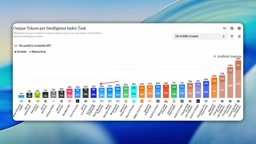
Meta positions MuseWonder as a new generation of frontier model family, including the standard MuseWonder and the more powerful MuseWonder Full. The latter reportedly scores 56 on the Artificial Analysis Intelligence Index, just two points behind Opus 5.5, and earned 79 on DeepSway. Meta also highlights capabilities like Active Memory, Active Focus, and Frontier Coding, claiming they can handle complex, long-horizon tasks.
On pricing, MuseWonder charges $4 per million input tokens and $20 for output, supports a 1 million token context window, and sits in the high-end frontier model tier. Meta even calls it "the world's best personal and professional agent model," with use cases ranging from understanding lease agreements and analyzing financial information to assisting with complex professional workflows.
The Artificial Analysis Intelligence Index is one of the more closely watched third-party composite benchmarks in AI model evaluation today. It aggregates standardized tests across multiple dimensions—reasoning, coding, math, knowledge Q&A—and weights the results into a single score for easy cross-model comparison. DeepSway, meanwhile, is a benchmark focused on software engineering tasks, typically requiring a model to fix bugs, implement features, or refactor within a given codebase, with automated tests determining pass or fail—making it far closer to real development workflows than traditional code-completion benchmarks. It's worth emphasizing that most of these benchmarks are carefully designed and curated, with clear task boundaries and unambiguous feedback signals, allowing models to significantly boost scores through targeted training. But that doesn't equate to equivalent capability in open-ended, long-horizon, multi-constraint real-world projects.
Real Experience: Three Tests Drain a $50 Plan
The reviewer first pointed out a thorny issue: running MuseWonder Full just three times in the MuseCode coding agent used up the entire quota of a $50 Power plan. "How is a developer supposed to evaluate your strongest model if they can barely use it a few times?" This usage limitation directly undermines the model's evaluability.

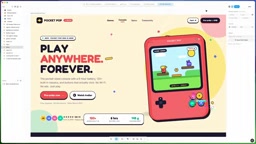
He tested three projects: a macOS browser clone, a Minecraft clone, and a Call of Duty Zombies mode clone. The results were all "decent" but far from top-tier—the macOS clone lacked animations when covering apps, the Minecraft clone included cave systems, ores, and crafting mechanics but had abnormal item-drop behavior, and in the Zombies clone, zombies walked straight through walls. These outputs don't match a "world's number two" positioning.
Where Does the Benchmark-vs-Reality Gap Come From
Meta's Chief AI Officer Alexander Wang admitted the team didn't specifically train the model on 3D demo games, adding, "In hindsight, maybe we should have done some." This statement reveals a key contradiction: the model performs excellently on benchmarks like DeepSway but struggles with 3D programming tasks that require spatial reasoning, physics simulation, and interaction design.
The reviewer pushed back on the idea that "3D demos don't represent real coding." He argued that game development involves geometry, coordinate transforms, camera systems, physics engines, rendering pipelines, and other hardcore domains. "You can't just train on a few 3D demos and expect the model to generate completely original, complex interactive worlds."
A more telling comparison is MuseWonder versus Sway2 on the same prompt. Sway2 completed the task for free in 15 minutes with noticeably better output quality; MuseWonder took 24 minutes, consumed about $18, and produced worse results. This inversion of efficiency and quality makes MuseWonder's premium pricing hard to justify.
3D programming tasks serve as a litmus test for distinguishing model capabilities because they stack multiple high-difficulty cognitive demands simultaneously: first, spatial reasoning—correctly understanding position, orientation, and transforms in a 3D coordinate system; second, physics simulation—requiring self-consistent logic for collision detection, gravity, velocity integration; third, interaction design—coordinating input response, state machines, and game loops; fourth, rendering pipeline organization—managing cameras, lighting, materials, and draw order sensibly. These capabilities are hard to acquire through a small number of demonstrative training samples; they often require the model to build a stable mapping between code semantics and runtime results. By contrast, most tasks in evaluation benchmarks have clear right-or-wrong criteria, allowing models to score high through pattern matching—but once they enter scenarios requiring building complex interactive systems from scratch, the gap quickly surfaces.
Highlights and Good Faith: Not Just Criticism
The reviewer also gave Meta due credit. MuseWonder shows unique strengths on real agent tasks—Meta's research shows the model generalizes better to unfamiliar tasks it wasn't specifically trained on, which is critical for AI agents operating in unpredictable environments. Meta's demos of in-browser cross-app plan creation, personalized gift shopping, and wedding seating arrangements showcase the model's potential in planning, personalization, and multi-constraint coordination.
Another notable strength is token efficiency. In both max thinking mode and the Full version, MuseWonder achieved benchmark results higher than the previous-generation MuseSpark 1.3 max while consuming fewer tokens. Additionally, the model's code and text output has a distinctive "flavor," showing its own aesthetic in front-end design—a consistent hallmark of the Muse series.
The Meta team's attitude toward criticism also earned recognition—they admitted the model isn't as good as Opus 5.5 at coding and acknowledged bugs, a level of transparency uncommon among AI companies.
Token efficiency refers to the number of tokens a model consumes to complete the same task, directly affecting inference cost and response latency. Among high-end frontier models, output token prices are often far higher than input, so efficiency differences quickly amplify into cost differences. If a model can match or exceed its predecessor's results using fewer tokens, it indicates improvements in reasoning path planning, redundancy suppression, and intermediate step compression. For agent tasks that run for long periods, token efficiency affects not just the bill but also how much work can be completed within a single context window—which in turn determines whether the model can handle long-horizon, multi-step complex workflows.
Positioning: Who Should Use MuseWonder
MuseWonder is currently available through the Meta model API and MuseCode, but the API is unavailable in most EU countries and limited to the US, Canada, and a few other regions. The reviewer believes the model suits users who need cross-app agent collaboration, document analysis, and personalized planning—not developers chasing peak coding quality.
"MuseWonder isn't a bad model; it has its own strengths, but for my personal use cases, it doesn't make the top five or even top ten," the reviewer concluded. This candid assessment reflects a core challenge in current AI model evaluation: benchmark scores are becoming increasingly poor at predicting how models will actually perform on real tasks.
Cross-app agent collaboration refers to a model's ability not only to generate text or code but also to autonomously plan and execute operations across multiple software applications, services, and interfaces—for example, reading documents, calling APIs, filling out forms, and coordinating schedules. The core challenge of such tasks is that environments are unpredictable, states change continuously, and errors cascade, so the model needs strong generalization and self-correction capabilities. Meta's launch demos of in-browser cross-app plan creation, gift shopping, and seating arrangements are examples of such capabilities. However, evaluation of these scenarios still lacks unified standards, and a gap may likewise exist between demo performance and real-world usability. Users should run small-scale validation against their own workflows before adopting.
One-line Summary
Meta releases MuseWonder with impressive benchmark scores, but hands-on coding tests reveal a clear gap from benchmarks.
Paragraph Summary
Meta has officially released the MuseWonder family of models, claiming it ranks second only to Claude Opus 5.5 on the Artificial Analysis Intelligence Index and scored 79 on the DeepSway software engineering benchmark. However, a reviewer who has long tracked AI models reached a very different conclusion after thorough testing: running MuseWonder Full just three times in MuseCode used up a $50 plan quota, and three projects—a macOS browser clone, a Minecraft clone, and a Zombies mode clone—were all "decent" but far from top-tier. In a same-prompt comparison with Sway2, Sway2 finished for free in 15 minutes with better quality, while MuseWonder took 24 minutes and about $18 yet produced worse results. The article also acknowledges MuseWonder's strengths in agent task generalization, token efficiency, and front-end design style, as well as the Meta team's transparency in admitting shortcomings, and points to the industry-wide challenge that benchmark scores are increasingly poor at predicting real-world task performance.
Related articles

iPhone Duo Hands-On: Is the $2,000 Small-Screen Foldable Worth It?
YouTube's Allison shares her iPhone Duo hands-on: dual-screen multitasking doubles efficiency, great video viewing, nice matte finish—but thick body, small outer screen, and a $2,000 luxury price.

Sentry's Ad Cracks Up Developers: Can On-call Actually Be Fun?
Sentry's ad short film taps into developers' on-call anxiety, using humorous dialogue to showcase its observability platform—errors, logs, traces, metrics, replays, and releases in one place.

LLM App Getting Worse With Every Change? Build an Effective Evaluation System in Three Steps
How do you know if your LLM app is getting better or worse? A Reddit-based guide to test sets, automated regression evaluation, LLM-as-judge scoring, and structured agent tracing.