Meta VR Glasses: Fitting a Cinema, Stadium, and Workstation into 100 Grams
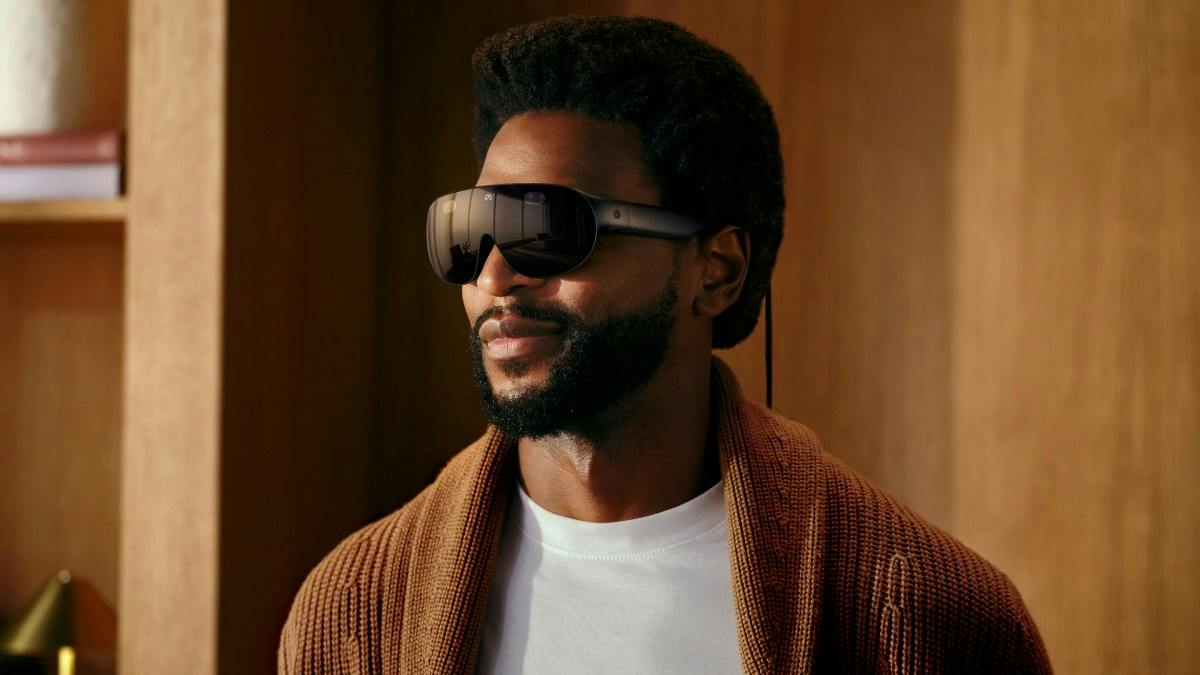
Meta's 100g VR glasses pack a flagship cinema and workspace experience into an everyday eyewear form factor, arriving Spring 2027 for $1,299.99.
Meta has announced VR glasses weighing just 100 grams with a glasses-like form factor, featuring a 5K micro-OLED display, Dolby Vision/Atmos, eye and hand tracking, Meta AI, and compatibility with the Quest app ecosystem. The key to hitting that weight target is a split architecture — the glasses handle display and sensing while a pocketable compute puck manages processing, keeping heat and weight off the user's face. Priced at $1,299.99 and targeting a Spring 2027 launch, the device is aimed at premium users who value lightweight design and high image quality. The core thesis: VR's biggest adoption barrier is wearability, not content — and only when devices become light enough for daily use will immersive experiences become genuine habits.
100 Grams, Redefining What VR Can Be
Meta's latest VR glasses compress a full virtual reality experience into a device weighing just 100 grams — roughly the size and form of a pair of ordinary glasses. This marks a sharp departure from the product logic that has defined VR headsets over the past few years. Instead of strapping a heavy computing unit to your face, users get an immersive experience through a lightweight pair of glasses.
Meta has positioned the device around three identities: a portable personal cinema, a virtual front-row seat at live sports, and a private multi-screen workspace. These three scenarios map neatly onto entertainment, sports, and productivity — the three major use cases VR has long pursued but has struggled to crack due to wearability concerns.
Hardware Specs and the Split-Design Architecture
The display centerpiece is a 5K micro-OLED screen with support for Dolby Vision and Dolby Atmos, signaling a clear flagship-tier ambition for both visual clarity and audio immersion. Micro-OLED is widely regarded in the near-eye display space as the leading technology for combining high resolution with thin, lightweight form factors — and it's one of the key enablers of the glasses-style form factor here.
On the interaction side, the device includes eye tracking, hand tracking, and integrated Meta AI, while remaining compatible with the existing Quest app ecosystem. In other words, this isn't a standalone platform built from scratch — it inherits Meta's existing content library and developer resources.
What actually makes 100 grams possible is the split architecture: the glasses themselves handle only display and sensing, while the actual computation is offloaded to a pocketable compute puck. This "glasses + compute unit" approach essentially strips weight and heat away from the head, a direction that lightweight AR/VR devices have broadly been exploring in recent years.
A note on micro-OLED: Compared to the LCD or conventional OLED panels common in traditional VR headsets, micro-OLED offers several key advantages — pixel densities in the thousands of PPI, higher contrast with true blacks, and an extremely thin and light panel. The core principle is depositing OLED emitters directly onto a silicon chip (CMOS backplane), eliminating the need for separate driver circuits and backlighting. This allows for high brightness and resolution at a fraction of the size and weight of equivalent LCD solutions. In consumer near-eye displays, yield rates and production costs remain the primary barriers to mass adoption, which is partly why devices using this technology tend to be expensive. Apple Vision Pro also uses micro-OLED, making the two products comparable in terms of display technology.
Price, Timeline, and Market Signals
According to official information, the Meta VR glasses are priced at $1,299.99 and are slated for a Spring 2027 release. Given the timeline, this is a mid-to-long-term product roadmap rather than an imminent launch — the specs announced today represent Meta's technical goals and product vision more than a finalized product.
At $1,299.99, the pricing sits well above Meta's existing mainstream Quest headset lineup, firmly placing it in the premium segment. That price point aligns with the 5K display, full Dolby audio-visual suite, and AI capabilities on offer — targeting heavy users who are willing to pay for lightweight design and high image quality.
On Product Hunt, the product received 64 upvotes and 3 comments, ranking 15th in the Virtual Reality and Wearables categories. That level of engagement suggests meaningful attention but not yet a viral moment — consistent with a product still in the pre-launch phase where information is primarily vision-driven.
The Product Logic Worth Watching
Viewed within the broader XR industry, this device reflects a clear directional thesis: the biggest barrier to mainstream VR/AR adoption isn't content or price — it's form factor. When a device weighs just 100 grams and looks like everyday glasses, "putting them on to watch a movie, catch a game, or work across multiple screens" can actually become a routine habit rather than a one-off novelty.
That said, measured skepticism is warranted. All specifications announced are still planned targets. Whether split-compute architecture, 5K micro-OLED, full tracking, and AI integration can coexist within a 100-gram weight and reasonable battery life remains to be validated by the actual product. With a long runway before release, the final experience could diverge meaningfully from the current vision.
For readers following the XR space, the significance of this product is the clear strategic direction it signals from Meta: rather than doubling down on more powerful all-in-one headsets, they're decoupling weight from compute, trading the traditional form factor for daily wearability. Whether this approach succeeds will be tested by the market when the product formally launches.
XR context: XR (Extended Reality) is the umbrella term for VR (Virtual Reality), AR (Augmented Reality), and MR (Mixed Reality). The industry's conviction that "form factor is the obstacle" has clear data backing: multiple user studies show that headsets exceeding 300 grams cause neck fatigue, with average single-session usage rarely exceeding 30 minutes — directly suppressing high-frequency daily use. Split-design architecture isn't a Meta invention — Nreal (now rebranded as XREAL), TCL, and others have previously released AR glasses with externalized compute units. But limited processing power and display quality have prevented them from delivering a full VR-grade immersive experience. Meta's differentiating bet here is maintaining the glasses form factor while still targeting flagship-level audio-visual specs, rather than using lightness as an excuse to lower the experience bar. Whether that balance between slim form and flagship performance can actually hold is the central question to answer when the device launches in 2027.
Related articles

Why Does the Tesla Roadster Need to Fly? A Deep Dive into Musk's Wild Demo
Tesla's Roadster launch showed wall-climbing, upside-down driving, and flying stunts—but The Vergecast notes the demo car may lack a battery, the Rocket version is invite-only and not street-legal, and the website terms don't guarantee delivery. After nine years of delays, why does this car still need to exist?

AI Is Not a Replacement: Human-AI Collaboration Through the Lens of Factory Root Cause Analysis
Starting from factory root cause analysis, this article explains how AI accelerates evidence chain construction rather than replacing human experts, exploring the pragmatic implementation logic and business value of 'AI supporting people rather than replacing them.'

AI Agent Decision Auditing: Building an Evidence Chain in Regulated Workflows
Starting from a Reddit discussion, this article analyzes three core issues in AI agent decision auditing within regulated workflows: what fields audit records should contain, how to handle feedback latency for erroneous decisions, and how to continuously calibrate LLM judge consistency with human judgment.