MetaGPT Explained: Building the First AI Software Company with a Multi-Agent Framework
MetaGPT simulates a software company using multi-agent AI roles guided by human-style SOPs.
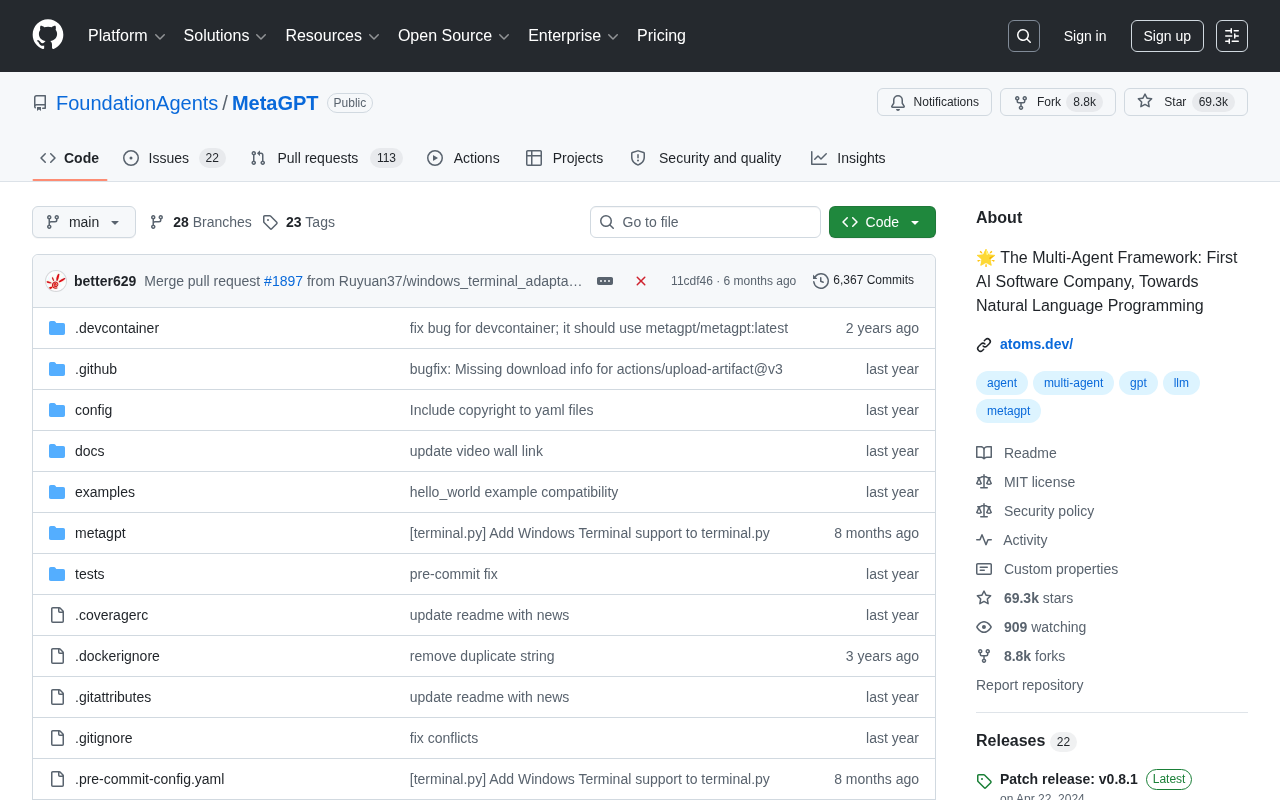
MetaGPT is an open-source Python framework with over 67K GitHub stars built around the idea that Code = SOP(Team) — bringing standard operating procedures from human software teams into a multi-agent system. It includes AI agents for product manager, architect, project manager, and engineer roles that collaborate to turn natural language requirements into working software. While its structured approach reduces the logical failures common in single-model generation, the framework still faces challenges like error accumulation between agents and limited handling of complex business logic, making it best suited as an efficiency multiplier rather than a full replacement for human developers.
When AI Goes Beyond Writing Code — and Builds a Company
Among the many open-source projects focused on "AI-assisted programming," MetaGPT has carved out a distinctly different path. Rather than having a single large model help you autocomplete a line of code, MetaGPT breaks down the entire software development process into multiple collaborative roles — product manager, architect, project manager, and engineer — each handled by a dedicated AI agent. The goal: simulate the inner workings of an "AI software company" within a single framework.
Maintained by the FoundationAgents team, the project has amassed over 67,760 stars and 8,621 forks on GitHub, with Python as its primary language. This level of community traction reflects the strong developer interest in "natural language programming" as a long-term direction.
Multi-Agent Collaboration: Breaking Down the Core Idea
MetaGPT's central philosophy can be distilled into one equation: Code = SOP(Team) — encoding the standard operating procedures (SOPs) refined through human team collaboration into a multi-agent system.
From a Single Requirement to Full Delivery
Traditional code generation tools typically follow a single-point model: "input a prompt, get a code snippet." MetaGPT's distinction lies in accepting a relatively abstract requirement (e.g., "build a to-do app") and routing it through a relay of internal role-based agents: the product manager produces a requirements document, the architect designs the system structure, the project manager breaks down tasks, and the engineer handles implementation.
The value of this division of labor is that it structures complexity. Each role focuses only on its area of expertise, passing information through standardized intermediate artifacts — such as documents and interface definitions — which reduces the logical breaks and context loss that tend to occur when a single large model tries to do everything in one shot.
Why SOP Matters
Introducing human-style standard processes into AI collaboration is, at its core, a way of providing large models with a set of behavioral constraints. LLMs naturally tend toward divergence, but software engineering demands convergence and discipline. Embedding SOPs makes agent outputs more predictable and easier to chain together — which is a key design distinction separating MetaGPT from projects that simply let multiple agents "discuss freely."
The Ambition — and the Limits — of "Natural Language Programming"
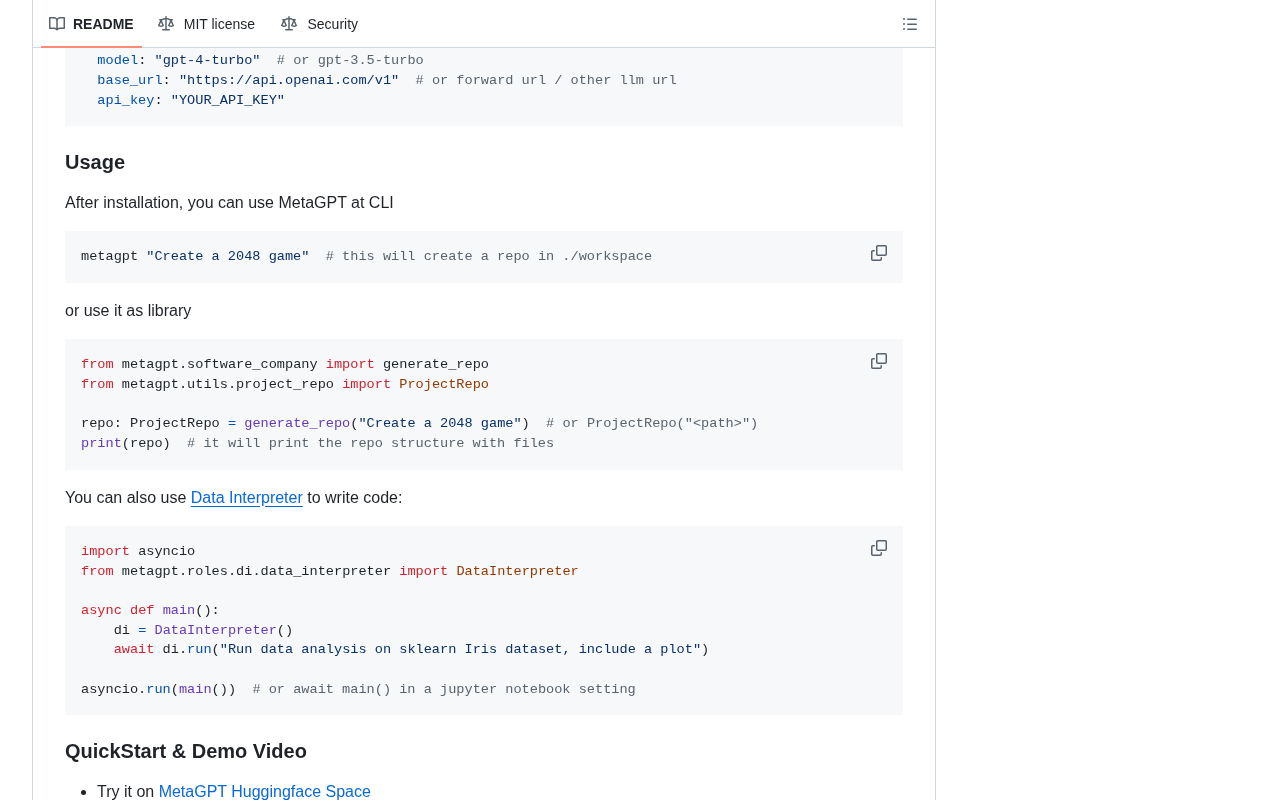
The project's subtitle, "Towards Natural Language Programming," spells out its long-term vision: enabling people with no coding background to describe what they want in plain language and receive working software in return.
The Vision Is Compelling
If this vision matures into a reliable reality, the barrier to software development would drop dramatically. The people who conceive of products would no longer need to master a programming language — they'd simply need to articulate their intent clearly, and the AI team would handle everything from design to code. For use cases like rapid prototyping and small-scale tool development, this is a genuinely attractive proposition.
The Reality Requires Sober Assessment
From an engineering practice standpoint, multi-agent frameworks like this still face significant challenges: errors can accumulate as information passes between agents, handling complex business logic remains limited, and the reliability and maintainability of generated output still requires human oversight. The 67K stars largely reflect community enthusiasm for the direction — not a signal that the framework can fully replace human development teams. A more pragmatic stance is to treat MetaGPT as an "efficiency multiplier" rather than a complete automation replacement.
What This Means for Developers
For developers interested in AI applications and open-source tooling, MetaGPT offers a valuable reference point: how to combine software engineering methodology with the capabilities of large language models.
Whether you're looking to introduce multi-agent collaboration into your own projects, or simply want to understand the frontier of "AI Agent orchestration," this project's architectural design and role-division approach is worth studying. As a Python project, it's also accessible for developers who want to get started quickly, extend it, or integrate it into existing workflows.
From a broader perspective, MetaGPT represents a microcosm of AI's evolution from "tool" to "collaborator." As the capabilities of individual models approach their ceiling, how to unlock greater value through multi-agent organization is becoming one of the industry's most important open questions.
Related articles

Spotit: Turn Every Mac App into a Real-Time Interactive Tutorial
Spotit is an AI-powered interactive tutorial tool for Mac. Press a shortcut, ask in plain language, and it highlights exactly where to click next — guiding you through any Mac app as you learn by doing.
OpenCode: The Open-Source Coding Agent That Hit 150K GitHub Stars
OpenCode is an open-source TypeScript coding agent with 150K+ GitHub stars. Learn about its features, advantages, and use cases for AI-powered development.
Learning AI Agent Development from Scratch: An Open-Source Tutorial Worth Bookmarking
Haozhe-Xing/agent_learning is a systematic, hands-on open-source tutorial for learning AI Agent development from scratch, with daily arXiv paper tracking built in.