Microsoft 365 Connector Outage: Email, Teams, and Other Services Affected

Microsoft 365 connector is experiencing elevated error rates and slow responses, affecting email, SharePoint, Teams, and calendar integrations.
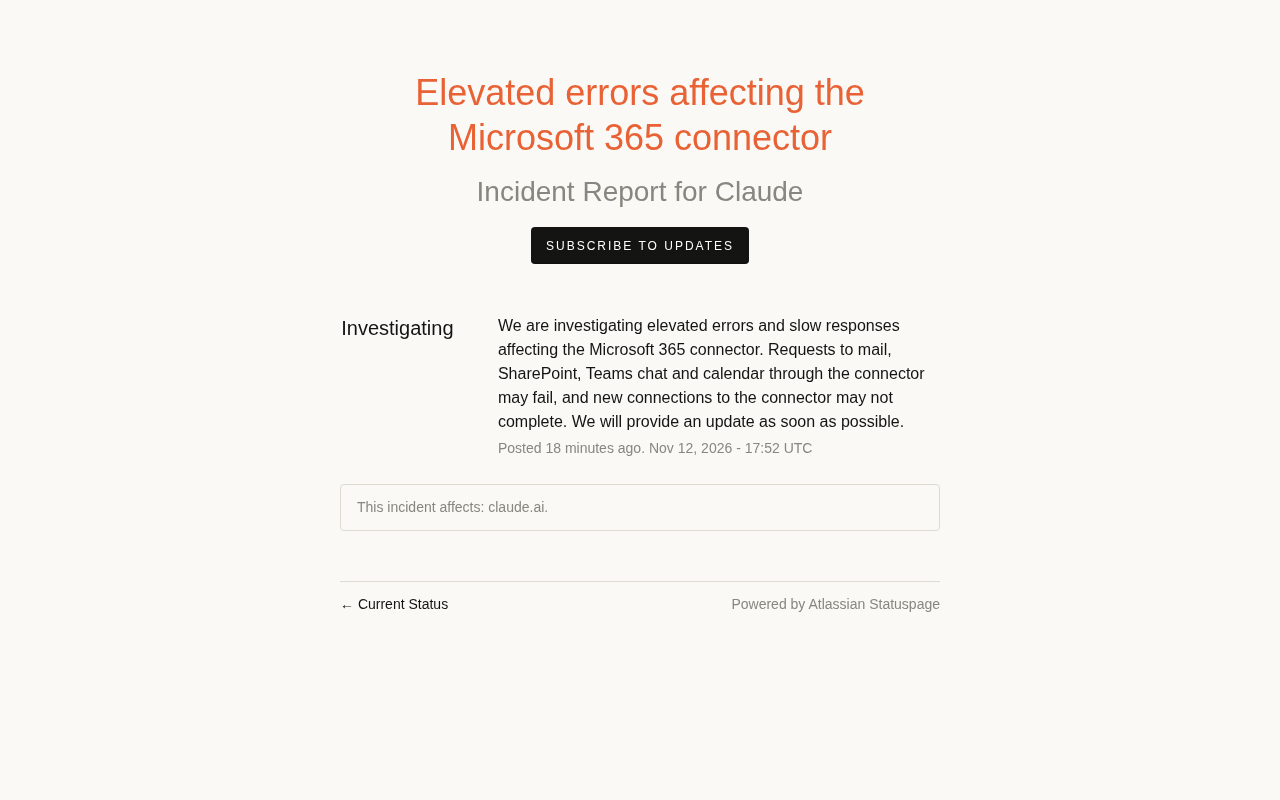
The Microsoft 365 connector has recently experienced widespread errors and slow responses. Microsoft's official status page has confirmed the issue and entered the investigation phase, but no cause or estimated repair time has been announced yet. The affected scope covers requests to access email, SharePoint, Teams chat, and calendar through the connector, as well as the establishment of new connections, manifesting as request failures, timeouts, or errors. Because this connector is a key bridge for many third-party applications and automation workflows to interface with the Microsoft ecosystem, the fault may trigger chain reactions such as interrupted email notifications, delayed chat bots, and blocked document collaboration. The article recommends that enterprises check critical workflows, postpone new connection configurations, follow official status updates, and record the scope of impact, while emphasizing the need to establish fault-tolerant mechanisms and backup plans to ensure business continuity.
Fault Details: Which Services Are Affected?
According to information posted on Microsoft's official status page, the issue primarily affects the normal functioning of the Microsoft 365 connector. Specific symptoms include:
- Email service: Requests to send or receive email through the connector may fail
- SharePoint: Requests to access or operate on SharePoint resources may time out or return errors
- Teams chat: Teams message interactions through the connector may behave abnormally
- Calendar functionality: Calendar-related operations are also affected
- New connection establishment: Attempts to create new connections to the connector may not complete
Microsoft has characterized the problem as "elevated error rates and slow response" and has moved into the investigation phase. No specific cause or estimated time to fix has been announced yet.
Microsoft 365 Connector is a standard connector in the Power Platform ecosystem, belonging to the category of Microsoft-maintained prebuilt connectors (Certified Connectors). Under the hood, it communicates with services such as Exchange Online, SharePoint Online, and Teams through the Microsoft Graph API. When a third-party application or a Power Automate / Power Apps workflow calls this connector, authentication forwarding and request proxying are actually handled by a connector gateway hosted in Azure. Therefore, failures at the connector level often originate from the gateway, identity authentication (OAuth token refresh), or rate-limiting policies, rather than from downstream services such as email or SharePoint being down—which also explains why multiple seemingly independent products experience elevated error rates at the same time.
The "elevated error rates and slow response" mentioned in the article correspond to two standard status indicators on Microsoft's status page: the former typically manifests as HTTP 429 (too many requests, triggering rate limiting) or 5xx server errors, while the latter manifests as request timeouts, which on the client side appear as failed workflow runs or connector operations that hang for a long time before erroring out. Unlike a full outage, in a degradation state some requests may still succeed, exhibiting intermittent failures. This makes troubleshooting more dependent on retry logs and request ID tracking. Users can view specific error codes in the "Run history" of Power Automate, and including the request ID when submitting a support case to Microsoft can help speed up diagnosis.
Chain Reactions from Connector Failures
The Microsoft 365 connector is a key bridge that many third-party applications and automation workflows use to interface with the Microsoft ecosystem. Whether it is an enterprise's internal low-code platform, customer service system, or various collaboration tools, they may all rely on this connector for data synchronization and function invocation.
When the connector has problems, the impact is often not limited to a single application. Automation processes that rely on email notifications may be interrupted, Teams chat bots may respond with delays, and collaboration scenarios based on SharePoint documents may also be blocked. For enterprises deeply integrated with Microsoft 365 services, the chain reactions caused by failures at this infrastructure level should not be underestimated.
Microsoft's Response and User Recommendations
In its status update, Microsoft said it "will provide the latest progress as soon as possible." For enterprises and developers currently affected, the following temporary measures are recommended:
- Check critical workflows: Confirm whether automation processes that depend on the Microsoft 365 connector are running normally, and enable backup notification channels if necessary
- Postpone new connection configuration: Before the fault is fixed, avoid configuring new connector integrations to prevent connection failures
- Follow official status updates: Keep an eye on the latest announcements on Microsoft's official status page for repair progress
- Record the impact of the fault: Keep a record of affected business operations to facilitate subsequent assessment of the scope of impact
This fault is another reminder that even the foundational components of mature cloud services can experience unexpected interruptions. Establishing fault-tolerant mechanisms and backup plans is a necessary measure to ensure business continuity.
(This article is based on information from Microsoft's official status page. The cause of the fault and the repair time are subject to subsequent official announcements.)
Related articles

Why Microsoft CEO Nadella Still Backs Nvidia After Jensen Huang's Departure
Microsoft CEO Nadella publicly expresses confidence in Nvidia interim CEO Colette Kress. This article analyzes Nvidia's power transition after Jensen Huang's departure, Microsoft's compute dependency, and the trust logic of the AI supply chain.

Nadella: Critical Infrastructure Is 'Unpatchable' as AI Cybersecurity Arms Race Escalates
Microsoft CEO Nadella addresses AI cyberattack fears, saying much critical infrastructure is unpatchable, downplaying the Outlook outage, and analyzing AI's dual role in cybersecurity.

Musk Backs Jensen Huang: Firing Him Is Like Cutting Jordan
Musk says Jensen Huang is loyal to the U.S. and likens firing him to cutting Michael Jordan—highlighting politicization anxieties in the AI chip industry and defending talent value.