Microsoft Global Email Outage Leads to Chlorine Leak at German Hotel, Injuring 15
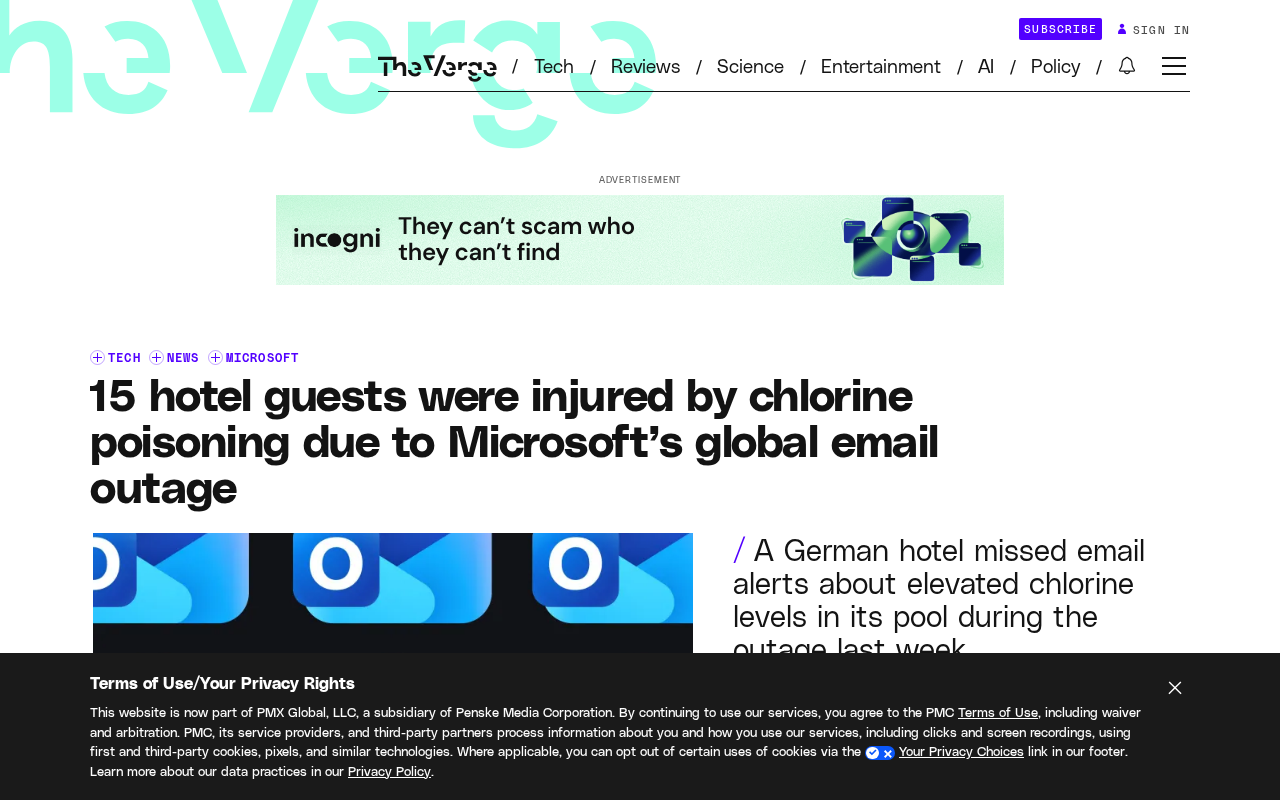
A Microsoft email outage left a German hotel's chlorine alert undelivered, injuring 15 people.
During a global Microsoft 365 and Outlook outage, a chlorine concentration alert at a German Phantasialand hotel pool failed to reach responsible staff because it relied on email, injuring 15 guests. The incident exposes the fragility of safety-critical notifications tied to a single cloud service: the safety system worked, but one failed external link in the notification chain broke the entire defense. The article argues that as enterprises move critical operations to the cloud, similar risks accumulate, and safety-critical systems need redundant communication channels (SMS, phone calls, local alarms) plus reassessed cloud availability assumptions and fallback plans.
A global Microsoft 365 and Outlook service outage recently triggered a serious real-world safety incident. According to German media outlet Westdeutscher Rundfunk (WDR), a hotel at Phantasialand failed to deliver a safety alert about rising chlorine levels in its pool because the email system was down, leaving 15 hotel guests injured. The incident puts the fragile link between cloud service reliability and physical safety in the spotlight.
Incident Recap: An Alert Email That Never Arrived
According to WDR, the accident occurred on Friday, when Microsoft's global email service experienced an outage. The pool safety system at the Phantasialand hotel detected an abnormal rise in chlorine concentration and immediately triggered its alarm mechanism. However, the system's alert notifications relied on email delivery, and Microsoft's Outlook and 365 services happened to be down at that moment, so the alert never reached the responsible personnel.
Chlorine is a common chemical for pool disinfection, but excessive concentrations can irritate and harm the human body. Without timely intervention, the high chlorine levels in the pool area ultimately injured 15 guests. This outcome highlights the risks that arise when critical safety notifications depend on a single cloud service.
As a pool disinfectant, chlorine is typically maintained at a safe concentration of 1–3 ppm (parts per million). When concentrations exceed 5 ppm, the eyes and respiratory mucosa become noticeably irritated; at 10 ppm or above, coughing, chest tightness, and even chemical pneumonia may result. Modern pools are usually equipped with chlorine concentration sensors and automated alarm linkage systems that trigger an alarm automatically once detected values exceed a set threshold. The problem is that the alarm notification modules in many such systems send emails via SMTP by default, and SMTP servers are often hosted on third-party cloud platforms. Once the cloud email service goes down, alert emails may sit in the send queue for hours, with no local audible or visual indication during that time—creating a blind spot where "the danger was detected but the notification couldn't get out."
The Butterfly Effect of a Cloud Service Outage
Microsoft's global outage had a wide impact, but most discussion has focused on productivity losses and communication inconvenience. The Phantasialand hotel incident reveals a deeper problem: the interdependence of modern infrastructure. The hotel's safety system itself may have been working properly—it detected the danger and triggered the alarm—but one link in the notification chain that depended on an external cloud service failed, and the entire safety defense collapsed.
This is not an isolated case. As enterprises migrate more and more critical business processes to the cloud, similar risks are accumulating across industries. From medical alerts to hospital scheduling, from financial transaction notifications to industrial control systems, email and cloud platforms often serve as inconspicuous yet vital communication hubs. When these hubs fail, the consequences can go far beyond "inconvenience."
Uptime commitments (SLAs) are contractual guarantees of service availability from cloud providers—for example, 99.9% monthly availability means about 43 minutes of allowed downtime per month. However, SLAs typically cover only the availability of the service itself, not indirect business losses or safety incident liability caused by outages. For safety-critical scenarios, a 43-minute email delay can mean catastrophic consequences. Moreover, global outages often stem from DNS misconfigurations, identity authentication service failures, or network routing problems, with impacts spanning regions and tenants that a single enterprise cannot avoid through its own operations. Organizations that rely on cloud services to send safety alerts therefore need to recognize that "high availability" in an SLA is not the same as "sufficient reliability in safety-critical scenarios."
Safety System Design Needs a Redundancy Mindset
This incident is a wake-up call for the design of safety-critical systems. Relying on a single communication channel—especially a third-party cloud service—is itself a vulnerability. A sound safety architecture should include redundant notification mechanisms, such as SMS, phone calls, local audible and visual alarms, or dedicated monitoring platforms, ensuring that backup options remain available when one channel fails.
At the same time, enterprises need to re-examine their assumptions about cloud service availability. Although major cloud providers usually offer high uptime commitments, global outages still occur from time to time. For scenarios involving personal safety, property safety, or critical business continuity, organizations should have clear degradation plans and manual intervention procedures.
In safety engineering, redundancy design usually follows the "diversity principle": not only is a backup channel needed, but the backup channel should be technically independent of the primary channel. For example, if the primary notification channel is internet-based email, the backup should use cellular-network SMS or voice calls rather than another cloud email service. Local audible and visual alarms depend on no external network at all and are the most reliable last line of defense. Internationally, functional safety standards such as IEC 61508 and ISO 13849 require failure mode analysis for safety-related systems, identifying single points of failure and designing corresponding mitigation measures. Binding safety notifications solely to one cloud email service would typically be judged an unacceptable single point of failure in a functional safety assessment.
Rethinking Dependence on Cloud Services
The exact cause of Microsoft's email outage is still awaiting official clarification, but the Phantasialand hotel accident has already provided a painful case study. It reminds technology decision-makers and safety officers: when connecting critical functions such as safety alerts and environmental monitoring to cloud services, the failure risk of every link in the communication chain must be assessed.
The convenience and scalability of cloud services are beyond doubt, but the baseline mindset of safety systems requires us to prepare for the "what if." This incident, which injured 15 people, should become an opportunity to advance redundancy design for safety systems and risk assessment of cloud dependence.
Related articles
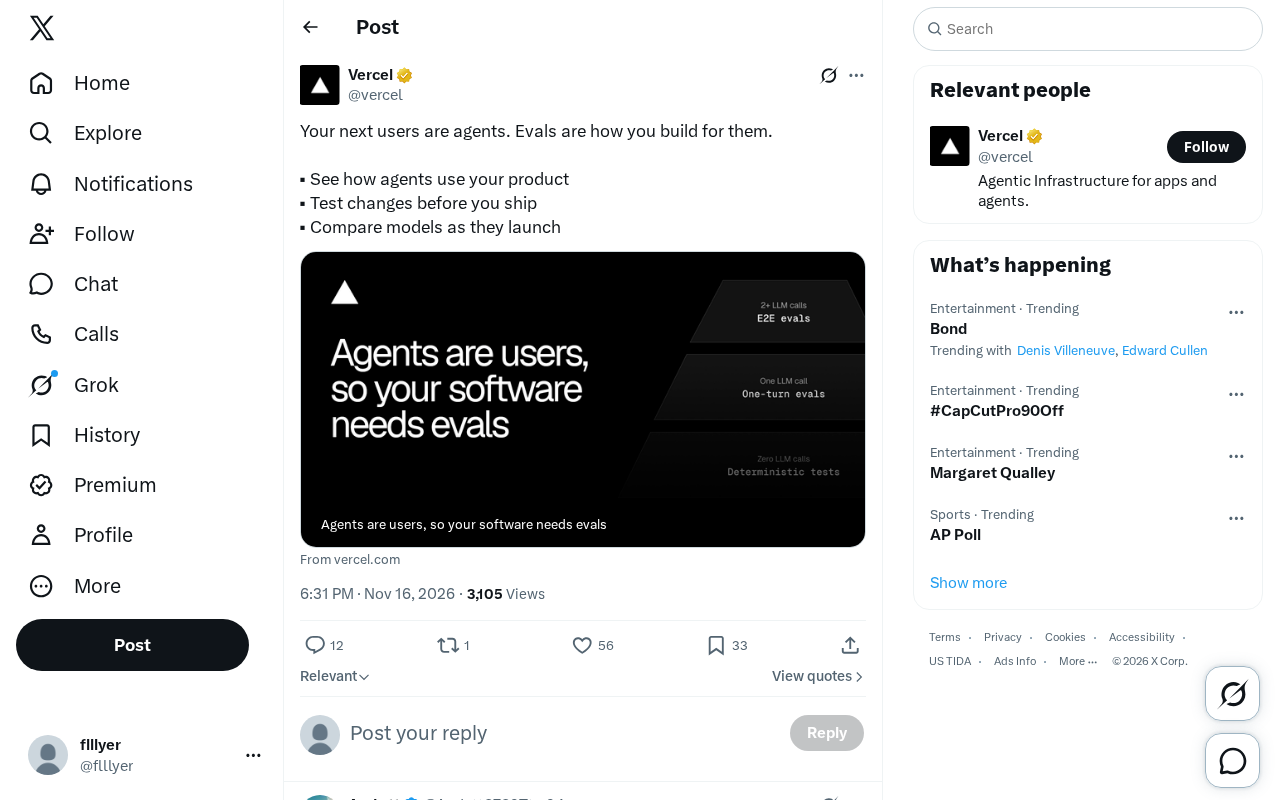
The AI Agent Era: Building a New Product Paradigm with Evals
AI Agents are becoming the next users of products. This article explains how to use Evals to observe Agent usage behavior, test changes before launch, and compare new model performance, helping product teams establish a development methodology for the Agent era.
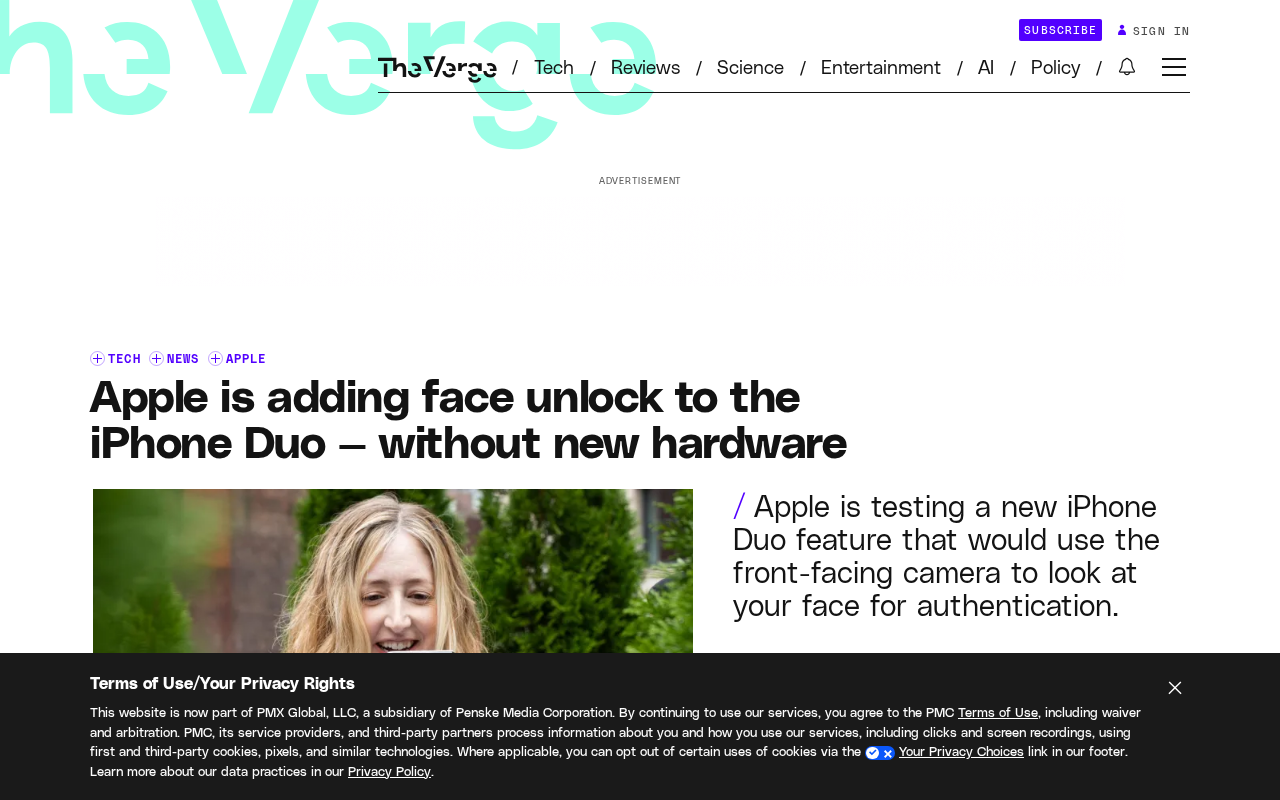
iPhone Duo to Support Face Unlock Using Only the Front Camera
Apple is developing front-camera-only face unlock for the iPhone Duo, now testing in the iOS 27.3 beta. We analyze the technical approach, user experience, and security trade-offs.

NVIDIA Board Denies Considering Rehiring Jensen Huang
According to CNBC, NVIDIA's board said it is not considering reinstating Jensen Huang as CEO and is focused on the investigation, with no discussions of a return.