Microsoft Offers Buyouts to 60,000 Employees as Tech Giants Resume Cost-Cutting

Microsoft offers buyouts to ~60,000 employees to cut costs and support its AI strategic shift.
Microsoft has offered buyout packages to approximately 60,000 employees—a significant share of its global workforce—as a large-scale labor restructuring under cost pressure. The voluntary approach aims to avoid public backlash and team disruption while reducing headcount. The backdrop is the tension between massive AI infrastructure spending and slowing growth in traditional businesses. Specific terms remain undisclosed, and the move could set an example for workforce optimization across the tech industry.
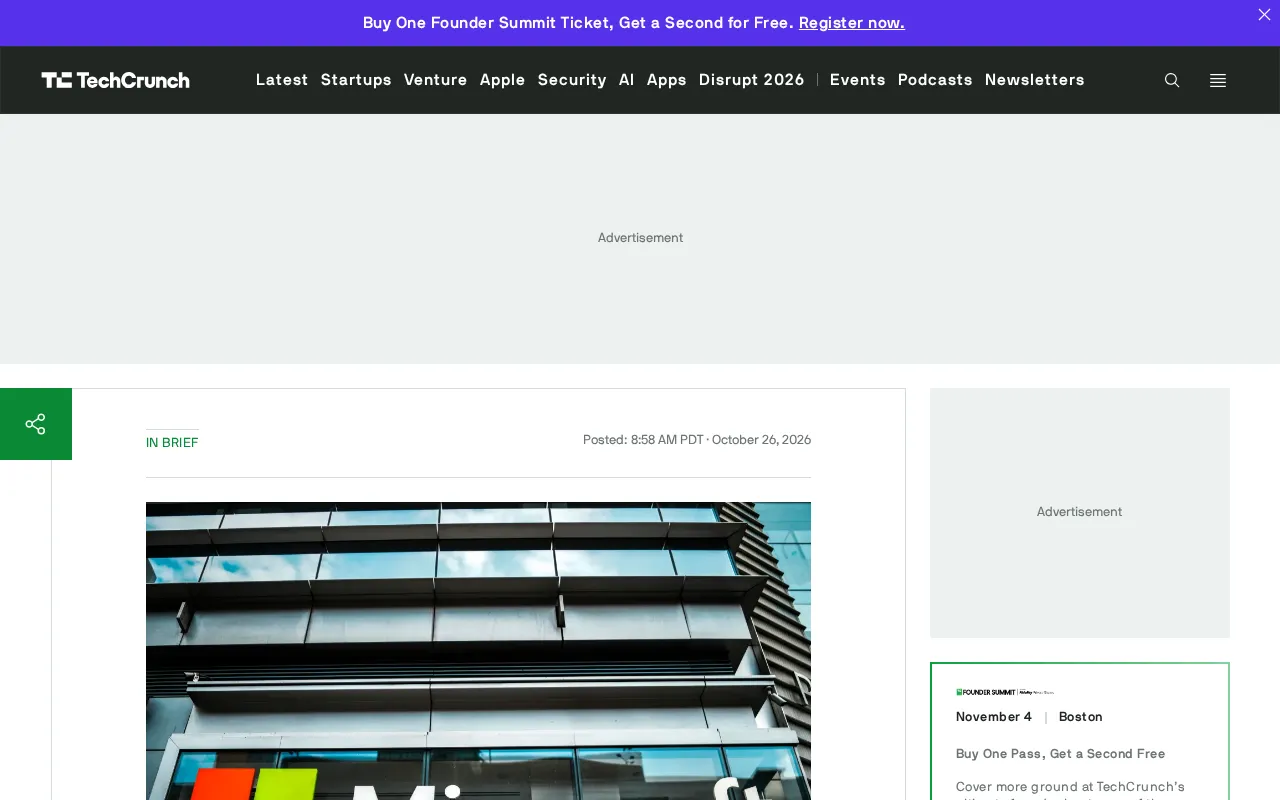
According to multiple foreign media reports, Microsoft has offered buyout packages to approximately 60,000 employees. This figure represents a significant proportion of Microsoft's global workforce and is seen as a large-scale restructuring of its labor force under cost pressure.
Buyout Program: A Dual Signal of Cost Reduction and Reorganization
A buyout is not a traditional layoff—it is a voluntary separation program in which the company provides financial compensation to encourage employees to leave on their own. For Microsoft, this approach can help avoid the public backlash and team disruption associated with forced layoffs while still achieving headcount reduction. Reports indicate this is Microsoft's latest effort to cut costs and reshape its workforce.
From a broader perspective, Microsoft's move reflects a common dilemma across the tech industry amid soaring AI infrastructure investments: massive capital expenditures driven by the large-model and computing-power arms race on one side, and slowing growth in traditional business lines on the other, forcing companies to find balance in labor costs.
The Difference Between Buyouts and Forced Layoffs
A buyout refers to a company proactively offering financial compensation to encourage employees to voluntarily terminate their employment, typically including a one-time severance payment, extended health insurance, and career transition services. Compared with forced layoffs, the core difference is voluntariness: employees can choose to accept or decline. For companies, buyouts reduce legal risk (e.g., avoiding age discrimination lawsuits), minimize negative publicity, and maintain morale among remaining employees—but they are usually more costly and make it difficult to precisely control the number and distribution of departing employees. In the U.S. tech industry, Voluntary Separation Programs (VSPs) are common, with compensation typically set at N months of salary plus continued benefits. The limitation of buyouts is that top talent may take the opportunity to leave while lower performers choose to stay, creating an "adverse selection" problem.
Why Now?
Microsoft has invested heavily in AI in recent years, with data centers, chip procurement, and model development all requiring sustained funding. At the same time, growth momentum in some traditional business units has weakened, and staffing structures have become redundant. Offering buyouts to approximately 60,000 employees is essentially about freeing up resources for a new strategic focus.
This "voluntary departure + compensation" model is not new in the tech industry, but the scale of Microsoft's offering is noteworthy. It signals that management hopes to complete a relatively thorough workforce optimization without significantly disrupting organizational stability.
How AI Infrastructure Spending Is Squeezing Tech Companies' Financial Structures
Large-model training and inference require massive GPU clusters, high-speed interconnect networks, and cooling systems—a single AI data center can require capital expenditures of billions of dollars. Microsoft's capital expenditures exceeded $50 billion in fiscal year 2024, with the majority directed toward AI infrastructure. These investments are amortized as depreciation on financial statements, directly compressing profit margins, while the revenue return cycle for AI businesses is long and difficult to cover costs in the short term. Meanwhile, traditional businesses (such as Windows licensing and Office subscription growth) are maturing with limited room for growth. This combination of "high capital expenditure + low-growth legacy businesses" forces companies to find balance in labor costs—typically the largest operating expense for tech companies. This is the same logic behind simultaneous workforce optimization at Meta, Google, and Amazon during the peak of AI investment.
What It Means for Employees and the Industry
For employees included in the buyout scope, the choice is not easy: accepting compensation means leaving a massive platform, while declining may mean facing stricter performance reviews or role changes down the line. For the industry, Microsoft's move could have a demonstration effect, with other tech companies potentially following suit with similar workforce optimization strategies.
One additional note: the currently available information comes primarily from media reports, and Microsoft has not officially disclosed the specific compensation standards, applicable departments, or application deadlines for the buyout program. How many employees will ultimately accept the offer remains uncertain.
Common "Workforce Optimization" Models in Tech and Their Demonstration Effects
In recent years, workforce adjustments in the tech industry have evolved from simple layoffs into a combination of tools: Voluntary Separation Programs (VSPs), performance-based bottom elimination (variants of stack ranking), hiring freezes, internal redeployment, and contractor reductions. Microsoft's buyout is large in scale and could trigger "competitive imitation"—peer companies may follow suit to maintain investor confidence in cost control. From a labor market perspective, large-scale buyouts release a significant number of experienced engineers into the market, increasing talent supply in the short term and potentially reducing salary negotiation leverage for similar roles. At the same time, however, demand for AI-related positions (such as machine learning engineering and data infrastructure) remains strong, exacerbating structural mismatches. For employees, the specific terms of a buyout package (months of severance, accelerated option vesting, reemployment support) are key to evaluating whether to accept—and these details have not yet been made public.
Observations and Assessment
Microsoft's buyout offer to approximately 60,000 employees is a product of cost control intersecting with AI strategic transformation. In the short term, it helps the company compress operating expenses and optimize its workforce structure. In the long term, the real test will be whether it can maintain momentum in core businesses and AI R&D while reducing headcount. For readers tracking employment trends in the tech industry, this is an event worth following closely.
One-line Summary
Microsoft offers buyouts to approximately 60,000 employees to control costs and support its AI strategic transformation.
Paragraph Summary
Microsoft has offered buyout packages to approximately 60,000 employees—a significant proportion of its global workforce—seen as a large-scale labor restructuring under cost pressure. The buyout approach, rather than forced layoffs, aims to avoid public backlash and team disruption while achieving headcount reduction. The backdrop is the tension between Microsoft's massive AI infrastructure capital expenditures and slowing growth in traditional businesses, requiring the company to find balance in labor costs and free up resources for its strategic shift. Specific compensation standards, applicable departments, and application deadlines have not been disclosed, and the final number of acceptances remains uncertain. The move could have a demonstration effect on workforce optimization strategies across the tech industry.
Related articles

Cursor AI in Practice: Weighing Efficiency Gains Against Costs in an AI IDE
An in-depth look at Cursor AI IDE's interface layout, four modes (Agent/Plan/Debug/Ask), model selection, and Git context integration, with hands-on demos weighing subscription costs against going direct to Claude.
Free Landing Page Design Rules Library: A Practical Guide for Claude Code and Cursor
A free landing page design skill for Claude Code and Cursor: MIT licensed, nearly 9,000 stars, asks about offer/audience/action before planning 12 sections with hard font and spacing constraints.

Cursor Keeps Writing Wrong Code? The Problem May Be Context, Not Prompts
Cursor keeps writing wrong code? The problem may be context, not prompts. Learn how to supply relevant files, full error messages, and expected results, plus a plan-first, small-step, test-driven workflow to reduce AI coding errors—while remembering code review remains the developer's job.