Microsoft Project Zenith: A Distraction-Free Windows Experience Built for Developers
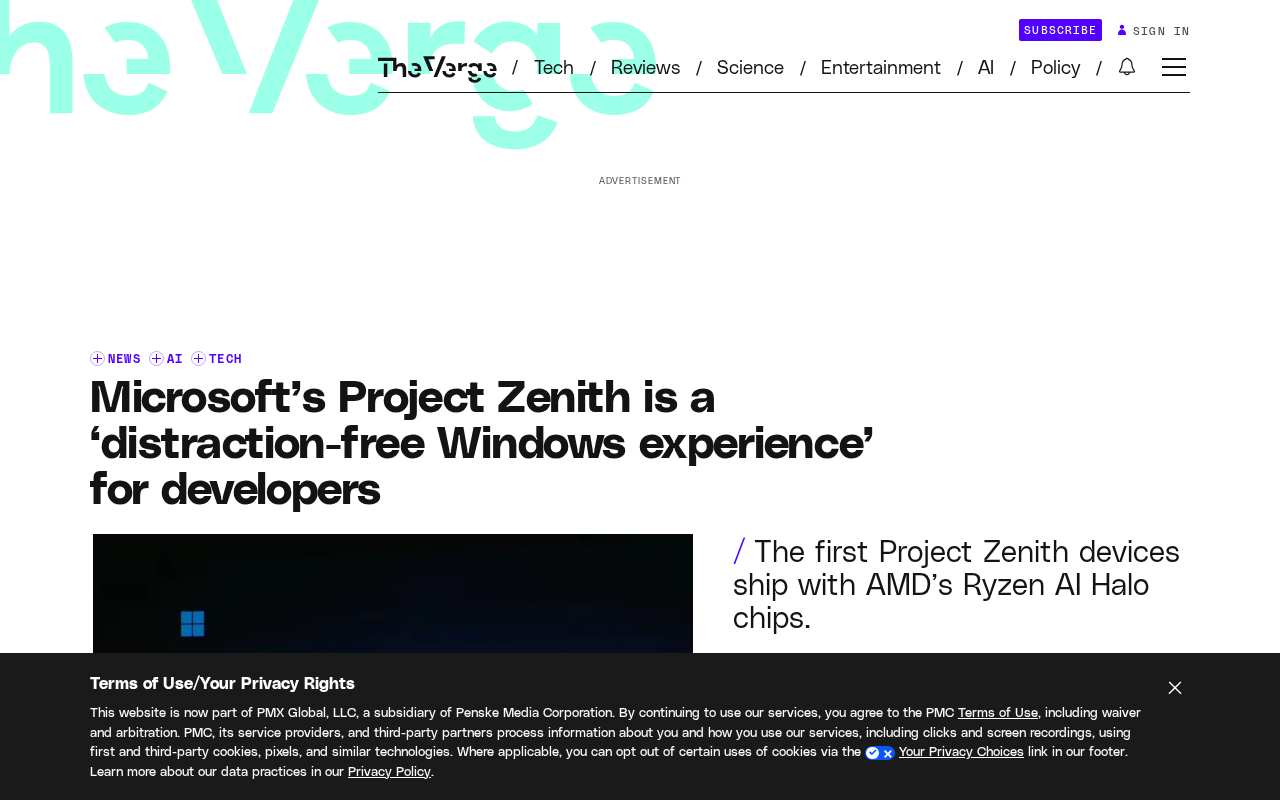
Microsoft's Project Zenith: premium Windows for devs with 64GB+ memory, zero bloat, ready to code
Microsoft officially unveiled Project Zenith, a developer-focused Windows experience requiring 64GB+ unified memory. It offers preconfigured development environments and a distraction-free OS stripped of ads and bloatware. The initiative continues Microsoft's push to reclaim professional developers from macOS and Linux.
Microsoft Gives Its Developer-Focused Windows a Official Name
Microsoft recently officially named its developer-optimized Windows experience—Project Zenith. This move continues Microsoft's developer-optimized Windows initiative announced earlier this year at the Build developer conference, now finally taking shape with a clear product identity and positioning.
Build Developer Conference Background: Microsoft Build is Microsoft's annual flagship technical conference for developers worldwide, typically held in May. This conference serves as an important platform for Microsoft to showcase its latest development tools, cloud services, AI technologies, and platform strategies. Historically, many significant products—such as major Azure cloud service updates, new Visual Studio versions, and in recent years the Copilot AI assistant—have debuted at Build. The conference not only launches new technologies but, more importantly, communicates Microsoft's technical direction and ecosystem strategy to the developer community, making it a crucial barometer for observing Microsoft's developer ecosystem positioning.
Unlike consumer-grade Windows, Project Zenith is defined as a "distraction-free Windows experience," with a very clear objective: to provide developers with an out-of-the-box, coding-focused operating system environment.
Project Zenith Hardware Requirements: Starting at 64GB Unified Memory
The most striking aspect of Project Zenith is that it's designed specifically for brand-new developer-dedicated devices, with fairly aggressive hardware specifications—requiring 64GB or more unified memory.
This hardware threshold reveals several key signals:
Targeting Intensive Development Scenarios
The 64GB unified memory configuration far exceeds the needs of typical office and consumer users. For developers who need to simultaneously run multiple containers, virtual machines, large IDEs, local databases, and even local AI model inference, sufficient memory is a core factor in boosting productivity.
Container and Virtual Machine Technology Background: Containers and virtual machines are two core environment isolation technologies in modern software development. Virtual machines (VMs) virtualize complete hardware through a hypervisor, with each VM running an independent operating system—offering strong isolation but with high resource overhead. Container technology (such as Docker) shares the host operating system kernel, achieving process isolation through namespaces and cgroups, with fast startup and low resource consumption. Developers commonly use containers to package applications and their dependencies, achieving 'build once, run anywhere.' Orchestration tools like Kubernetes further simplify large-scale container deployment and management. Modern microservice architectures, cloud-native application development, and DevOps workflows heavily rely on container technology. For developers, simultaneously running multiple container environments (development, testing, production simulation) and local Kubernetes clusters is a standard daily scenario, which is why high-memory configurations are critical for developer devices.
Microsoft setting such high hardware specifications indicates that Project Zenith targets professional-grade, production-environment development workflows.
The Design Trend of Unified Memory Architecture
The term "unified memory" itself is also noteworthy. It means CPU, GPU, and even AI acceleration units can share the same memory pool, aligning with the design philosophy of Apple's M-series chips.
Unified Memory Architecture Technical Analysis: Unified Memory Architecture (UMA) is a design that allows CPU, GPU, and other processing units to share the same physical memory pool. In traditional architectures, CPUs have independent system memory and GPUs have dedicated video memory, requiring data transfer between them via PCIe bus copying, which creates latency and bandwidth bottlenecks. Unified memory architecture eliminates this barrier, allowing all processing units to directly access the same memory address space. Apple's M-series chips represent this architecture, achieving seamless CPU/GPU/Neural Engine collaboration through high-bandwidth memory and system-on-chip (SoC) design. For scenarios requiring frequent data sharing between different processing units—such as AI inference, graphics rendering, and large-scale data processing—unified memory architecture can significantly improve performance and efficiency. This architecture is also an important trend in the heterogeneous computing era, particularly suited for modern development workloads that need to simultaneously invoke multiple computing resources.
In today's environment of increasing AI local inference demands, unified memory architecture can significantly reduce the overhead of moving data between different processing units, making it especially friendly for scenarios like running local large models and code assistance tools.
Out-of-the-Box Preconfigured Development Environment
According to Microsoft, Project Zenith devices will come with preconfigured Windows development environment settings. This means developers can enter actual coding much faster after receiving their devices, without needing to install and configure various development toolchains from scratch.
This approach aligns with the recent "developer-first" product design trend. From GitHub Codespaces to various cloud development environments, the industry is collectively pursuing a "zero-configuration, instant-use" development experience.
GitHub Codespaces and Cloud Development Environments: GitHub Codespaces is Microsoft's cloud development environment service, allowing developers to code directly in browsers without local environment configuration. Built on VS Code, it provides complete IDE functionality with backend running in cloud containers. Developers can predefine development environments through configuration files (devcontainer.json), including runtimes, toolchains, and extensions. When team members open the same repository, they all get a consistent, ready-to-use development environment, solving the classic "works on my machine" problem. Codespaces represents the "Environment as Code" philosophy and is an important practice in cloud-native development. Similar services include Gitpod and Replit. This model's advantages lie in standardization, rapid startup, and elastic computing power, though it depends on network connectivity and cloud service stability.
Project Zenith can be seen as Microsoft's attempt to bring this philosophy down to the local operating system level—freeing developers from tedious environment setup and making Windows itself a more developer-friendly platform.
Microsoft's Developer Ecosystem Strategy
In recent years, Microsoft's investment in the developer ecosystem has been evident. From acquiring GitHub, launching VS Code, promoting WSL (Windows Subsystem for Linux), to deeply integrating Copilot into the development toolchain, Microsoft has consistently worked to reshape its image among professional developers.
WSL Technical Deep Dive: Windows Subsystem for Linux (WSL) is a compatibility layer developed by Microsoft that allows native execution of Linux binary executables on Windows. WSL 1 uses a translation layer to convert Linux system calls to Windows kernel calls, while WSL 2 employs lightweight virtual machine technology, running a real Linux kernel to provide complete system call compatibility and better file system performance. WSL 2 supports complex Linux tools like Docker and systemd, with file I/O performance improved up to 20 times compared to WSL 1. For Windows users needing Linux development environments, WSL provides a more seamless experience than dual-boot or virtual machines—enabling smooth switching between Windows and Linux, shared file systems, and even direct invocation of Linux commands from Windows. WSL's introduction is viewed as a landmark move in Microsoft's embrace of open source and improvement of developer experience, greatly lowering the barrier for Windows developers using Linux toolchains.
Project Zenith is a continuation of this strategy. For a long time, many professional developers—especially those working in web development, cloud-native, and machine learning—have preferred macOS or Linux as their primary development platforms. Microsoft clearly hopes to win back this user segment through a "distraction-free, high-performance, preconfigured" dedicated Windows experience.
Developer Pain Points Behind the "Distraction-Free" Positioning
The "distraction-free" positioning is particularly telling. One criticism of consumer-grade Windows in recent years has been its increasing ad pushes, bundled applications, system notifications, and various "suggestion" content. For developers seeking focus, these are unnecessary distractions.
Project Zenith's promise to provide a clean version stripped of these distracting elements directly addresses developer pain points. If Microsoft can truly deliver on the "distraction-free" promise, this could become an important selling point for attracting developers back to the Windows platform.
Areas to Watch for Project Zenith
Public information about Project Zenith remains limited, with many details awaiting further disclosure from Microsoft. The following aspects are worth continued attention:
- Specific Device Form Factors and OEM Partners: Which manufacturers will release Project Zenith-compliant devices, and what will the pricing range be.
- Specific Content of Preconfigured Environments: Which development tools, language runtimes, and frameworks will be integrated by default.
- Integration Depth with WSL and Copilot: Will Project Zenith become the optimal carrier for Microsoft's AI-assisted development capabilities.
- Specialized Optimizations for AI Developers: The 64GB unified memory specification hints at support for local AI inference, which holds significant potential in the current AI application development boom.
Overall, Project Zenith represents another proactive attempt by Microsoft to improve developer experience. In the new era of AI-driven software development, a high-performance, clean, out-of-the-box development platform truly aligns with the core needs of professional developers today. Whether it can genuinely challenge macOS's position in the high-end development market remains to be validated by the market.
Key Takeaways
- Microsoft officially named its developer-focused Windows experience Project Zenith, emphasizing a distraction-free environment
- Requires devices with 64GB or more unified memory, targeting intensive professional development workflows
- Comes with preconfigured development environments, enabling faster onboarding for developers
- The "distraction-free" positioning directly addresses long-standing complaints about consumer Windows (ads, bloatware, notifications)
- Represents Microsoft's continued effort to win back professional developers, particularly those who prefer macOS or Linux
- Aligns with trends in unified memory architecture and local AI inference capabilities
- Part of Microsoft's broader developer ecosystem strategy, following GitHub acquisition, VS Code, WSL, and Copilot integration
Related articles

GPT-6 Astra Completes All 48 Levels of 'I'm Not A Robot' Game
GPT-6 Astra successfully completes all 48 levels of the 'I'm Not A Robot' game, demonstrating remarkable visual understanding, logical reasoning, and task adaptation. This article analyzes the technical capabilities behind this breakthrough and its implications for CAPTCHA verification and AI safety.
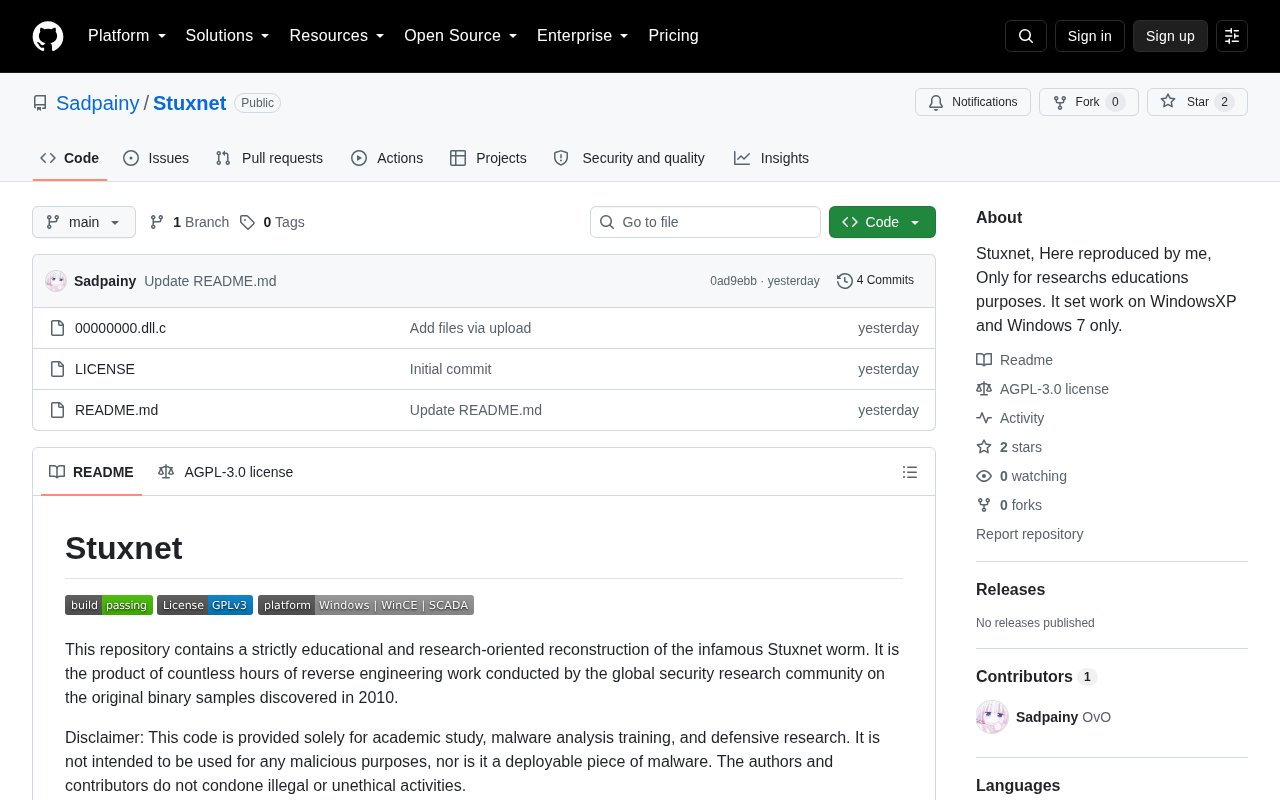
Stuxnet Source Code Reconstruction: Dissecting the Attack Chain of History's Most Complex Cyber Weapon
In-depth analysis of the Stuxnet source code reconstruction open-source project, examining how this cyber weapon targeting Iranian nuclear facilities exploited four zero-day vulnerabilities, stole digital certificates, covertly manipulated PLC centrifuges, and exploring industrial security lessons and ethical controversies of open-source reconstruction.

Minimalist Aesthetic Puzzle Game Development: Insights from Independent Creation
An in-depth analysis of an independent developer's aesthetic puzzle project shared on Hacker News, exploring minimalist design philosophy, Show HN community culture, and aesthetics-first product thinking in independent development.