Microsoft Reportedly Leaks New Unified Xbox UI: One Interface for Handhelds, Consoles, and Cloud Gaming

Microsoft reveals a unified Xbox UI system spanning handhelds, consoles, and cloud gaming.
Microsoft showcased a unified Xbox UI spanning handhelds, consoles, and cloud gaming at GDC, and has since provided clearer details. Featuring responsive design, the UI aims to reduce the learning curve when switching between devices, serving Microsoft's broader strategy of developing an Xbox handheld and strengthening the Game Pass cloud gaming experience. It likely leverages Windows 11's Adaptive Shell architecture to deliver a consistent, device-agnostic experience.
Microsoft Showcases Cross-Platform Unified Xbox Interface
During the Xbox keynote at this year's Game Developers Conference (GDC) held in March, Microsoft showcased a "consistent" Xbox user interface spanning handhelds, consoles, and cloud gaming. At the time, limited-quality videos and photos taken at the venue made it difficult for outsiders to determine whether this UI represented any substantive update. However, Microsoft appears to have recently provided much clearer clues.
About GDC: The Game Developers Conference is the world's largest and longest-running professional summit for game developers. Held annually in San Francisco since its founding in 1988, it has become the premier stage for game industry technology announcements and strategic declarations. Unlike the consumer-facing E3, GDC's audience consists primarily of developers and industry professionals. Microsoft's decision to showcase the new UI system here carries clear technical significance — it's intended to give developers advance notice to understand and adapt to the new interface standards.
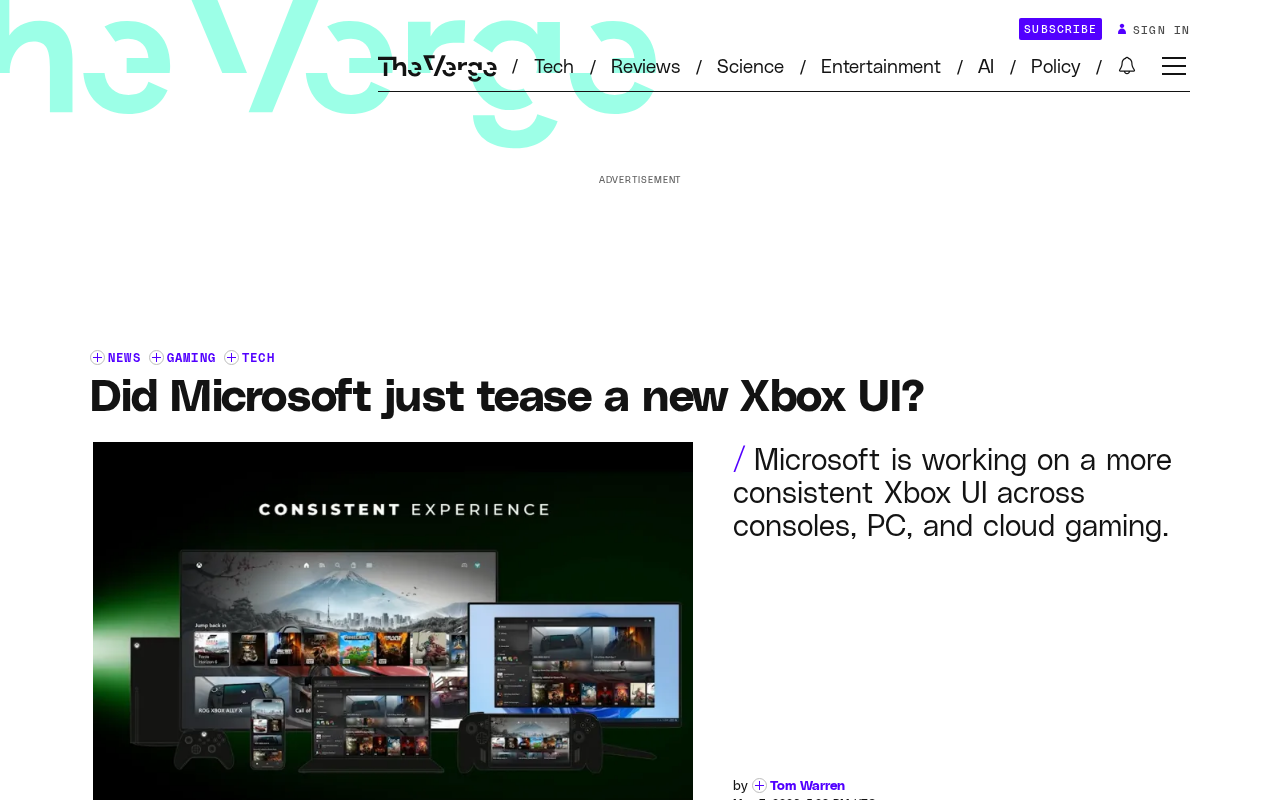
Cross-Device Unified Experience: Microsoft's Strategic Intent
The strategic intent behind this move is crystal clear — as the Xbox ecosystem continues expanding to more device form factors, including traditional consoles, portable handhelds, and cloud gaming terminals, a unified user interface becomes critically important. A consistent Xbox UI not only reduces the learning curve for users switching between different devices but also strengthens the overall brand recognition of Xbox as a platform.
Positioning in the Handheld Market
In recent years, the portable gaming device market has been reinvigorated by the success of products like the Steam Deck. Microsoft has explicitly expressed interest in an Xbox handheld, and a unified UI capable of adapting to different screen sizes and interaction methods is the foundational infrastructure needed to realize this vision.
The Steam Deck is a handheld PC gaming device launched by Valve in 2022, running the Linux-based SteamOS and supporting a vast library of PC games from the Steam platform. Its commercial success directly validated the product logic of "full PC game library + handheld form factor," spawning a wave of competitors including the ASUS ROG Ally and Lenovo Legion Go. One of the Steam Deck's core competitive advantages is its Big Picture Mode — an interface system optimized for controller input and smaller screens — which closely mirrors the unified Xbox UI approach Microsoft is pursuing. The Steam Deck's success has also directly spurred Microsoft to accelerate Xbox handheld development, with industry consensus expecting Microsoft to launch an official Xbox handheld within the next two years.
Seamless Cloud Gaming Integration
As a key component of Microsoft's Game Pass strategy, cloud gaming equally requires interface consistency with local devices. When players switch from a console to cloud gaming on a phone or tablet, a familiar interface dramatically improves the continuity of the experience.
Xbox Game Pass is a game subscription service launched by Microsoft in 2017. The Game Pass Ultimate tier integrates xCloud cloud gaming functionality, allowing users to play console and PC games via network streaming on non-Xbox hardware such as phones, tablets, and browsers. The essence of this strategy is transforming Xbox from a "hardware sales" model to a "subscription service" business model, with subscribers exceeding 34 million as of 2024. Cloud gaming places particularly stringent demands on UI consistency: users may access the same game library on a console, then a phone, then a PC all in the same day. Any sense of interface fragmentation directly undermines subscription retention — this is the core commercial driver behind Microsoft's push for a unified UI.
Potential Changes in the New Xbox UI
While Microsoft has yet to officially reveal the full details of the new UI, several directions can be inferred from the GDC demonstration:
- Responsive Design: Interface elements automatically adjust their layout based on screen size and resolution
- Unified Navigation Logic: Core operation paths remain consistent regardless of which device is being used
- Performance Optimization: Adapted for different hardware capabilities, ensuring smooth operation even on low-power handheld devices
It's worth noting that bringing responsive design to a game console UI presents unique technical challenges: the console interface must simultaneously support controllers, touchscreens, keyboard and mouse, and other input methods, while being extremely sensitive to rendering performance. A UI that runs smoothly on an Xbox Series X must maintain equally low-latency responsiveness on a handheld chip with only one-tenth the power budget. Microsoft's solution likely draws from Windows 11's "Adaptive Shell" technology architecture, which allows the same UI codebase to dynamically downgrade rendering quality based on device capabilities while maintaining consistent interaction logic.
Industry Impact and Outlook
Microsoft's push for a cross-platform unified UI could set a precedent for the entire gaming industry. Competitors like Sony and Nintendo are also exploring the possibilities of multi-device ecosystems in their own ways.
Sony's exploration of multi-device ecosystems is primarily reflected in its PlayStation Remote Play feature and the dedicated streaming handheld PlayStation Portal released in 2023. However, the Portal fundamentally lacks local processing power, making it fundamentally different in positioning from the Steam Deck or a potential Xbox handheld. Nintendo, meanwhile, achieved hardware convergence of "console + handheld" through the Switch series, but its UI system remains relatively closed with limited cross-device extensibility. In contrast, Microsoft's advantage lies in its Azure cloud infrastructure and Windows ecosystem, providing a technological foundation for achieving truly "device-agnostic" gaming experiences that competitors find difficult to replicate. If Microsoft can be the first to deliver a truly seamless cross-device experience, it will hold a significant advantage in the next generation of platform competition.
What remains to be seen is when this new UI will officially roll out to users, and whether it will debut alongside new hardware — such as the rumored Xbox handheld. From the GDC showcase to the gradual leaks since then, Microsoft is clearly laying the groundwork for a major platform experience upgrade.
Key Takeaways
- Microsoft showcased a unified Xbox UI spanning handhelds, consoles, and cloud gaming at GDC
- The unified UI is critical infrastructure for Microsoft's expansion of the Xbox ecosystem to more device form factors
- The new UI likely adopts responsive design with adaptive screen sizing, potentially leveraging Windows 11's Adaptive Shell architecture
- This move is closely tied to Microsoft's strategy of developing an Xbox handheld and strengthening the Game Pass cloud gaming experience (currently 34M+ subscribers)
- The Steam Deck's market success is a key external catalyst driving Microsoft to accelerate this initiative
- Microsoft has recently provided clearer UI detail clues, suggesting an official reveal is approaching
Related articles
 Tech Frontiers
A Rare Quiet Day in AI: Recursive Self-Improvement Stirs Beneath the Surface
A rare quiet day in AI sees multiple sources go silent simultaneously. Behind the calm, Recursive Self-Improvement (RSI) research continues. What this means for the industry.
 Tech Frontiers
Reve 2 vs. Ideogram 4: A Deep Dive into Layout Control in AI Image Generation
A deep comparison of Reve 2 and Ideogram 4's layout control capabilities, covering technical approaches, real-world use cases, and industry trends for designers and creators.
 Tech Frontiers
In the Weights: Check Your Influence Score in the AI World
In the Weights is an AI influence search engine that quantifies your presence in the AI world with a score. Explore how it evaluates practitioners and what it means for digital identity.