MiniMax M2.7 Free Access Guide: Zero-Cost AI Coding via NVIDIA Endpoint + Kilo CLI

NVIDIA offers MiniMax M2.7 free endpoint; developers can access zero-cost AI coding via Kilo CLI.
NVIDIA has added a free endpoint for MiniMax M2.7 on build.nvidia.com. The model uses a 230B parameter sparse MoE architecture (activating 10B per pass) with a 204.8K context window, delivering impressive results on coding benchmarks like SWE-Pro. Developers can configure access through Kilo CLI in minutes and use this powerful model in agentic coding workflows at zero cost.
Key Takeaways
NVIDIA has added a free endpoint for the MiniMax M2.7 model on its API platform build.nvidia.com. Combined with the Kilo CLI tool, developers can experience this new model—which excels at software engineering and agentic tasks—at zero cost. This isn't just a model update; it's a major upgrade to free AI coding workflows.
MiniMax M2.7 Deep Dive: Architecture and Capabilities
MiniMax M2.7 is the latest open-source text model from MiniMax, continuing the M2 series (which previously went through M2, M2.1, and M2.5 iterations). This upgrade brings substantial capability improvements.
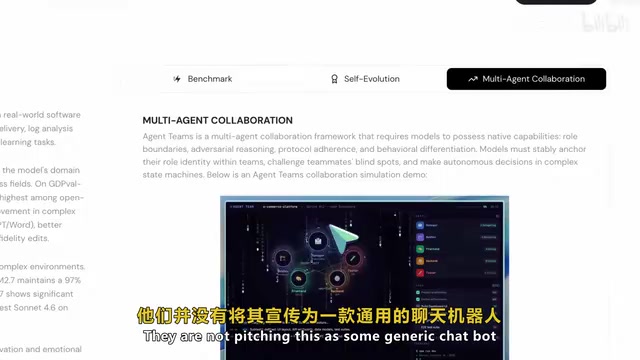
Model Specifications and Technical Architecture
From a technical standpoint, M2.7 uses a 230-billion parameter sparse MoE (Mixture of Experts) architecture, activating only 10 billion parameters per token. This means it maintains strong capabilities while achieving high inference efficiency.
About MoE Architecture: Mixture of Experts (MoE) is a significant technical breakthrough in recent large language model development. The core idea is to divide model parameters into multiple "expert" sub-networks, with a Gating Network dynamically selecting only a few experts to process the current input during each inference pass, rather than activating all parameters. This design allows models to have far more total parameters than traditional dense models while keeping actual computation within acceptable limits. In M2.7's case, only about 10B of the 230B total parameters are activated per inference, meaning computational cost is comparable to a 10B dense model, but model capacity approaches the 230B level. MoE architecture was first proposed by Shazeer et al. in 2017 and later validated at scale by Google's Switch Transformer, Mixtral, and others. It has now become one of the mainstream choices for frontier large models.
What's even more noteworthy is its 204.8K context window, which is extremely practical for handling large codebases and complex project documentation.
On the Engineering Significance of Long Context Windows: The context window refers to the maximum number of tokens a model can process in a single inference pass, directly determining how much information the model can "see." A 204.8K context window is roughly equivalent to processing 1.5 million English characters simultaneously—approximately 150,000 lines of code or hundreds of pages of technical documentation. This capability is particularly critical for software engineering scenarios: a mid-sized Python project typically contains tens of thousands of lines of code, and models with traditional 8K or 32K windows can only see a fraction, unable to understand cross-file dependencies and overall architecture. Achieving ultra-long context relies on attention mechanism optimizations (such as Flash Attention and Sliding Window Attention) as well as improvements to positional encoding (such as the extrapolation capabilities of RoPE). However, it's worth noting that ultra-long context doesn't mean the model attends equally to all content—the "Lost in the Middle" problem (where models forget information in middle positions) remains an important area of ongoing research.
Benchmark Results: Impressive Performance in Coding and Agentic Tasks
M2.7's benchmark results are quite impressive:
- SWE-Pro: 56.22%
- VibePro: 55.6%
- TerminalBench 2: 57%
- NL2Repo: 39.8%
- Skill adherence rate: ~97% across 40 complex skill cases
About the SWE-bench Series: SWE-bench (Software Engineering Benchmark) is a professional software engineering evaluation benchmark proposed by a Princeton University research team in 2023. It's regarded by the industry as one of the "gold standards" for measuring AI models' real programming capabilities. Unlike traditional code completion tests, SWE-bench requires models to locate issues in complete code repositories based on real GitHub Issues, modify code, and pass unit tests—simulating a real engineer's workflow end-to-end. SWE-Pro is its upgraded version, introducing more complex multi-file modifications and cross-module dependency scenarios with significantly increased difficulty. A 56.22% SWE-Pro score means the model can independently solve more than half of real engineering problems, which is a relatively high level among current models. VibePro and TerminalBench 2 focus on code generation quality in "vibe coding" scenarios and terminal command execution capabilities, respectively.
In MiniMax's own MMClaw evaluation, M2.7 shows significant improvement over M2.5, approaching Sonnet 4.6's level in open-ended tool-calling scenarios. These numbers demonstrate that M2.7 has made substantial progress in coding, agentic workflows, tool calling, codebase understanding, and multi-step tasks.
NVIDIA Free Endpoint: Zero-Cost Access Guide for Developers
The most attractive thing about M2.7 is that it's free. NVIDIA has marked it as a free endpoint on build.nvidia.com, allowing developers to use it without paying per token.

About the NVIDIA NIM Platform: NVIDIA NIM (NVIDIA Inference Microservices) is an inference microservices platform launched by NVIDIA in 2024, designed to provide developers with optimized AI model deployment solutions. build.nvidia.com serves as its externally accessible API portal, aggregating mainstream large language models from multiple organizations and providing services through a unified OpenAI-compatible API interface. NVIDIA can offer free endpoints partly because its GPU hardware advantages dramatically reduce inference costs, and partly as a strategy to attract the developer ecosystem and strengthen its position in AI infrastructure. For model providers like MiniMax, distributing models through the NVIDIA platform provides both high-quality inference infrastructure and access to a broader developer community—a win-win situation.
Scope and Limitations of Free Access
To be clear, "free" here refers to free access under NVIDIA's current API trial or developer access terms—not an unlimited production-grade free tier. These policies may change at any time. But for developers testing projects, validating model behavior, or using it in CLI coding workflows, it's more than sufficient—you can experience a powerful new model without worrying about API costs.
Kilo CLI Configuration Tutorial: Connect in Minutes
Why is Kilo CLI the best vehicle for using this free endpoint? Because it makes model switching incredibly simple.
Detailed Configuration Steps
The entire setup takes just a few steps:
- Get your NVIDIA API key from build.nvidia.com
- Open Kilo CLI and run
/connect - Select NVIDIA and paste your key
- Run
/modelsto select MiniMax M2.7
That's it. From hearing about the model to using it in a real coding agent workflow takes just a few minutes.
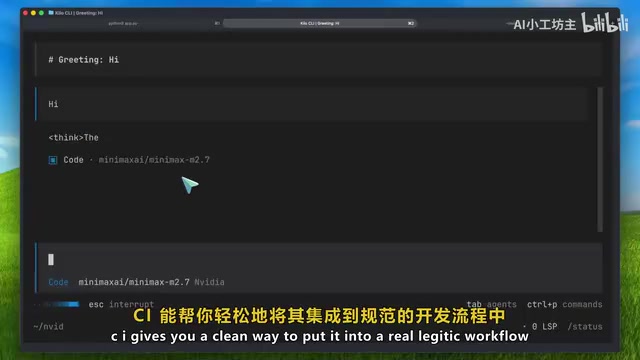
About AI Coding Agent Workflows: Agentic workflows represent a new paradigm of AI usage that differs from the traditional "question and answer" mode. In agent mode, the model doesn't just generate text—it actively calls tools (such as file read/write, code execution, web search), decomposes complex tasks into multiple sub-steps, and dynamically adjusts its strategy based on intermediate results, forming a "perceive-plan-act" closed loop. For coding scenarios, this means the model can autonomously complete cycles like "read code → understand requirements → modify files → run tests → fix based on errors."
Related articles
 Tutorials
ChatGPT Plus Subscription Guide: Are GPT-5.5, image-2, and Codex Worth the Upgrade?
A detailed look at ChatGPT Plus features — GPT-5.5, image-2, and Codex — with a Plus vs Pro comparison and a complete step-by-step subscription guide for users outside the US.
 Tutorials
Harness AI Engineering in Practice: Using Claude Code to Master Enterprise-Level E-Commerce Development
Deep dive into Harness AI Engineering: master enterprise e-commerce development with Claude Code using the Rules, Skills, Wiki, and Changes framework.
 Tutorials
Cursor + Codex Dual-IDE Collaboration: A Practical Methodology for Open-Source Project Customization
A complete methodology for open-source project customization based on real-world experience, detailing the Cursor+Codex dual-IDE workflow, seven-stage process, MVP validation, and AI source code reading techniques.