MIT's New Library Director Chris Bourg: A Champion of Digital Access and Open Scholarship

Chris Bourg is appointed MIT Associate Provost and Director of Libraries, leading three strategic directions: digital access, open scholarship, and data-intensive research.
MIT announced Chris Bourg as Associate Provost and Director of the Barbara K. Ostrom (1978) Library, marking a new phase for the MIT Libraries in digital transformation and open scholarship. Bourg previously held a senior role at the MIT Libraries, and this promotion allows her to engage more deeply in institutional-level academic strategy. Her focus spans three areas: digital access to break down barriers to scholarly resources; open and equitable scholarly publishing, advocating for author copyright retention and open access journals; and data-intensive research support, expanding library services for data management, curation, and analytical tools. As a global benchmark for academic libraries, MIT's move may set an example for open access and scholarly communication, while embedding library services more tightly into data-heavy research workflows such as data science and AI.
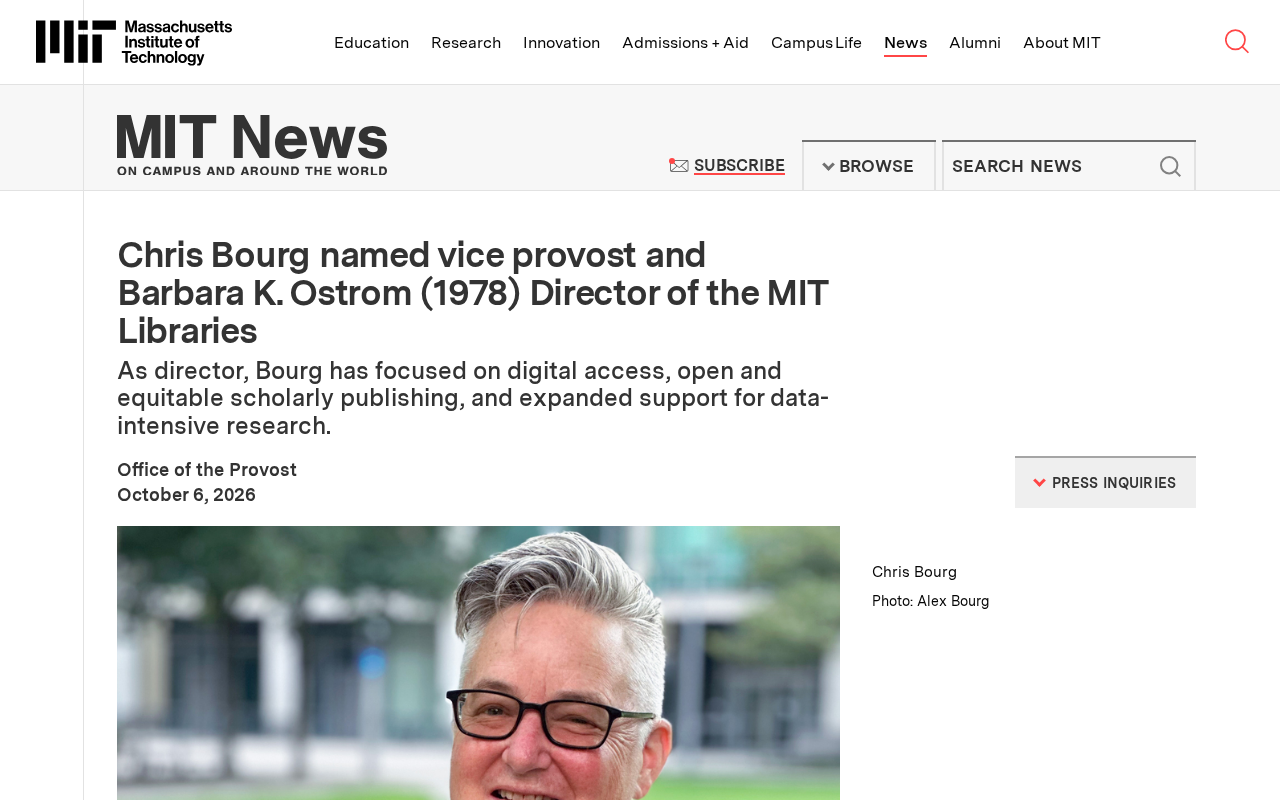
MIT recently announced that Chris Bourg has been appointed Associate Provost and Director of the Barbara K. Ostrom (1978) Library. This appointment marks a new phase for the MIT Libraries in digital transformation and open scholarship.
Appointment Background and Responsibilities
Chris Bourg had previously held a senior position at the MIT Libraries, and this promotion to Associate Provost and Director means she will be more deeply involved in academic strategic planning at the institutional level. As the Barbara K. Ostrom (1978) Chair-level Director, Bourg will oversee the full scope of library operations, including collection development, digital services, and research support.
The MIT Libraries system enjoys a stellar reputation among academic institutions worldwide, with a mission to support teaching, learning, and research while advancing open access to knowledge. Bourg's appointment reflects MIT's repositioning of the library's role in the digital age—shifting from a traditional book repository to a key partner in data-intensive research.
The Barbara K. Ostrom (1978) Chair professorship for the Director of Libraries is named after MIT alumna Barbara K. Ostrom, who graduated from MIT in 1978 and later became a longtime supporter of the Libraries. Chair-level director positions of this kind hold special significance at MIT, meaning the role carries not only administrative responsibilities but also academic leadership and strategic voice. An Associate Provost belongs to the university's central academic administration, typically responsible for cross-departmental academic affairs coordination and involving decisions within the Provost's Office. Bourg holding both titles simultaneously signals that the position of Library Director has been elevated to the level of institutional strategic decision-making at MIT, rather than serving merely as the head of a back-office support department. This dual identity enables her to participate directly in academic resource allocation, open policy formulation, and research infrastructure planning—thereby driving library transformation at a more macro level.
Three Core Directions
According to official statements, during her tenure as Director, Bourg's work has focused on three areas: digital access, open and equitable scholarly publishing, and expanded support for data-intensive research.
Digital Access
In the area of digital access, Bourg is committed to breaking down barriers to scholarly resources, ensuring that the MIT community and researchers worldwide can more easily utilize the Libraries' digital collections. This includes promoting electronic resource acquisition, optimizing discovery systems, and improving remote access experiences.
Open and Equitable Scholarly Publishing
Open scholarship is another key battleground for Bourg. She advocates for equitable scholarly publishing models, supports authors in retaining copyright, promotes the development of open access journals, and resists excessive commercialization of scholarly publishing. The MIT Libraries have repeatedly innovated in open access policy in recent years, and Bourg's continued leadership will consolidate this trend.
Open Access (OA) is a movement that emerged in academia in the early 21st century, aiming to make scholarly outputs freely and without restriction available to the public for reading and use. Its core backdrop: subscription costs for traditional academic journals have risen year after year, creating the so-called "serials crisis," under which many university library budgets are overwhelmed, while researchers—who are both authors and readers of papers—cannot freely access literature in their own fields. OA has two main paths—gold OA refers to authors publishing directly in open access journals, usually requiring payment of an article processing charge (APC); green OA refers to authors depositing preprints or postprints of their papers in institutional repositories for free public access. MIT was among the first universities globally to adopt a university-wide open access policy in 2009, granting MIT authors the right to retain copyright and deposit their papers in the institutional repository DSpace@MIT. Since then, international initiatives such as "Plan S" have further pushed for full openness of publicly funded research outputs, while the business models of the scholarly publishing market, the fairness of APC fees, and author copyright ownership remain subjects of ongoing debate.
Data-Intensive Research Support
Faced with growing demand for data-driven research, Bourg has expanded the Libraries' support for data management, data curation, and analytical tools. The library is no longer merely a document provider, but an active participant in managing the full lifecycle of research data.
Data-Intensive Research is also known as the "Fourth Paradigm," proposed by computer scientist Jim Gray in 2007, referring to a mode of scientific research—following experimentation, theory, and computational simulation—that relies primarily on large-scale data-driven methods. This type of research depends on the collection, cleaning, storage, analysis, and reuse of massive datasets, and is widely applied in fields such as genomics, climate science, astronomy, social sciences, and artificial intelligence. For libraries, this paradigm brings entirely new functional requirements: Research Data Management (RDM) encompasses the development of Data Management Plans (DMPs), the application of metadata standards, data storage and backup strategies, and the implementation of the FAIR principles—Findable, Accessible, Interoperable, and Reusable. In addition, Data Curation refers to the long-term maintenance, format migration, and semantic annotation of data, ensuring that it remains understandable and usable by future generations after a project ends. Leading institutions such as the MIT Libraries have established dedicated data services teams that collaborate with researchers throughout the entire project lifecycle—this role transformation is precisely the core context of Bourg's expansion work.
Impact on MIT and the Academic World
Bourg's promotion may bring broader industry impact. The MIT Libraries are often regarded as a benchmark in open access, digital preservation, and other areas, with their policies and practices frequently emulated by other university libraries. Bourg's continued leadership of this institution is expected to further advance the openness and equity of the scholarly communication system.
For MIT researchers, this means stronger infrastructure support, especially in research fields that rely heavily on large datasets, such as data science and artificial intelligence. Library services will become more tightly embedded in the research workflow rather than remaining on the periphery.
Conclusion
Chris Bourg's appointment is not merely a personnel change—it is a confirmation of the MIT Libraries' strategic direction. Against the backdrop of dramatic shifts in scholarly publishing models and explosive growth in research data, her experience and vision will help the MIT Libraries continue to lead innovation and serve the creation and dissemination of knowledge.
One-line Summary
Chris Bourg has been appointed Associate Provost and Director of the MIT Libraries, leading three strategic directions: digital access, open scholarship, and data-intensive research.
Paragraph Summary
MIT announced that Chris Bourg will serve as Associate Provost and Director of the Barbara K. Ostrom (1978) Library, marking a new phase for the MIT Libraries in digital transformation and open scholarship. Bourg previously held a senior position at the MIT Libraries, and this promotion enables her to participate more deeply in institutional-level academic strategic planning. Her work focuses on three areas: digital access, aimed at breaking down barriers to scholarly resources; open and equitable scholarly publishing, advocating for author copyright retention and supporting open access journals; and data-intensive research support, expanding the Libraries' services for data management, curation, and analytical tools. As a benchmark among academic libraries worldwide, the MIT Libraries' personnel arrangement may have a demonstrative effect on open access and the scholarly communication system, while embedding library services more tightly into research workflows that depend heavily on large datasets, such as data science and artificial intelligence.
Related articles

iPhone Duo Battery Life Tested: One Charge a Day Is Unavoidable, and the Large Screen Is the Culprit
iPhone Duo battery test: heavy use needs at least one charge a day, and about 30% remains after 6.5 hours of screen-on time. How often the large screen is unfolded is key; a MagSafe battery pack helps, and long-term degradation is also worth watching.

Kimi K3.1 Pro Open-Sourced: 2.8 Trillion Parameters Close In on Opus
Moonshot releases the open-source MoE model Kimi K3.1 Pro, with 2.8T total parameters and 104B activated, trailing Opus 5.5 by under 1 point on Terminal Bench 4.0.

Costco Tech Price Guessing: Are Monitors, Keyboards, Mice, and Bose Speakers Worth It?
A YouTube blogger guesses prices of Costco tech products: 2K 180Hz monitor, Logitech keyboard and mouse, Bose speaker, and CyberPower UPS, revealing warehouse-store selection and brand premium.