Mitsubishi UFJ Partners with OpenAI: A Complete Roadmap for Building an AI-Native Bank

MUFG teams up with OpenAI to systematically transform into a fully AI-native bank.
Japan's largest financial group, MUFG, has announced a deep partnership with OpenAI aimed at becoming a truly AI-Native enterprise. The initiative spans three layers: deploying ChatGPT Enterprise across all staff, launching a Custom GPT "AI Banker" to reallocate human capacity toward higher-value work, and building a new digital bank powered by an "AI Concierge" that delivers 24/7 personalized financial services — redefining how customers interact with banking.
MUFG's AI-Native Vision
Mitsubishi UFJ Financial Group (MUFG), Japan's largest financial conglomerate, has unveiled a deep partnership with OpenAI with a clear goal: to become a truly "AI-Native" enterprise. This goes far beyond adopting a single AI tool — it's a systematic reimagining of corporate culture, business processes, and customer experience from the ground up.
What is an AI-Native enterprise? The concept of "AI-Native" is borrowed from the software industry's "Cloud-Native" philosophy — where applications are designed from the ground up for cloud environments rather than migrated from legacy systems. By analogy, an AI-Native enterprise doesn't simply layer AI tools onto existing workflows. Instead, it redesigns its organizational structure and business logic with AI collaboration as the default mode of working. This concept gained widespread traction between 2023 and 2024 alongside the proliferation of large language models. Research from McKinsey, BCG, and other consultancies shows that companies achieving genuine AI-Native transformation far outperform peers who only pursue isolated AI applications — in both efficiency gains and innovation velocity.
As MUFG officially describes it, an AI-Native enterprise is one where "AI and humans can collaborate naturally, the supporting environment is fully in place, and that culture has organically permeated the entire organization." In other words, AI is no longer a tool reserved for a handful of technical experts — it becomes a core capability that every employee can draw on daily, like calling on a trusted work partner.

MUFG leadership has stated clearly: "AI will fundamentally transform the nature of finance." Behind this conviction lies a deep anxiety about the digital wave disrupting traditional banking — and a proactive commitment to change. The digital pressure facing Japan's banking sector is uniquely intense: years of ultra-low and even negative interest rates (the Bank of Japan's negative rate policy remained in place until it was formally ended in 2024) severely compressed traditional net interest margins, while internet banks like Rakuten Bank and PayPay Bank, along with payment platforms like LINE Pay, have been siphoning younger customers away from incumbents. As one of the world's largest banking groups with assets exceeding $3 trillion, MUFG's AI transformation strategy is not just an internal efficiency play — it is a strategic defense against structural competitive threats. As customers grow increasingly accustomed to instant, personalized digital services, the traditional branch-and-counter model faces mounting pressure to reinvent itself.
Why ChatGPT Enterprise
Among the many AI solutions available, MUFG ultimately chose OpenAI's ChatGPT Enterprise. According to the company, this decision came down to two critical factors.
Balancing Usability and Security
The first was broad accessibility — the product needed to be easy enough for all employees to use at scale, not just technical teams. The second was enterprise-grade security, which is especially critical for a bank handling enormous volumes of sensitive financial data.

ChatGPT Enterprise's technical characteristics make it capable of meeting stringent financial regulatory requirements. Launched in August 2023, its core differentiators include: data isolation guarantees (enterprise inputs are not used to train OpenAI models), unlimited access to GPT-4-class models, extended context windows (supporting longer contracts and report documents), and enterprise IT integration capabilities such as SSO (Single Sign-On) and SCIM (automated user provisioning). For financial institutions, compliance frameworks such as GDPR and Japan's Act on the Protection of Personal Information (APPI) impose strict constraints on data handling. The Enterprise version's commitment that "data never leaves the tenant" was a prerequisite for clearing compliance review — the financial industry's near-zero tolerance for data breaches means any customer information leak could trigger a systemic crisis of trust.
A Strategic Partnership Beyond Technology
Notably, MUFG emphasized that OpenAI provides more than just technology and models — it also delivers "in-depth product guidance" and "training programs for all employees," including custom GPT learning workshops designed specifically for MUFG staff. This end-to-end support, from technical delivery to on-the-ground implementation, elevated OpenAI from a mere vendor to a genuine strategic transformation partner.
The "AI Banker": Reallocating Human Value
One of the most concrete outcomes of the MUFG-OpenAI collaboration is a Custom GPT persona called the "AI Banker" (AI公員).

The technical underpinnings of Custom GPT are worth examining closely here. This capability, introduced by OpenAI in November 2023, allows enterprises to build specialized AI assistants on top of the ChatGPT foundation — using natural language instructions, uploaded proprietary knowledge base documents, and configured tool integrations (such as external API connections) — without writing a single line of code. Companies can inject internal policies, product manuals, and industry terminology libraries into a Custom GPT, turning it into a "domain expert" tailored to specific business scenarios. MUFG leveraged this technology to package banking procedures, financial regulations, and internal operations manuals into an interactive intelligent assistant.
The group openly acknowledged that many employees on its digital solutions team are not deeply familiar with banking procedures or financial industry knowledge — and the "AI Banker" is designed to help these employees rapidly close that expertise gap. The deeper logic behind this design is to free people from repetitive, knowledge-lookup tasks.
MUFG offered a particularly insightful way to measure success: "What we care about is how many more client visits were made with the time saved, or how much more thinking was invested in writing better proposals." In other words, the efficiency gains from AI are not aimed at headcount reduction — they're about "reinvesting" human capacity into higher-value work and client-facing activities. This philosophy of framing AI adoption around "time reallocation" rather than "cost cutting" is one the entire industry would do well to emulate.
The AI Concierge and a New Digital Bank
Looking ahead, MUFG's ambitions extend well beyond internal efficiency — the group has set its sights on a complete reinvention of the customer experience.

MUFG is advancing a new service brand and plans to launch an entirely new digital bank. Within that bank, MUFG will partner with OpenAI to deploy an "AI Concierge" — leveraging cutting-edge AI to deliver personalized financial services and proactive recommendations to both retail and corporate customers, 24 hours a day, 365 days a year.
The "AI Concierge" represents a deeper trend toward embedded financial services. On the technical side, this relies on OpenAI's GPT Actions capability — which allows third-party services to be called directly by ChatGPT through standardized API interfaces, enabling users to check balances, initiate transfers, and purchase financial products without ever leaving the conversation interface. This model is what the industry calls the AI evolution of "Conversational Banking" or "Embedded Finance." Gartner predicts that by 2026, more than 30% of new digital banking products will feature AI conversation as the primary interaction interface.
MUFG leadership painted an even more ambitious long-term vision: even if a customer never opens a banking app or visits a branch, they could complete financial transactions simply through ChatGPT — the AI platform they already use every day. "If financial transactions can be completed within ChatGPT, that will be an entirely new customer experience." This effectively shifts the bank's service entry point away from its own proprietary app and onto an AI platform where users have already established deep usage habits — posing a profound challenge to traditional banks' app ecosystem strategies while simultaneously opening up new opportunities. It's the realization of truly "invisible finance."
A Benchmark Case for Traditional Finance's AI Transformation
The MUFG-OpenAI partnership offers a case study worth close examination for traditional financial institutions worldwide navigating AI transformation. Its value lies not in the adoption of any single technology, but in a systematic effort across three dimensions: at the cultural level, making AI a daily tool for every employee; at the organizational level, reallocating human value through the AI Banker; and at the product level, reimagining customer experience through the AI Concierge and the new digital bank.
The journey from "adopting a tool" to "becoming an AI-Native enterprise" reflects a depth of transformational commitment that MUFG has made visible. For an industry renowned for its stability and conservatism, such a strategic bet carries both enormous opportunity and significant risk — and the true verdict will ultimately be delivered by the real-world performance of its digital bank and AI services once they go live.
Key Takeaways
Related articles
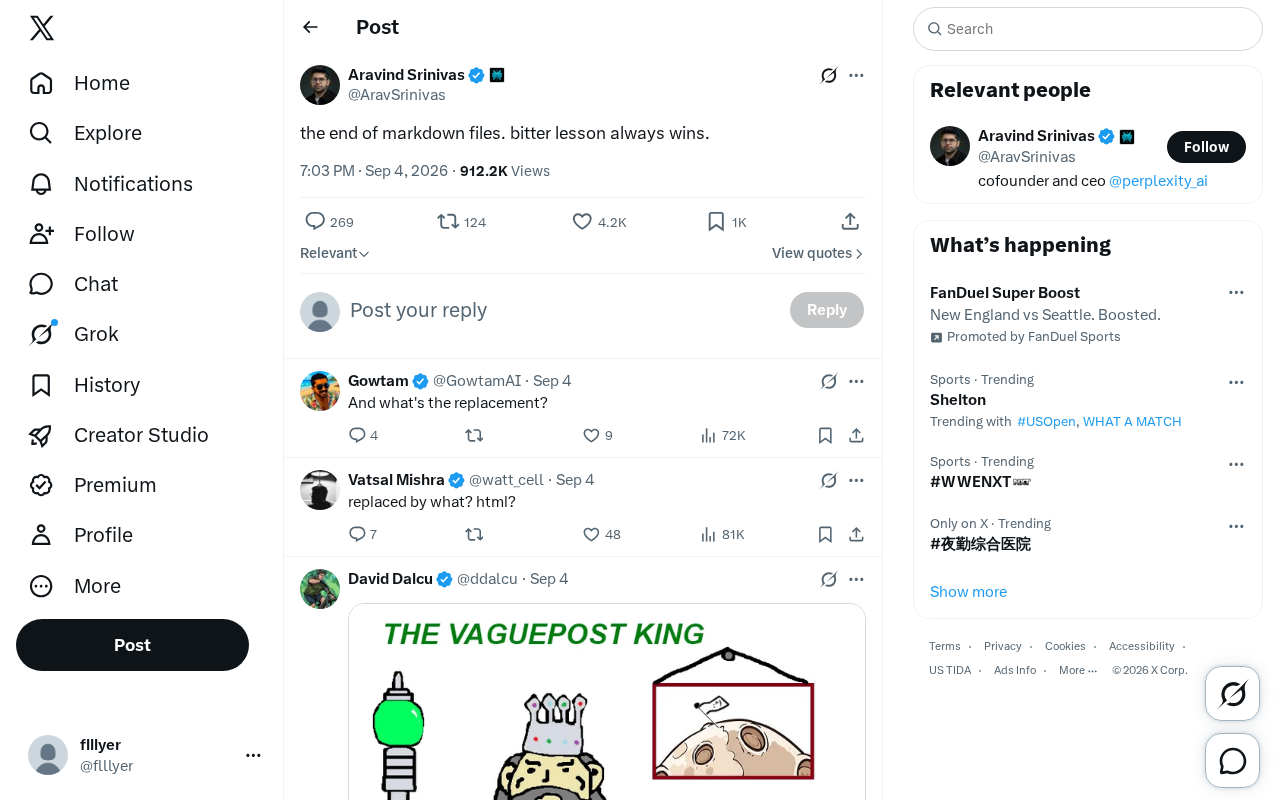
Are Markdown Config Files Going Extinct? How the Bitter Lesson Is Reshaping AI-Assisted Programming
Will CLAUDE.md and .cursorrules be replaced by AI? Analyzing the tension between hand-crafted rules and model autonomy through Sutton's Bitter Lesson.
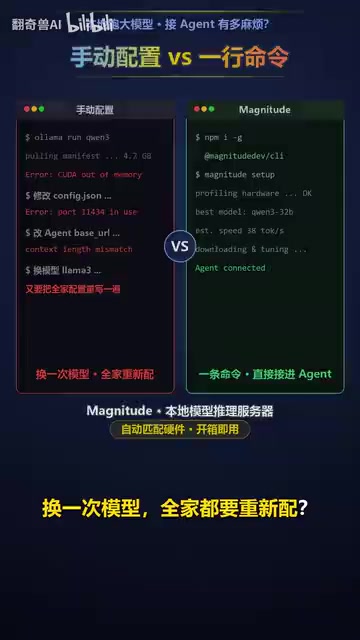
Magnitude: One Service to Handle Local LLM Inference and Agent Integration
Magnitude is an open-source local LLM inference server that auto-optimizes for your hardware and integrates seamlessly with Codex, Claude Code, and other AI Agents.
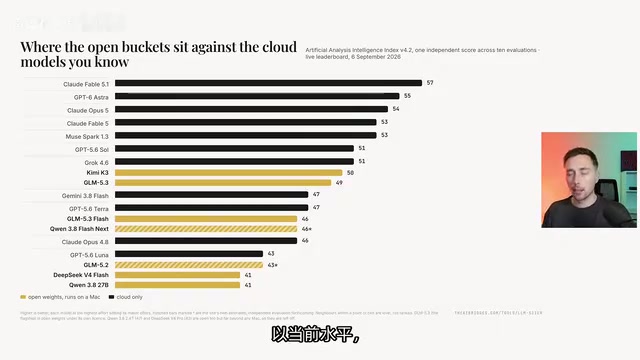
Mac Local AI Buying Guide: A Complete Breakdown of Memory Configurations and Model Speed
In-depth analysis of Mac memory requirements, inference speed, and costs for running local AI LLMs. From 48GB to 512GB configs — which models fit, how bandwidth affects speed, and local vs. cloud cost comparison.