MLOps from Scratch: A 100-Day Learning Challenge Roadmap and Practical Guide

A college student's 100-day public MLOps learning journey — from Python basics to model deployment and monitoring.
A college student launched a public 100-day MLOps challenge on Reddit, learning everything from Python OOP and Git to Docker containerization, model serving, and drift monitoring. The journey highlights how engineering fundamentals — not just modeling skills — are the true differentiator for ML engineers, and why learning in public is a powerful strategy for anyone transitioning from data science to ML engineering.
One College Student's 100-Day MLOps Challenge
Recently on Reddit, a college student launched a trending "MLOps 100-Day Challenge" (Day 1/100 of MLOps), publicly documenting their journey of learning Machine Learning Operations (MLOps) from the ground up. The learner already had a foundation in machine learning and data science, but recognized a significant gap between "being able to train a model" and "being able to reliably deploy a model to production" — and decided to spend 100 days systematically closing that engineering gap.
In their Day 1 update, they wrote about watching CampusX's Python course at 2.5x speed (roughly 4 hours of content), while also reviewing version control systems (Git) and the first part of Python object-oriented programming (OOP). This seemingly humble starting point actually captures the core logic of MLOps learning: engineering skills first, modeling skills second.
This "Learning in Public" approach — sharing your progress openly every day — has become extremely popular in developer communities in recent years. It not only helps learners stay disciplined, but also makes the entire learning path reproducible and referenceable. For anyone looking to get started with MLOps, a genuine first-hand learning record like this is far more valuable than an abstract course syllabus.
Why MLOps Is Worth 100 Days of Your Time
The Mental Shift: From "Model" to "System"
Many data science practitioners have had a similar experience: you train a model with decent accuracy in a Jupyter Notebook, and then… nothing. The model sits quietly on your local machine, unable to create real business value. MLOps (Machine Learning Operations) exists precisely to solve this "last mile" problem.
MLOps borrows from the DevOps philosophy in software engineering, integrating the development, deployment, monitoring, and iteration of machine learning models into an automated, reproducible engineering workflow. It's not about "how to make a model more accurate" — it's about "how to make a model run continuously, reliably, and at scale in production."
It's worth knowing that MLOps didn't emerge from nothing — it's a natural extension of DevOps culture into the machine learning domain. DevOps emerged around 2009, with the core idea of breaking down the wall between Development (Dev) and Operations (Ops) through automated pipelines enabling continuous integration and continuous delivery (CI/CD). MLOps builds on this philosophy while adding ML-specific steps like data engineering, model training, and experiment tracking — forming a complete lifecycle management system that covers data collection → model training → evaluation → deployment → monitoring → retraining. Google's 2015 paper "Hidden Technical Debt in Machine Learning Systems" was one of the first to systematically expose the engineering complexity of ML systems. The paper noted that in a real-world ML system, the model training code often accounts for less than 5% of the total codebase, with the remaining 95% consisting of data pipelines, feature engineering, monitoring, configuration management, and other engineering code. This paper is considered one of the foundational documents of the MLOps concept.
The Real-World Demand for MLOps Engineers
From an industry perspective, demand for MLOps engineers is growing rapidly. As more companies move AI from the experimental stage to actual deployment, what's scarce isn't algorithm engineers who can tune hyperparameters — it's engineering talent who can build training pipelines, manage model versions, and implement automated deployment and monitoring. This explains why a student who is already "familiar with ML" would still choose to spend 100 dedicated days on MLOps.
What Day 1 Reveals About the MLOps Foundation
Python Engineering Skills: More Than Just Writing Scripts
This learner started Day 1 with a Python course, specifically reviewing object-oriented programming (OOP). That's no coincidence. In real MLOps projects, code needs to be modular, reusable, and testable — not scattered across Notebook cells as loose scripts. OOP concepts like encapsulation and inheritance are foundational to building maintainable ML pipelines.
Solid Python engineering skills — covering code standards, module design, error handling, and more — are often the true dividing line between a "data scientist" and an "ML engineer." This is a reminder to learners: don't rush toward flashy deployment tools. Build your programming fundamentals first.
Version Control: Git Is Just the Beginning
The other key topic on Day 1 was Git and version control systems. In the MLOps context, the scope of version control expands dramatically — you need to manage not just code versions, but also data versions and model versions.
As the learner progresses, they'll likely encounter specialized tools like DVC (Data Version Control) and MLflow. DVC was open-sourced by Iterative.ai in 2017, with its design directly inspired by Git — it uses a Git-like command interface but is specifically designed for tracking large datasets and model files, the kind of binary files that don't belong in a Git repository. DVC records hash pointers to data inside Git while storing the actual files in remote storage (S3, GCS, etc.), enabling coordinated version management of both data and code. MLflow was open-sourced by Databricks in 2018 and provides four core modules: Experiment Tracking, Projects, Model Registry, and Models. It has become one of the most widely used ML experiment management platforms in the industry. In the MLOps toolchain, DVC and MLflow are often used together — DVC handles data-layer versioning, and MLflow handles experiment-layer versioning. And it all starts with mastering the basics of Git. In that sense, the Git foundation laid on Day 1 is the entry point to the entire MLOps toolchain.
A Complete MLOps Learning Roadmap
Although this learner has just started, based on the MLOps knowledge landscape, a reasonably complete 100-day roadmap can be sketched out as follows:
Phase 1: Engineering Foundations (Days 1–20)
- Advanced Python: OOP, modularization, unit testing, logging
- Version Control: Advanced Git operations, branching strategies, collaboration workflows
- Command Line & Linux Basics: Shell scripting, environment management
- Virtual Environments & Dependency Management: venv, conda, requirements
Phase 2: Containerization & Pipelines (Days 21–50)
- Docker: Image building and container orchestration basics
- Data & Model Version Management: DVC, MLflow experiment tracking
- Experiment Tracking: Logging hyperparameters, metrics, and artifacts
- CI/CD Concepts: Introduction to automated testing and continuous integration
Docker containerization solves the long-standing ML engineering headache of "it works on my machine." By packaging model code, dependencies, and the runtime environment into an image, Docker ensures complete consistency for inference services across development, testing, and production environments. It eliminates the "environment nightmare" of migrating a model from a data scientist's laptop to a production server.
Phase 3: Deployment & Model Serving (Days 51–80)
- Model Serving: Wrapping inference APIs with FastAPI or Flask
- Cloud Platform Basics: Managed ML services on AWS/GCP/Azure
- Kubernetes Introduction: Container orchestration and elastic scaling
- CI/CD in Practice: Building pipelines with tools like GitHub Actions
When a single container can't handle high-concurrency inference demands, Kubernetes (K8s) plays a critical role as a container orchestration platform. K8s originated from Google's internal Borg system and was open-sourced in 2014. It automatically manages container scheduling, scaling, health checks, and rolling updates. In ML inference scenarios, K8s can dynamically scale Pod counts based on traffic (Horizontal Pod Autoscaler), combined with GPU resource scheduling, to deliver elastic, cost-efficient large-scale model serving. Kubeflow is an orchestration platform built on top of K8s specifically designed for ML workflows, and is a key option for production-grade MLOps architectures.
Phase 4: Monitoring & Operations (Days 81–100)
- Model Monitoring: Data drift and concept drift detection
- Performance Monitoring & Alerting
- Model Retraining & Iteration Strategies
- End-to-End Project Integration: Connecting the full ML lifecycle
The "drift" problem in model monitoring is one of the core challenges that distinguishes MLOps from traditional software operations. Data Drift refers to changes over time in the statistical distribution of input data in production — for example, seasonal shifts in user profiles causing the data the model receives to diverge from its training distribution. Concept Drift is even more fundamental — it refers to changes in the actual mapping relationship between input variables and target variables. For example, if economic conditions change and user spending patterns shift entirely, the original model becomes invalid even if the input data distribution stays the same. Common drift detection methods include statistics-based approaches like PSI (Population Stability Index) and KS tests, as well as ML-based adversarial validation methods. This is precisely why MLOps emphasizes continuous monitoring and automated retraining after model deployment — rather than a "deploy once, use forever" approach.
The core logic of this roadmap is progressive layering: write good code → manage versions → package containers → deploy to production → monitor and maintain, forming a complete closed loop for the machine learning lifecycle.
The Value of Learning in Public: Compounding Returns
Why Share Your Learning Process Openly?
This learner chose to publish their daily notes on Notion with a commitment to update every day. This practice is worth celebrating in itself. The concept of "Learning in Public" was systematically articulated by developer Shawn Wang (swyx) in a 2018 blog post. His core argument: learners should openly share their thought processes, mistakes, and incremental progress — rather than waiting until they've "fully learned" something before speaking up. The idea quickly resonated in developer communities, spawning challenges like "#100DaysOfCode" and "#100DaysOfMLOps" on GitHub. There's solid cognitive science behind it — the Feynman Technique holds that explaining something to others deepens your own understanding — as well as the psychological principle of "commitment and consistency," which says that publicly declaring a goal significantly increases follow-through.
Learning in public offers several core benefits:
Enforced accountability: Knowing that others are watching your progress significantly strengthens your internal motivation to keep going. Building a knowledge asset: Daily learning notes ultimately become your own personal knowledge base, which is enormously valuable to revisit later. Building a personal brand: Consistent public output tends to attract like-minded peers and can even bring unexpected career opportunities. For technical learners, public documentation carries additional value: it creates searchable, indexed knowledge artifacts, and serves as tangible "proof of work" in job applications — often more convincing than a traditional resume.
Lessons for MLOps Beginners
For readers who also want to break into MLOps or other technical fields, this case study offers a few simple but important lessons:
Start from the basics — don't skip steps. Even though this learner already understood ML, they were willing to go back and strengthen their Python and Git fundamentals. Without a solid foundation, advanced tools will just become castles in the air.
Learn in parallel and stay pragmatic. They mentioned learning "ML and MLOps simultaneously," showing that learning isn't an either/or choice — you can build engineering skills without abandoning your core technical skills.
Create a trackable feedback loop. Using daily check-ins and public notes to quantify progress makes the abstract concept of "learning" measurable and sustainable.
Closing Thoughts: From Algorithm Worship Back to Engineering Practice
A college student's "Day 1/100" might look like just another ordinary check-in post in a community thread. But it reflects an important trend in AI talent development today: moving away from algorithm worship and back toward engineering practice. As model training becomes increasingly democratized, the truly scarce skill is the engineering capability to reliably deploy AI systems into production.
The 100-day MLOps journey has only just begun, but the choices made at the starting line — solid Python fundamentals, disciplined version control — already point in the right direction. For every learner hoping to find their footing in the age of AI, this public learning journal may be exactly the kind of real, followable, and referenceable template worth taking seriously.
Related articles
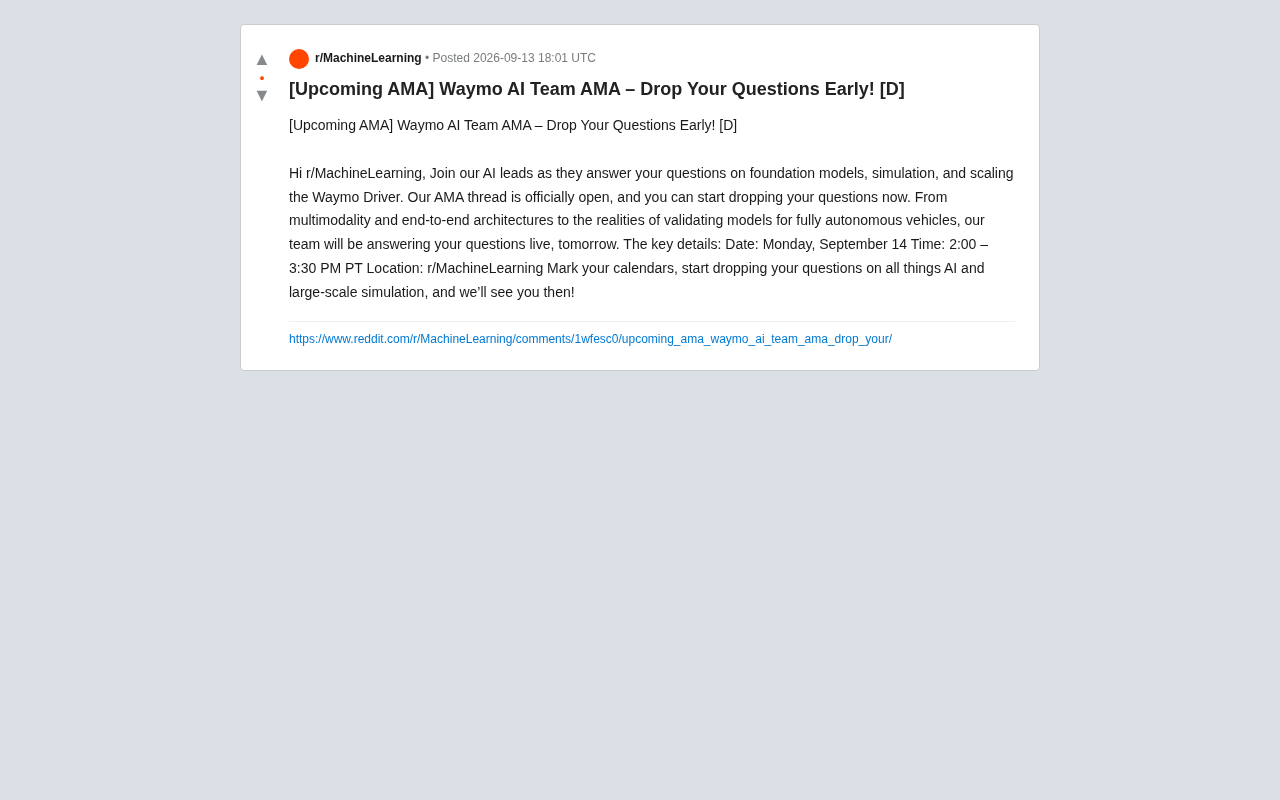
Waymo AI Team to Host AMA: Focusing on Foundation Models and Autonomous Driving Simulation
Waymo's AI technical leads are hosting an AMA on Reddit's r/MachineLearning, covering foundation models, large-scale simulation, multimodality, and end-to-end autonomous driving architectures.
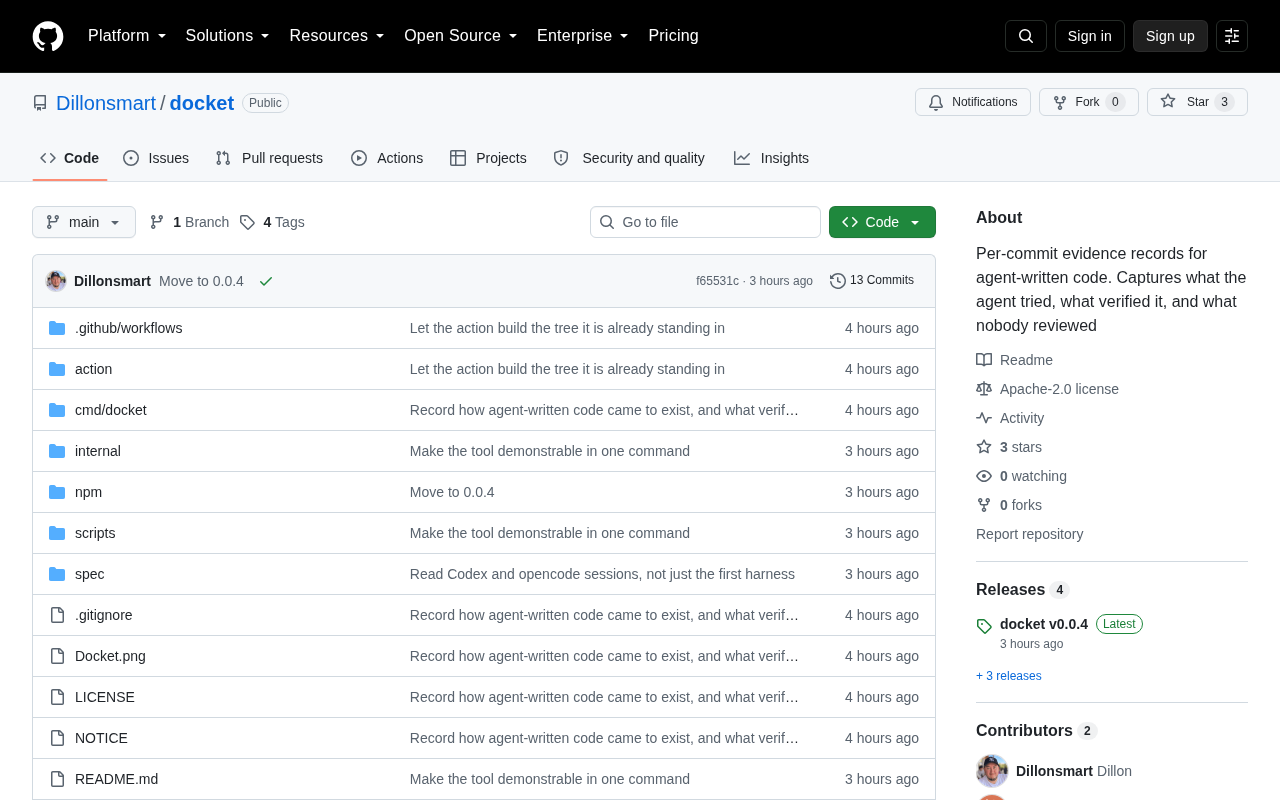
Docket: Building Per-Commit Evidence Trails for AI Agent-Generated Code
Docket builds per-commit evidence trails for AI agent-generated code, making every AI commit traceable, auditable, and verifiable — a pragmatic step in AI coding governance.
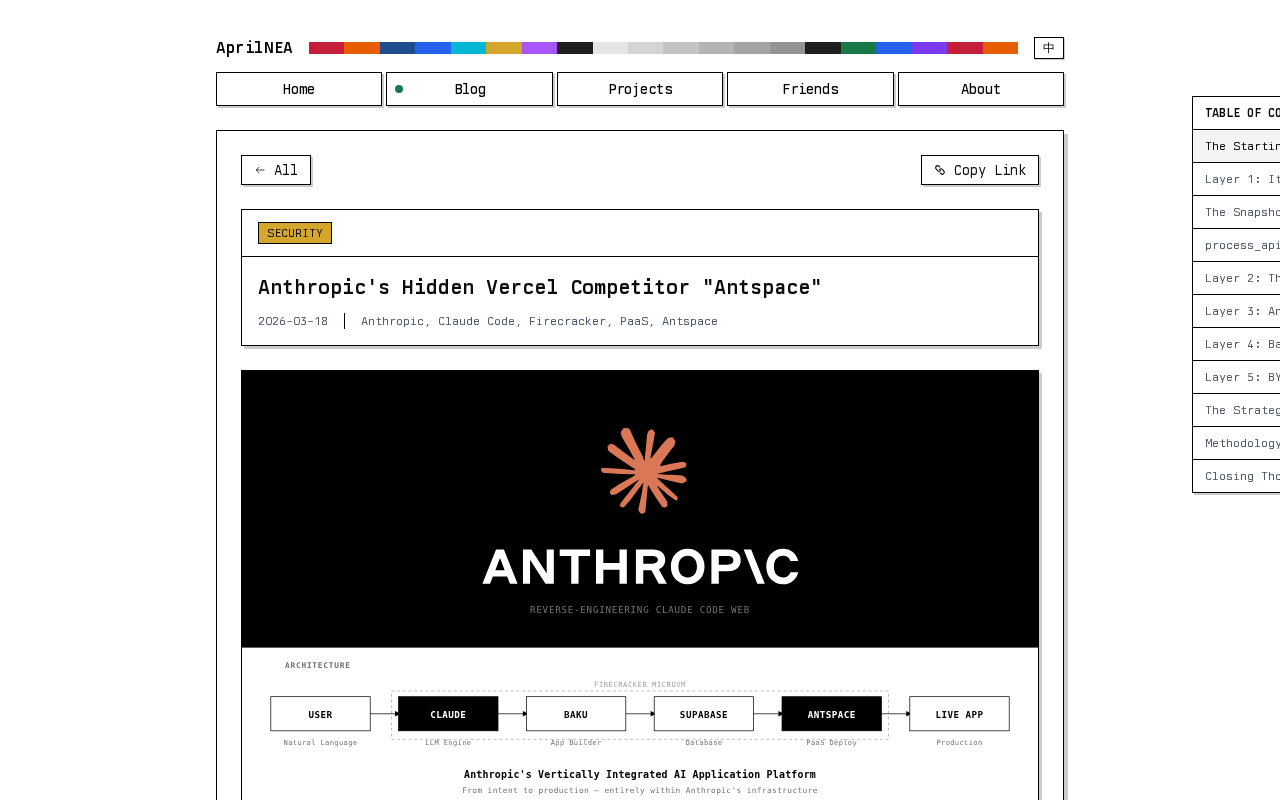
Reverse-Engineering Claude Web's Sandbox: Uncovering Anthropic's Hidden MicroVM
A reverse-engineering analysis of Claude Web's code sandbox reveals Anthropic's likely MicroVM architecture and internal "Antspace" environment, with insights for AI product security.