Moat: An Open-Source Alternative to OpenRouter?
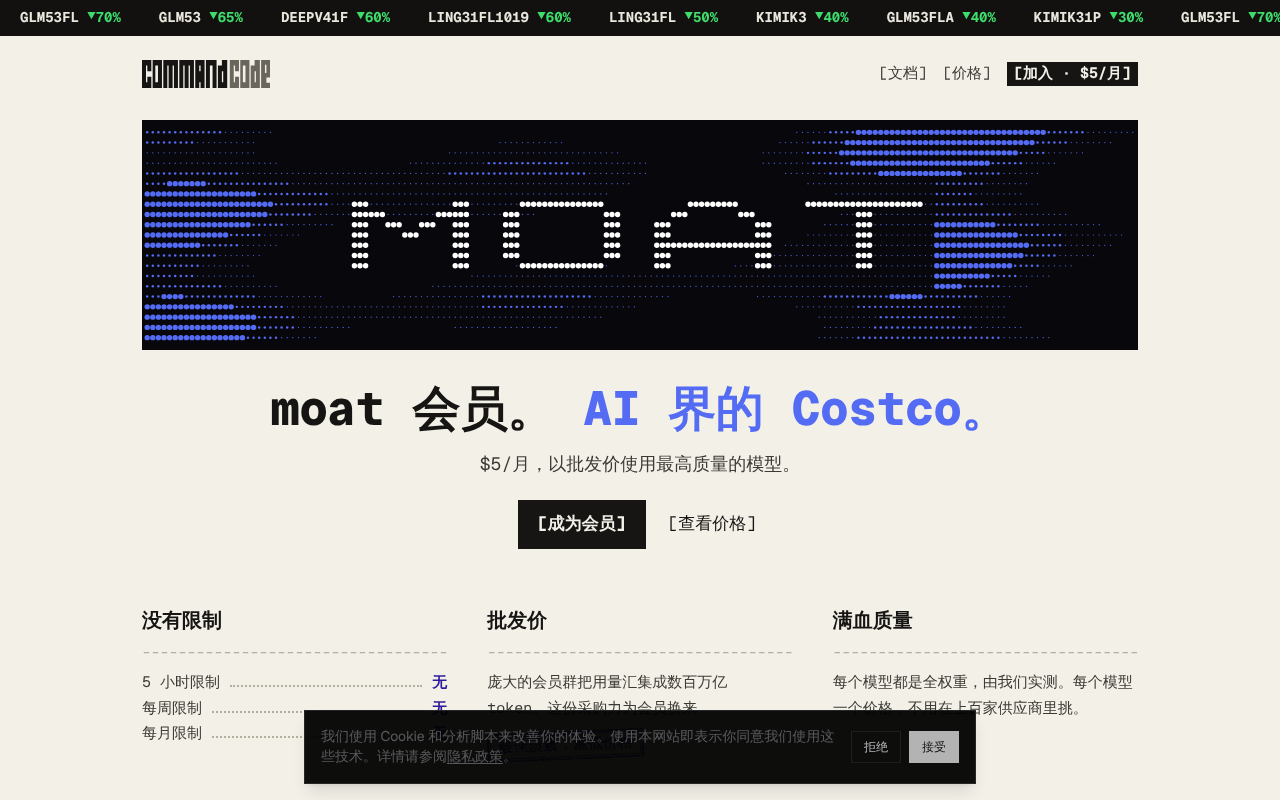
Moat appeared on HN as an OpenRouter alternative, but public info is scarce and its maturity is unverified.
The article introduces Moat, a project discussed on Hacker News that positions itself as an OpenRouter alternative. It covers OpenRouter's value in unified interfaces, usage-based billing, and model switching versus the single-point dependency it creates, but notes the source material only provides the title and discussion activity (12 points, 9 comments), leaving Moat's features, architecture, licensing, and community sentiment unknown. It lists key evaluation criteria and advises watching rather than treating it as mature.
Title
Moat: An Open-Source Alternative to OpenRouter?
Meta Description
Moat bills itself on Hacker News as an OpenRouter alternative. This article examines its positioning, the pain points of multi-model routing, and the key open questions for evaluating the project.
Article Content
In AI application development, calling multiple LLM APIs has become routine. OpenRouter, as an aggregation and routing service, lets developers access models from different vendors through a single interface. Recently on Hacker News, a project called Moat claimed to be "your OpenRouter replacement," sparking a small round of discussion.
What Is Moat?
Judging from the project title and the context of the discussion, Moat positions itself as an alternative to OpenRouter, with the same goal of simplifying access to and routing across multi-model APIs. OpenRouter's core value lies in a unified interface, usage-based billing, and model switching—and Moat clearly wants to offer another option in that direction.

However, the source material only provides the title and discussion activity (12 points, 9 comments), without disclosing Moat's specific features, architecture, or license. As a result, it's currently impossible to confirm whether it's an open-source project, a commercial service, or a personal experiment.
OpenRouter's core mechanism is "aggregated routing": it doesn't train models itself, but instead establishes upstream connections with vendors such as OpenAI, Anthropic, Google, and Meta, as well as various open-source model hosting providers. Developers only need a single OpenRouter API key to call hundreds of models using a unified request format. Its value comes down to three points: a unified OpenAI-compatible interface lowers integration costs; token-based billing with prepaid credit support avoids opening separate accounts with each vendor; and built-in model fallback and load balancing automatically switch when an upstream is rate-limited or fails. For this reason, OpenRouter holds the power to decide model availability, price markups, and routing strategy—which constitutes the "platform dependency" discussed below.
Why Do Developers Need an OpenRouter Alternative?
OpenRouter solves the fragmentation problem of multi-model calls, but it also introduces a new dependency: the routing layer becomes a single point, and pricing and availability are constrained by platform policy. Some developers want a self-hostable, more transparent alternative—this may be the backdrop against which Moat appeared.
The discussion volume of 9 comments on HN suggests the topic has some level of interest, but no broad consensus has formed yet. Since the comment content isn't included in the source material, it's impossible to judge whether the community's specific assessment of Moat is supportive or skeptical.
A self-hostable routing layer is one of the core demands for this kind of alternative. A typical approach is to build on open-source gateways such as LiteLLM, One API, or Portkey, maintaining upstream keys on your own servers so that requests don't pass through a third party—yielding greater control over data compliance, cost accounting, and troubleshooting. Such self-built solutions typically support unified billing statistics, per-project quota allocation, request log auditing, and custom fallback chains. The cost is that you have to handle operations and maintenance, upstream key management, and rate limiting yourself, and you can't directly reuse the volume discounts that aggregation platforms negotiate. To judge whether an alternative is up to par, the key is whether it covers the three basic capabilities: a unified interface, multi-upstream fallback, and usage statistics.
Open Questions
To assess whether Moat can truly replace OpenRouter, at minimum you'd need to know: which model providers it supports, whether it supports streaming output and fallback routing, its billing model, deployment method, and project activity. All of this information is missing from the available material.
For developers focused on AI infrastructure, this project is worth keeping an eye on, but until more details are made public, it shouldn't be treated as a mature solution.
Summary
Moat entered the HN spotlight with its pitch as an OpenRouter replacement, hitting a real pain point in multi-model routing. But publicly available information is currently extremely limited, and the project's maturity, feature completeness, and community feedback all remain unknown. Interested readers are advised to visit the project homepage or the original thread directly to get first-hand information before making a judgment.
One-line Summary
Moat appeared on HN as an OpenRouter alternative, but public information is scarce and its maturity remains to be verified.
Paragraph Summary
The article introduces Moat, a project that sparked discussion on Hacker News and positions itself as an alternative to OpenRouter. As an LLM API aggregation and routing service, OpenRouter simplifies multi-model access through a unified interface, usage-based billing, and model switching, but it also makes the routing layer a single point of dependency, with pricing and availability constrained by platform policy. This is precisely the backdrop for alternatives to emerge. However, the original source material contains only the title and discussion activity (12 points, 9 comments), without disclosing Moat's features, architecture, license, or comment content, so it's impossible to determine whether it's an open-source project, a commercial service, or a personal experiment—or to assess community sentiment. The article lists the key information needed for evaluation, including supported model providers, streaming output and fallback routing capabilities, billing model, deployment method, and project activity, and recommends keeping an eye on it rather than treating it as a mature solution until details are public.
Related articles

Nothing CMF Buds 2A Drops to $17.89 on Black Friday: A New Low for ANC Earbuds
Nothing CMF Buds 2A wireless earbuds Black Friday deal: just $17.89 on Amazon, about $11 off retail and a record low. ANC earbuds at an entry-level price.

When AI Creation Gets Accused of "Spitting": Hacker News Heats Up Over the Glaude Controversy
A Hacker News post, "Spitting in the Face of Glaude," sparks debate on AI creation transparency and attribution ethics. This analysis examines the blurred creator identity behind the controversy and offers practical advice for AI content production.

Akai Embraces Custom Firmware: MPC Sample 1.4 Lets Users AI-Program Their Sampler
Akai embraces the modding community with MPC Sample 1.4 firmware, supporting vibe-coded custom firmware and effects. We analyze the impact of this open strategy on music hardware and AI-assisted programming.